Basic Arithmetic Word Problems Worksheets for 4-Year-Olds
5 filtered results
-
From - To
Introducing our Basic Arithmetic Word Problems Worksheets for 4-Year-Olds! These engaging and educational worksheets are designed to develop young learners' early math skills through fun, age-appropriate word problems. Tailored specifically for preschoolers, our worksheets cover foundational arithmetic concepts such as addition and subtraction using familiar scenarios and colorful illustrations. Each sheet encourages critical thinking and practical problem-solving while making math enjoyable. Perfect for parents and educators, these resources provide a solid foundation for future mathematical learning and success. Spark a love for math in your little ones with our carefully crafted worksheets today!
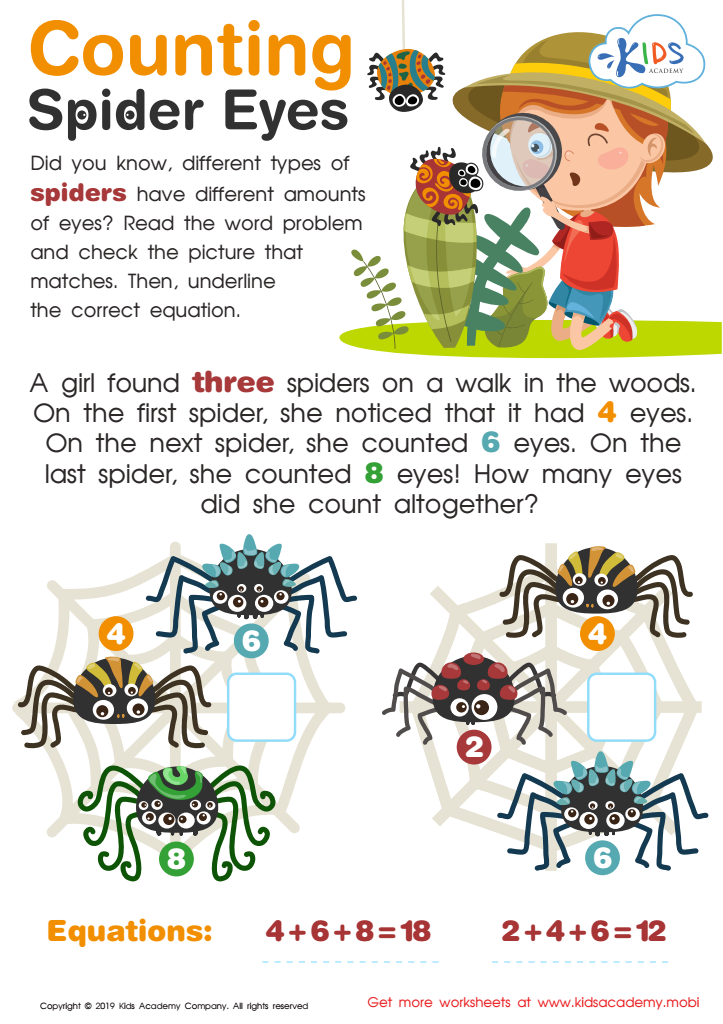
Counting Spider Eyes Worksheet
 Assign to My Students
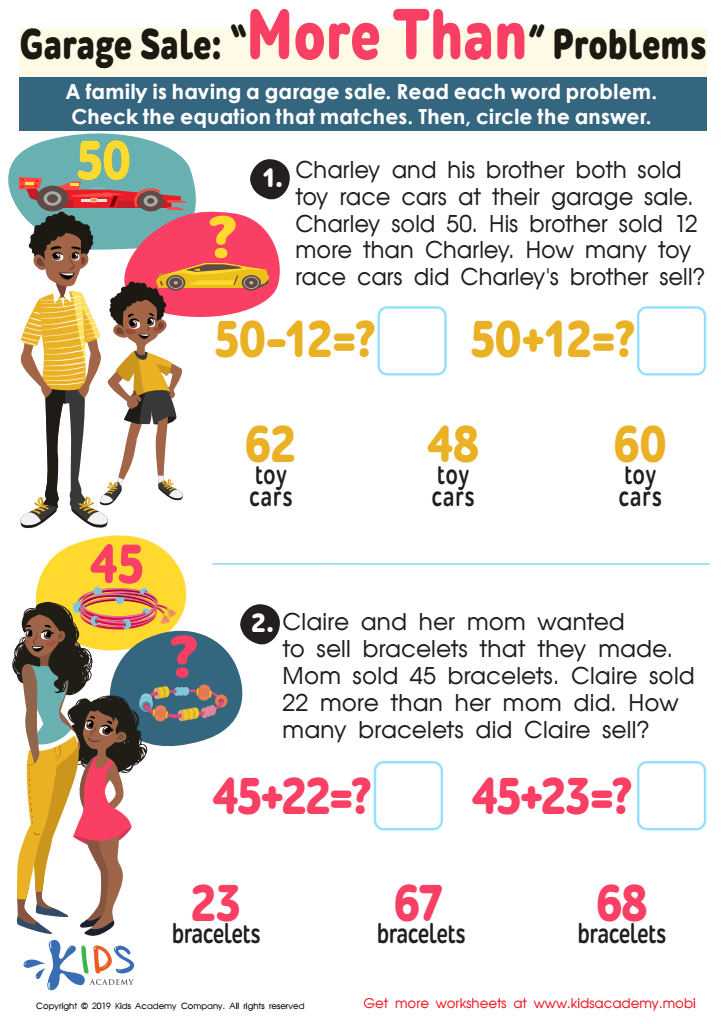
Garage Sale - More yhan Worksheet
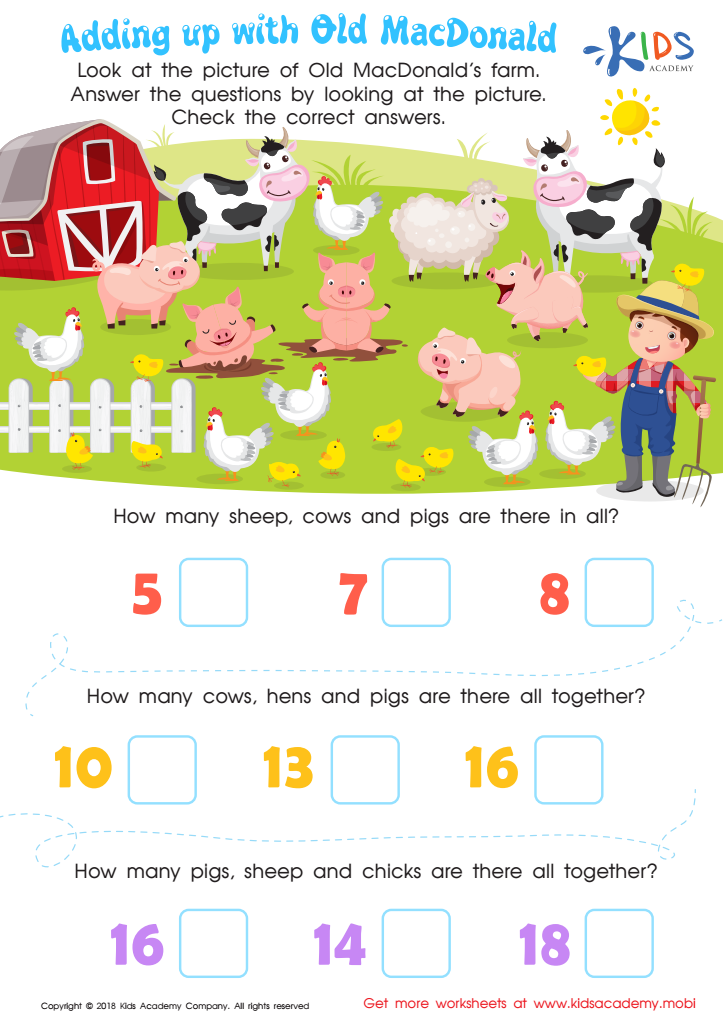
Adding Up with Old MacDonald Worksheet
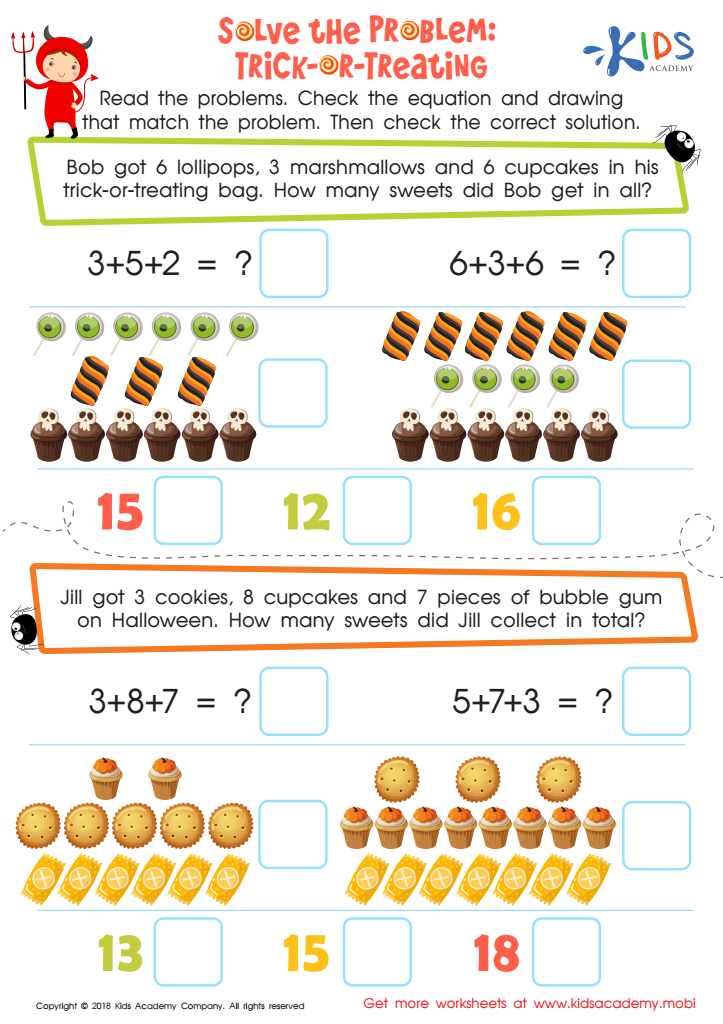
Solve the Problem: Trick–or–treating Worksheet
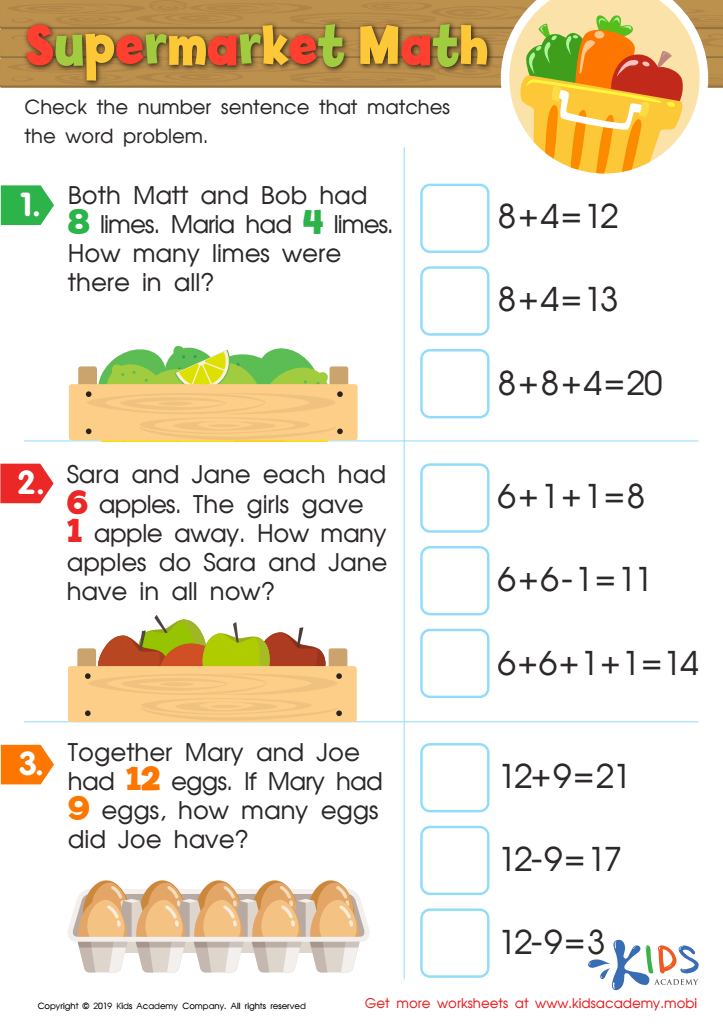
Supermarket Math Worksheet








Parents and teachers should place a high importance on basic arithmetic word problems for 4-year-olds because they are fundamental to early childhood development. Firstly, these activities cultivate critical thinking skills. When children are presented with problems in a story format, they learn to follow the narrative, identify relevant information, and determine the steps required to arrive at a solution. This process enhances their logical thinking and reasoning capabilities.
Additionally, solving arithmetic word problems introduces young learners to basic mathematical concepts like addition and subtraction in a more tangible and relatable manner. Instead of just memorizing numbers, they understand how maths applies to real-world situations, fostering a deeper comprehension and appreciation for the subject.
Moreover, early exposure to arithmetic word problems aids in developing language skills. Word problems typically require children to comprehend and process language, enriching their vocabulary and improving their ability to structure and understand sentences.
Engaging children in these problems also encourages problem-solving and decisiveness, skills which are transferable to numerous other aspects of their lives. Practicing these skills at a young age builds a strong foundation for future academic success and everyday living skills. It nurtures a growth mindset, motivating children to face challenges head-on, fostering both intellectual and emotional resilience.








