Problem-solving abilities Word Problems Worksheets for 4-Year-Olds
4 filtered results
-
From - To
Enhance your child's critical thinking with our Problem-Solving Abilities Word Problems Worksheets designed specifically for 4-year-olds! These engaging worksheets introduce young learners to essential problem-solving skills through fun, relatable scenarios. Each activity encourages children to think creatively as they analyze and solve simple word problems, fostering their mathematical understanding and mental agility. Perfect for both classroom and home use, these resources provide an interactive way to prepare your child for future academic challenges. Watch them develop confidence in tackling problems while having fun! Start building their problem-solving foundation today with our thoughtfully crafted worksheets.
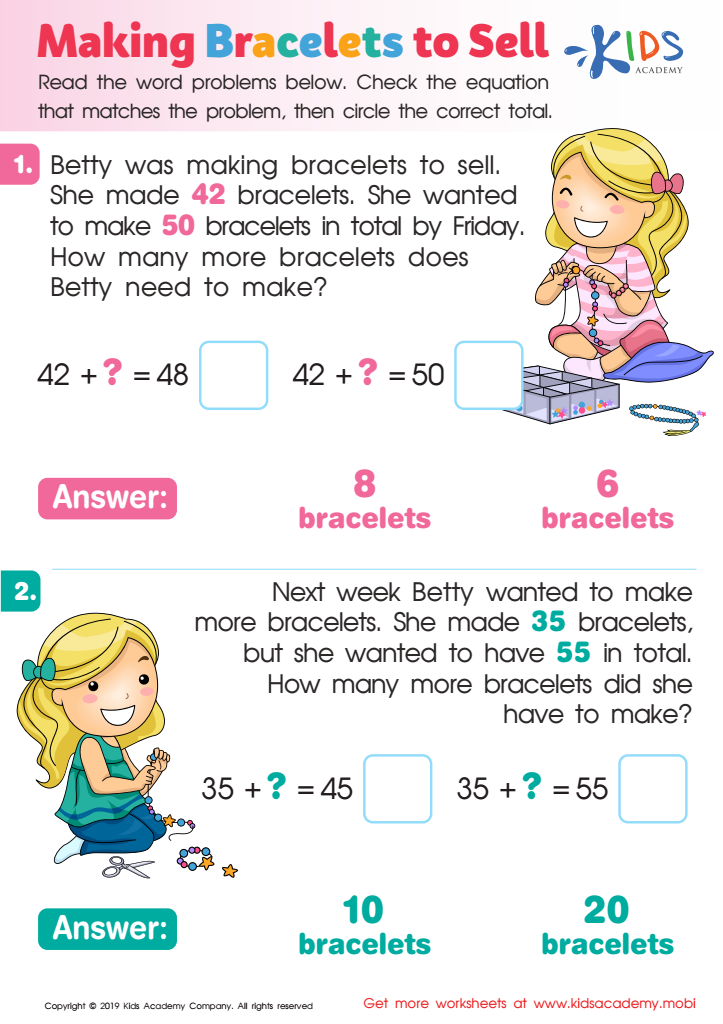
Making Bracelets to Sell Worksheet
 Assign to My Students
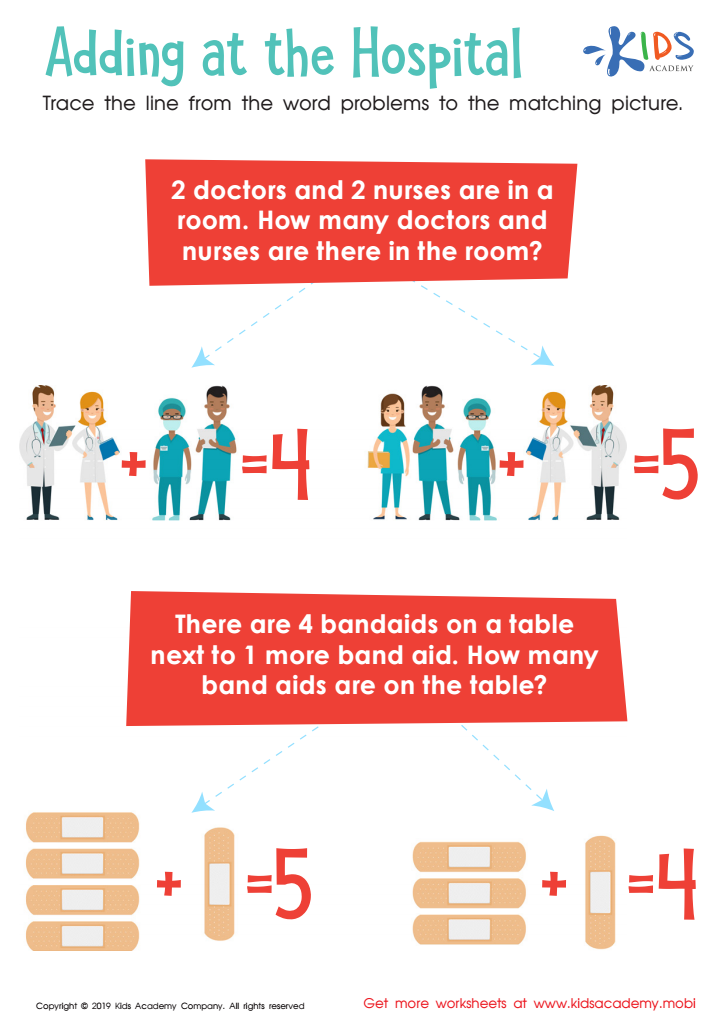
Adding at the Hospital Worksheet
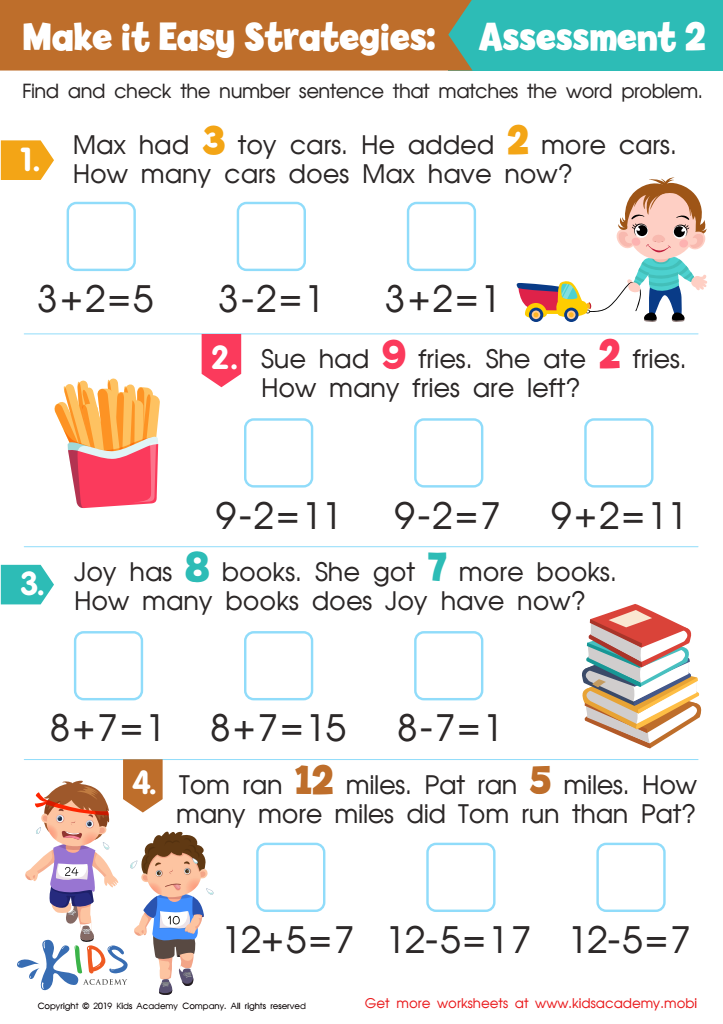
Make it Easy Strategies: Assessment 2 Worksheet
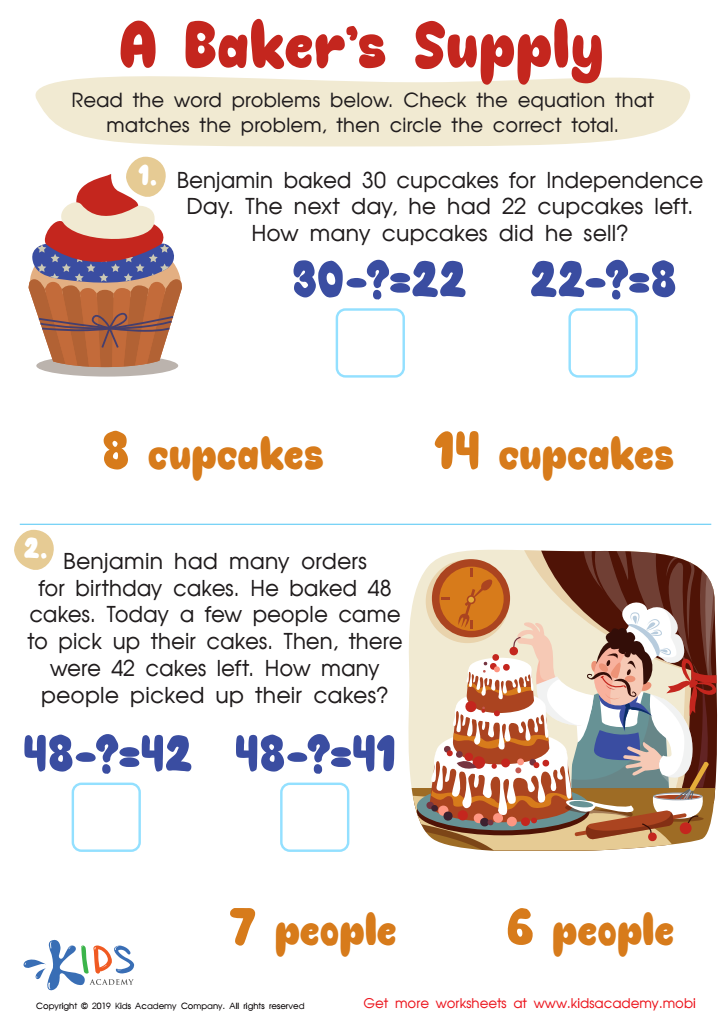
A Baker's Supply Worksheet








Parents and teachers should prioritize problem-solving abilities in young children, especially through engaging with word problems. At the age of 4, children are in a critical developmental stage where cognitive skills are burgeoning. Word problems encourage them to think critically, learn to analyze information, and develop reasoning skills. These abilities are crucial not just for early math understanding, but they also lay the foundation for lifelong learning.
When children solve word problems, they practice interpreting language and applying it to real-life scenarios, bridging the gap between mathematical concepts and everyday situations. This helps to foster curiosity and encourage imaginative thinking. Engaging in such activities can also enhance vocabulary and comprehension skills, as children learn to articulate their thought processes.
Moreover, problem-solving through word problems instills resilience, as children learn to tackle challenges, fail, and try again. This boosts their confidence and improves their overall attitude towards learning.
In short, fostering problem-solving abilities through word problems can create a stimulating environment where children learn essential skills that benefit them academically and socially, ultimately preparing them for future success. Encouraging this development should be a joint effort between parents and educators.








