Coloring skills Building Vocabulary Worksheets for 4-Year-Olds
3 filtered results
-
From - To
Enhance your child's vocabulary and fine motor skills with our "Coloring Skills Building Vocabulary Worksheets for 4-Year-Olds." These engaging, age-appropriate worksheets combine fun coloring activities with essential vocabulary-building exercises. Ideal for early learners, each worksheet introduces new words and concepts, encouraging language development in an enjoyable way. Your child will delight in coloring their favorite images while practicing spelling, recognition, and usage of new words. Developed by educational experts, our worksheets are designed to support preschoolers in reaching important learning milestones. Perfect for at-home learning or supplementing classroom instruction. Download now to boost your child's early literacy skills!
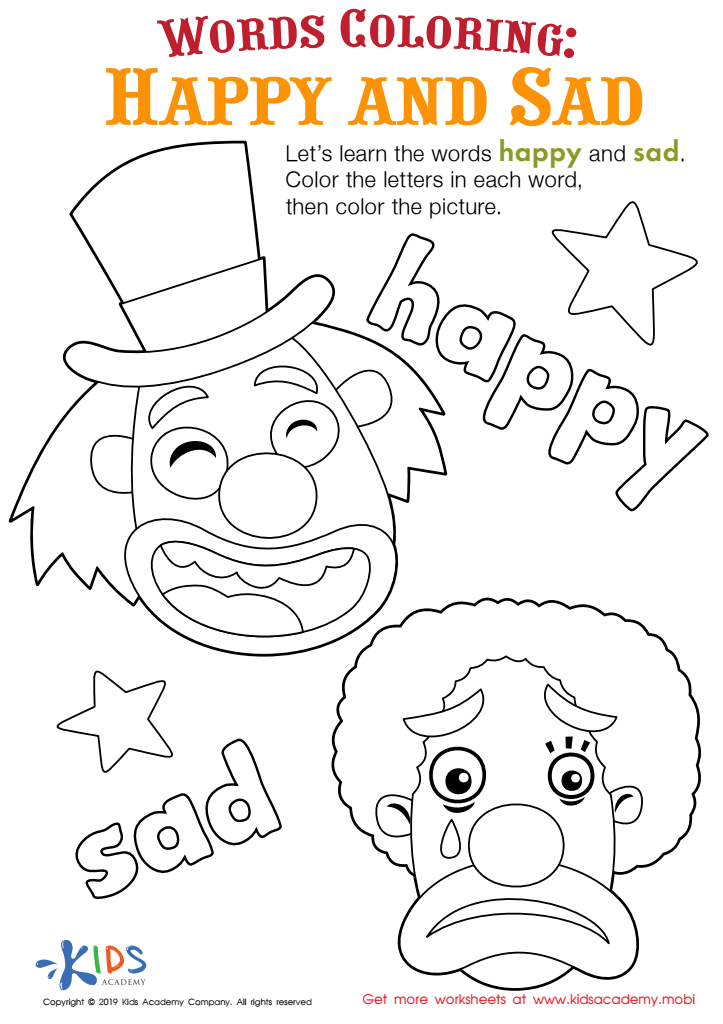
Happy and Sad Words Coloring Worksheet
 Assign to My Students











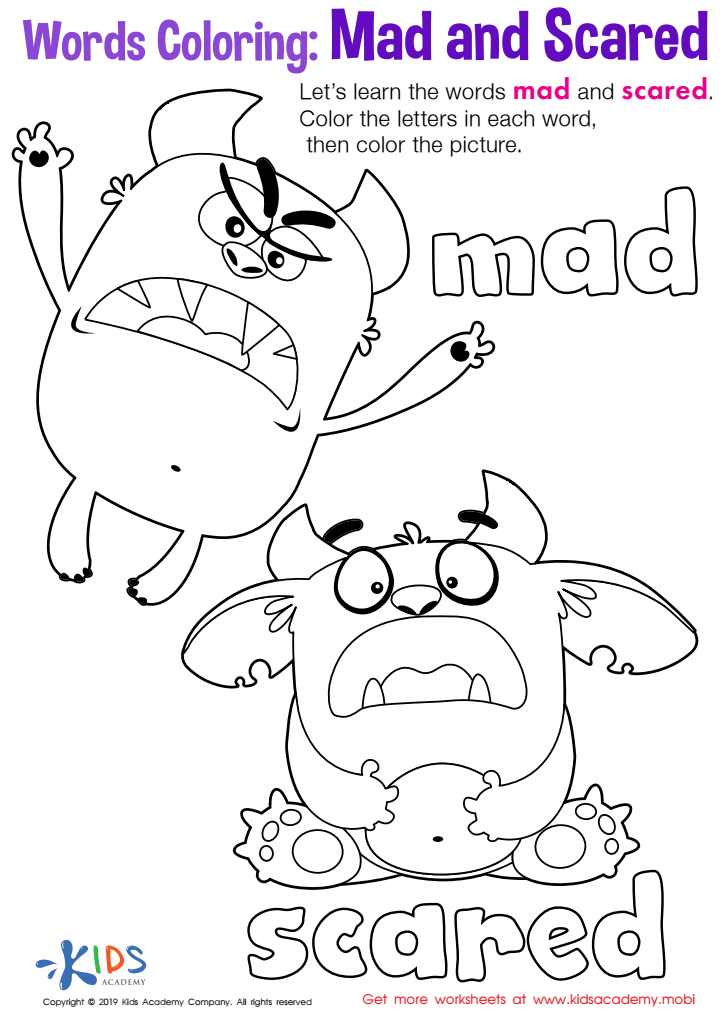
Mad and Scared Words Coloring Worksheet
Assign to My Students
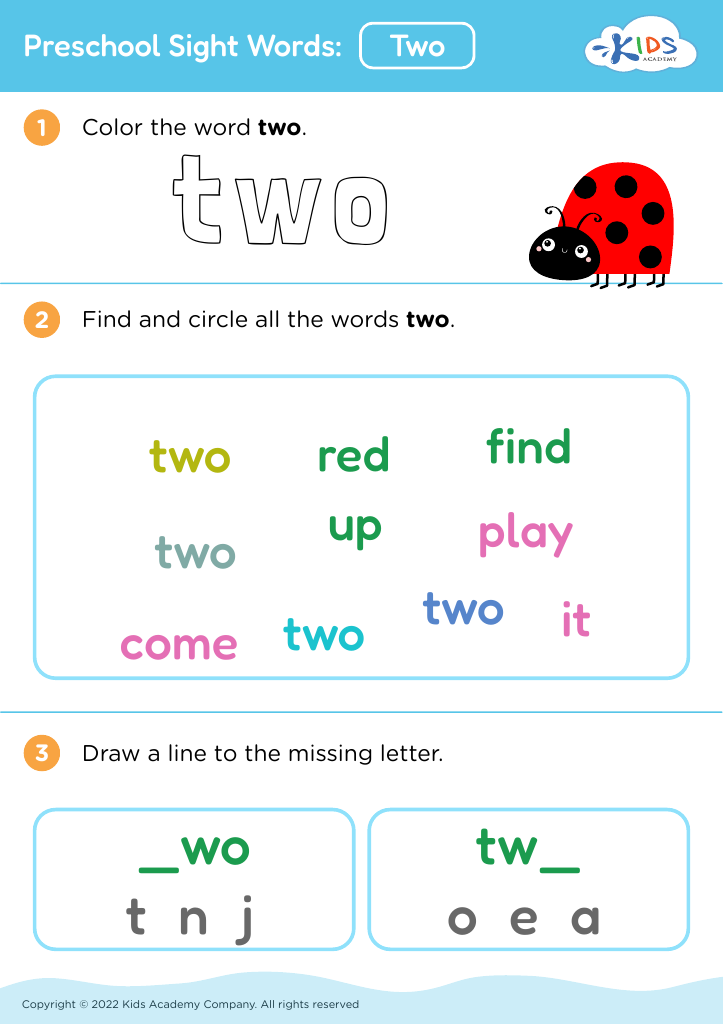








Coloring skills play a pivotal role in building vocabulary for 4-year-olds, serving as a foundation for cognitive and linguistic development. When children engage in coloring activities, they are exposed to various objects, scenes, and themes, often accompanied by descriptive terms. This exposure helps enrich their vocabulary as they learn to identify and name different colors, shapes, and items. For instance, by coloring a picture of a farm, children might encounter terms like barn, tractor, or silo.
Moreover, coloring enhances fine motor skills, which are critical for writing development. Proper grasp and control of crayons lay the groundwork for future writing tasks, where descriptive writing skills are necessary. This physical activity also promotes concentration and attention to detail, essential for effective communication and language use.
Aside from cognitive benefits, the social aspect of coloring activities often includes discussions with peers or adults, encouraging verbal expression and interaction. When a child talks about what they are coloring, they practice articulation and sentence construction, further reinforcing their vocabulary.
In conclusion, coloring activities are not merely an artistic endeavor but a multifaceted approach to vocabulary building and cognitive development. Parents and teachers should thus incorporate coloring into early education to support language growth and academic readiness.








