Understanding prepositions Building Vocabulary Worksheets for 4-Year-Olds
5 filtered results
-
From - To
Welcome to our “Understanding Prepositions: Building Vocabulary Worksheets for 4-Year-Olds”! These engaging resources are designed to help young learners grasp basic prepositions and enhance their vocabulary. Our fun, interactive worksheets feature colorful illustrations and relatable contexts to captivate your child's interest while they learn important positional concepts like 'in,' 'on,' 'under,' and more. Through a variety of activities, children will improve their language skills and understanding of spatial relationships. Ideal for preschool or kindergarten settings, our worksheets promote early literacy and encourage playful learning. Start building your child's vocabulary today with our delightful and educational materials!
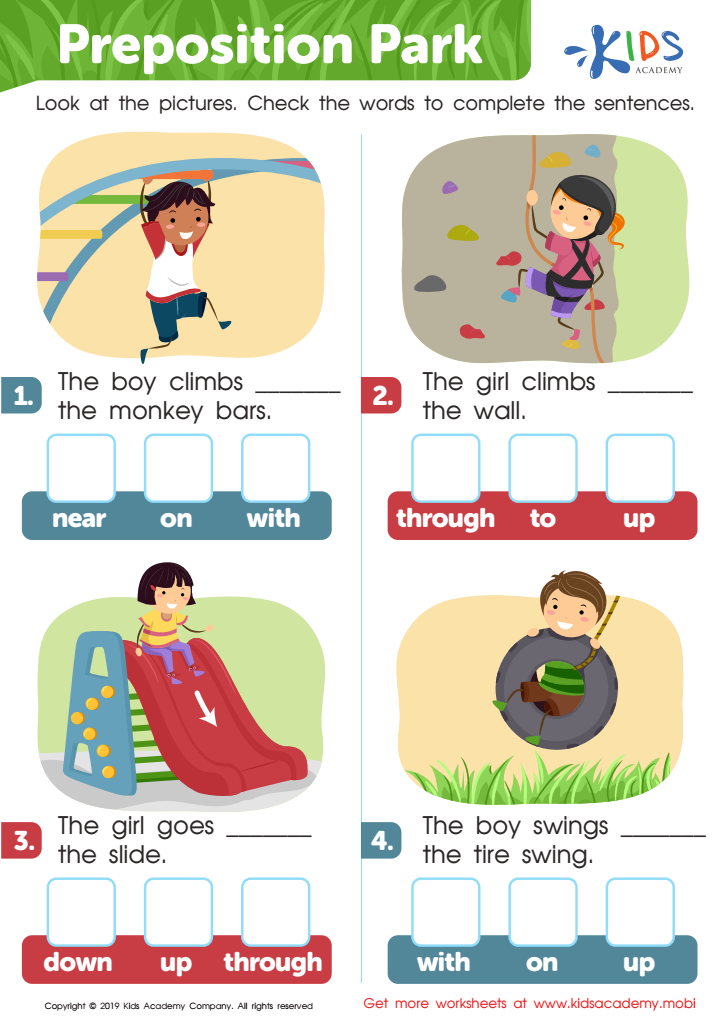
Preposition Park Worksheet
 Assign to My Students











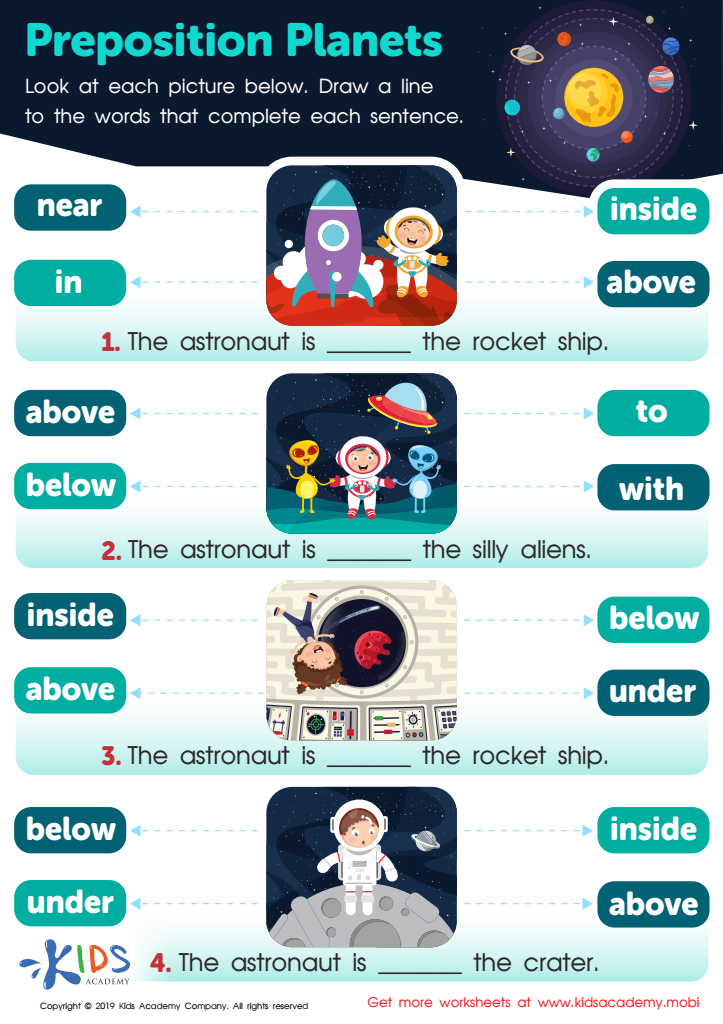
Preposition Planets Worksheet
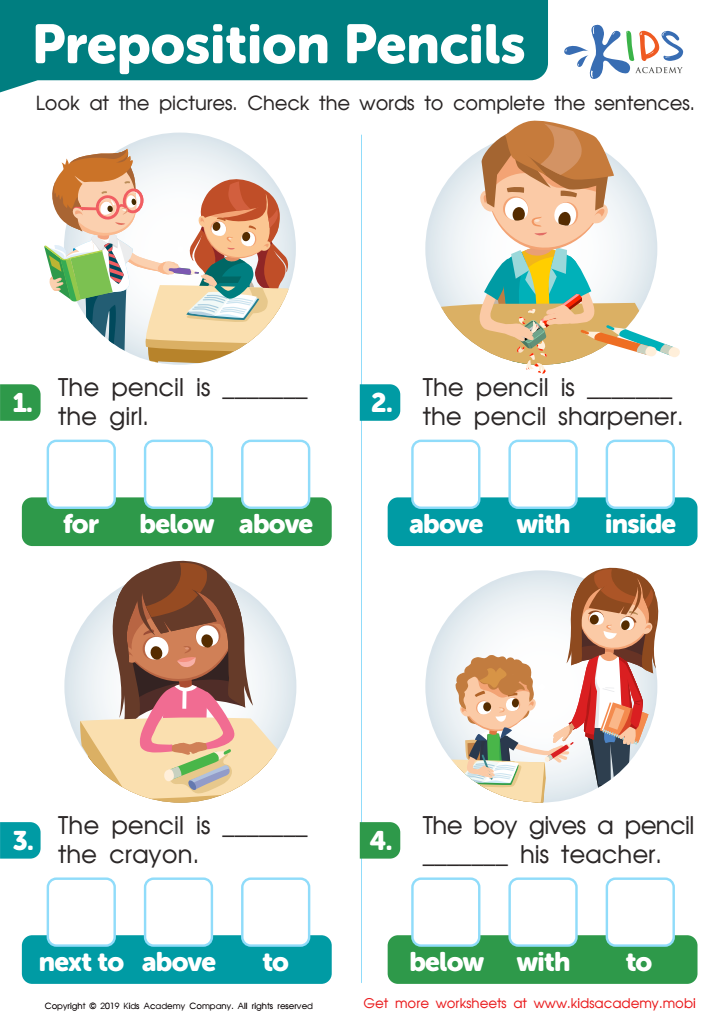
Preposition Pencils Worksheet
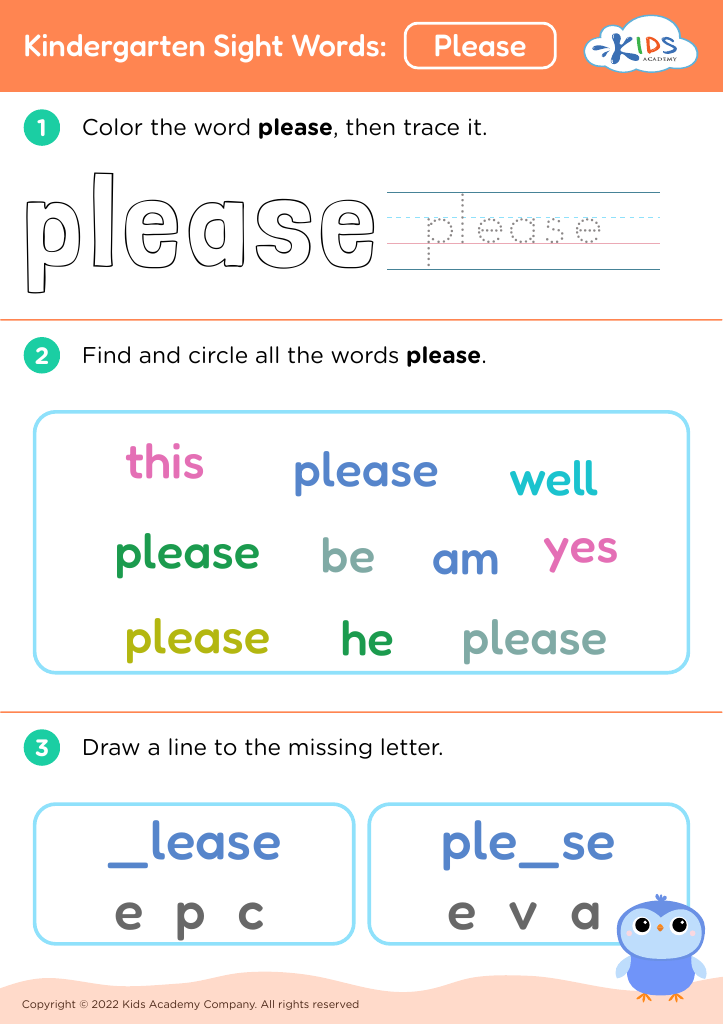








Understanding prepositions and building vocabulary in 4-year-olds are crucial components of early language development that have lasting impacts on a child's communication skills. At this age, children are naturally curious and eager to explore the world around them. Prepositions, which describe relationships between objects—such as "in," "on," "under," and "beside"—help children make sense of their environment and articulate their experiences. For instance, when a child talks about their toy being "under the table," it enhances their spatial awareness and cognitive skills.
Vocabulary building at this stage is equally important, as it lays the groundwork for reading and writing skills. Expanding vocabulary empowers children to express their thoughts, feelings, and ideas clearly, fostering better communication and social interactions. It also helps them develop critical thinking skills as they learn to categorize, describe, and make connections between new words and existing knowledge.
Ultimately, investing time and effort into teaching prepositions and vocabulary can significantly enhance a child's learning journey, providing them with the language tools necessary for academic success and personal relationships. Parents and teachers play a vital role in this process, cultivating a rich linguistic environment that encourages exploration and engagement.








