
Story comprehension Reading Fiction Worksheets for 4-Year-Olds
5 filtered results
Difficulty Level
Grade
Age
-
From - To
Subject
Activity
Standards
Introduce your 4-year-old to the magical world of stories with our Story Comprehension Reading Fiction Worksheets. These thoughtfully designed worksheets stimulate young minds through engaging and age-appropriate reading activities. Each worksheet aims to enhance comprehension skills, boost vocabulary, and foster a love for reading. With vibrant illustrations and simple questions, children can easily follow along and understand the stories' key elements. Perfect for early readers, these worksheets are a fun and educational tool that prepares kids for future reading success. Explore our collection today and watch your child's confidence and reading skills soar!
Favorites
With answer key
Interactive
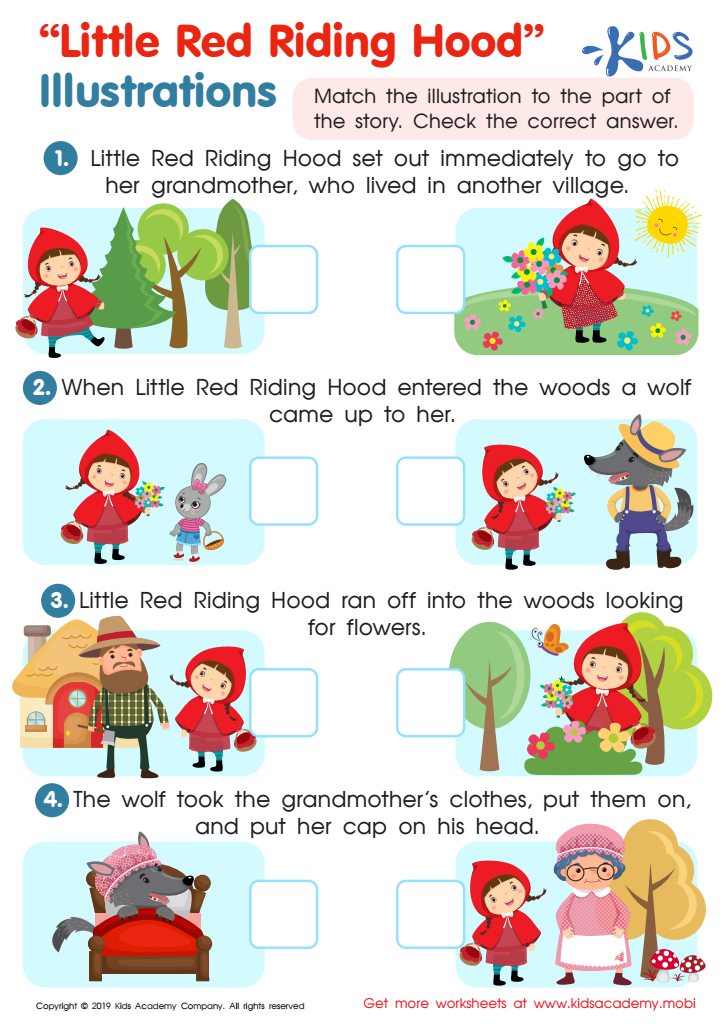
Little Red Riding Hood: Illustrations Worksheet
Comprehension is improved by having young readers recall and retell stories. This worksheet uses colorful illustrations of the fairytale Little Red Riding Hood. Children use their comprehension skills and strategy to match illustrations to the story parts, check off the appropriate boxes and use the pictures as clues.
Little Red Riding Hood: Illustrations Worksheet
Worksheet
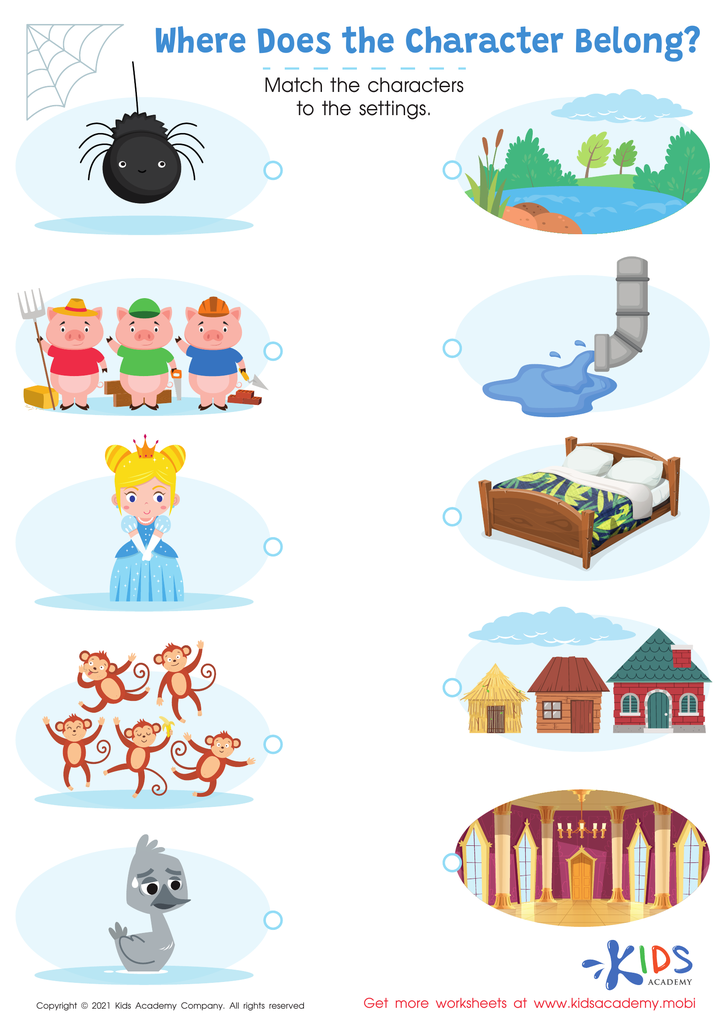
Where Does the Character Belong? Worksheet
Fairy Tales are a great way to teach young ones about settings, characters and other literary elements. This worksheet contains illustrations from popular fairy tales to help kids identify characters and match them to the right settings. It's a fun way to improve recall skills and enhance comprehension using visuals.
Where Does the Character Belong? Worksheet
Worksheet
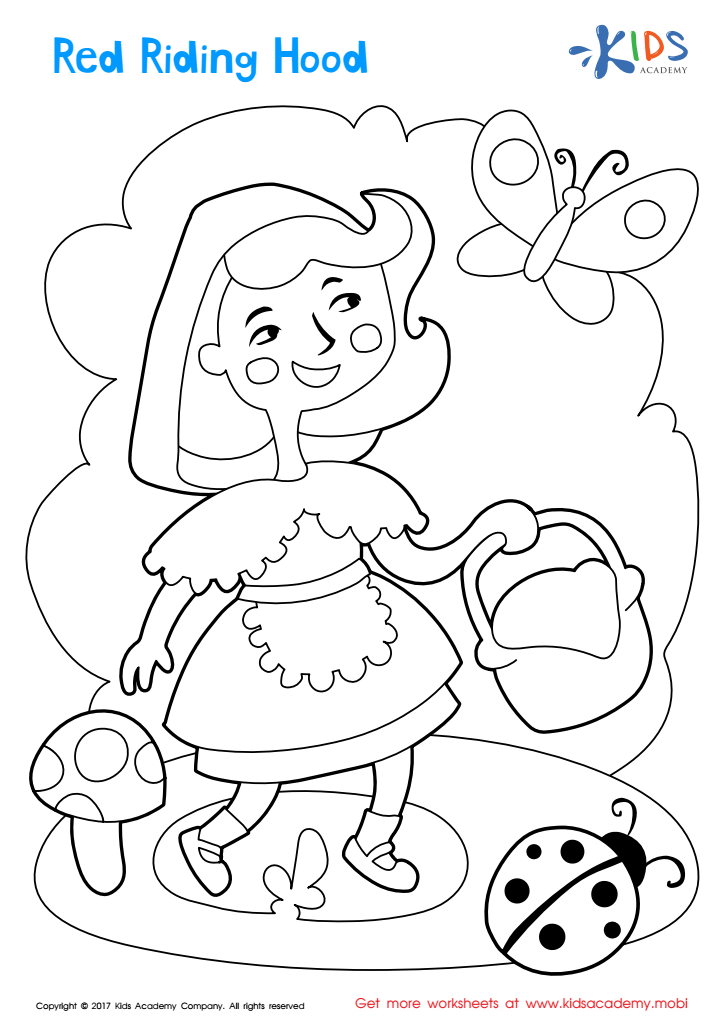
Red Riding Hood Coloring Page
Red Riding Hood awaits in the woods, with a butterfly, mushroom, and ladybug around her. Let your child bring the story to life with this magical printable coloring page. Fairytale fun for all!
Download (PDF)
 Assign to My Students
Assign to My Students
Red Riding Hood Coloring Page
Worksheet
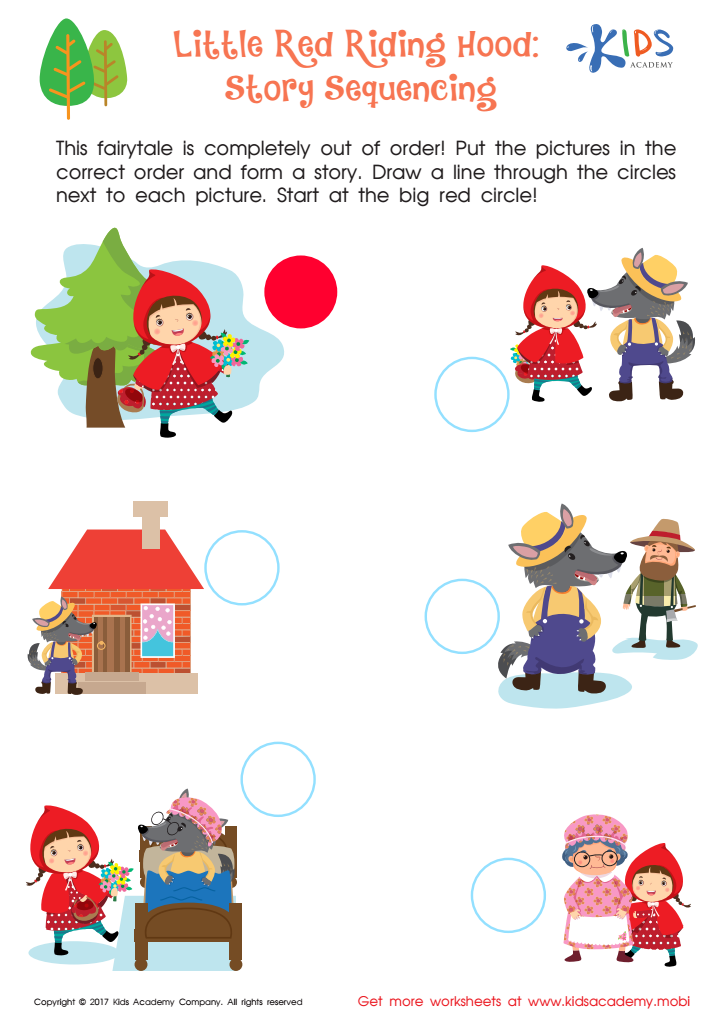
Story Sequencing Printable
Children must identify story events in sequential order to build a better understanding of plot.
Help your child learn how to understand plot with this fun comprehension worksheet: Little Red Riding Hood! Guide them to identify story events and order them correctly to boost their reading skills.
Story Sequencing Printable
Worksheet
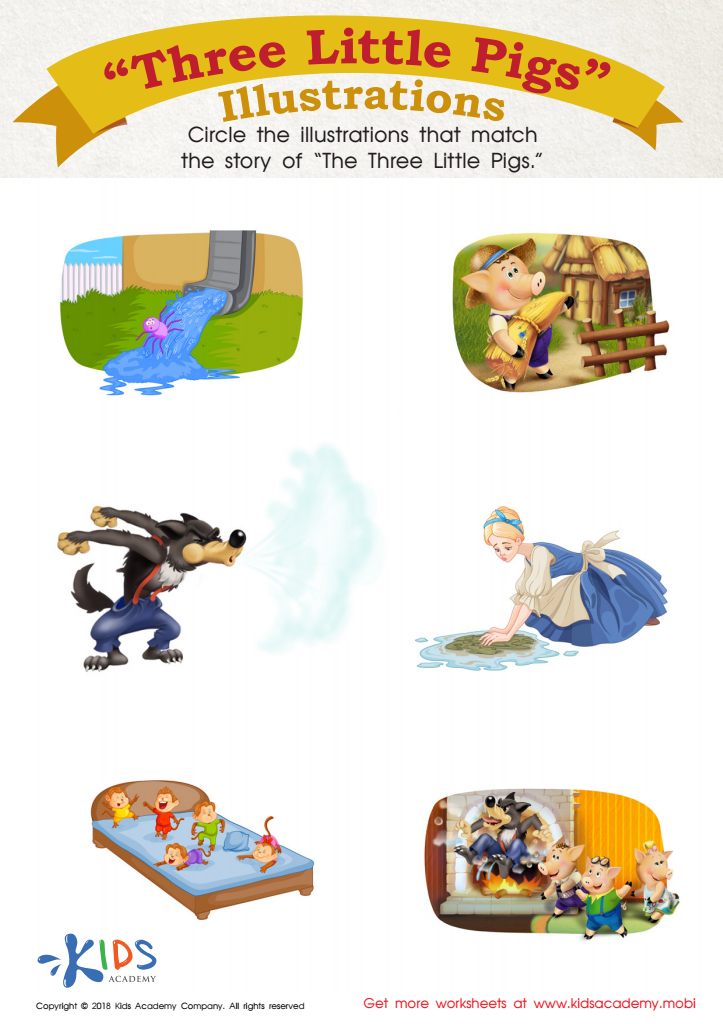
Three Little Pigs: Illustrations Worksheet
Fairy Tales are a great way for young children to learn about settings, characters and other fiction elements. This worksheet has illustrations from The Three Little Pigs, and lets your student use what they know and the visuals to match the story. It's a fun way for them to practice story recall and comprehension with illustrations.
Three Little Pigs: Illustrations Worksheet
Worksheet
Join Kids Academy for Free
Who is primarily going to use this learning content?







Story comprehension and reading fiction for 4-year-olds is vital for several reasons. At this age, children's brains are developing rapidly, and engaging with stories boosts cognitive, social, and emotional growth. Firstly, it fosters language development. As kids hear new words and phrases in stories, their vocabulary expands, and they start understanding sentence structures. This early exposure prepares them for reading and writing skills they'll need in school.
Additionally, reading fiction ignites imagination and creativity. Children learn to visualize characters, settings, and events, which enhances their creative thinking abilities. Comprehending stories also requires them to understand the sequence of events and grasp cause and effect, essential skills for logical reasoning.
Socially, story comprehension introduces children to various social situations and emotions, teaching empathy and helping them understand other people's feelings and perspectives. It also provides a safe space to confront and discuss complex topics and emotions, aiding in emotional regulation.
From a bonding standpoint, reading together strengthens the parent-child or teacher-student relationship. It creates a trusting environment where children feel safe and valued, which is crucial for emotional development.
In summary, prioritizing story comprehension and reading fiction at this age equips children with essential linguistic, cognitive, and social tools that lay a strong foundation for their future educational and personal success.








