Identifying shapes Sight Words Worksheets for 4-Year-Olds
5 filtered results
-
From - To
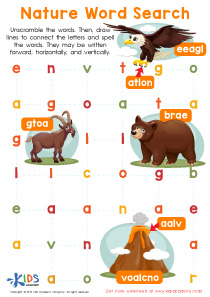
Discover our "Identifying Shapes Sight Words Worksheets for 4-Year-Olds" designed to engage young learners in a playful, educational experience. Perfect for preschoolers, these worksheets seamlessly blend sight words practice with shape recognition activities. Your child will enhance their reading skills while familiarizing themselves with basic geometric shapes like circles, squares, and triangles. Each worksheet offers colorful, kid-friendly images and simple instructions to keep learning fun and frustration-free. Boost your child’s cognitive development and vocabulary with our expertly crafted resources, encouraging critical thinking and early literacy success. Visit Kids Academy for more engaging educational tools!
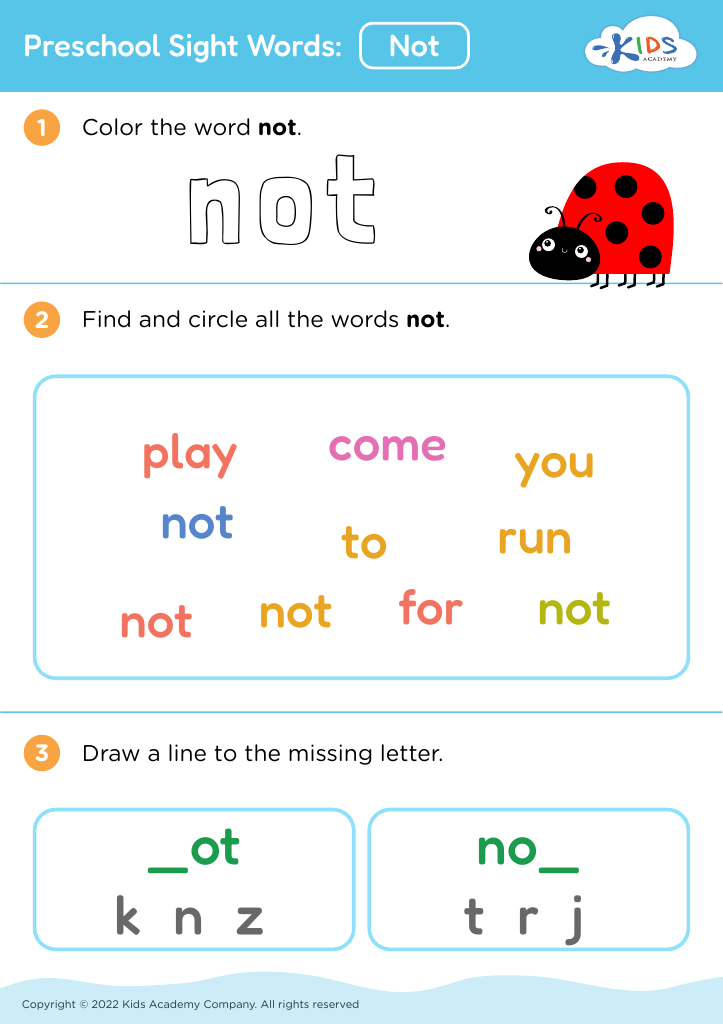

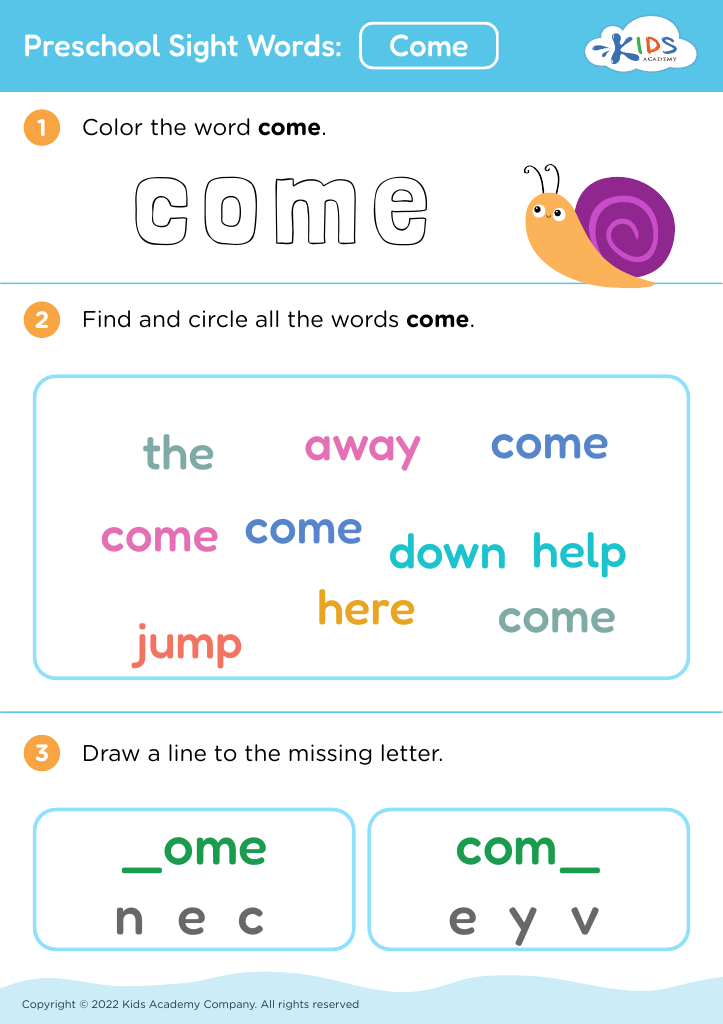
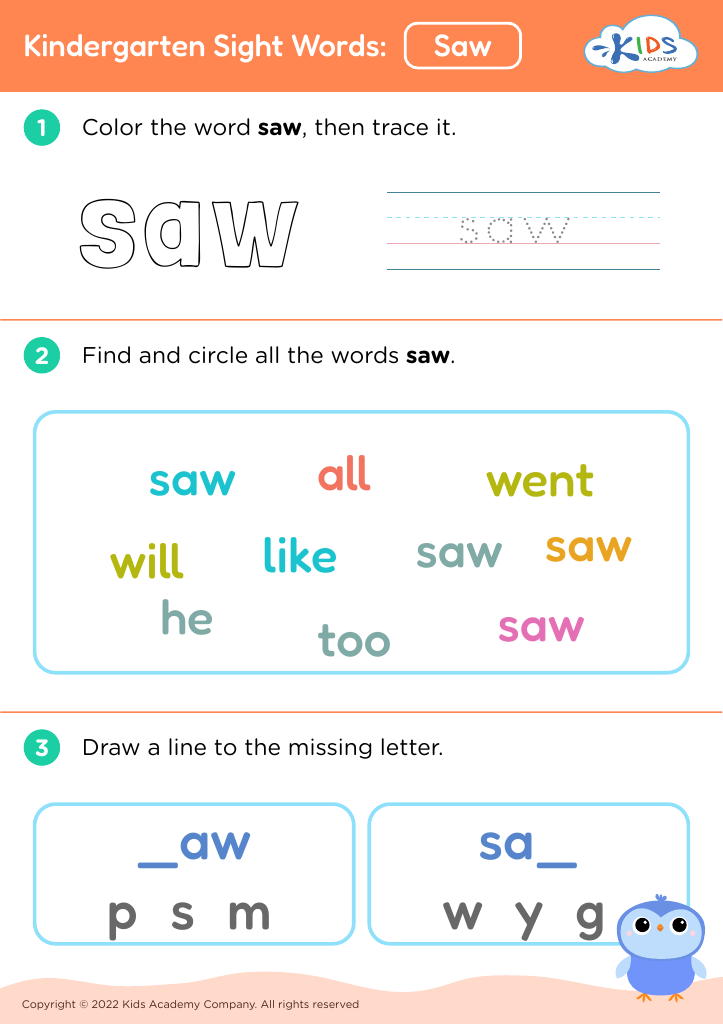
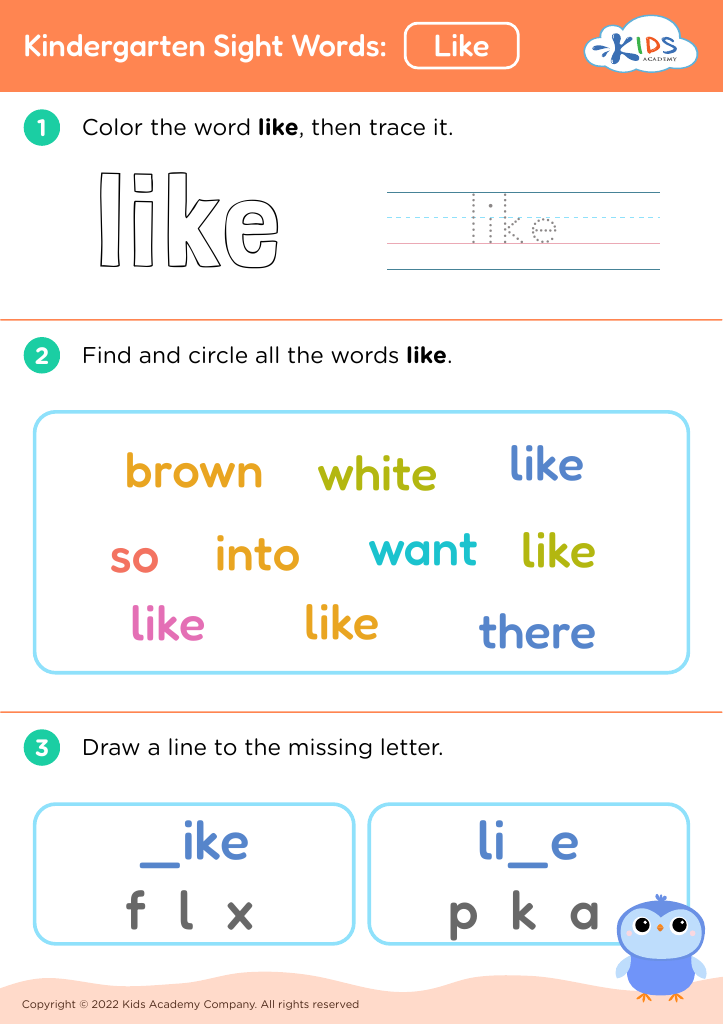
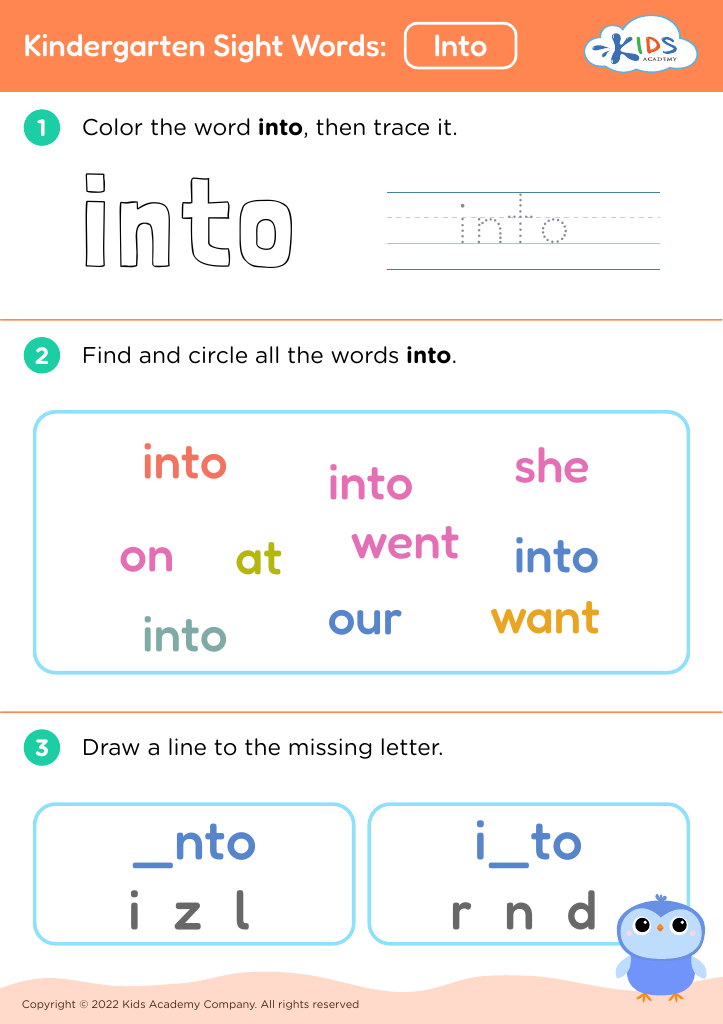







Identifying shapes and learning sight words are crucial developmental milestones for 4-year-olds that can set the foundation for future academic success. Parents and teachers should understand their importance for several reasons.
First, recognizing shapes is fundamental for visual-spatial skills and early math concepts. Shapes are the building blocks of geometry; by identifying basic shapes such as circles, squares, and triangles, children develop pattern recognition and problem-solving skills, essential for later mathematical thinking.
Second, learning sight words (commonly used words that young children are encouraged to memorize as a whole) is vital for early literacy development. Sight words make up a significant portion of the text in children's books. By familiarizing themselves with these words, children can begin to read more fluently and understand the context more effectively, boosting their confidence and inspiring a love for reading.
Moreover, both shapes and sight words contribute to language development and cognitive skills. Discussing shapes expands children’s vocabulary and promotes descriptive language, while sight words recognition enhances phonemic awareness and aids in decoding new words.
Ultimately, caring about these early skills means fostering an enriching, supportive environment that fuels curiosity, lays down basic educational frameworks, and engenders a love of learning that children will carry with them through school and beyond. Parents and teachers play a critical role in nurturing these abilities, ensuring a well-rounded early education.