Understanding prepositions Grammar Worksheets for 4-Year-Olds
3 filtered results
-
From - To
Discover engaging "Understanding Prepositions" grammar worksheets designed specifically for 4-year-olds! These fun, interactive activities help young learners master the basics of prepositions through colorful illustrations and relatable scenarios. With simple instructions and age-appropriate vocabulary, children can easily comprehend concepts such as above, below, in, and out. Our worksheets encourage hands-on learning and critical thinking skills, making grammar not just educational but enjoyable! Perfect for parents and teachers looking to reinforce classroom lessons at home, these resources promote language development while keeping kids entertained. Download our prepositions worksheets today and watch your child’s understanding of language soar!
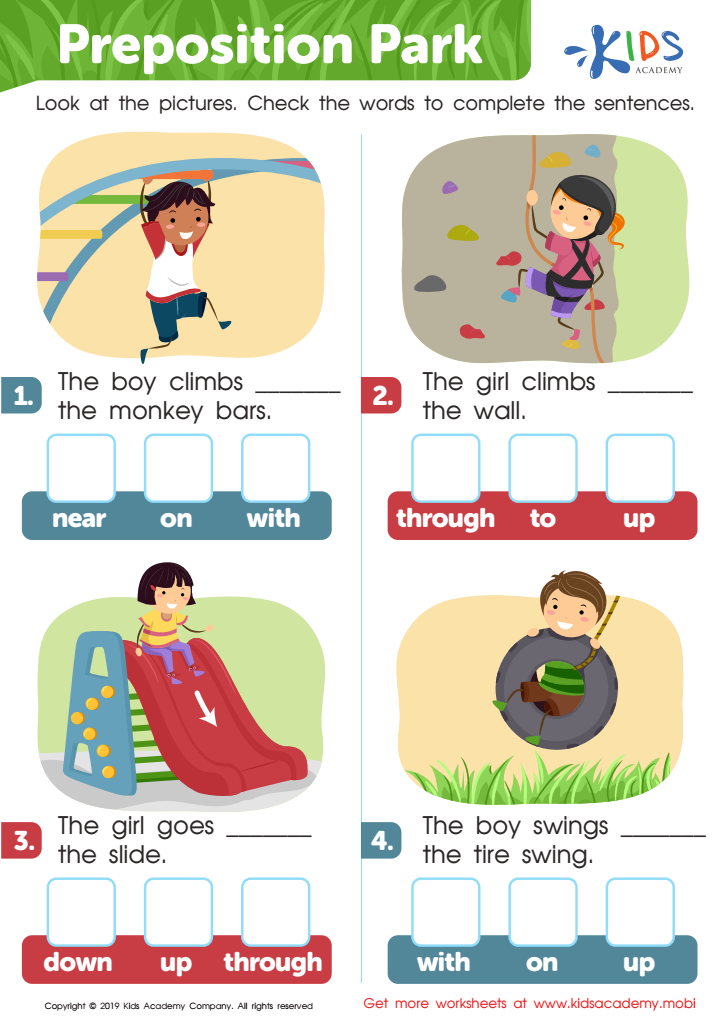
Preposition Park Worksheet
 Assign to My Students
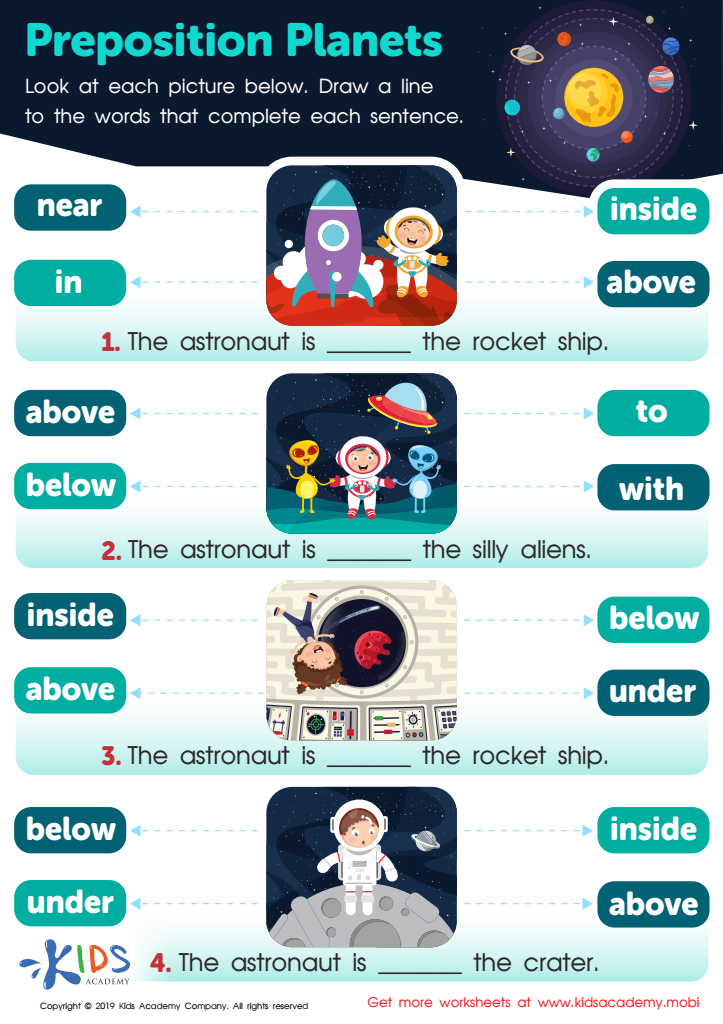
Preposition Planets Worksheet
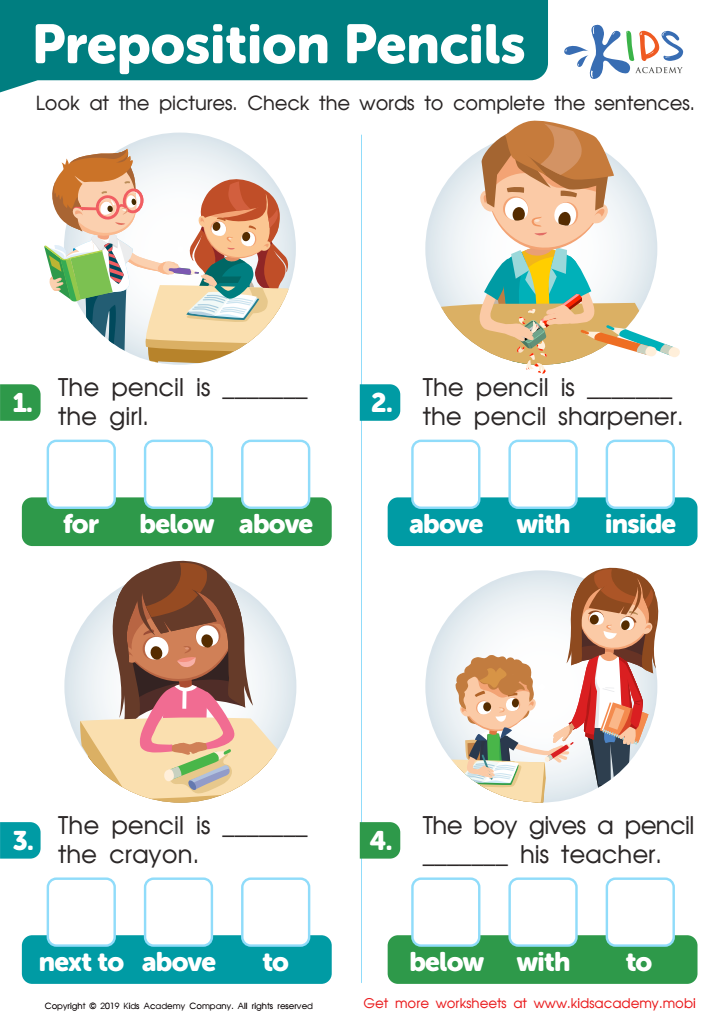
Preposition Pencils Worksheet






Understanding prepositions is essential for four-year-olds as they lay the groundwork for critical language skills. At this age, children are rapidly developing their communication abilities, and learning prepositions helps them articulate spatial relationships and clarify their thoughts. For parents and teachers, fostering this knowledge is crucial for several reasons.
Firstly, prepositions enhance vocabulary, as children learn not only the words like "in," "on," and "under," but also how to use them in context. This linguistic foundation supports better comprehension of spoken language and aids in following directions—critical for everyday interactions.
Secondly, mastering prepositions reinforces cognitive skills by encouraging children to think about how objects relate to one another in space. Activities that involve sorting, building, or even simple storytelling can spur this understanding.
Furthermore, early exposure to grammar, including prepositions, can lead to improved reading and writing skills as children progress in their education. It equips them to create more complex sentences, fostering a love for language.
In conclusion, understanding prepositions is a fundamental step in language development that enriches a child's ability to express themselves and interact effectively with the world around them, making it a priority for both parents and teachers.








