
Letter recognition Alphabetizing Worksheets for Ages 5-6
3 filtered results
Difficulty Level
Grade
Age
-
From - To
Subject
Activity
Standards
Discover our engaging Letter Recognition and Alphabetizing Worksheets designed specifically for children ages 5-6! These interactive resources help young learners enhance their letter identification and sequencing skills in an enjoyable way. Through vibrant illustrations and fun activities, kids will practice recognizing letters, arranging them in alphabetical order, and reinforcing their understanding of the alphabet. Perfect for preschool and kindergarten classrooms or home learning, these worksheets encourage creativity while building foundational literacy skills. Support your child's educational journey and make learning letters exciting with our comprehensive collection of printables tailored for emerging readers. Explore and download today for a fun learning experience!
Favorites
With answer key
Interactive
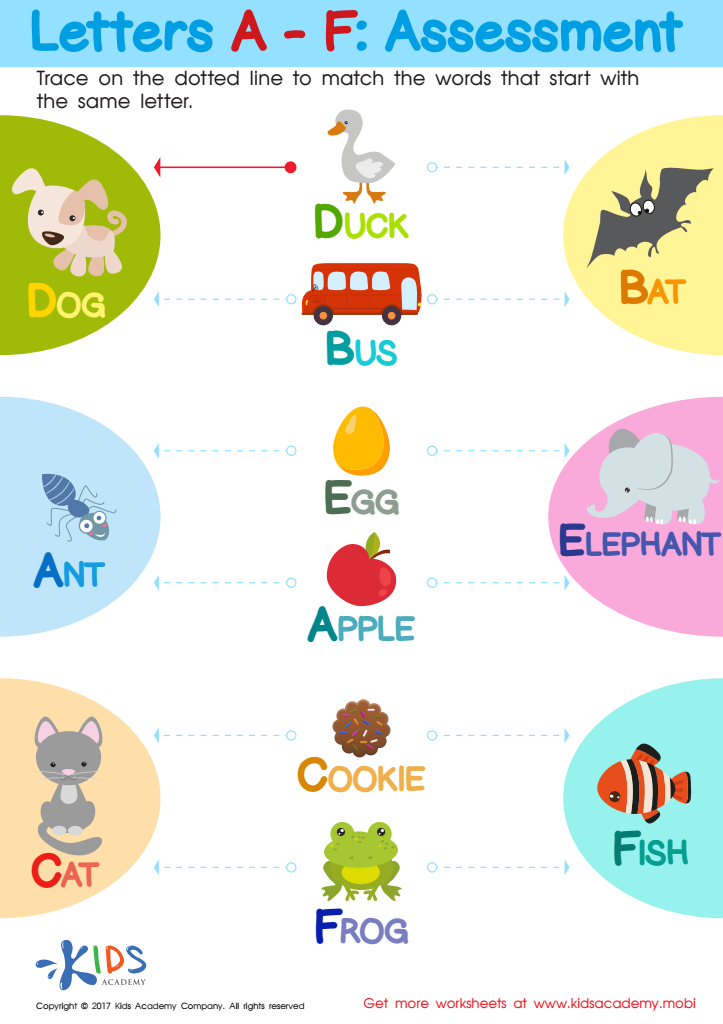
Letters A - F Worksheet
Help your child develop their reading skills with this fun phonics worksheet aimed at preschoolers. They can match letters A-F using colorful words and pictures. Assist your child by sounding out the letters and words - it's a great way to learn!
 Assign to My Students
Letters A - F Worksheet
Worksheet
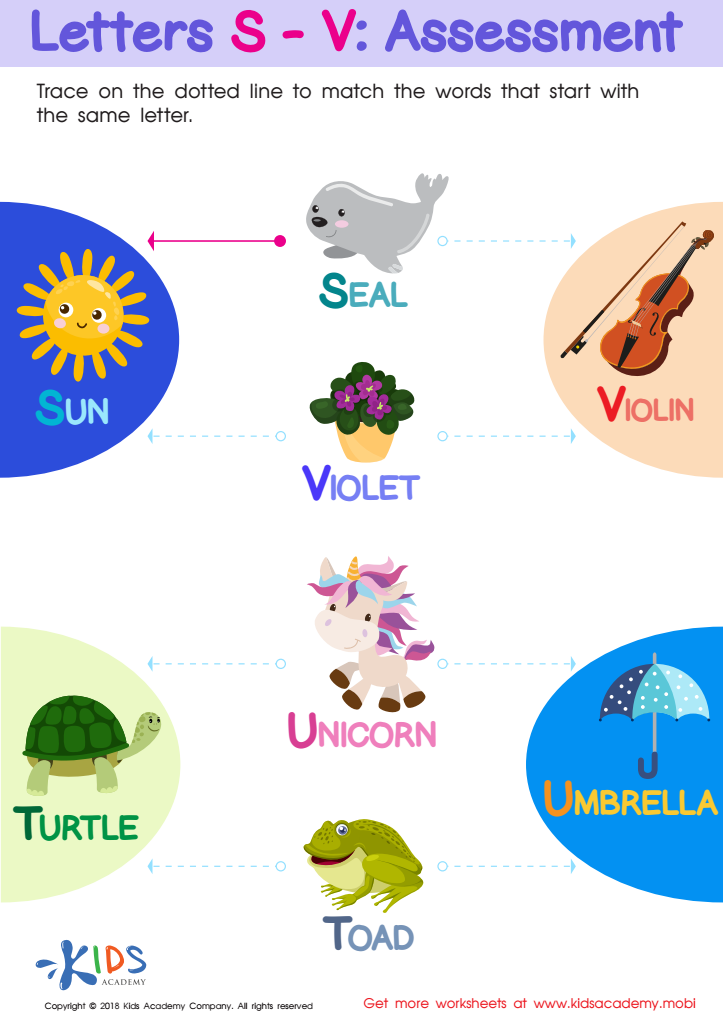
Letters S - V Tracing Worksheet
Kids can have fun learning phonics and reading with this PDF! Trace the lines of letters S-V to match words that start with the same letter. With easy directions and bright pictures, any young learner will love it!
Letters S - V Tracing Worksheet
Worksheet
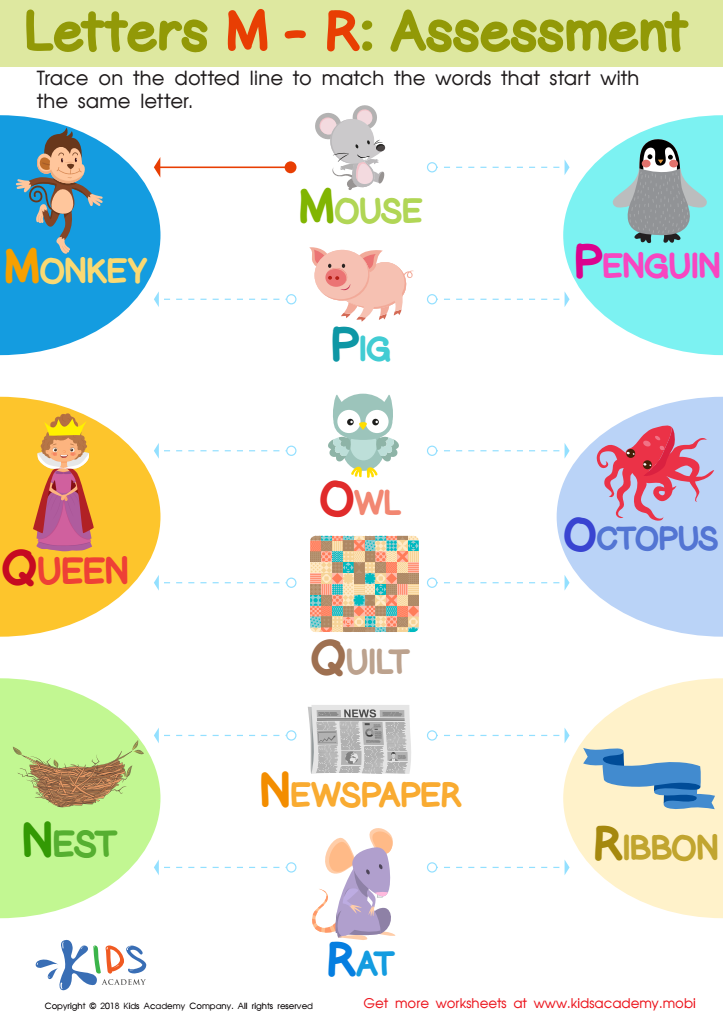
Letters M-R Tracing Worksheet
Does your child like learning to read? This printout is ideal! Kids match words to letters M-R by tracing. You can assist them in sounding out the words to pick the correct letter. Plus, visuals are included to help them recognize words with pictures.
Letters M-R Tracing Worksheet
Worksheet
Join Kids Academy for Free
Who is primarily going to use this learning content?


Letter recognition and alphabetizing are foundational skills for young learners ages 5-6, making them crucial for parents and teachers to prioritize. Mastery of these skills not only lays the groundwork for reading and writing, but it also fosters cognitive development and critical thinking. When children can recognize letters and arrange them in alphabetical order, they enhance their understanding of language structure, which contributes to better spelling and vocabulary acquisition.
Moreover, these skills promote confidence in literacy. Mastering letter recognition empowers children to decode words, allowing them to tackle more complex texts and cultivate a love for reading. Understanding the alphabet also assists in developing organizational skills, as students learn to categorize and sequence information, laying the groundwork for mathematical reasoning and problem-solving.
Additionally, recognizing letters helps children develop fine motor skills through writing activities, enhancing their overall academic readiness. This early focus on literacy will ensure a smoother transition into future educational endeavors. Parents and teachers play a vital role in creating a supportive learning environment through songs, games, and interactive activities that make learning fun and engaging. As partners in a child's education, it is essential to support them during this crucial developmental phase, helping to unlock their full potential.







