Phonics practice Beginning Sounds Worksheets for Ages 5-6
5 filtered results
-
From - To
Welcome to our Phonics Practice Beginning Sounds Worksheets designed for children ages 5-6! This engaging resource helps young learners master the crucial skill of identifying and distinguishing beginning sounds in words. By using these worksheets, kids will practice connecting letters with their corresponding sounds, enhancing their phonemic awareness and paving the way for reading success. Each worksheet features colorful illustrations and fun activities that capture children's attention while making learning enjoyable. Perfect for home or classroom use, our worksheets support early literacy development, making it a fantastic tool for parents and educators alike. Start your child's phonics journey today!
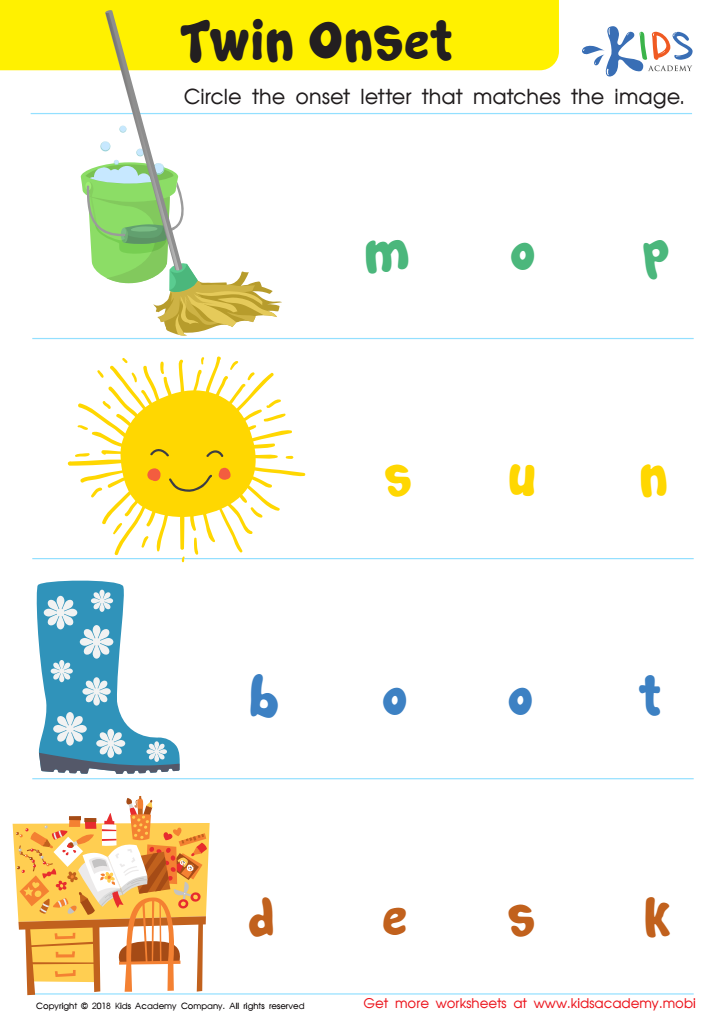
Twin Onset Worksheet
 Assign to My Students
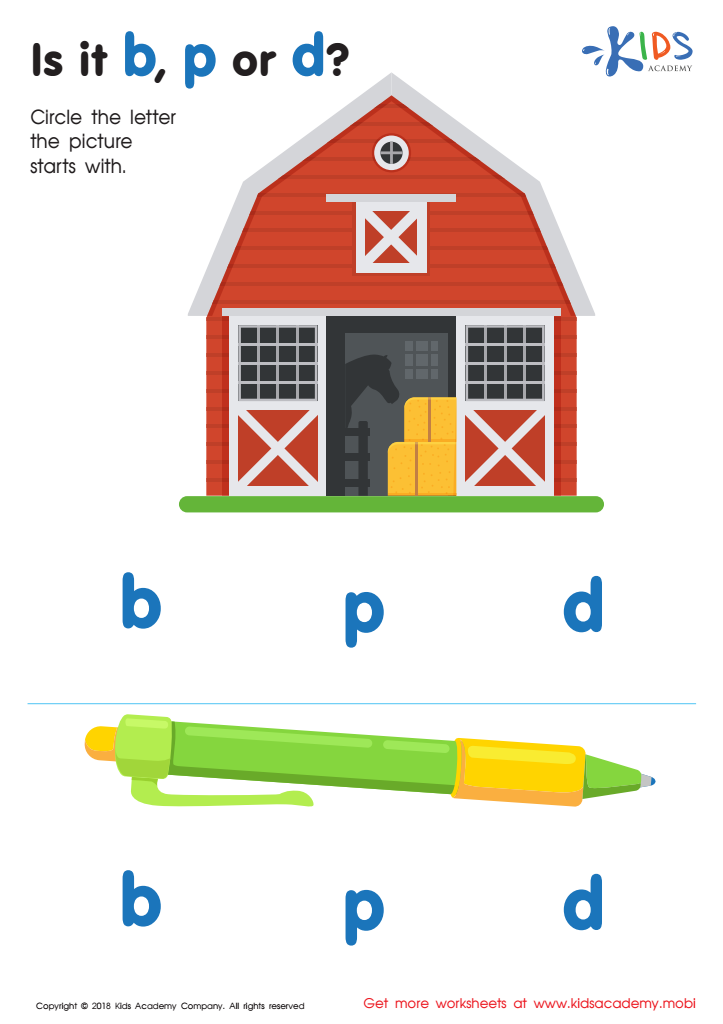
Is it b, p or d? Worksheet
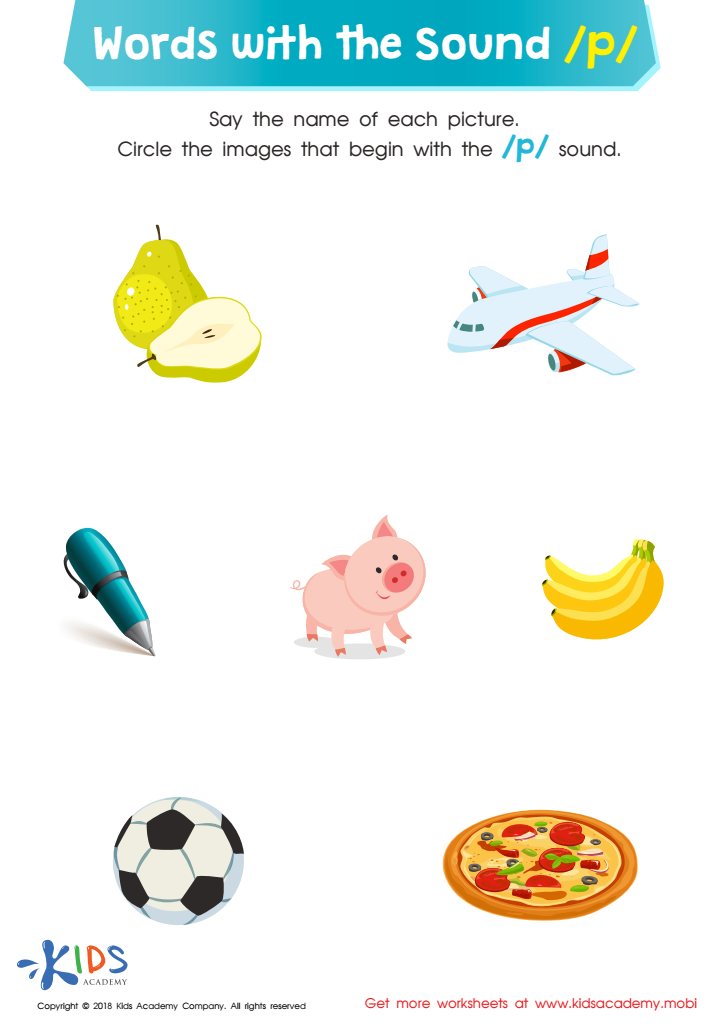
Words with sound p Reading Worksheet
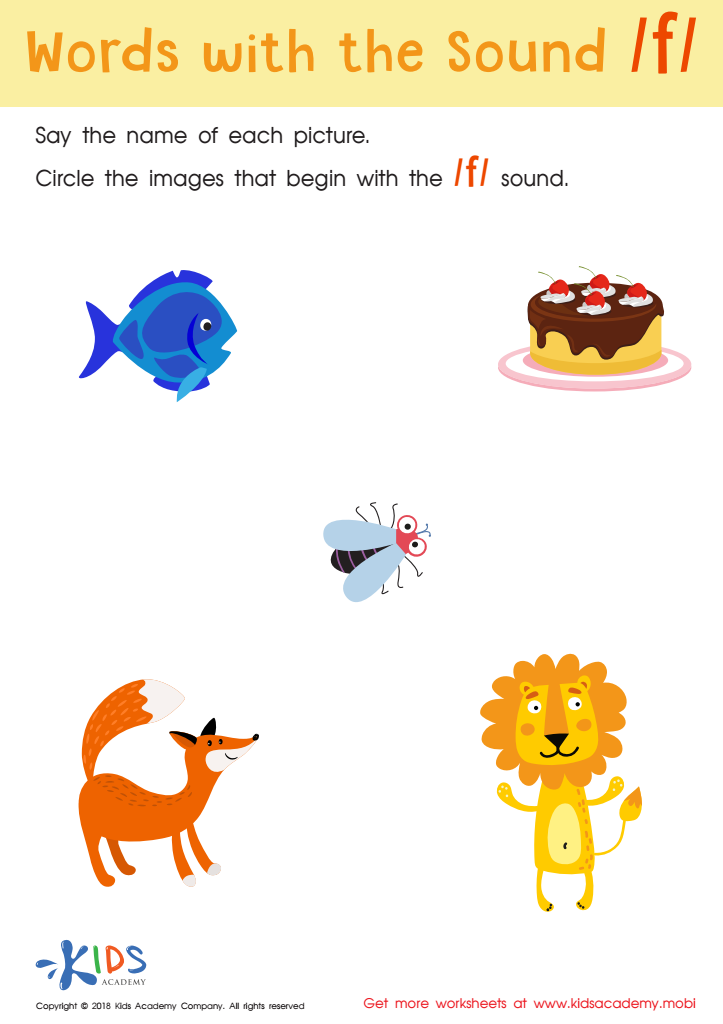
Words with sound f Reading Worksheet
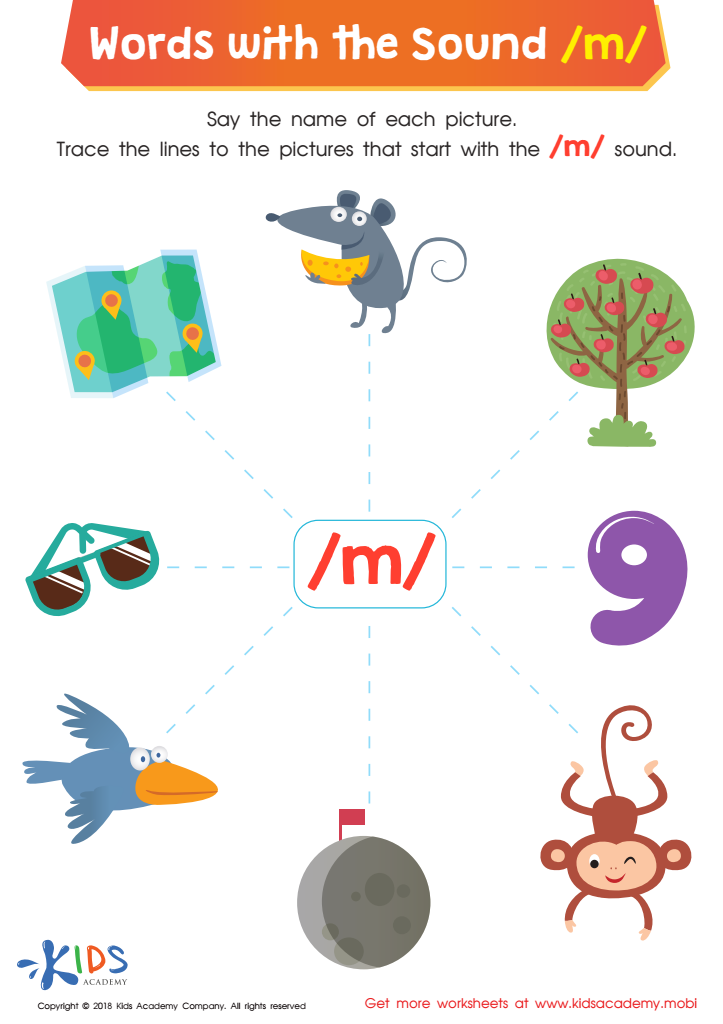
Words with Sound M Reading Worksheet








Phonics practice, particularly focusing on beginning sounds, is crucial for children aged 5-6. At this developmental stage, young learners are building foundational literacy skills, which are vital for their future academic success. Understanding beginning sounds equips children with the ability to decode words, enhancing their reading and writing abilities.
Additionally, practicing beginning sounds aids phonemic awareness, which is the ability to manipulate and identify sounds in words. This skill is directly linked to successful reading outcomes. By helping children recognize and produce initial sounds, parents and teachers ensure that learners can blend these sounds together, fostering fluent reading.
Beyond academics, recognizing beginning sounds also fuels a child's confidence and enthusiasm for language. Engaging in fun, interactive phonics activities—such as games, songs, and storytelling—creates a positive learning environment. This not only strengthens skills but also promotes a love for reading.
Investing time in phonics practice ultimately equips children with essential tools for effective communication and comprehension. As they progress in their literacy journey, these foundational skills allow them to tackle more complex texts with ease, setting them up for long-term success in their academic pursuits. Hence, parents and teachers play a vital role in nurturing these critical early literacy skills.







