Vocabulary expansion Consonants Worksheets for Ages 5-6
6 filtered results
-
From - To
Boost your child's early literacy skills with our "Vocabulary Expansion Consonants Worksheets" tailored for ages 5-6. These engaging and educational worksheets focus on enhancing vocabulary through fun consonant exercises. Each activity is designed to help young learners identify and practice consonant sounds, enriching their understanding and usage of new words. Through colorful and interactive tasks, children build reading and speaking skills, fostering a love for learning and laying a strong foundation for future academic success. Ideal for parents and teachers, these worksheets make vocabulary expansion an enjoyable and effective process for young minds.
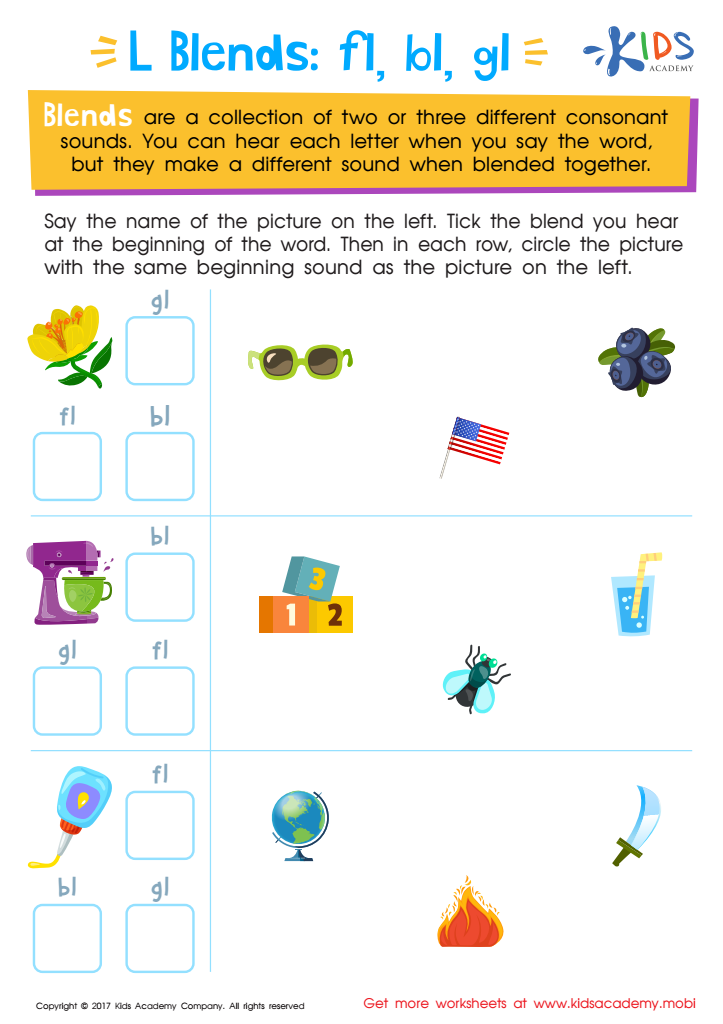
Blending Consonants: "Fl", "Bl" and "Gl" Printable
 Assign to My Students
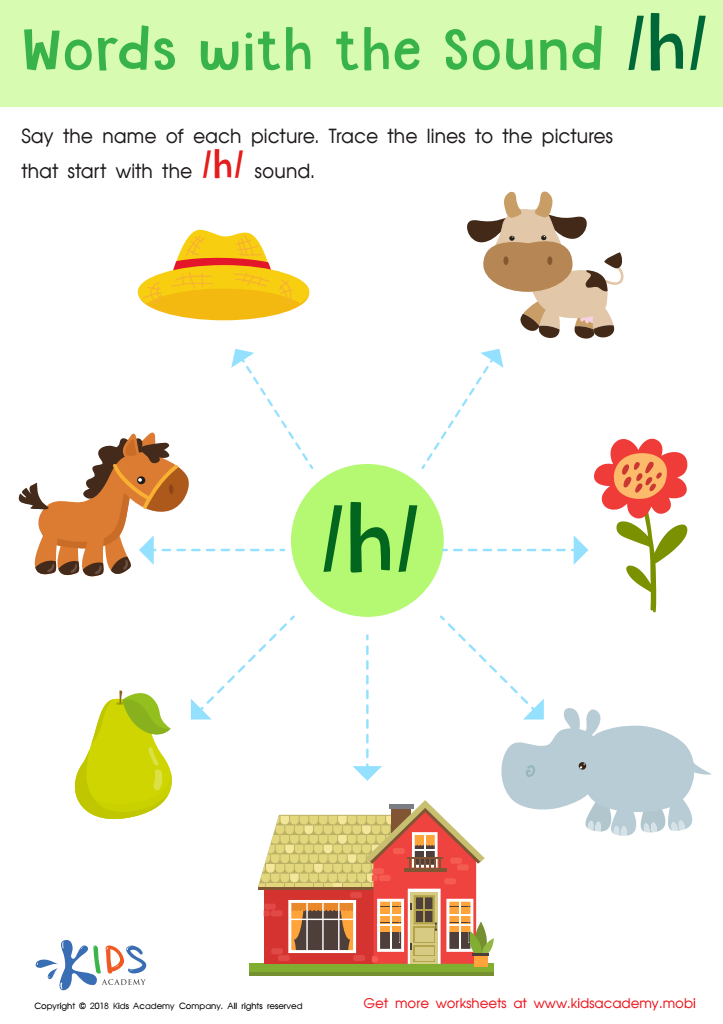
Words with sound h Reading Worksheet
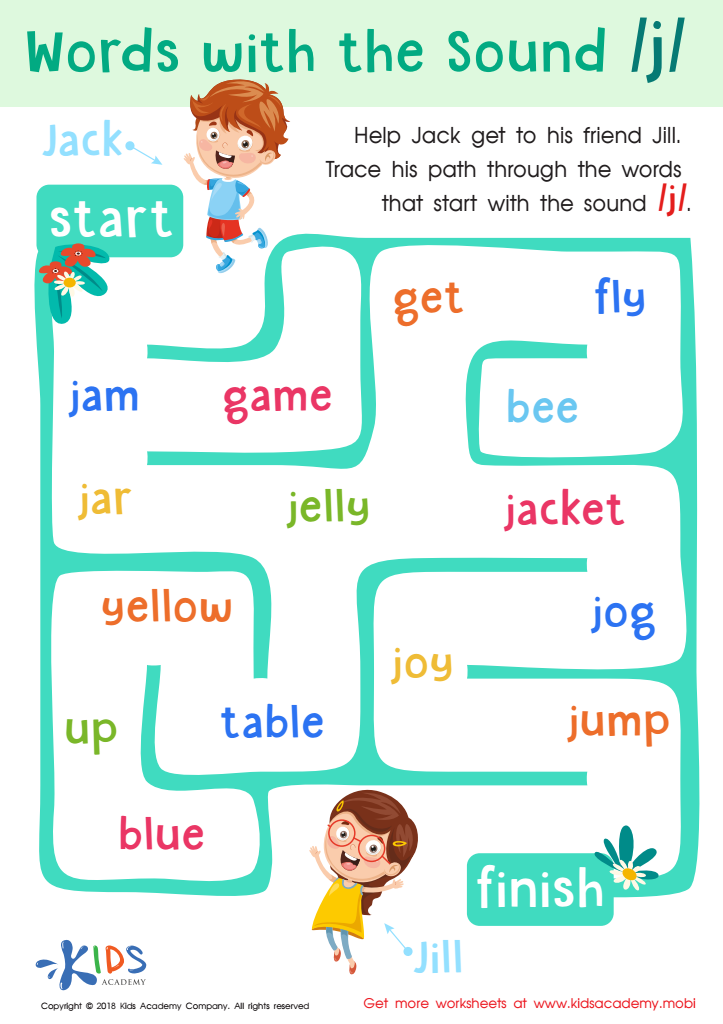
Words with sound j Reading Worksheet
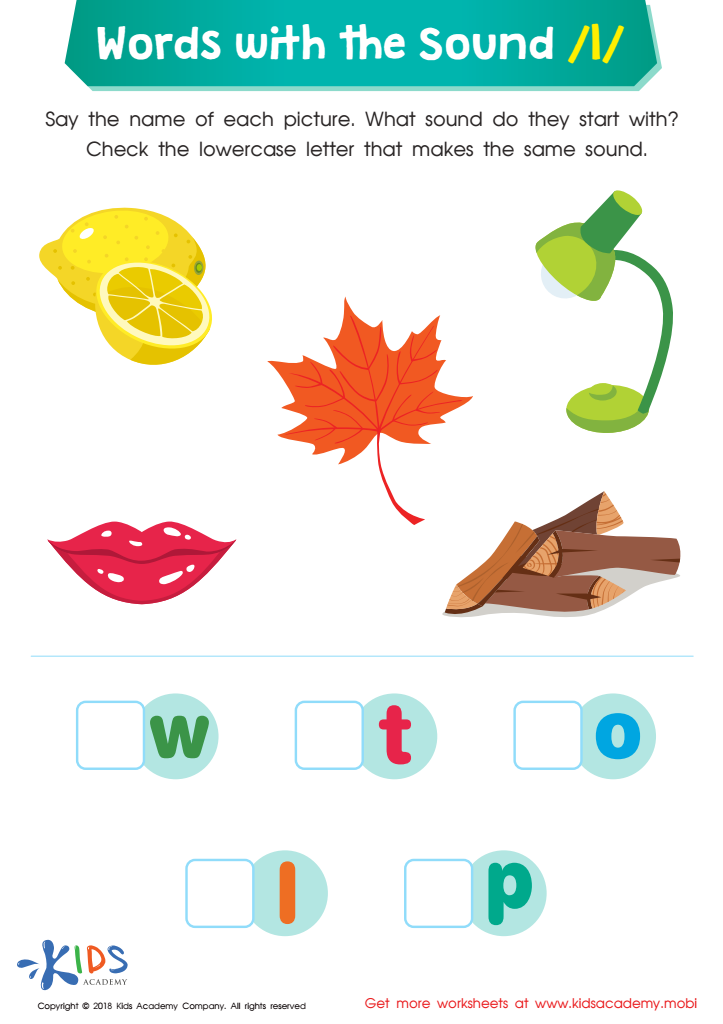
Words with Sound L Reading Worksheet
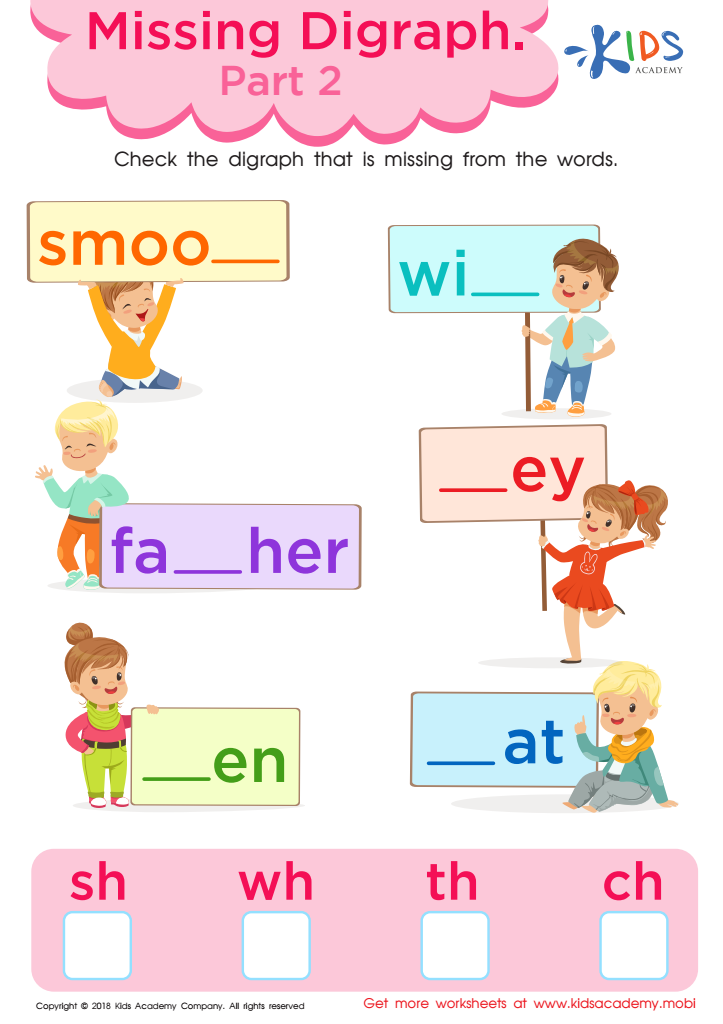
Missing Digraph: Part 2 Worksheet
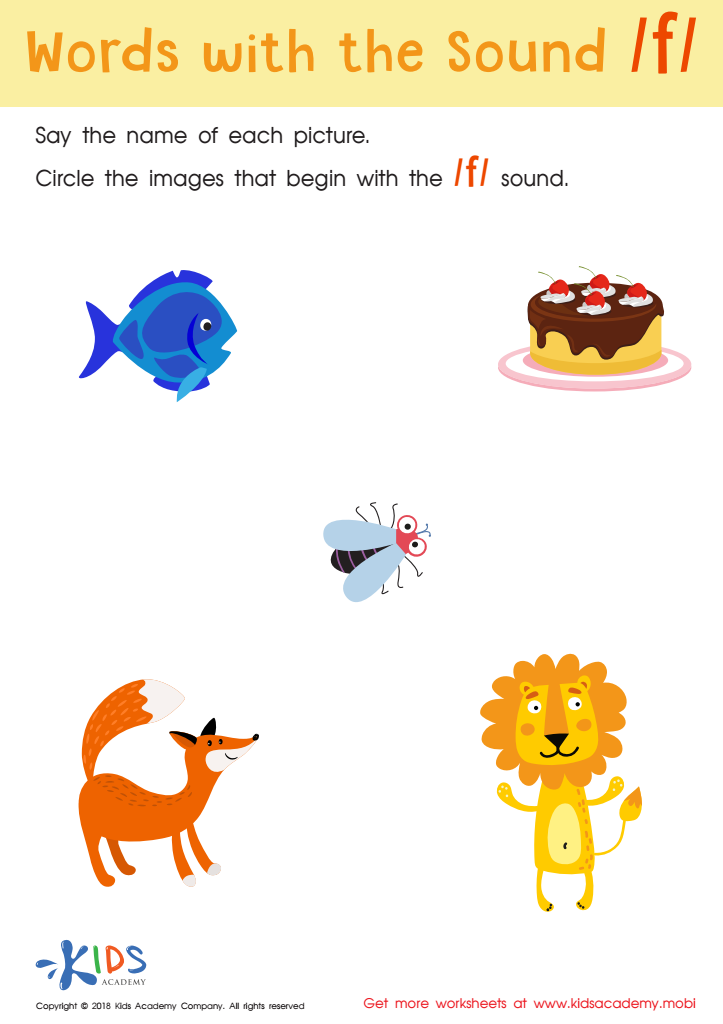
Words with sound f Reading Worksheet



Expanding vocabulary and understanding consonants for children ages 5-6 is crucial for their early literacy development. At this age, children are in kindergarten or first grade, where foundational language skills are being established. A strong vocabulary enhances their ability to understand and communicate effectively, which is vital for their overall academic success and social interactions.
Vocabulary expansion enables children to better grasp the meanings of words they encounter in stories, instructions, and everyday conversation. This understanding enhances their comprehension skills, making it easier for them to follow lessons and participate in classroom activities. It also fosters a love for reading and learning, as children with a rich vocabulary are more likely to enjoy books and become lifelong readers.
Consonants play a key role in phonics, the method of teaching reading based on sound recognition. By recognizing and understanding consonants, children can decode new words more easily. This decoding skill is essential for reading fluency, which contributes to a child’s ability to read smoothly and with understanding. Moreover, proficiency in consonants aids in correct spelling and proper pronunciation, further strengthening communication skills.
Therefore, parents and teachers should prioritize vocabulary and consonant learning to support children's cognitive growth, boost their confidence, and lay a solid foundation for future educational achievements.







