
Lowercase letter writing Alphabet Worksheets for Ages 5-6
3 filtered results
Difficulty Level
Grade
Age
-
From - To
Subject
Activity
Standards
Discover our engaging "Lowercase Letter Writing Alphabet Worksheets for Ages 5-6" designed to make learning fun and effective. These meticulously crafted worksheets help young learners master the art of writing lowercase letters through interactive exercises and guided practice. Each worksheet combines letter tracing, recognition activities, and colorful illustrations to boost essential early literacy skills. Perfect for classroom use or at-home learning, our worksheets ensure children develop fine motor skills, improve handwriting, and foster a love for reading and writing. Turn learning time into playtime with our comprehensive and child-friendly alphabet writing worksheets today!
Favorites
With answer key
Interactive
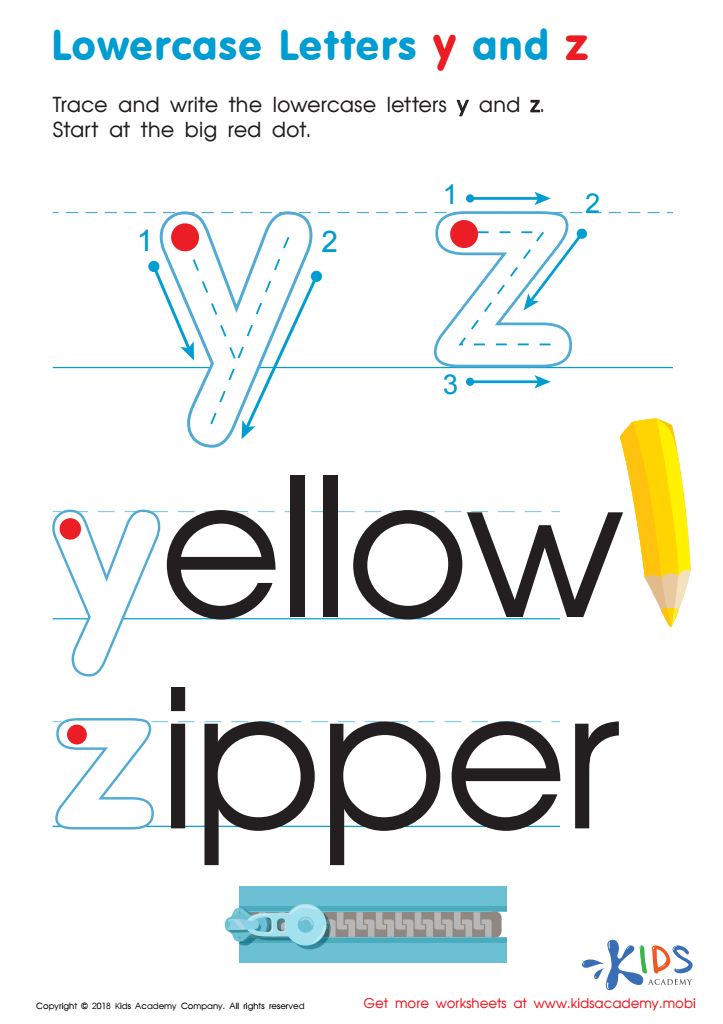
Lowercase Letters y z Worksheet
Help your child get a good start in writing and reading by tracing and writing the lowercase letters y and z. With this activity, they will learn the alphabet, which is essential for literacy success. Guide them through the worksheet and make sure they form the letters correctly. This will help them learn the basics needed to write and read fluently.
 Assign to My Students
Lowercase Letters y z Worksheet
Worksheet
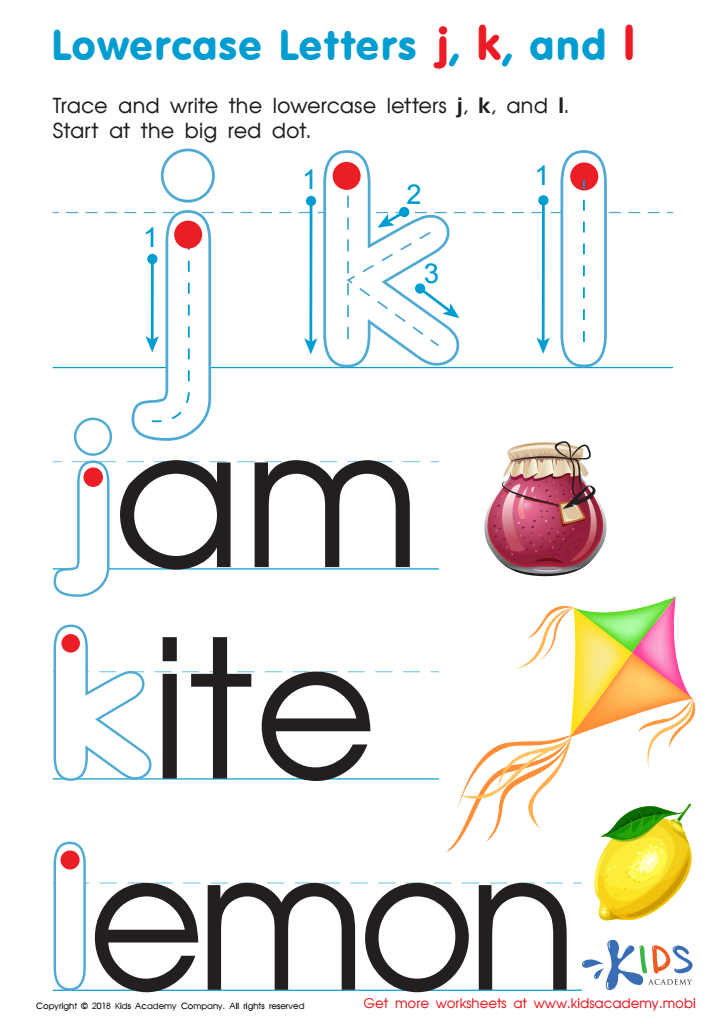
Lowercase Letters j k l Worksheet
Teach your child the difference between uppercase and lowercase letters. Have them trace and write the lowercase letters j, k, and l, starting at the red dot. Guide your child's hand to form the letters correctly.
Lowercase Letters j k l Worksheet
Worksheet
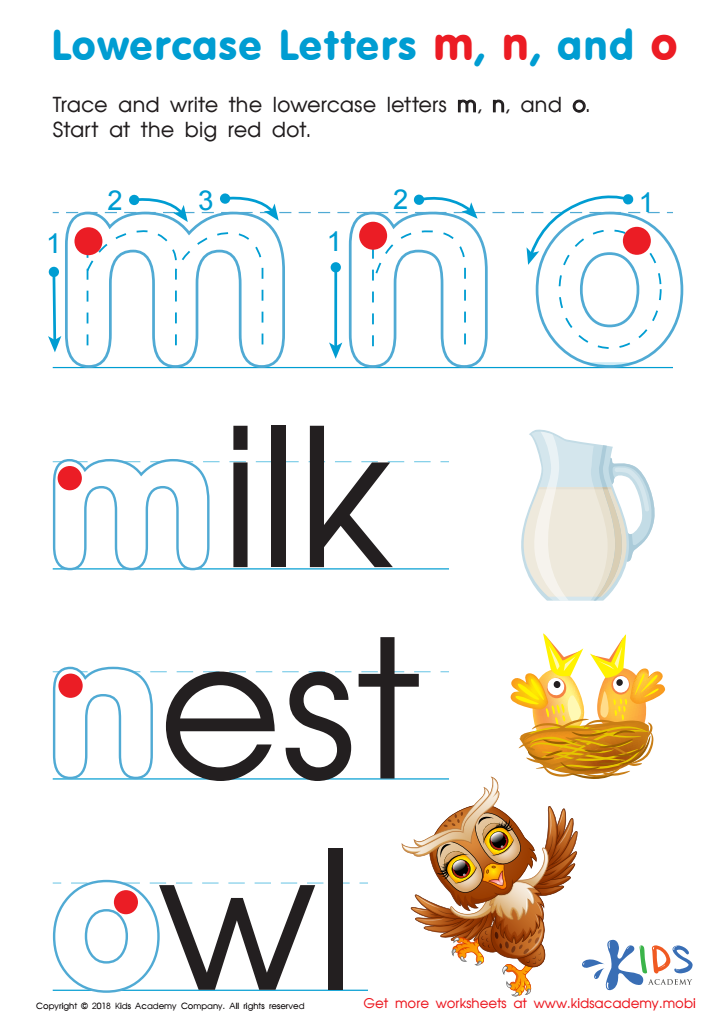
Lowercase Letters m n o Worksheet
Help your child learn the alphabet with letter tracing. Show them the difference between uppercase and lowercase letters by working through this free worksheet, tracing and writing lowercase m, n and o.
Lowercase Letters m n o Worksheet
Worksheet
Join Kids Academy for Free
Who is primarily going to use this learning content?






Early childhood is a critical period for language and literacy development. For children aged 5-6, mastering lowercase letter writing plays a significant role in building foundational skills for reading, writing, and overall communication. At this age, children typically begin to transition from understanding the basic structures of individual letters to combining them into words and sentences. Lowercase letters are more prevalent in text, so familiarity with them is essential for fluent reading and comprehension.
Learning to write lowercase letters helps children develop fine motor skills and eye-hand coordination. These skills are crucial not only for writing but also for other daily tasks like buttoning a shirt, tying shoelaces, and using utensils. Writing practice enhances muscle memory, making it easier for children to write effortlessly and quickly as they grow.
Furthermore, engaging with lowercase letters helps children recognize letter shapes and their distinctions, minimizing confusion between similar letters such as 'b' and 'd' or 'p' and 'q'. This understanding supports accurate reading and avoids common early reading mistakes.
Teachers and parents are key supporters in this learning process. By ensuring that children practice lowercase letter writing, adults provide the tools needed for successful academic progression, fostering a lifelong love for reading and writing. Early mastery also boosts confidence, encouraging children to tackle more complex literacy challenges with enthusiasm.







