Phonetics understanding Alphabet Worksheets for Ages 5-6
3 filtered results
-
From - To
Unlock the magic of early reading with our Phonetics Understanding Alphabet Worksheets designed for ages 5-6! These fun, educational printable sheets are perfect for helping young learners grasp the relationship between letters and their sounds. As children engage with exciting activities like tracing letters, matching photos and sounds, and practicing pronunciation, they build a strong foundation in phonics. These worksheets support reading readiness and boost confidence in burgeoning literacy skills. Ideal for parents and teachers, our engaging resources make learning the alphabet an enjoyable adventure for kids. Join us now and watch your child's phonetic understanding blossom!
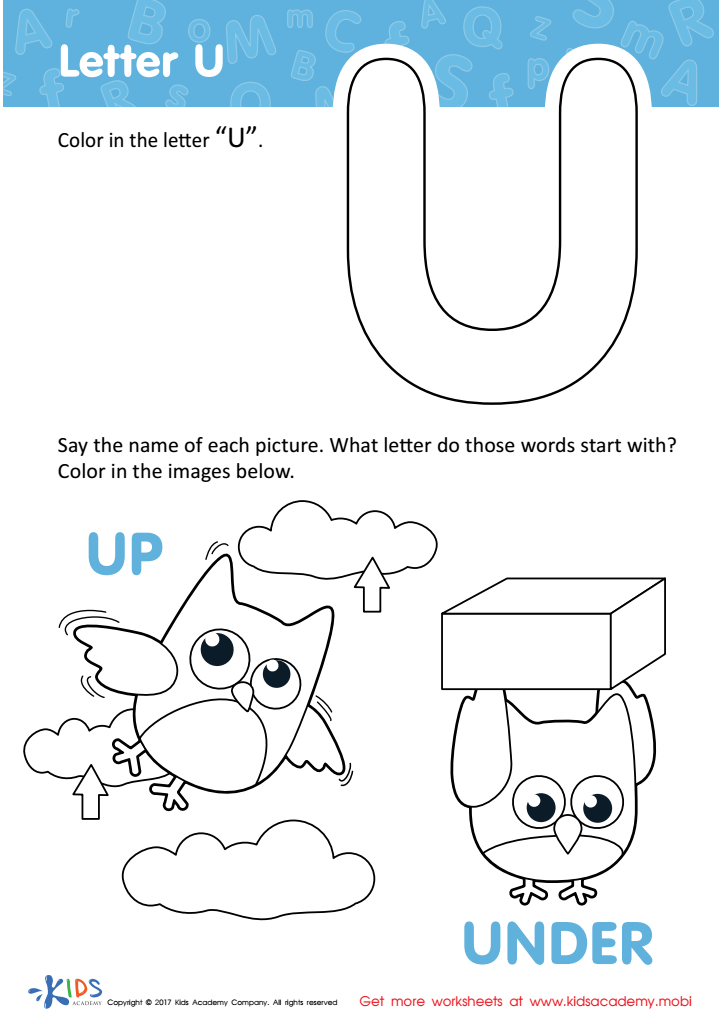
Letter U Coloring Sheet
 Assign to My Students
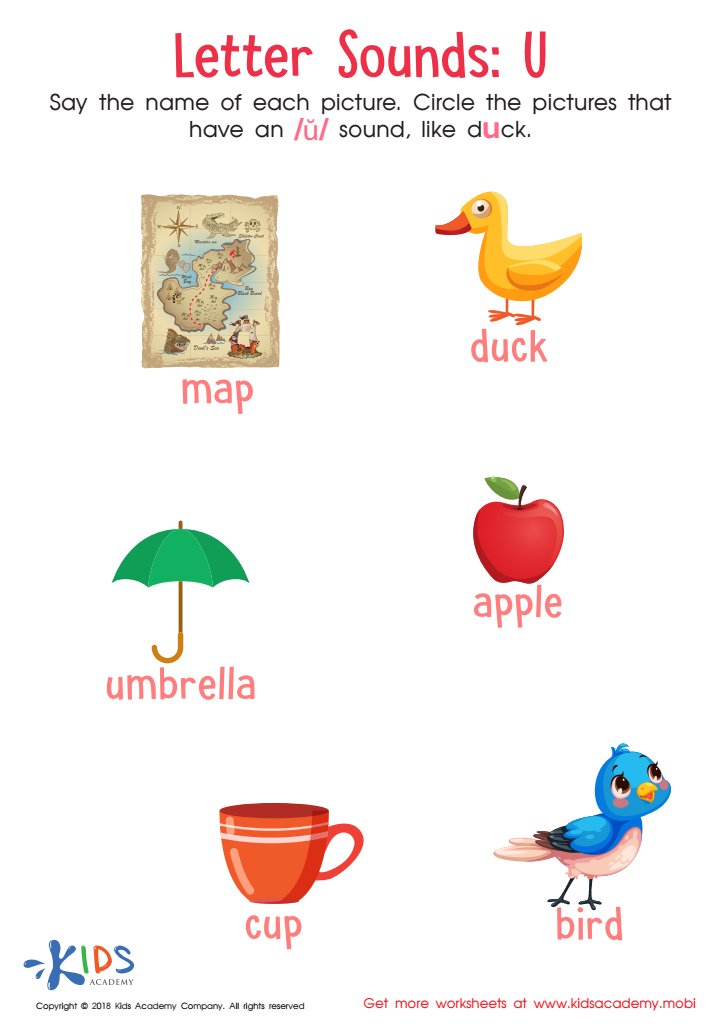
Letter U Sounds Worksheet
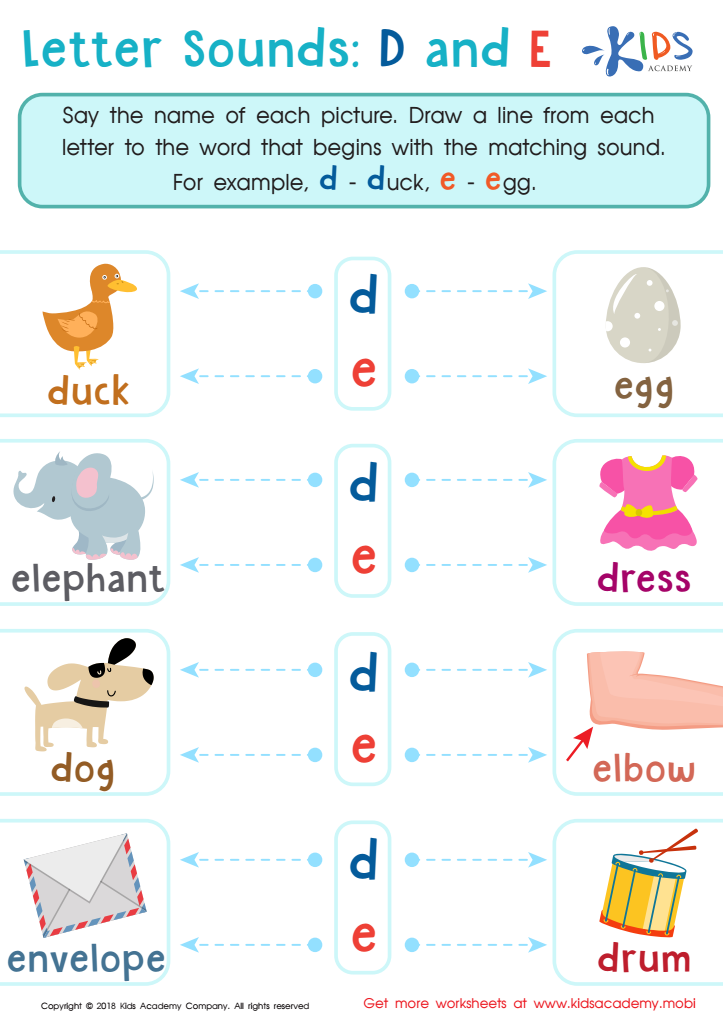
Letter D and E Sounds Worksheet






Understanding phonetics is crucial for young learners between the ages of 5-6 as it lays the foundation for essential reading and writing skills. Phonetics, the study of sounds, helps children connect letters with their corresponding sounds, enabling them to decode words more effectively. At this formative age, their brains are highly receptive to learning new sounds, making it the ideal time to introduce phonetic principles.
Parents and teachers should care about phonetic education because it promotes literacy development. When children understand how letters and sounds intertwine to form words, they become more confident readers and writers. Phonetic awareness also aids in the recognition of spelling patterns and pronunciation, enhancing overall language comprehension.
Moreover, early phonetic education supports cognitive development by improving memory and attention. As children learn to distinguish between different sounds, they develop sharper listening skills and phonological awareness, critical components for grasping more complex linguistic structures in future learning stages.
Phonetics instruction can be engaging and fun, using songs, games, and activities tailored to young learners’ developmental stages. These interactive approaches keep children motivated and make learning feel less like a chore. In summary, a strong understanding of phonetics at an early age equips children with the tools they need for successful communication and academic performance.







