Visual discrimination Alphabet Worksheets for Ages 5-6
5 filtered results
-
From - To
Welcome to our "Visual Discrimination Alphabet Worksheets" designed specifically for children aged 5-6! These engaging worksheets help young learners strengthen their visual discrimination skills by focusing on letter recognition and differentiation. Through fun activities and practice exercises, children will improve their ability to identify similar-looking letters, enhancing their reading and writing abilities. Tailored to spark curiosity and keep kids entertained, our worksheets foster an enjoyable learning environment. Perfect for home or classroom use, these resources provide essential early literacy skills that boost confidence and prepare children for future educational success. Start building a strong foundation for your child today!
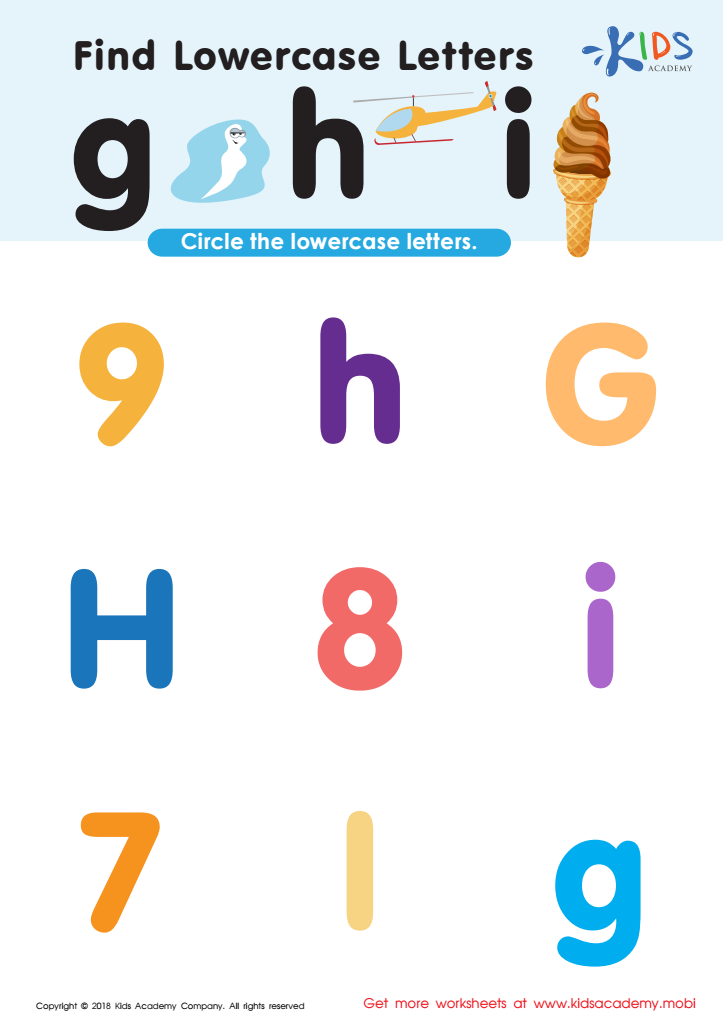
Find Lowercase Letters g h i Worksheet
 Assign to My Students
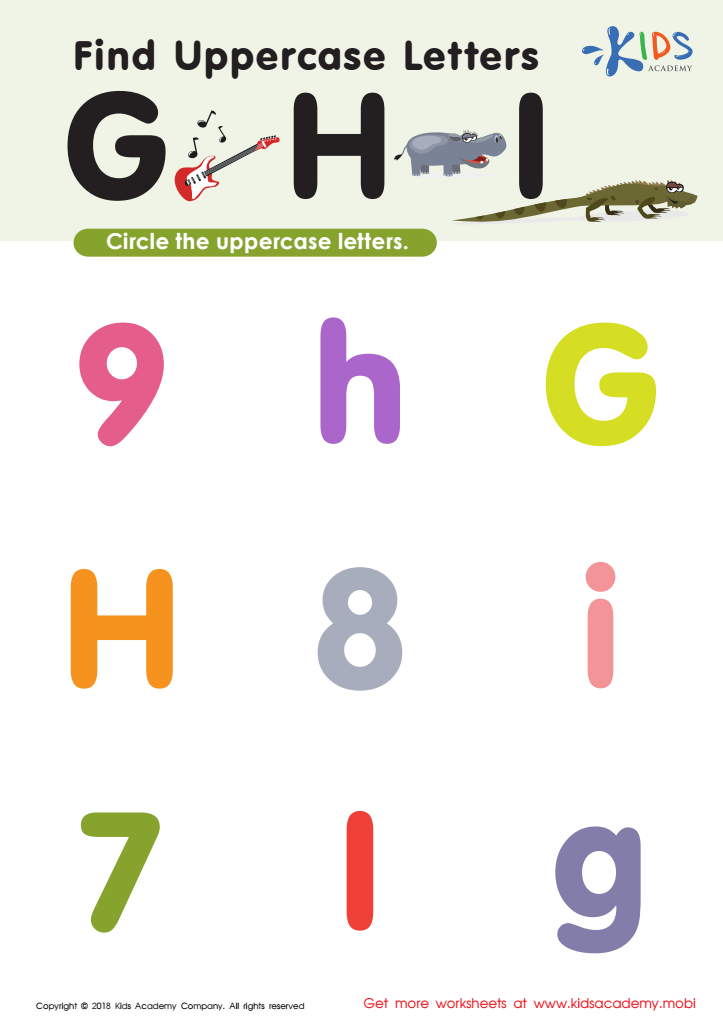
Find Uppercase Letters G, H, and I Worksheet
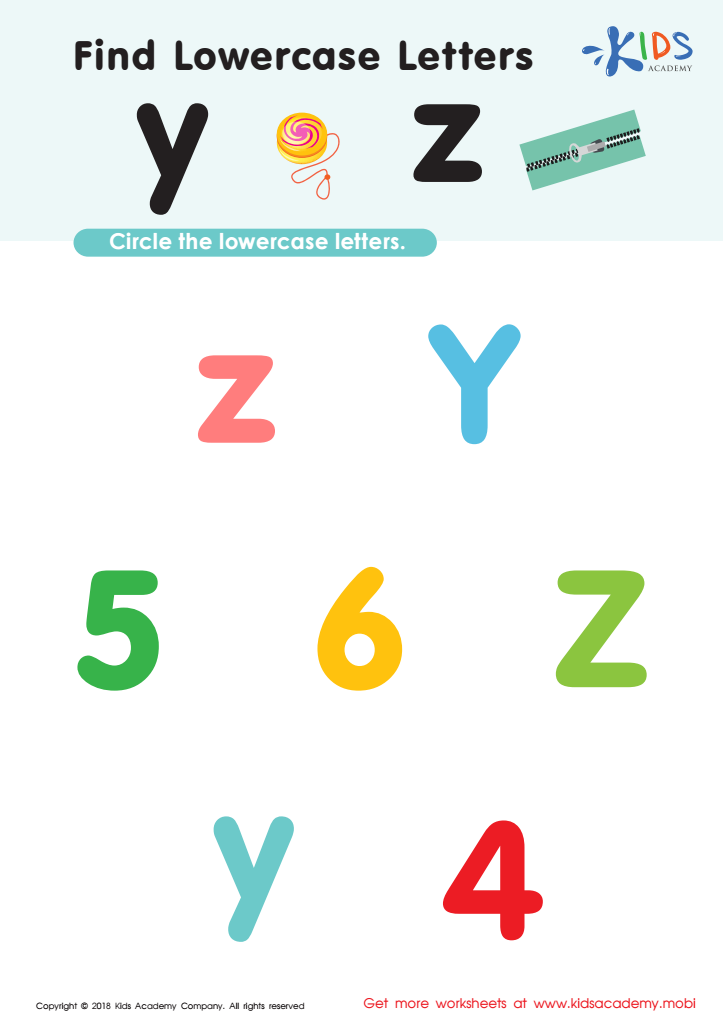
Find Lowercase Letters y z Worksheet
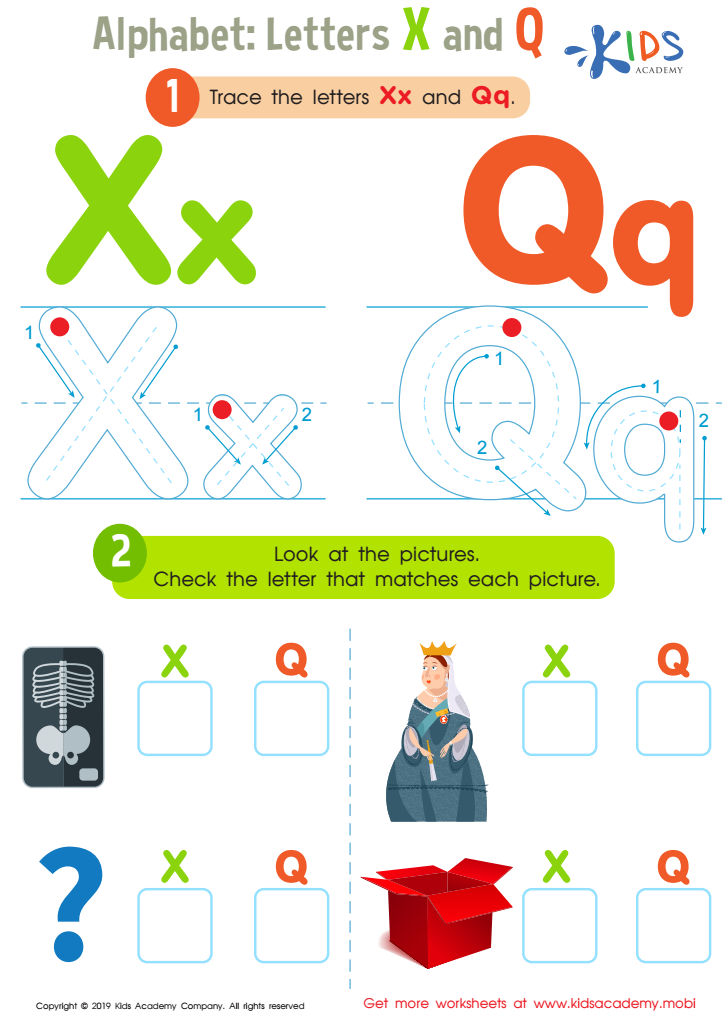
Letters X and Q Tracing Worksheet
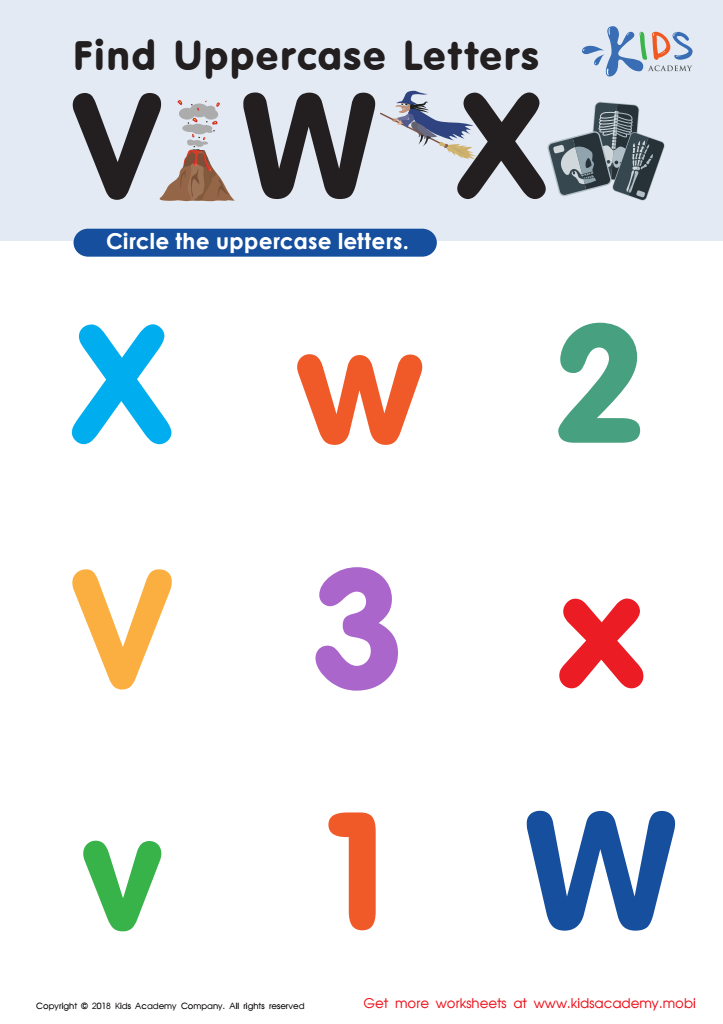
Find Uppercase Letters V, W, X Worksheet


.jpg)




Visual discrimination is an essential skill for young learners, particularly those aged 5-6, as it lays the foundation for reading and writing. This skill involves the ability to distinguish between similar shapes, letters, and objects, which is crucial for recognizing the alphabet and understanding their differences, such as distinguishing between "b" and "d" or "p" and "q."
Parents and teachers should recognize the importance of enhanced visual discrimination as it directly impacts a child's literacy development. Developing strong visual discrimination skills helps children in letter recognition, sound association, and eventually, decoding words. This proficiency aids in building confidence as students transition from recognizing letters to forming words and sentences.
Beyond academics, cultivating visual discrimination aids children in becoming more observant and detail-oriented individuals. This skill encourages critical thinking and problem-solving abilities, which are critical not just in school, but in everyday life.
By prioritizing visual discrimination activities in both home and classroom settings, parents and teachers can create engaging and fun learning experiences. This investment in early literacy skills will significantly benefit children's academic journey and set the stage for lifelong learning and success.







