Letter recognition Letter M Worksheets for Ages 5-6
3 filtered results
-
From - To
Introduce your little learners to the world of letters with our engaging "Letter M Recognition Worksheets" designed for ages 5-6! These printable worksheets from Kids Academy are perfect for helping children recognize and write the letter M in a fun and educational way. Each activity focuses on enhancing motor skills, and boosting letter recognition through tracing, matching, and coloring exercises. Ideal for both classroom and home use, our worksheets make learning the alphabet an enjoyable experience. Nurture your child's early literacy skills and set a strong foundation for future reading success. Download now and watch them master the letter M!
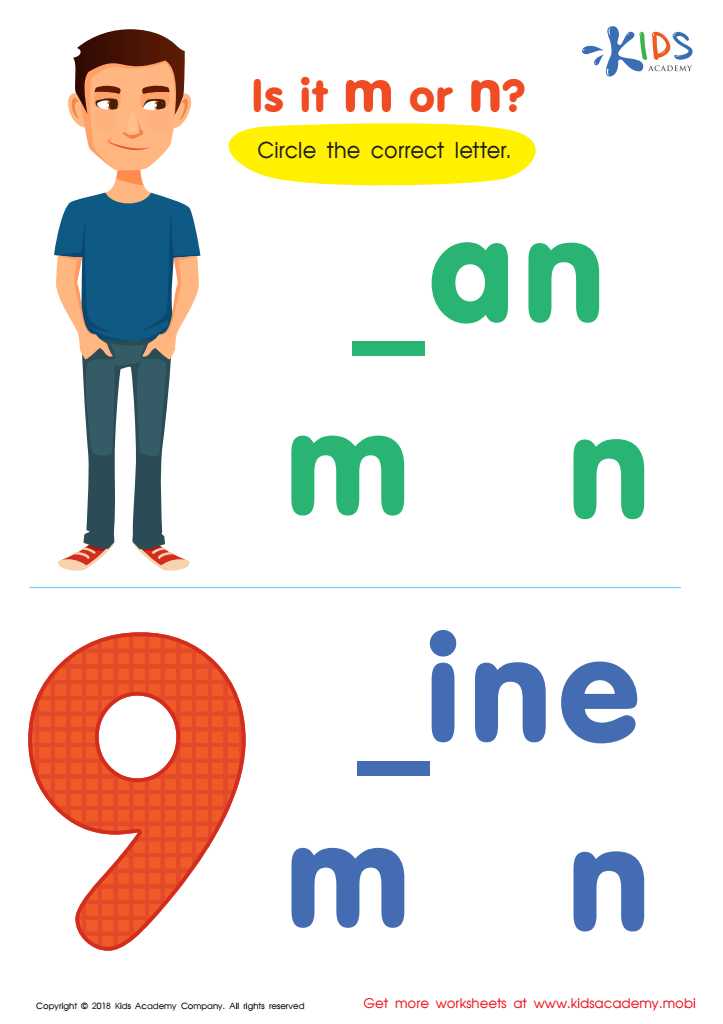
Is It m or n? Worksheet
 Assign to My Students
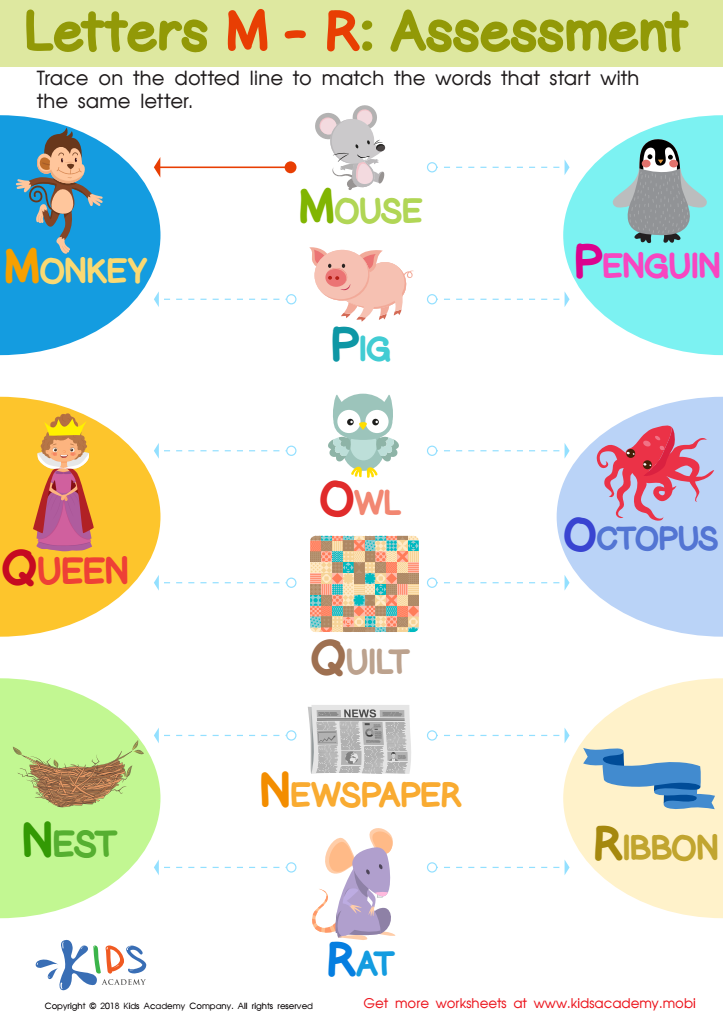
Letters M-R Tracing Worksheet
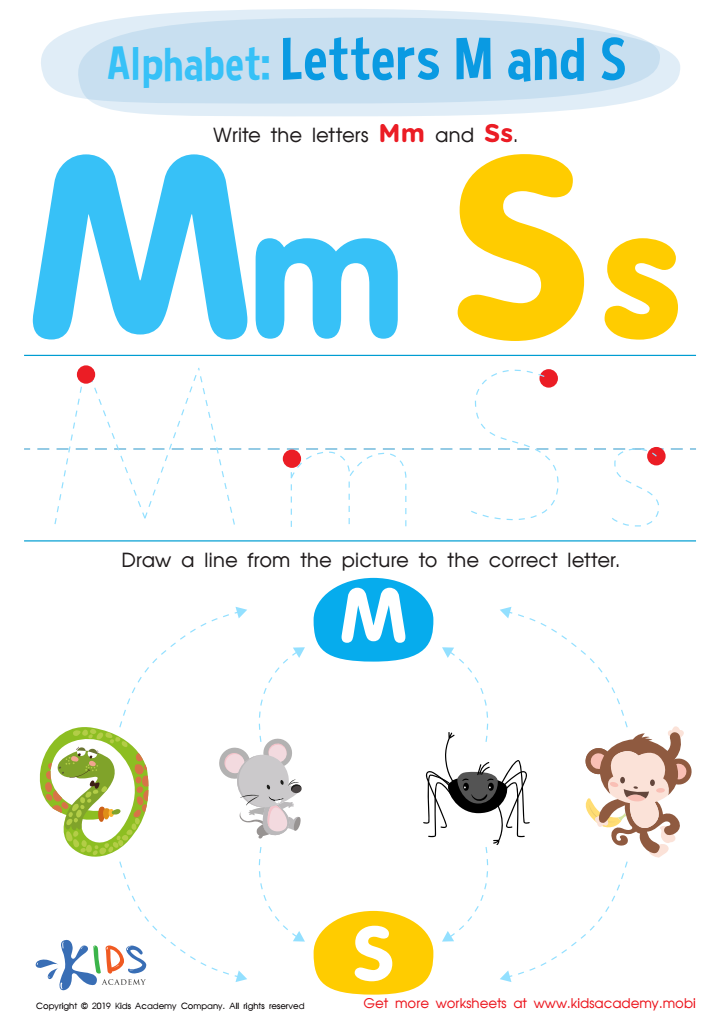
Letters M and S Tracing Worksheet






Letter recognition, including the letter M, is foundational for young learners, particularly for children ages 5-6. At this stage, children are typically in kindergarten or beginning first grade, a critical period for developing pre-reading skills which directly impact future literacy.
Recognizing the letter M is integral for several reasons. Firstly, letter recognition is a key predictor of reading success. Understanding the letter M helps children make connections with sounds, which is essential for phonemic awareness. Phonemic awareness is the ability to hear, identify, and manipulate individual sounds in words, and it lays the groundwork for decoding skills necessary for reading.
Secondly, recognizing the letter M enables children to relate it to familiar words and names they may encounter frequently, such as "Mom," "Milk," or "Moon." This association helps boost their vocabulary and comprehension skills.
Thirdly, proficiency in letter recognition promotes confidence and a positive attitude towards learning. When children can swiftly identify letters like M, they experience a sense of achievement, encouraging continued engagement and interest in literacy activities.
For parents and teachers, supporting letter M recognition involves interactive activities such as using flashcards, engaging in alphabet songs, or reading books that emphasize the letter M. Investing time in these exercises ensures a strong literacy foundation, setting children up for long-term academic success.