Letter Tracing Practice Letter Recognition Worksheets for Ages 5-6
5 filtered results
-
From - To
Our "Letter Tracing Practice Letter Recognition Worksheets for Ages 5-6" are designed to offer young learners engaging and effective handwriting practice. Through our fun, printable worksheets, children will enhance both their letter recognition and fine motor skills. Specifically tailored for kids ages 5-6, these sheets combine creative exercises with proven educational techniques. Easy-to-follow guides assist children in mastering each letter of the alphabet, helping them build a solid foundation for reading and writing. Perfect for use at home or in the classroom, our worksheets make learning enjoyable and productive for early learners.
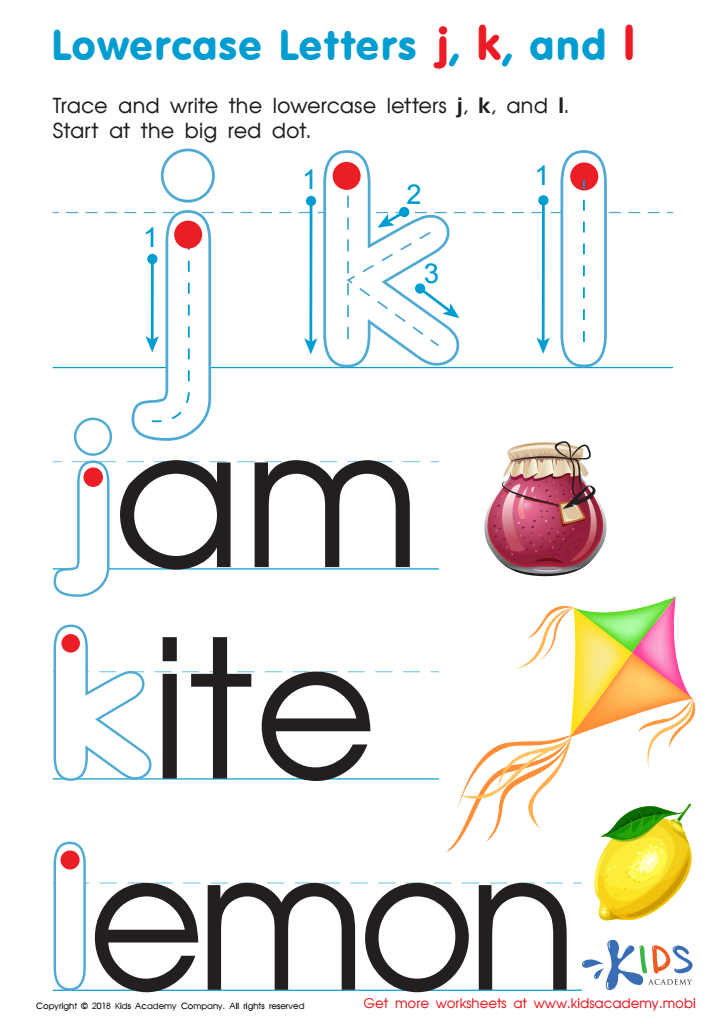
Lowercase Letters j k l Worksheet
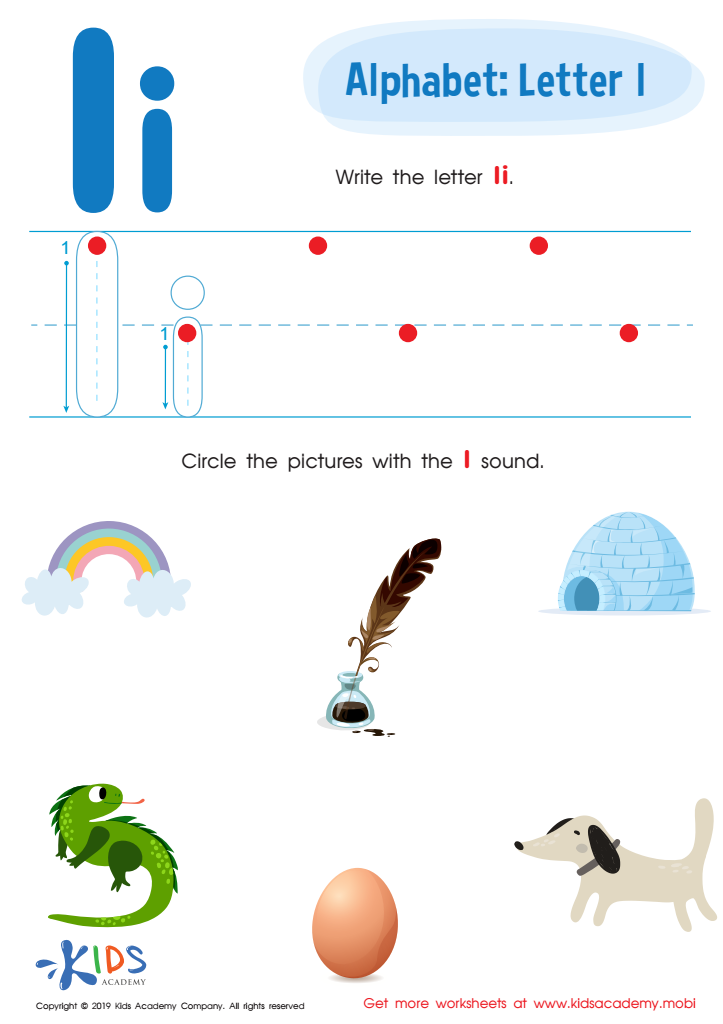
Letter I Tracing Worksheet
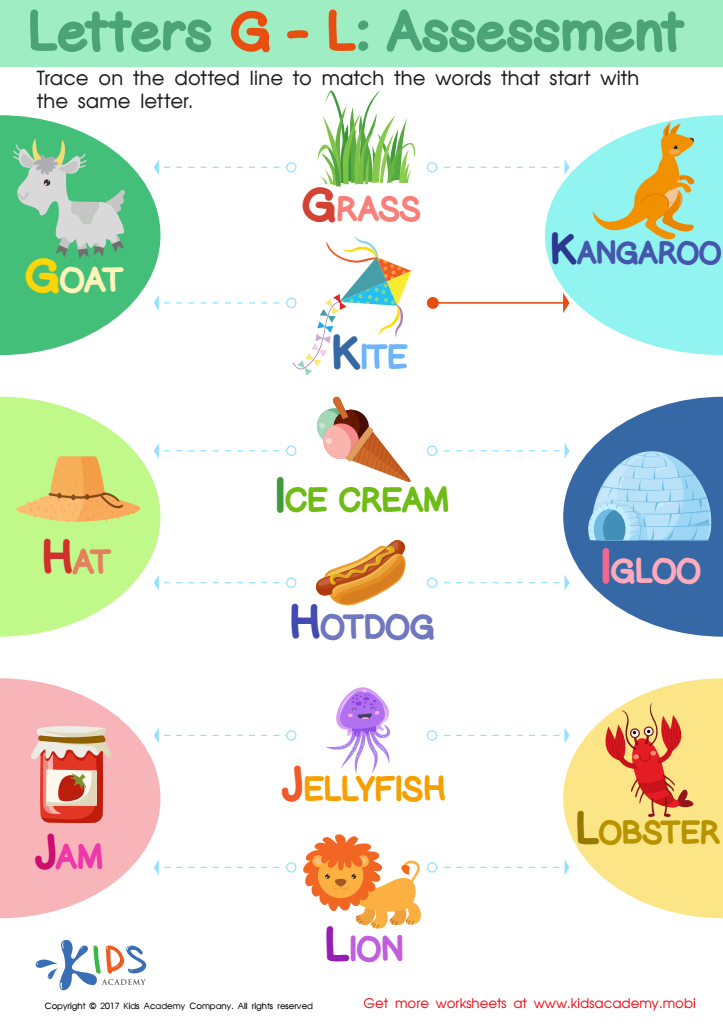
Letters G-L Worksheet
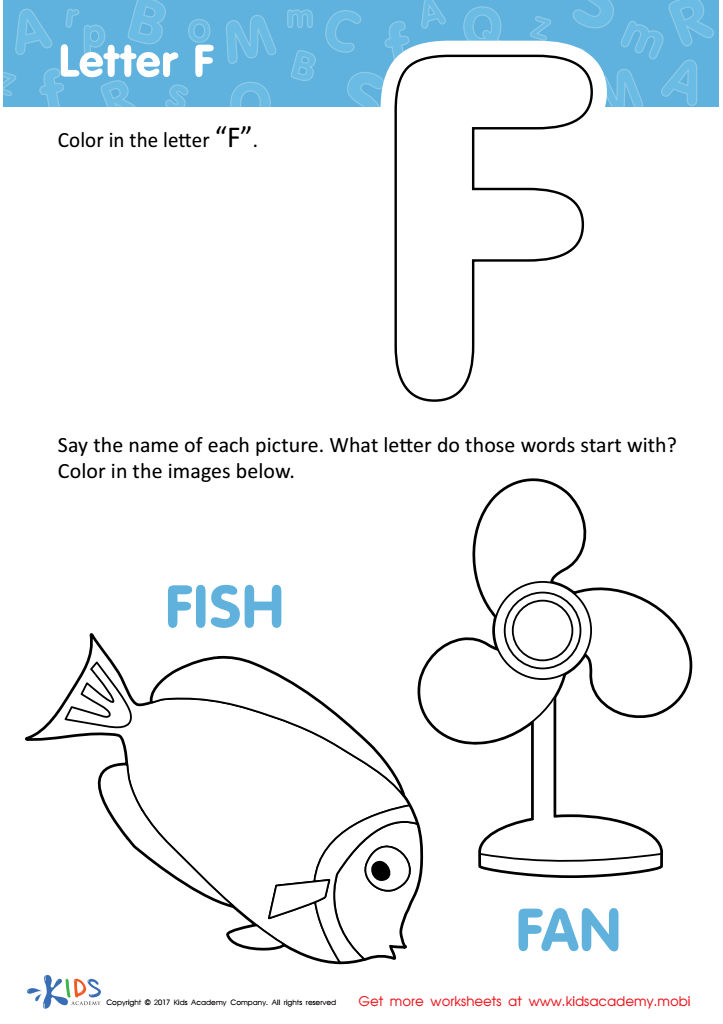
Letter F Coloring Sheet
 Assign to My Students
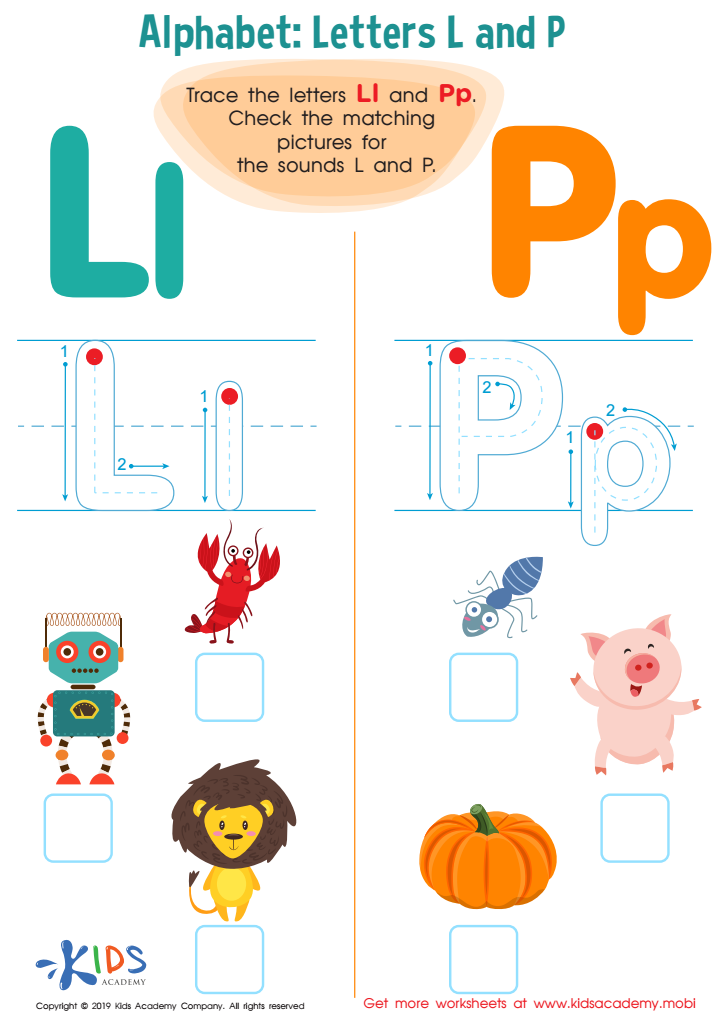
Letter L and P Tracing Worksheet








Letter tracing practice and letter recognition are foundational skills crucial for children ages 5-6. At this developmental stage, children are transitioning from recognizing letters individually to understanding their function within words. Letter tracing engages fine motor skills as children use pencils or other writing tools to follow the shapes of letters. This precise hand movement lays the groundwork for handwriting proficiency, improving their ability to write legibly and with proper form.
Furthermore, the repetition involved in letter tracing helps solidify the visual aspects of each letter, establishing familiarity and aiding in quicker recognition. When children learn to differentiate between letters, they build the essential pre-reading skills required to understand how letters form words and sentences. This familiarity also influences their confidence and enthusiasm towards reading and writing, as success in foundational tasks sets them up for further academic achievements.
For teachers and parents, investing time in letter tracing practice means investing in a child's overall literacy. Letter recognition directly contributes to phonemic awareness, an ability to link sounds to letters, and ultimately reading fluency. This structured practice not only enhances manual dexterity but also encourages cognitive development, setting the stage for a lifelong love and proficiency in reading and writing.







