
Spelling practice Letter Recognition Worksheets for Ages 5-6
4 filtered results
Difficulty Level
Grade
Age
-
From - To
Subject
Activity
Standards
Enhance your child’s literacy skills with our captivating Spelling Practice Letter Recognition Worksheets for Ages 5-6. These engaging and educational worksheets from Kids Academy help young learners master the alphabet, improve letter recognition, and build fundamental spelling skills. Perfect for preschool and kindergarten students, each worksheet is thoughtfully designed to combine fun and learning through various activities, such as tracing, matching, and identifying letters. Boost your child’s confidence and prepare them for future reading success with our expertly crafted worksheets. Try them today and watch your child’s reading and writing skills soar!
Favorites
With answer key
Interactive
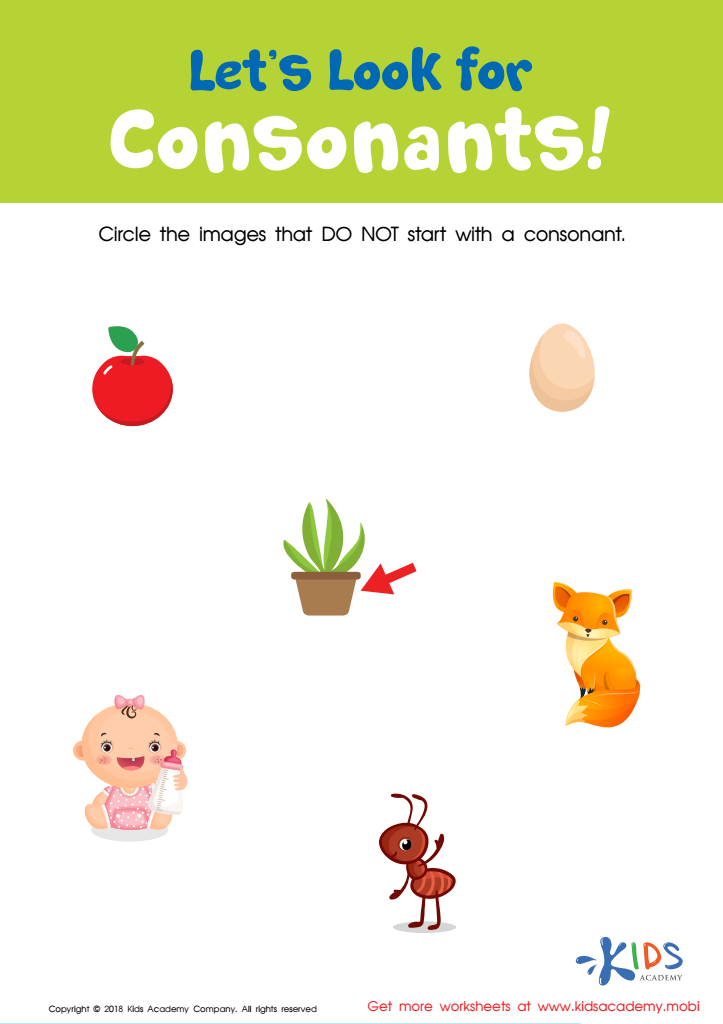
Let's Look for Consonants Worksheet
Help kids learn consonants and words that start with them. Ask them to recite the alphabet, then explain consonants are all letters but the 5 vowels. Use the worksheet to ask them to circle items without a consonant. Emphasize that's 21 consonants.
 Assign to My Students
Let's Look for Consonants Worksheet
Worksheet
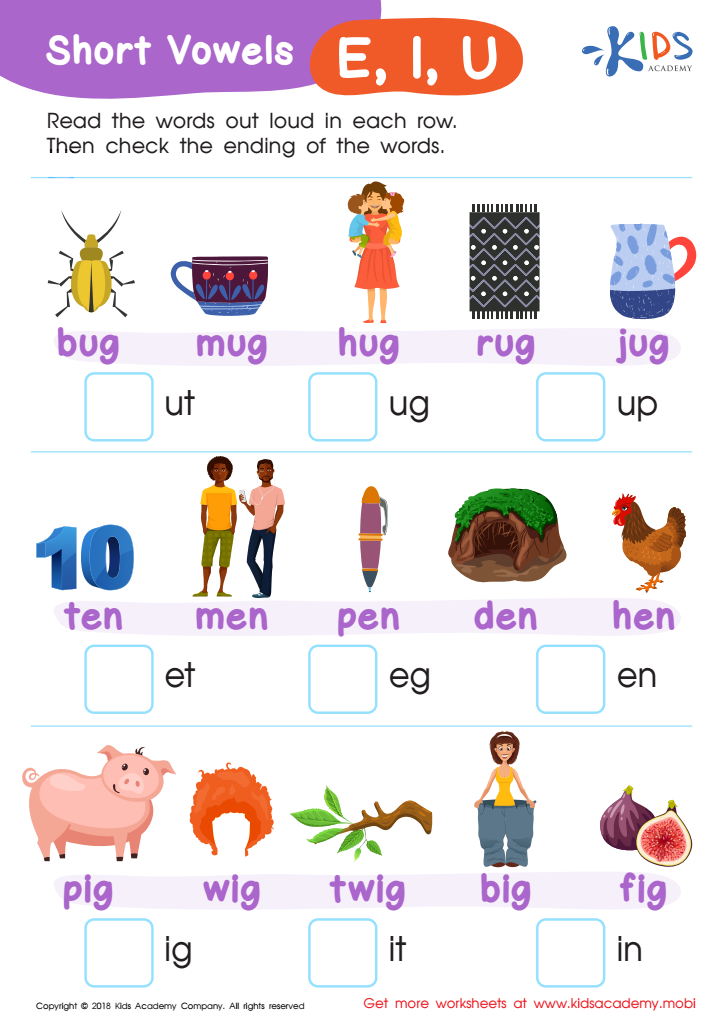
Short Vowels /e/, /i/, and /u/ Worksheet
Your emergent reader can have fun while practicing their short vowel sounds with this free, brightly colored worksheet. They'll identify one-syllable words by their pictures, then match the correct ending for each. They'll gain an understanding of how short vowel sounds vary in closed syllables with different endings, without even realizing it!
Short Vowels /e/, /i/, and /u/ Worksheet
Worksheet
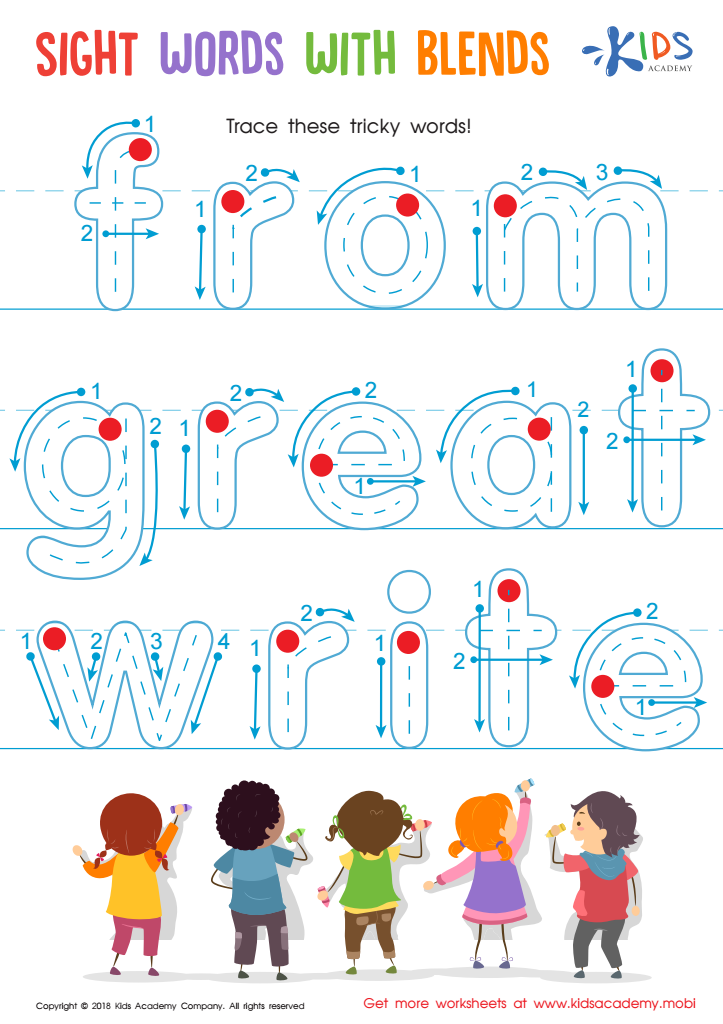
Sight Words with Blends Worksheet
This free PDF lets your children trace and write sight words with tricky blends. The guide numbers help them start from the top, building fine motor skills and enhancing sight word vocab. It's a great way to give your kids a solid foundation for reading!
Sight Words with Blends Worksheet
Worksheet
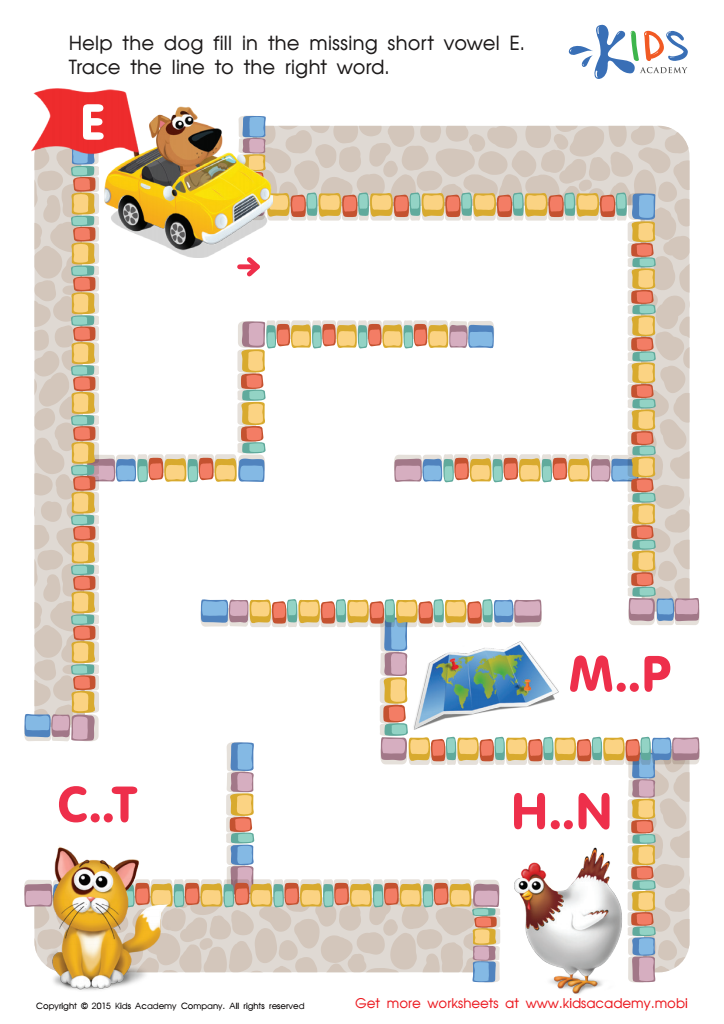
Short Vowel Sound E Worksheet
This free printable phonics worksheet helps kids learn the short vowel sound E. Kids need to help the dog complete the word “hen” by finding their way through a maze. It teaches kids to see the connection between letters and sounds and also strengthens their writing and spelling skills. Fun and educational, this phonics worksheet is great for kids. Want more? Check out here.
Short Vowel Sound E Worksheet
Worksheet
Join Kids Academy for Free
Who is primarily going to use this learning content?








Parents and teachers should care about spelling practice and letter recognition for children aged 5-6 because these foundational skills are crucial for their overall literacy development. At this age, children's brains are highly receptive to learning, and they are at the beginning stages of reading and writing. Understanding letters and their corresponding sounds helps kids decode words, an essential step toward fluent reading.
Spelling practice reinforces this by helping children understand word structures, develop vocabulary, and improve handwriting. When children frequently engage with letters and words, they become more comfortable and confident in their language abilities. Importantly, this practice enhances phonemic awareness, meaning children recognize and manipulate sounds in words, a key predictor of later reading success.
Additionally, early competence in spelling and letter recognition supports academic growth beyond literacy. It boosts cognitive skills such as memory, attention, and problem-solving. Socially, children who are proficient in these areas tend to participate more in classroom activities and communicate more effectively with peers and teachers, fostering better relationships and a positive self-concept.
In summary, caring about spelling practice and letter recognition for young children sets the stage for lifelong learning, ensuring they have the essential skills to navigate more advanced literacy tasks and excel academically and socially.







