
Word Recognition Letter Recognition Worksheets for Ages 5-6
3 filtered results
Difficulty Level
Grade
Age
-
From - To
Subject
Activity
Standards
Enhance your child's literacy skills with our engaging Word Recognition and Letter Recognition Worksheets designed specifically for ages 5-6. These vibrant, interactive worksheets provide an effective way to help young learners identify letters and words through fun activities. Our carefully crafted exercises promote essential skills such as phonemic awareness and vocabulary development, fostering a love for reading from an early age. With an array of activities ranging from matching letters to interactive word searches, children will enjoy learning in a playful environment. Download and print these worksheets today to support your child’s early reading journey and build a strong foundation for future learning!
Favorites
With answer key
Interactive
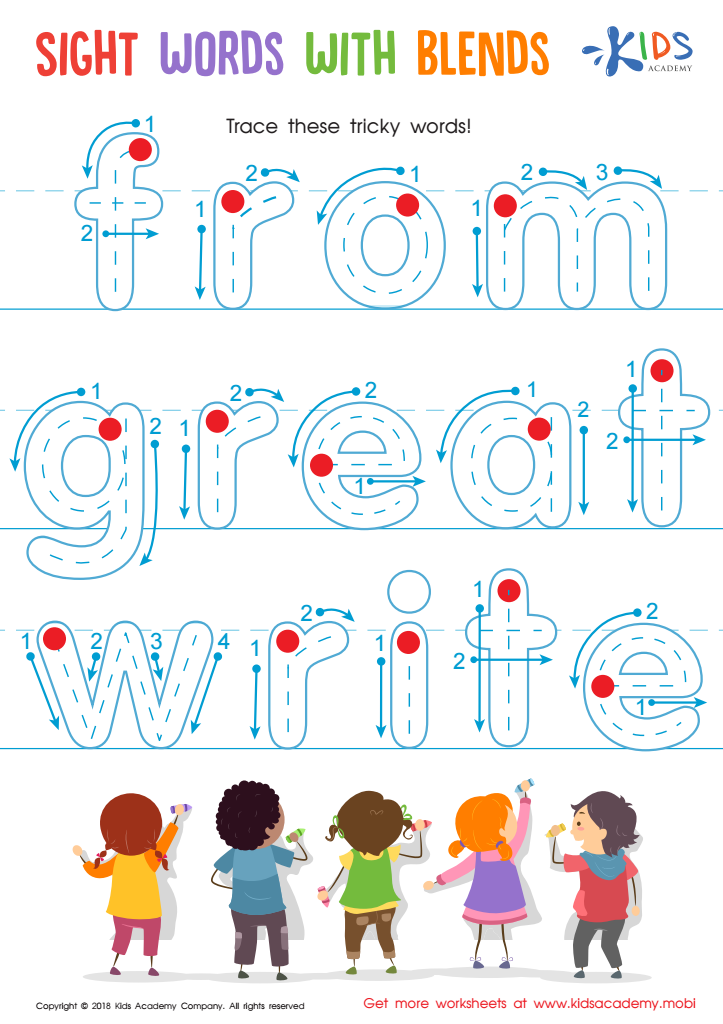
Sight Words with Blends Worksheet
This free PDF lets your children trace and write sight words with tricky blends. The guide numbers help them start from the top, building fine motor skills and enhancing sight word vocab. It's a great way to give your kids a solid foundation for reading!
 Assign to My Students
Sight Words with Blends Worksheet
Worksheet
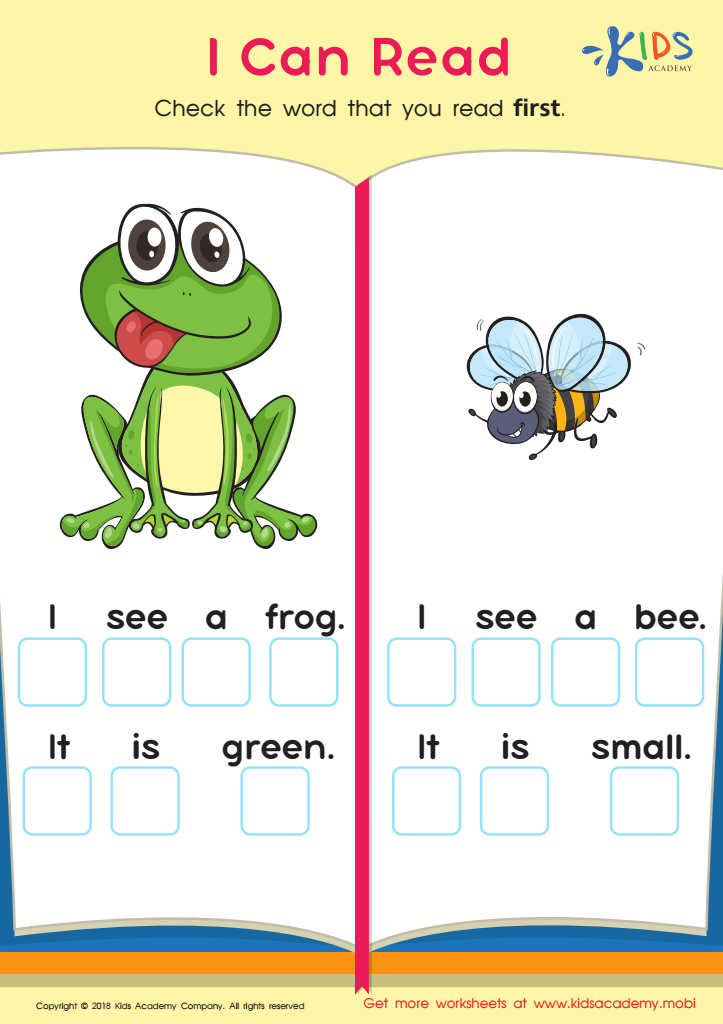
I Can Read Worksheet
Test your child's reading skills with this fun worksheet. See how well they know one-letter, two-letter, and five-letter words. Ask your little one to read the sentences and tick the word they identify first. It's a great way to track their progress and help them become more confident readers.
I Can Read Worksheet
Worksheet
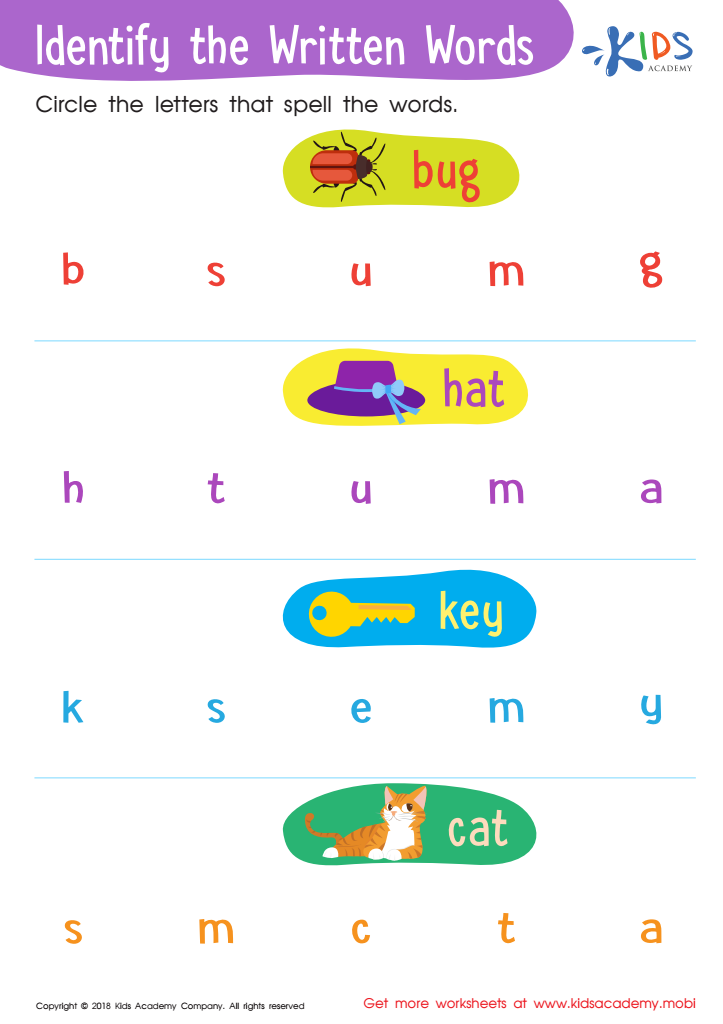
Identify the Written Words Worksheet
Have your students identify the objects on the printout, then spell the words. If they already know how to spell, this exercise should be easy. Help them circle the correct letters from the set to spell out the words. This is a great way to reinforce reading and spelling skills. Max 80 words.
Identify the Written Words Worksheet
Worksheet
Join Kids Academy for Free
Who is primarily going to use this learning content?








Word recognition and letter recognition are fundamental skills that lay the foundation for literacy and effective communication in early childhood education. For children ages 5-6, mastering these skills is crucial for several reasons.
First, letter recognition allows young learners to identify and understand the alphabet, opening the door to phonemic awareness, which is essential for reading. When children can recognize letters, they can connect sounds to letters, easing the transition from decoding to reading fluency.
Word recognition takes this process a step further, enabling children to quickly identify familiar words without needing to sound them out each time. This automaticity boosts their confidence and motivation, making reading a more enjoyable experience rather than a daunting task.
Moreover, these skills significantly impact children's overall academic performance. Early literacy competence fosters better comprehension, vocabulary acquisition, and communication abilities, contributing to their success in school and beyond.
Finally, parents and teachers play a vital role in reinforcing word and letter recognition through engaging activities, games, and daily reading practice. By actively supporting these skills, they help cultivate a love for learning and literacy that can last a lifetime. Prioritizing these competencies is crucial for developing future readers and learners.







