Handwriting practice Letter U Worksheets for Ages 5-6
4 filtered results
Difficulty Level
Grade
Age
-
From - To
Subject
Activity
Standards
Enhance your child's writing skills with our Handwriting Practice Letter U Worksheets designed for ages 5-6. These engaging worksheets from Kids Academy provide a fun and effective way for young learners to practice writing the letter U, both uppercase and lowercase. Each sheet includes traceable patterns, guiding lines, and blank spaces to promote mastery of letter formation. Perfectly tailored for kindergartners, these worksheets help improve fine motor skills, pencil grip, and letter recognition, setting a solid foundation for future literacy success. Make handwriting enjoyable with our beautifully crafted, easy-to-use Letter U practice sheets!
Favorites
With answer key
Interactive
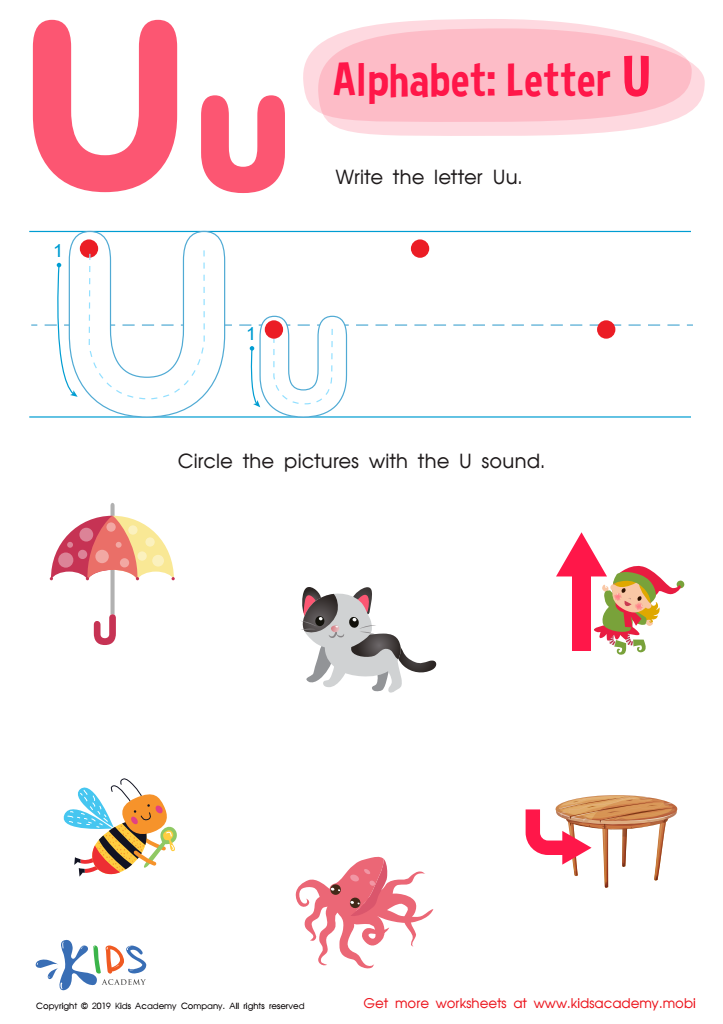
Letter U Tracing Worksheet
Your students can have fun and learn about the alphabet with this letter «U» worksheet. Pre-schoolers will trace the letter «U», circle words with the letter sound, and learn phonics while boosting their confidence. Doing these tasks will help them understand the letter more.
Letter U Tracing Worksheet
Worksheet
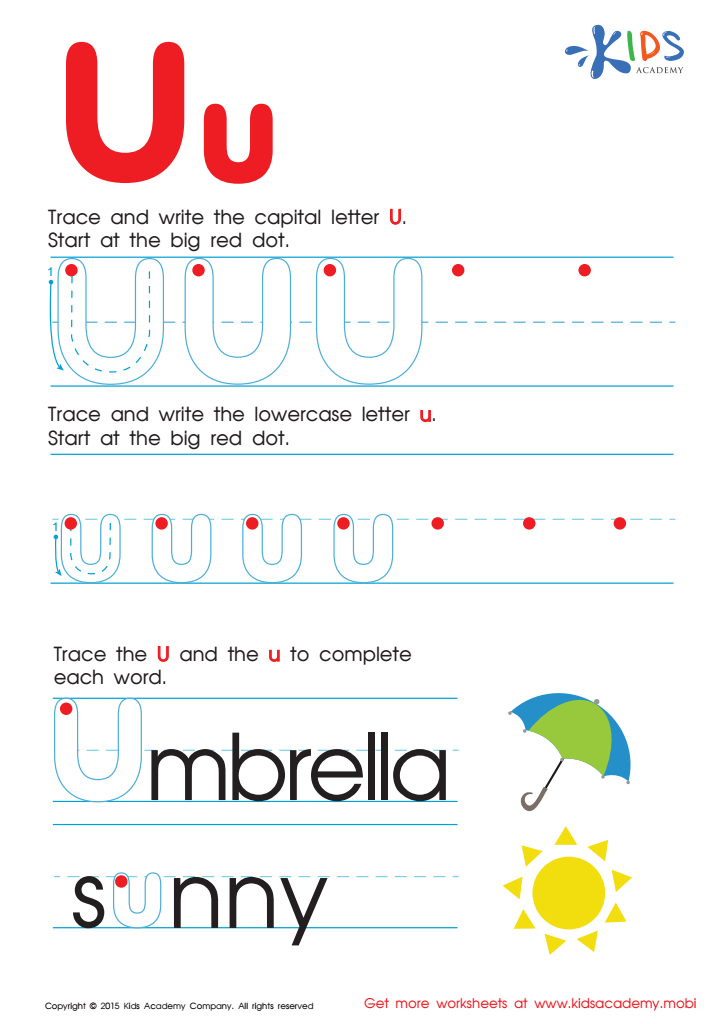
Letter U Tracing Page
Ready to trace and write the letter "U"? Use our worksheet and practice tracing both uppercase and lowercase letters. Complete the words "umbrella" and "sunny" with a capital "U". Check our full collection of alphabet printables for more activities.
Letter U Tracing Page
Worksheet
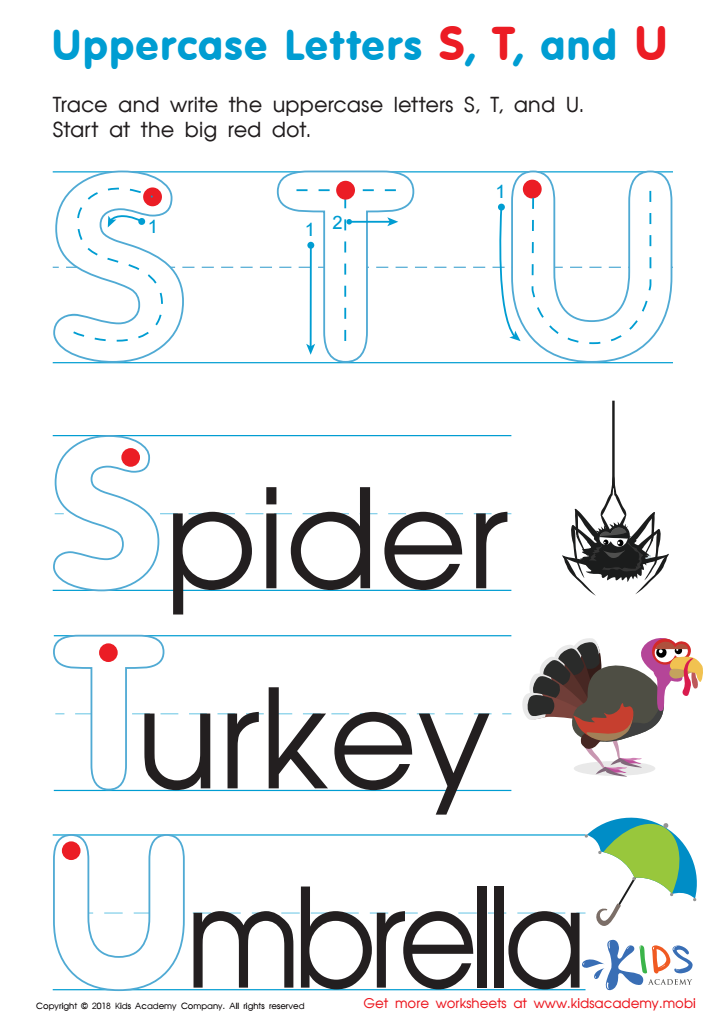
Uppercase Letters S, T, and U Worksheet
Help your kids learn to write upper-case letters with this fun tracing sheet. Start at the big red dot for each letter: S, T, and U. Show them the pictures and ask what letter each word starts with. Guide their hand and watch them learn!
Uppercase Letters S, T, and U Worksheet
Worksheet
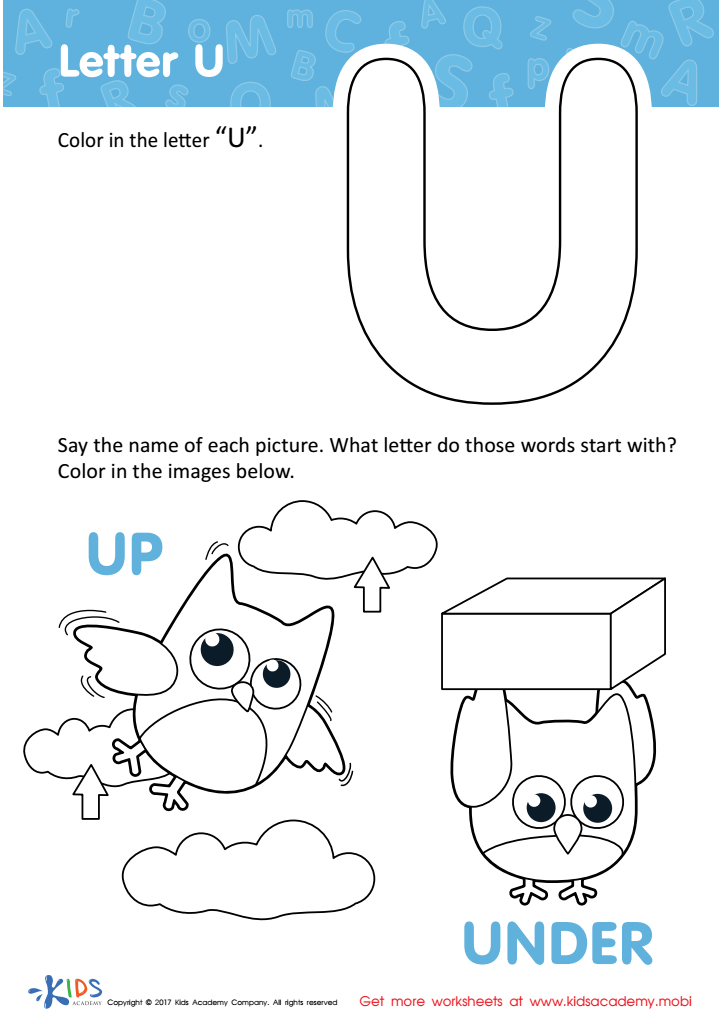
Letter U Coloring Sheet
This letter "U" coloring page helps your child learn two things at once - the letter "U" and positional words! An adorable owl character aids in understanding up and under. In a few strokes of a crayon, your child can master these concepts.
Download (PDF)
 Assign to My Students
Assign to My Students
Letter U Coloring Sheet
Worksheet
Join Kids Academy for Free
Who is primarily going to use this learning content?





Handwriting practice for the letter "U" is an essential activity for children ages 5-6, laying the groundwork for literacy and cognitive development. Firstly, handwriting enhances fine motor skills, including hand-eye coordination and muscle memory, as children learn to control pencil movements precisely. Mastering the letter "U” helps solidify these skills, which are fundamental for all writing tasks.
Additionally, learning to write the letter "U" aids in letter recognition and phonemic awareness. Recognizing and distinguishing the sounds associated with letters is critical in developing reading abilities. By practicing the letter "U," children begin to understand the connection between letters and sounds, forming the foundation of phonics.
Handwriting practice also strengthens cognitive functions like memory and concentration. When children focus on forming the letter "U," they engage in practices that improve their attention spans. This disciplined approach fosters patience and persistence.
Lastly, effective handwriting practices nurture confidence and self-esteem. As children see their progress and gain proficiency, they feel a sense of accomplishment which encourages a positive attitude towards learning. This confidence transcends beyond just writing and positively impacts their overall educational experience.
In summary, practicing the letter "U" aids fine motor development, phonemic awareness, cognitive functions, and self-confidence, making it a vital component of early childhood education.