Rhyming skills development Rhyming Worksheets for Ages 5-6
4 filtered results
-
From - To
Enhance your child's rhyming skills with our engaging worksheets designed for ages 5 to 6. These printable resources make learning fun while building foundational literacy skills through rhyming activities. Each worksheet features captivating illustrations and interactive exercises to help children recognize sound patterns, improve phonemic awareness, and boost vocabulary. With varied activities such as rhyming word matching, fill-in-the-blanks, and creative drawing prompts, kids will enjoy practicing and mastering the art of rhyme. Perfect for home, preschool, or kindergarten settings, our worksheets serve as a great tool for parents and educators dedicated to fostering early language development. Start the rhyming journey today!

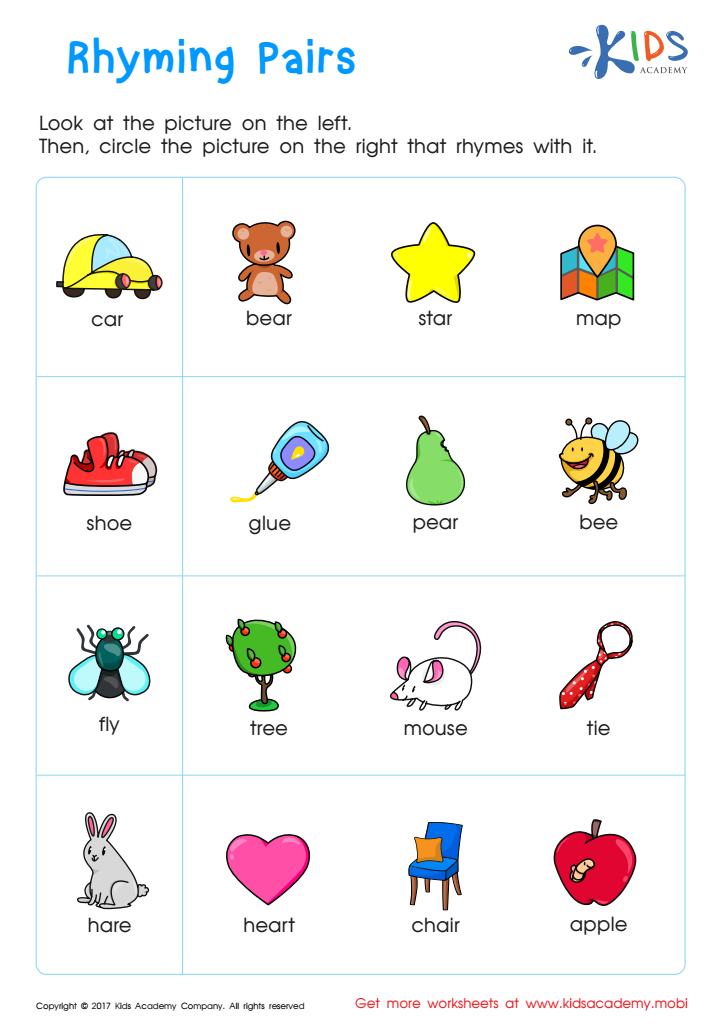
Rhyming Words Rhyming Worksheet
 Assign to My Students
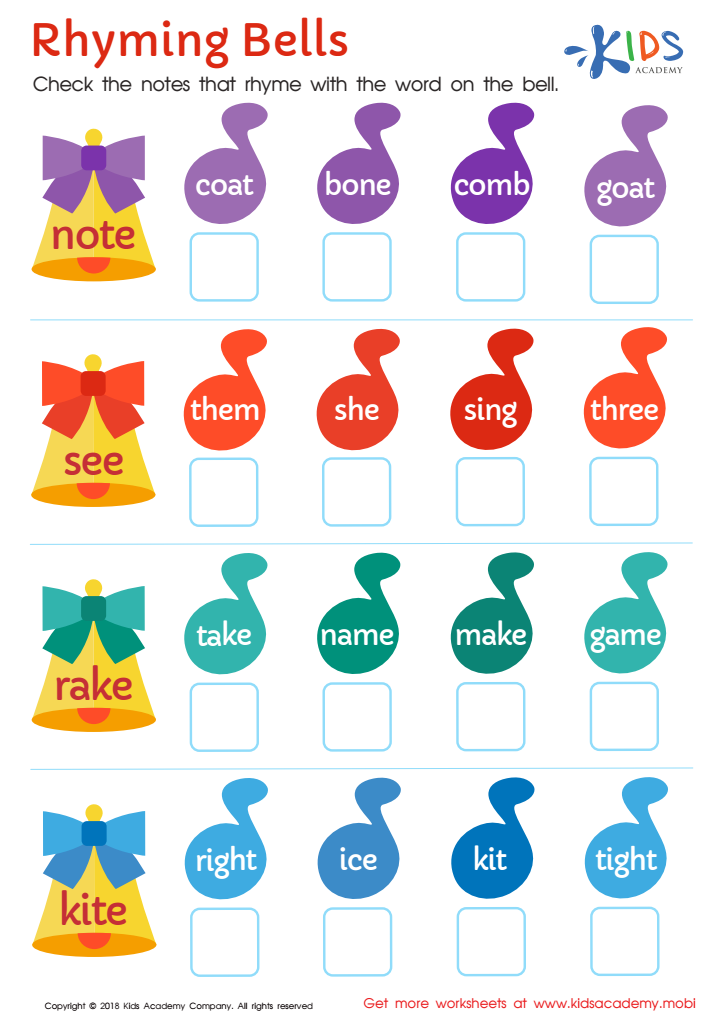
Rhyming Bells Worksheet
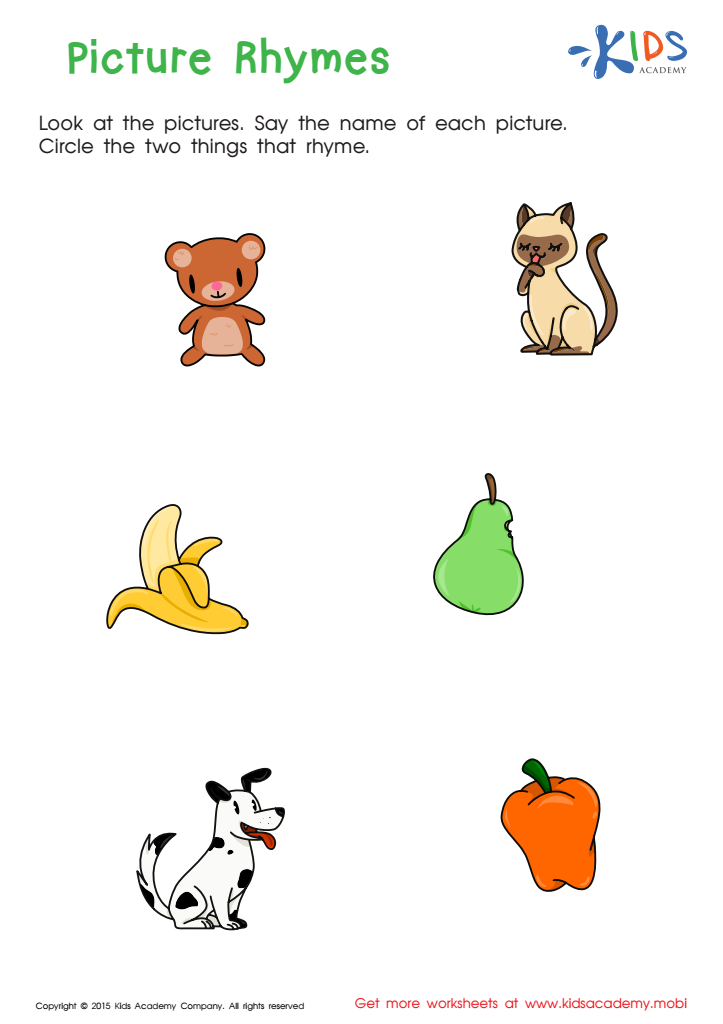
First Words: Picture Rhymes Worksheet







Rhyming skills development is crucial for children aged 5-6, as it significantly impacts their early literacy and language acquisition. Understanding rhymes helps children to recognize similar sounds, which is foundational for phonemic awareness—the ability to hear, identify, and manipulate sounds in spoken words. This skill is directly linked to reading proficiency; children who can rhyme typically perform better in reading comprehension and decoding in later grades.
Furthermore, engaging with rhymes enhances vocabulary and language use, exposing children to a variety of words and sentence structures. This not only aids in their speaking and listening skills but also lays the groundwork for creative expression and storytelling ability.
In addition to cognitive benefits, rhyming activities such as songs, poetry, and games foster social interactions among peers and create a joyful learning environment. It not only supports language skills but also builds confidence in communication.
For parents and teachers, prioritizing rhyming skills means investing in a child's academic future, making early literacy experiences enjoyable, and aiding in overall cognitive and emotional development. By nurturing these skills, adults can help create enthusiastic learners ready to tackle more complex literacy tasks as they progress in their education.







