Vocabulary enhancement Rhyming Worksheets for Ages 5-6
6 filtered results
-
From - To
Enhance your 5-6-year-old's vocabulary with our engaging Rhyming Worksheets! Designed to make learning fun, these worksheets help young learners recognize rhyming words, boosting both reading and language skills. Each activity encourages creativity and reinforces phonemic awareness, a key foundation in early literacy. Perfect for parents and educators alike, our printables are ideal for use at home or in the classroom. Through playful exercises and colorful illustrations, children will develop a love for words while expanding their vocabulary. Start enhancing their language skills today with our innovative and exciting rhyming worksheets!
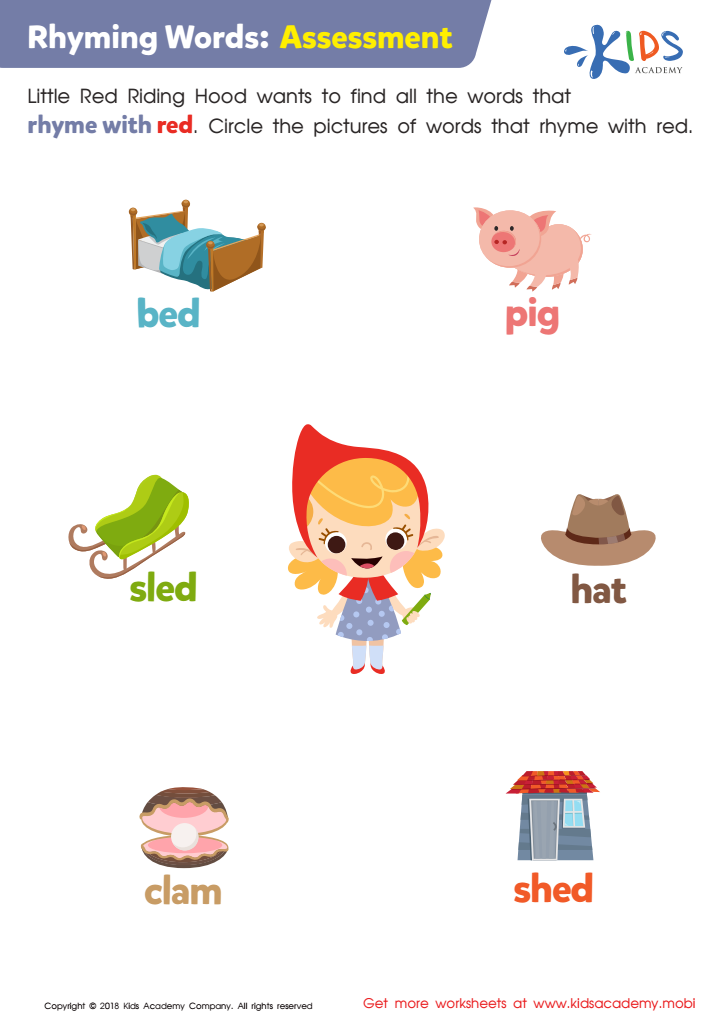
Rhyming Words: Assessment Worksheet
 Assign to My Students
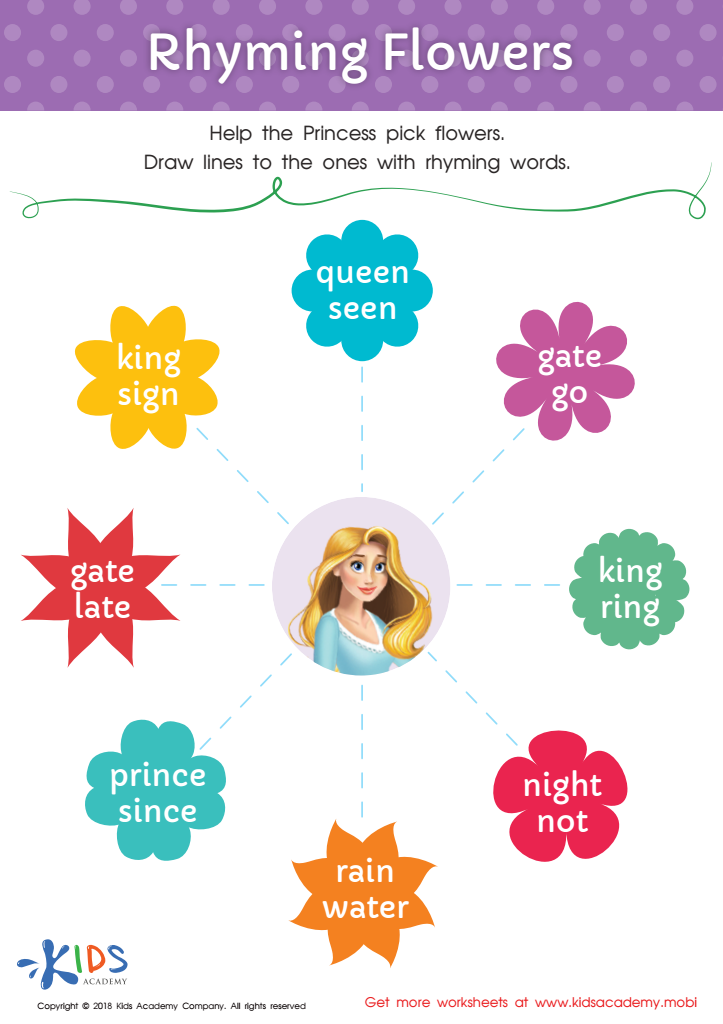
Rhyming Flowers Worksheet
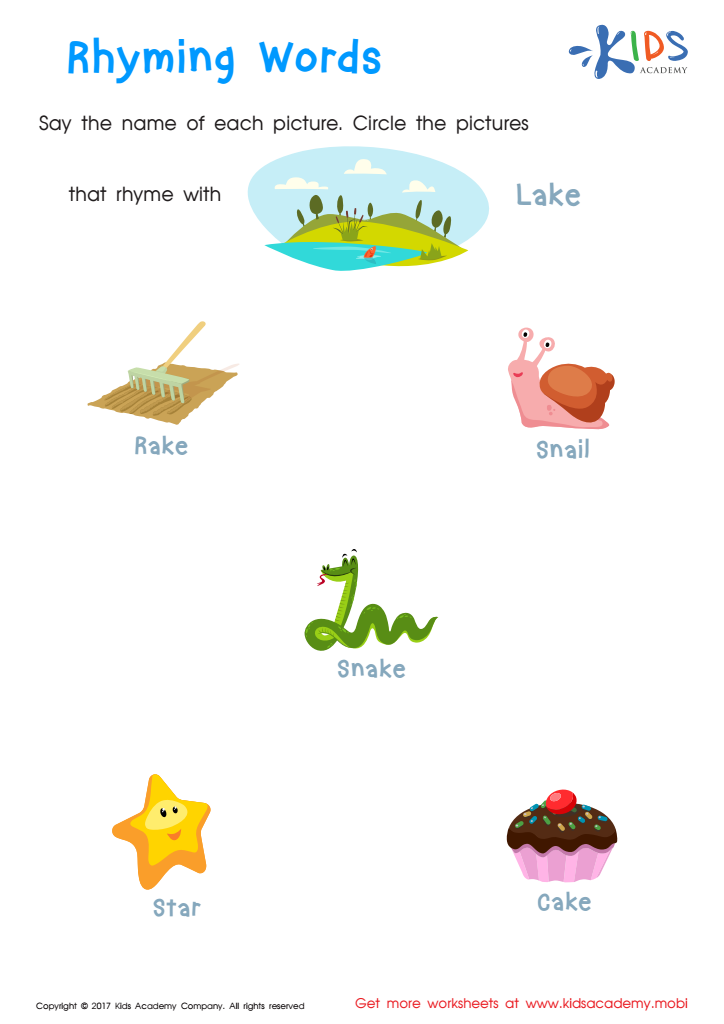
Rhyming Words Rhyming Worksheet
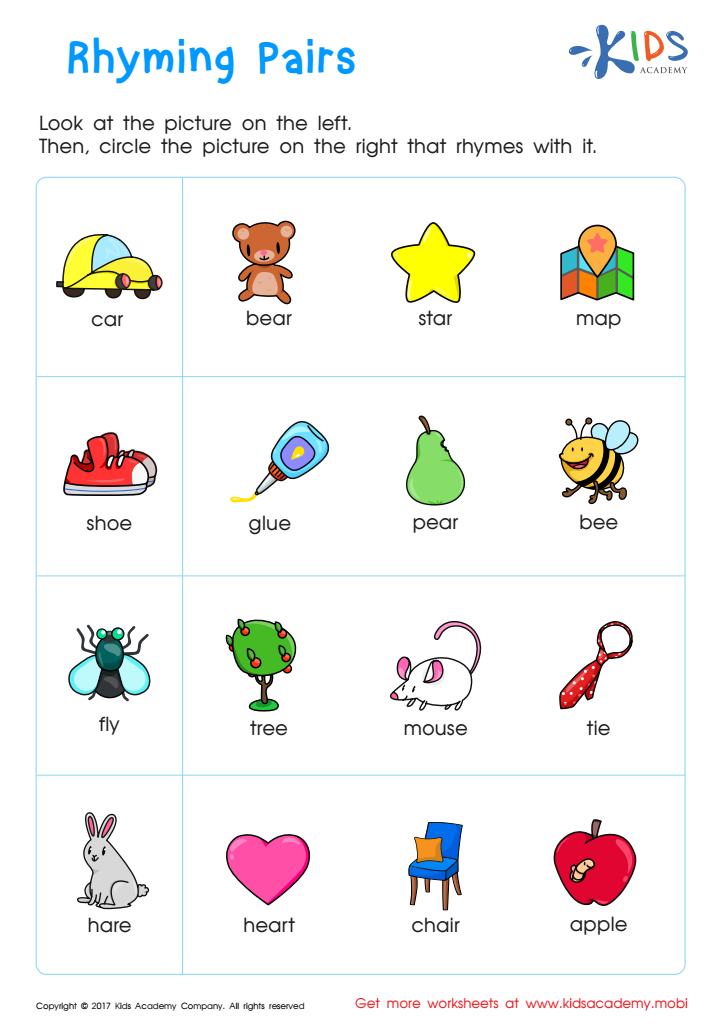
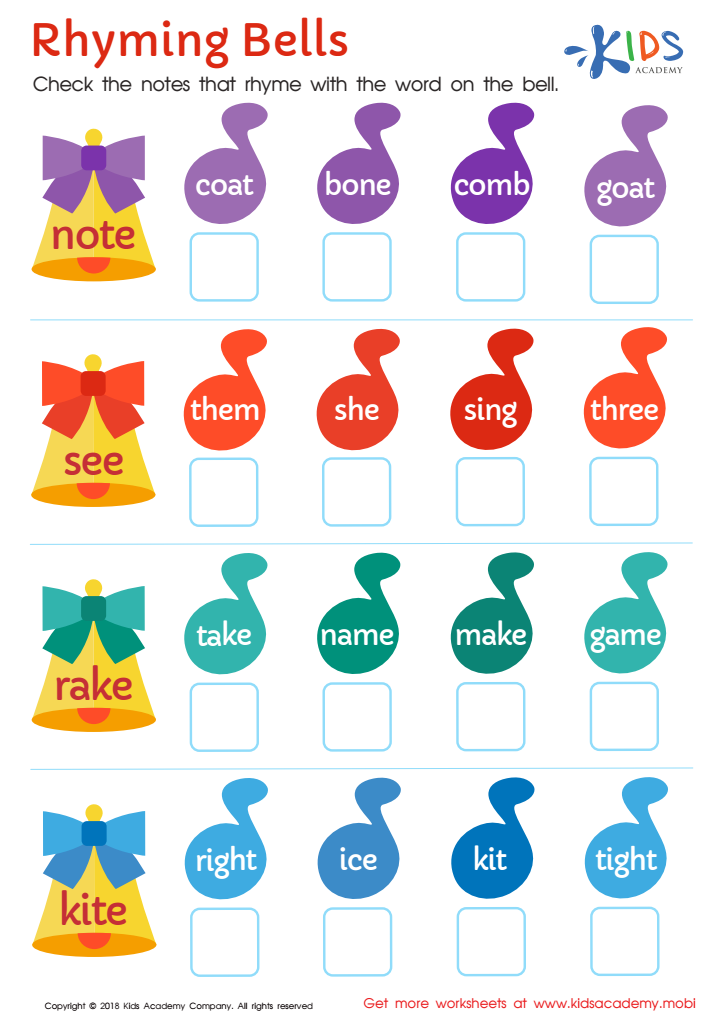
Rhyming Bells Worksheet
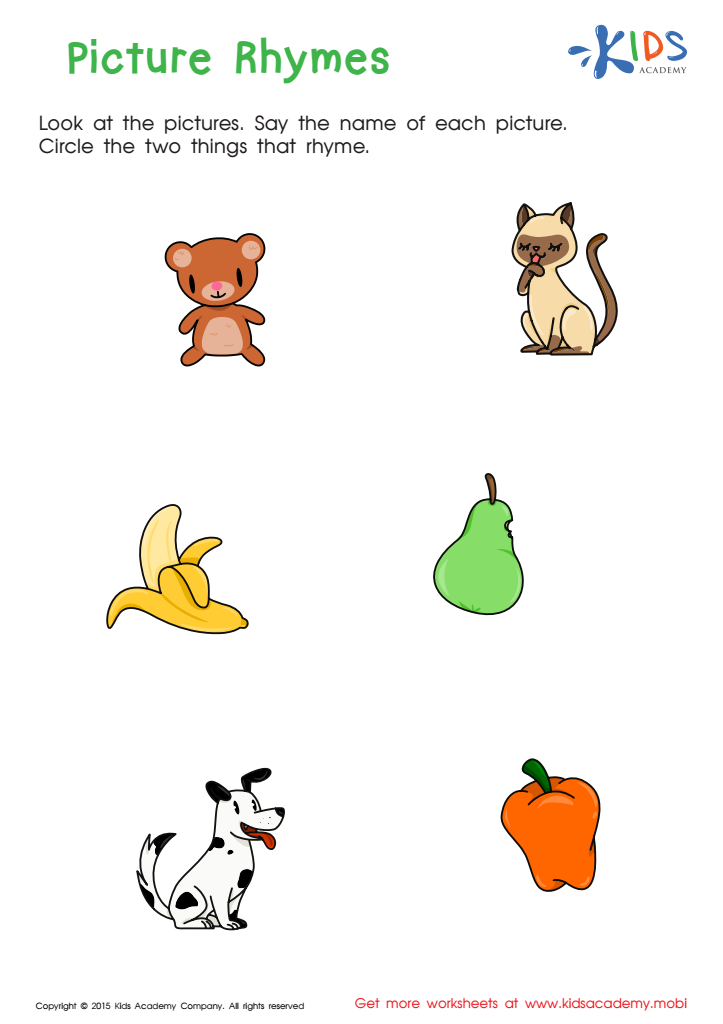
First Words: Picture Rhymes Worksheet







Vocabulary enhancement through rhyming is crucial for children aged 5-6 due to its significant impact on early literacy development. At this formative age, kids are honing their language skills, and rhyming plays a foundational role. Recognizing and producing rhymes helps children understand phonemic awareness, which is the ability to hear, identify, and manipulate individual sounds in words. This skill is essential for decoding words when they begin reading.
Rhymes make language fun and memorable, aiding in retention. When kids engage with rhyming words, they start noticing patterns and structures in language, which enhances their ability to predict and infer meaning. This predictive skill fosters better comprehension and fluency.
Additionally, rhyming activities build a rich vocabulary by introducing new words in context. For instance, if a child learns "cat," they're likely to encounter accompanying rhyming words like "bat," "hat," and "rat," simultaneously broadening their word bank while making connections between sounds and meanings.
Parents and teachers should prioritize rhyming because it also boosts cognitive development, encourages auditory discrimination, and reinforces social bonding through songs and poems. By embedding rhyming activities into daily routines, adults can make language acquisition a joyous and effective part of children's growth, setting a solid foundation for future academic success.







