Lowercase letter writing Tracing Letters Worksheets for Ages 5-6
3 filtered results
-
From - To
Discover our engaging Lowercase Letter Writing Tracing Worksheets designed specifically for children aged 5-6. These worksheets are the perfect tool for young learners to practice and refine their handwriting skills. Each page features clear, easy-to-follow guidelines for tracing lowercase letters, helping children build confidence in their writing abilities. Our fun and interactive resources encourage concentration and motor skill development while maintaining an enjoyable learning experience. Ideal for home or classroom use, these worksheets support early literacy and foundational writing skills, ensuring a positive start to your child's educational journey. Get started today and watch their writing flourish!
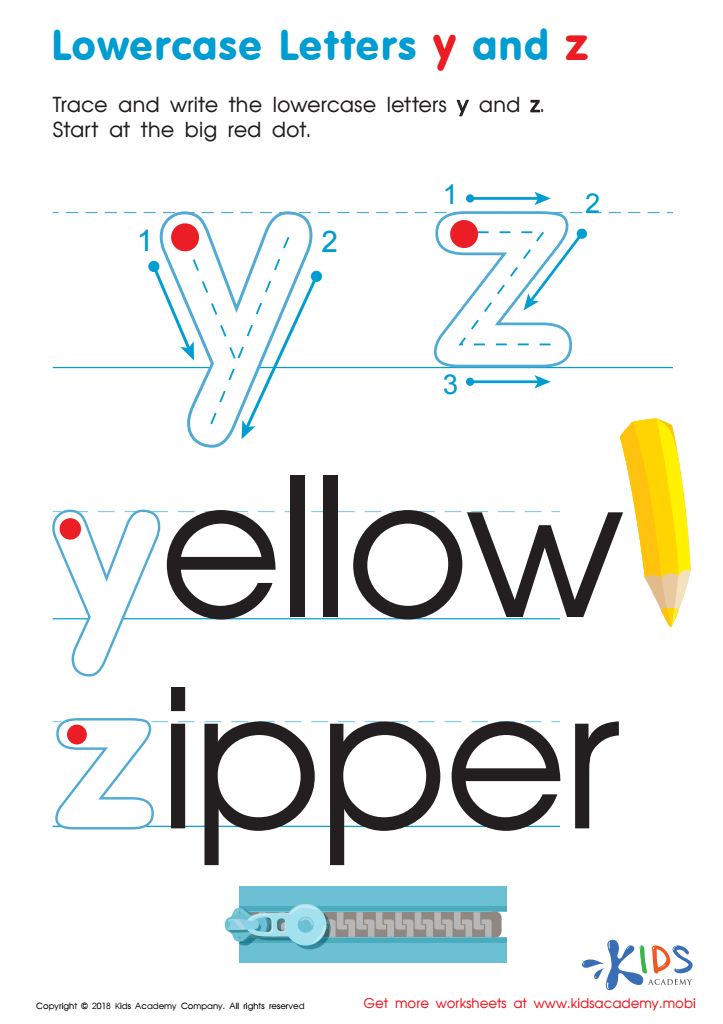
Lowercase Letters y z Worksheet
 Assign to My Students
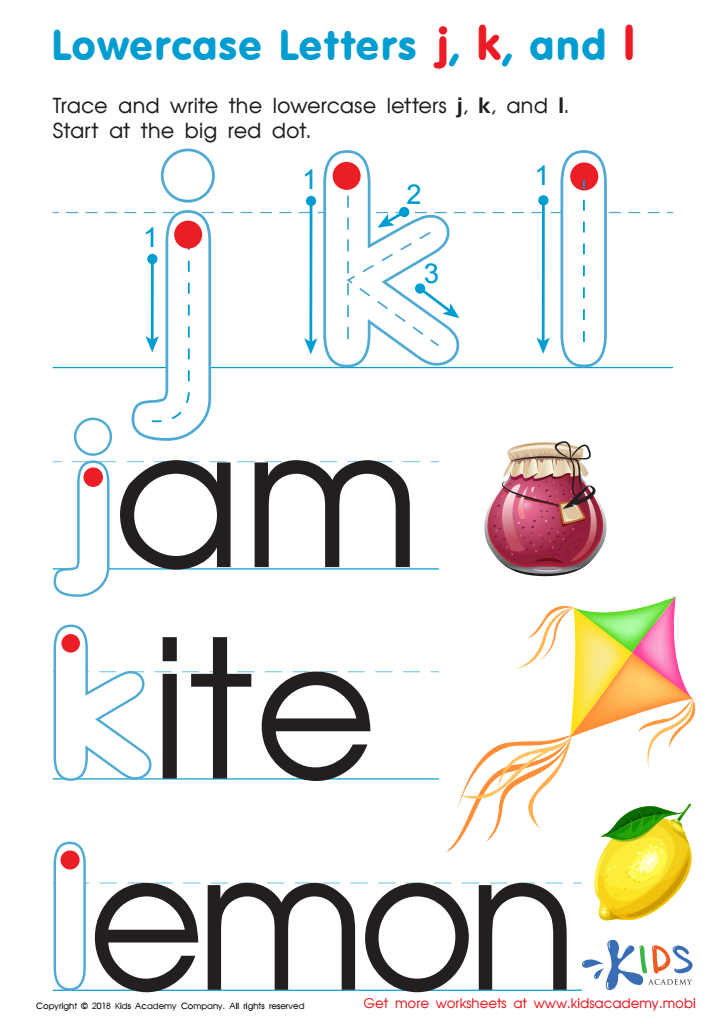
Lowercase Letters j k l Worksheet
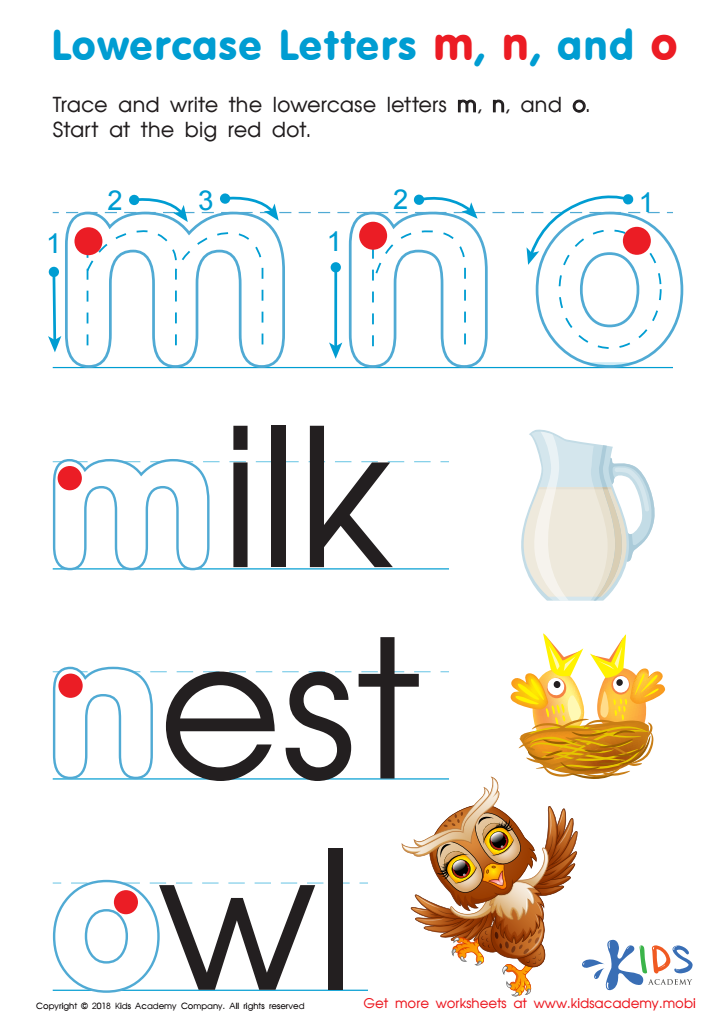
Lowercase Letters m n o Worksheet








Lowercase letter writing is a fundamental skill that sets the stage for young children's literacy development. For ages 5-6, tracing letters serves as an effective and engaging method to build fine motor skills and handwriting proficiency. This age group is still developing their hand-eye coordination; therefore, tracing lowercase letters helps them gain confidence in their writing abilities.
Moreover, lowercase letters are predominantly used in writing, making it essential for children to master their formation early on. Parents and teachers should care about tracing activities because they promote not just writing skills, but also cognitive development as children learn to recognize letter shapes and sounds simultaneously.
Tracing letters can be a fun and interactive experience. It encourages repetition, which aids retention, while future literacy tasks become easier as children advance. Furthermore, fostering handwriting skills from an early age has been shown to contribute positively to a child's overall academic success. Involving parents and teachers in tracing exercises encourages a supportive learning environment, which is crucial in motivating children towards becoming proficient writers. Ultimately, mastery of lowercase letters provides children with the tools they need to express themselves more effectively in both academic and personal settings.








