Fine motor skills development Upper & Lowercase Letters Worksheets for Ages 5-6
3 filtered results
-
From - To
Help your child master fine motor skills with our engaging Upper & Lowercase Letters Worksheets, designed specifically for ages 5-6. These worksheets perfectly blend fun and learning, offering age-appropriate activities that develop handwriting precision. By tracing, matching, and writing both uppercase and lowercase letters, children will enhance their coordination, pencil control, and dexterity. Each worksheet provides ample practice space, making it easy for young learners to build muscle memory and confidence in their writing abilities. Watch your child’s skills flourish as they navigate a journey of alphabet mastery with these thoughtfully crafted educational exercises.
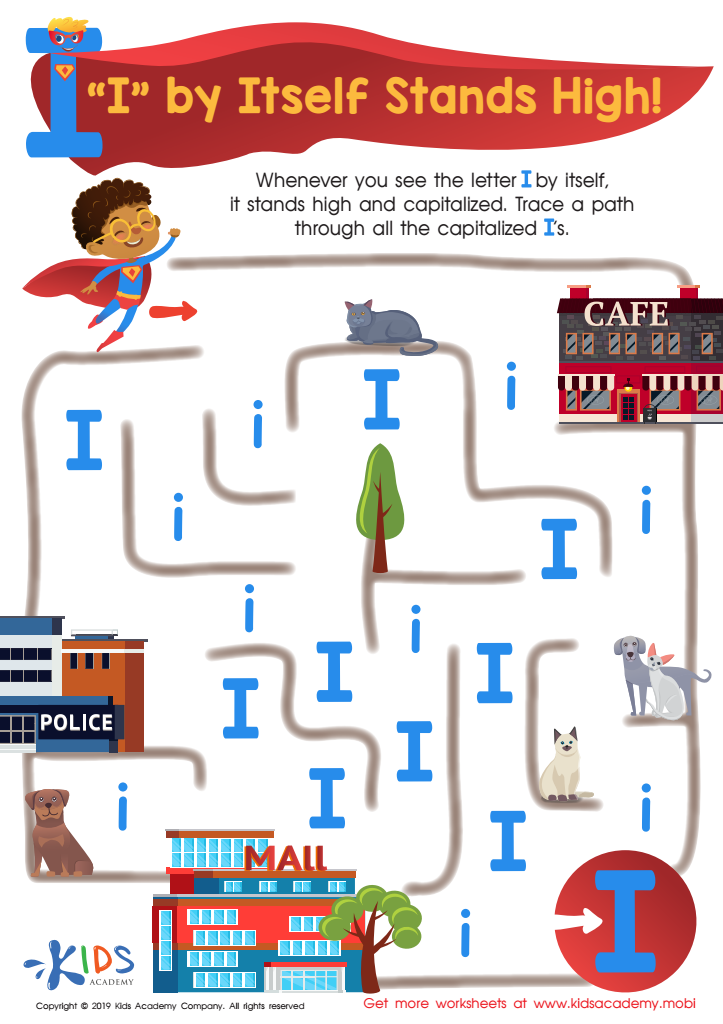
I Stands High Worksheet
 Assign to My Students




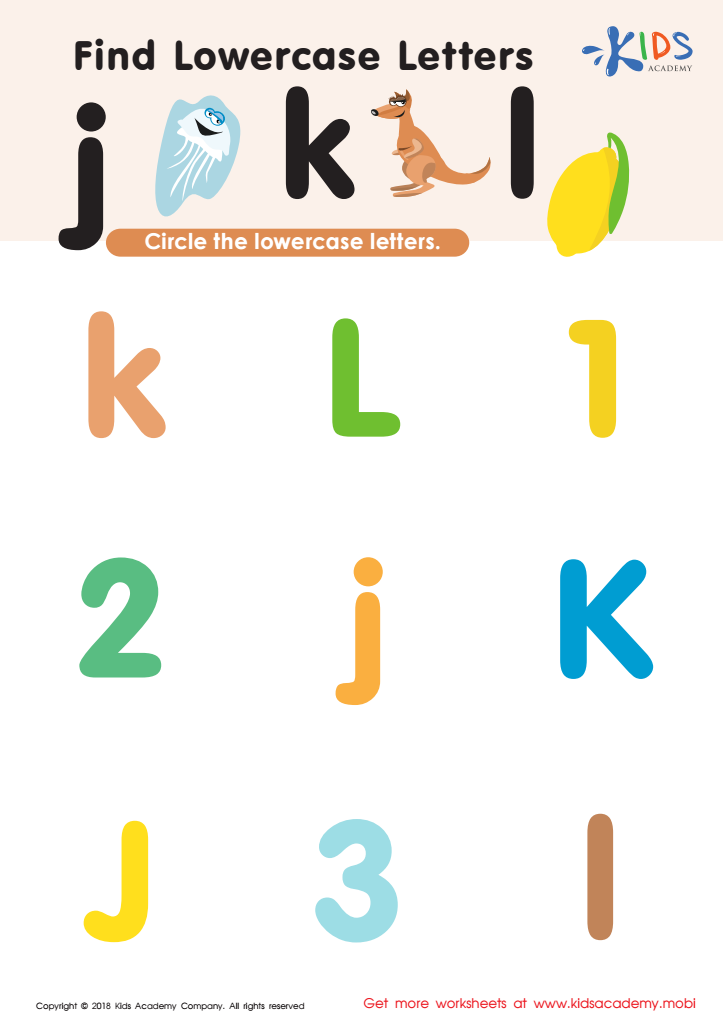
Find Lowercase Letters j k l Worksheet
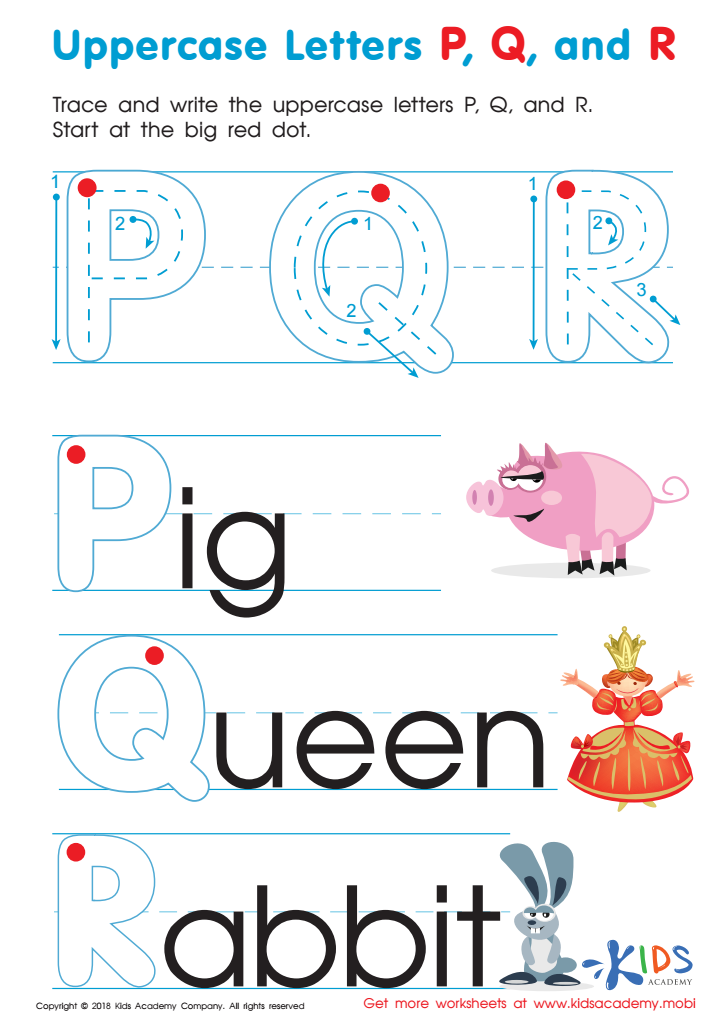
Uppercase Letters P, Q, and R Worksheet






Parents and teachers should prioritize the development of fine motor skills, particularly in learning to write uppercase and lowercase letters, for children aged 5-6 for several crucial reasons. At this age, children typically begin to interact more with the structured educational environment of kindergarten or first grade, where the foundational elements of writing are introduced. Mastering fine motor skills allows children to grasp, hold, and maneuver a pencil effectively, which is essential for forming letters correctly.
Developing fine motor skills enhances a child's ability to perform everyday tasks, such as buttoning clothes, tying shoes, or cutting with scissors, bolstering their overall independence and self-confidence. When fine motor skills are practiced in the context of writing, children experience direct improvements in hand-eye coordination, muscle control, and dexterity. This early focus on proper letter formation sets the stage for clearer, more legible handwriting as they progress through school.
Furthermore, writing by hand is closely linked to cognitive development and literacy skills. Forming letters manually aids in letter recognition, phonemic awareness, and eventually reading fluency. By caring about this aspect of their development, parents and teachers ensure that children possess the basic yet vital tools they need for academic success and daily life tasks, fostering a sense of competence and achievement.







