Letter-sound association Upper & Lowercase Letters Worksheets for Ages 5-6
3 filtered results
-
From - To
Unlock your child's reading potential with our engaging Letter-Sound Association Upper and Lowercase Letters Worksheets, specifically designed for ages 5-6! These worksheets provide a fun and interactive way for young learners to associate sounds with letters, reinforcing essential phonics skills. Each activity includes colorful visuals and easy-to-follow exercises that help kids identify uppercase and lowercase letters while practicing their sounds. Perfect for both classroom learning and home practice, our printable resources make mastering the alphabet enjoyable. Foster a strong foundation in literacy and ignite a love for reading with our expertly crafted worksheets that cater to early learners!
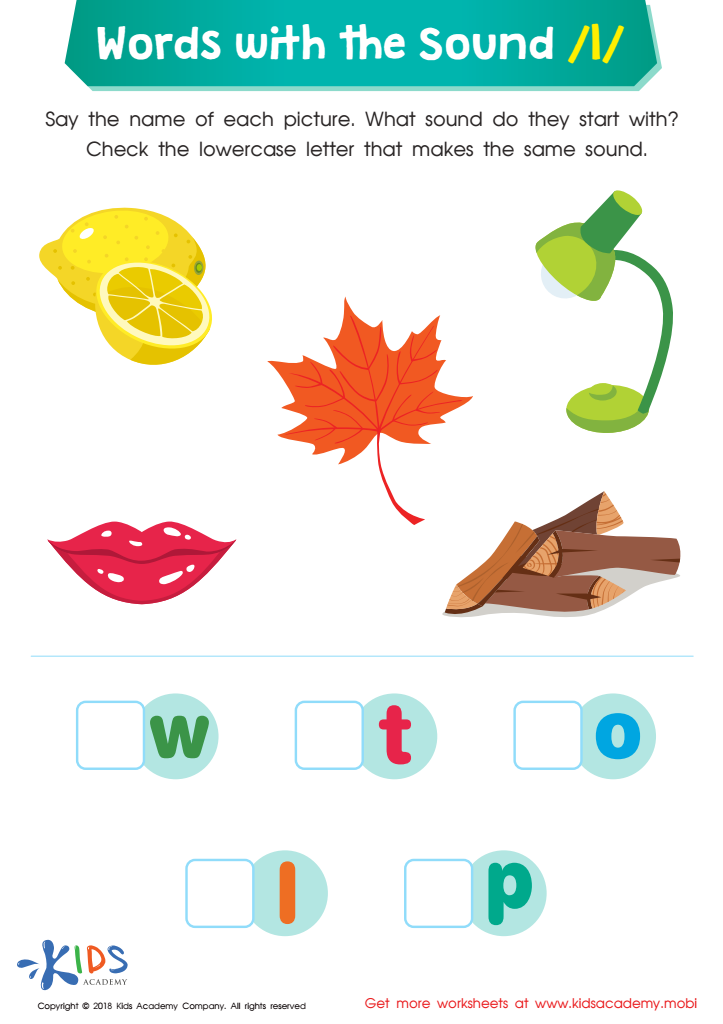
Words with Sound L Reading Worksheet
 Assign to My Students





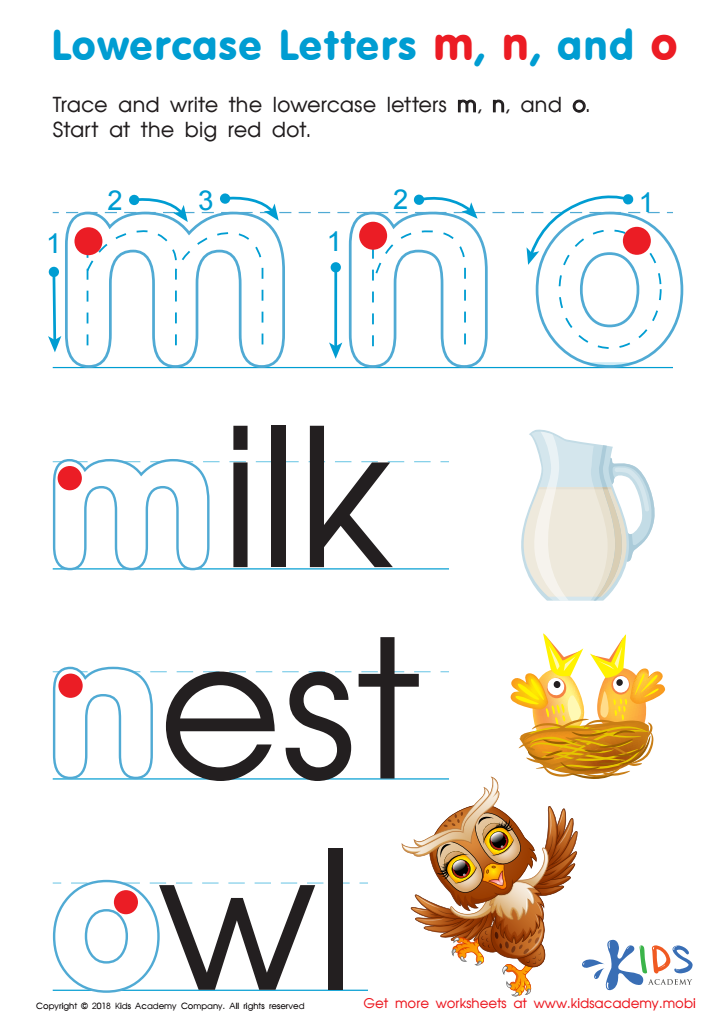
Lowercase Letters m n o Worksheet
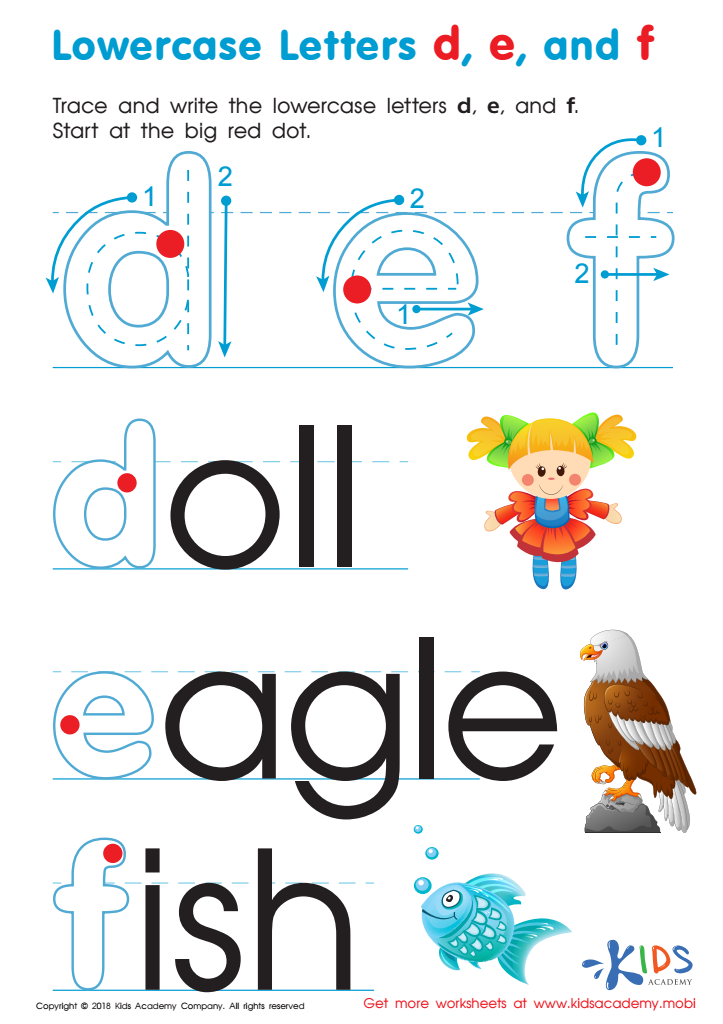
Lowercase Letters d e f Worksheet






Understanding letter-sound associations for both uppercase and lowercase letters is crucial for children aged 5-6, as it forms the foundation of literacy development. At this age, children's language skills are rapidly developing, and recognizing letters along with their corresponding sounds is essential for early reading and writing proficiency.
First, mastering letter-sound associations enables children to decode words, making it easier for them to read independently. This skill is pivotal in fostering a love for reading and learning, as they can explore stories and information on their own.
Second, differentiating between uppercase and lowercase letters enhances a child's ability to recognize and form words accurately. Since reading and writing incorporates both letter types, understanding their distinct yet related uses is vital for effective communication. For instance, uppercase letters often indicate the beginning of sentences or proper nouns, while lowercase letters dominate most text, thus necessitating their proficiency.
Furthermore, phonemic awareness nurtures cognitive development and boosts self-confidence. When parents and teachers emphasize these associations, they are laying a strong groundwork for children’s future academic successes. Ultimately, cultivating these skills leads to improved literacy, enriching a child's educational journey and opening the door to lifelong learning.







