
Phonics Skills Vowels and Consonants Worksheets for Ages 5-6
4 filtered results
Difficulty Level
Grade
Age
-
From - To
Subject
Activity
Standards
Enhance your child's phonics skills with our engaging Vowels and Consonants Worksheets designed specifically for ages 5-6. These interactive resources support early literacy by helping young learners identify and differentiate between vowels and consonants through fun activities. Our worksheets promote letter recognition, sound matching, and spelling fundamentals, making it easy for kids to grasp the essentials of reading. Each worksheet is tailored to keep children interested while building a solid foundation in phonics. Bring joy to learning with colorful activities that inspire confidence and develop essential skills for educational success. Get started today and watch your child's reading abilities flourish!
Favorites
With answer key
Interactive
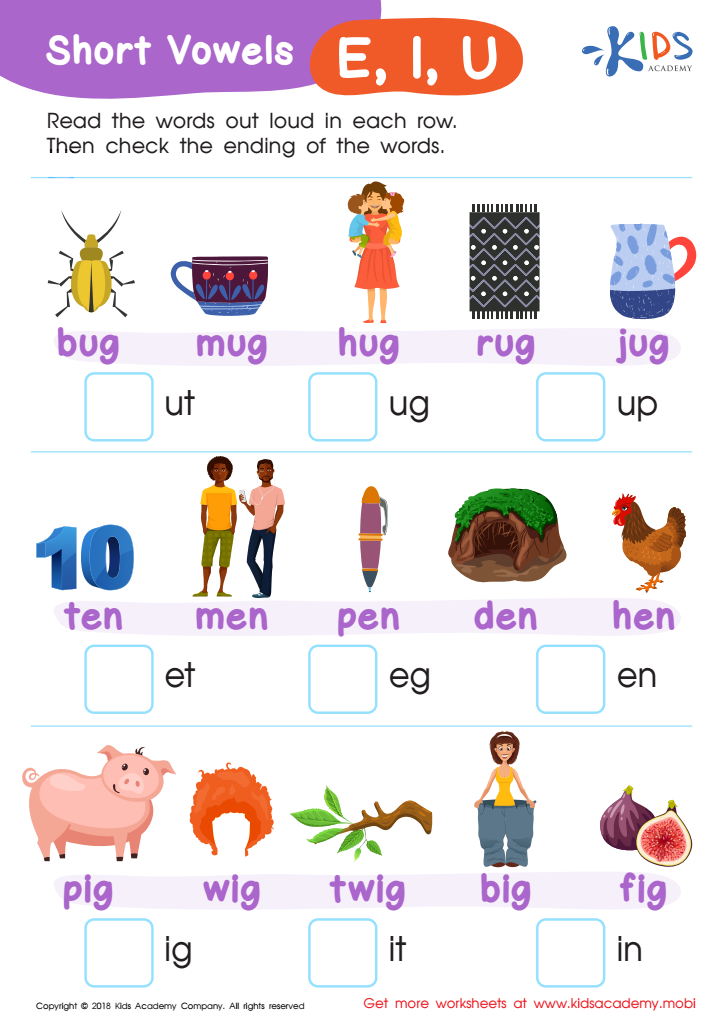
Short Vowels /e/, /i/, and /u/ Worksheet
Your emergent reader can have fun while practicing their short vowel sounds with this free, brightly colored worksheet. They'll identify one-syllable words by their pictures, then match the correct ending for each. They'll gain an understanding of how short vowel sounds vary in closed syllables with different endings, without even realizing it!
 Assign to My Students
Short Vowels /e/, /i/, and /u/ Worksheet
Worksheet
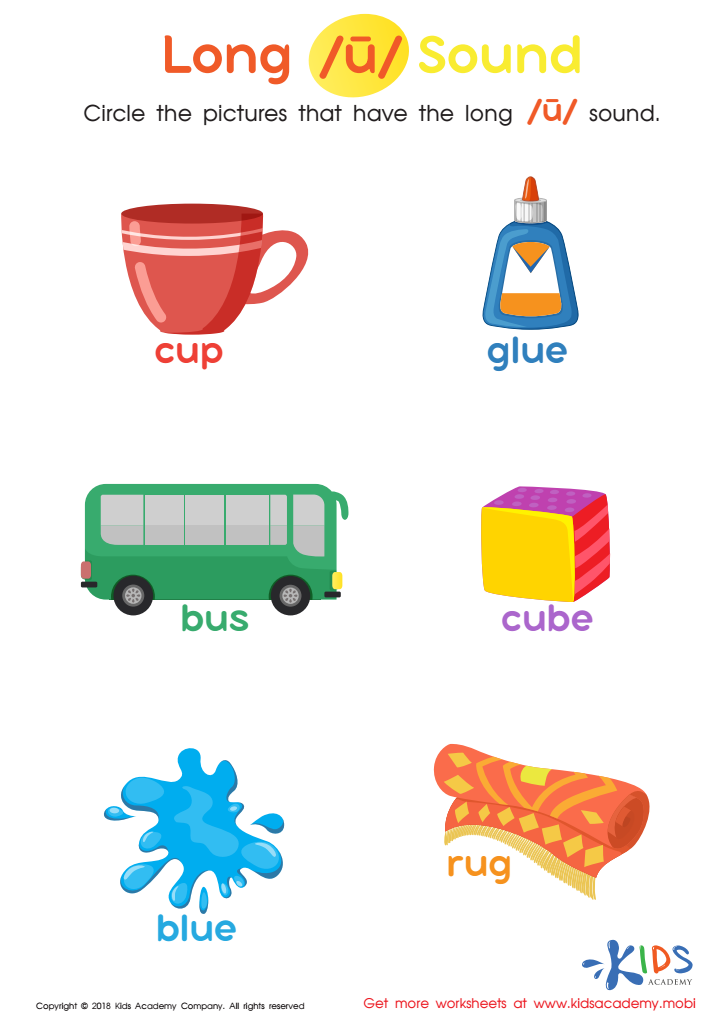
Long «u» Sound Worksheet
This fun and engaging free PDF worksheet teaches kids to differentiate between long and short «u» sounds. Through tracing circles around the correct words, they'll practice their fine motor skills while also recognizing patterns (silent-e for «ū» sound) in closed-syllable words. Bright and cheery pictures make it a great confidence booster for new readers!
Long «u» Sound Worksheet
Worksheet
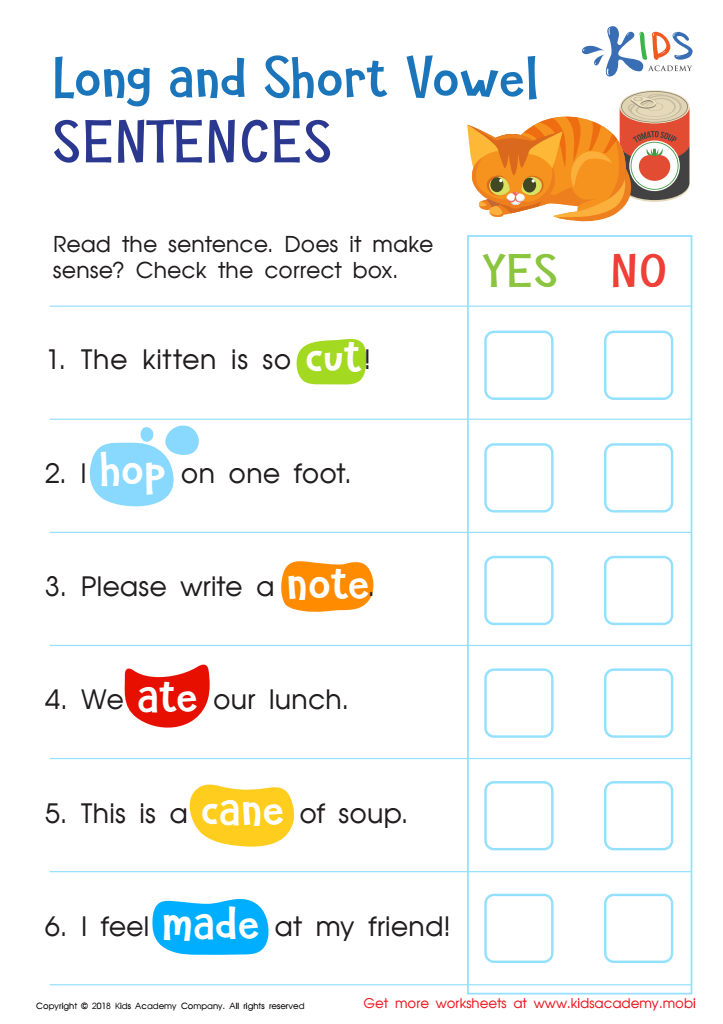
Long and Short Vowel Sentences: Assessment Worksheet
This printable worksheet helps kids practice differentiating between short and long vowel sounds. They'll use context clues to figure out which words make sense in simple sentences. A great way to build reading and writing skills!
Long and Short Vowel Sentences: Assessment Worksheet
Worksheet
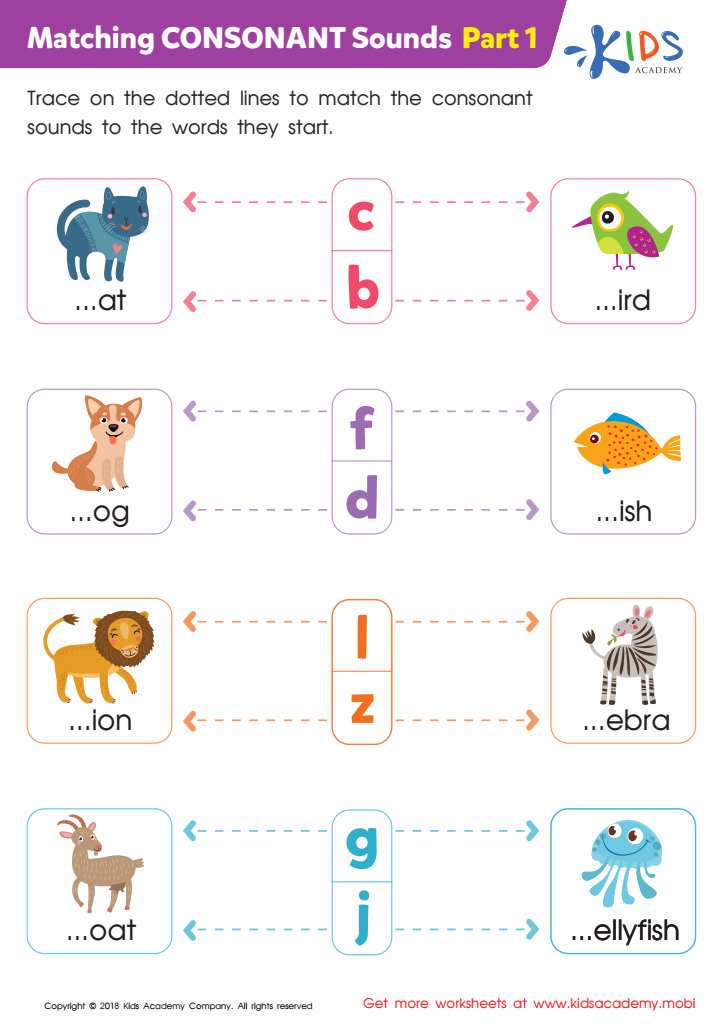
Matching Consonant Sounds: Part 1 Worksheet
Decide which letter matches each word and picture in this fun phonics worksheet. Slide your finger over each word, trying out each letter to check for matches. Once each pair is solved, trace the dotted lines with pencil to complete the printable. Who knew learning could be so enjoyable?
Matching Consonant Sounds: Part 1 Worksheet
Worksheet
Join Kids Academy for Free
Who is primarily going to use this learning content?



Understanding phonics skills, particularly vowels and consonants, is crucial for children aged 5-6 as they lay the foundation for reading and writing. Phonics is the method of connecting sounds to letters, which enables children to decode words, an essential skill for literacy development. This age group is at a critical stage where they begin to develop language skills, and phonics offers a structured approach to reading education.
Vowels and consonants are the building blocks of words. By mastering their sounds and relationships, children enhance their ability to recognize and spell words, leading to improved vocabulary and comprehension. When teachers and parents focus on these skills, they foster not only academic growth but also confidence and a love for reading that can last a lifetime.
Additionally, phonics instruction nurtures cognitive development, helping children learn to segment and blend sounds, which are integral processes in literacy. Engaging in phonics activities supports their neural pathways for language processing, making future learning more effective.
By prioritizing phonics skills, adults can ensure that children are well-prepared for academic success and develop essential communication skills that will serve them throughout their lives. Early intervention and practice can make a significant difference during these formative years.







