Phonics Skills Vowels Worksheets for Ages 5-6 - Page 2
25 filtered results
-
From - To
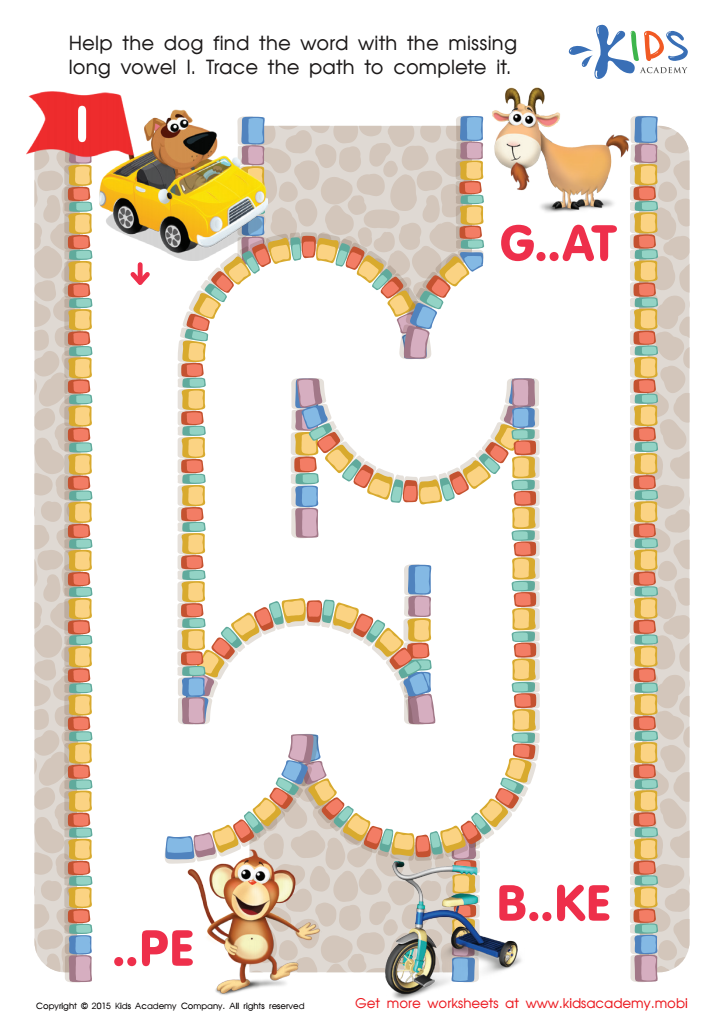
Long Vowel Sound I Worksheet
 Assign to My Students





Phonics skills, particularly regarding vowels, play a crucial role in early literacy development for children aged 5-6. Understanding vowels is essential because they form the foundation of word formation and pronunciation. At this age, children are just beginning to explore the world of reading and writing, and a solid grasp of how vowels function can significantly enhance their abilities.
Vowels can often be challenging for young learners due to their varying sounds and roles in different words. Teaching phonics skills focusing on vowels helps children decode words, making it easier for them to progress in their reading proficiency. When children recognize vowel patterns and sounds, they can read more fluently and with increased comprehension.
Moreover, mastering phonics skills is linked to greater confidence in literacy activities. Children who feel secure in their understanding of vowel sounds are more likely to engage enthusiastically in reading and writing tasks. This foundational knowledge sets the stage for future academic success, encouraging a lifelong love of learning. Therefore, parents and teachers should prioritize phonics instruction, ensuring that young learners are equipped with the essential skills required for reading development.







