Vocabulary development Vowels Worksheets for Ages 5-6
5 filtered results
-
From - To
Enhance your child's language skills with our Vocabulary Development Vowels Worksheets designed for ages 5-6! These engaging worksheets focus on teaching young learners the essential building blocks of vowels, aiding in early reading and writing success. Through fun and interactive exercises, children will expand their vocabulary, recognize vowel sounds, and understand their importance in word formation. Perfect for use at home or in the classroom, our carefully crafted activities make learning enjoyable and effective. Start your child’s journey to literacy with our expertly-designed, educational worksheets today! Visit Kids Academy for more information.
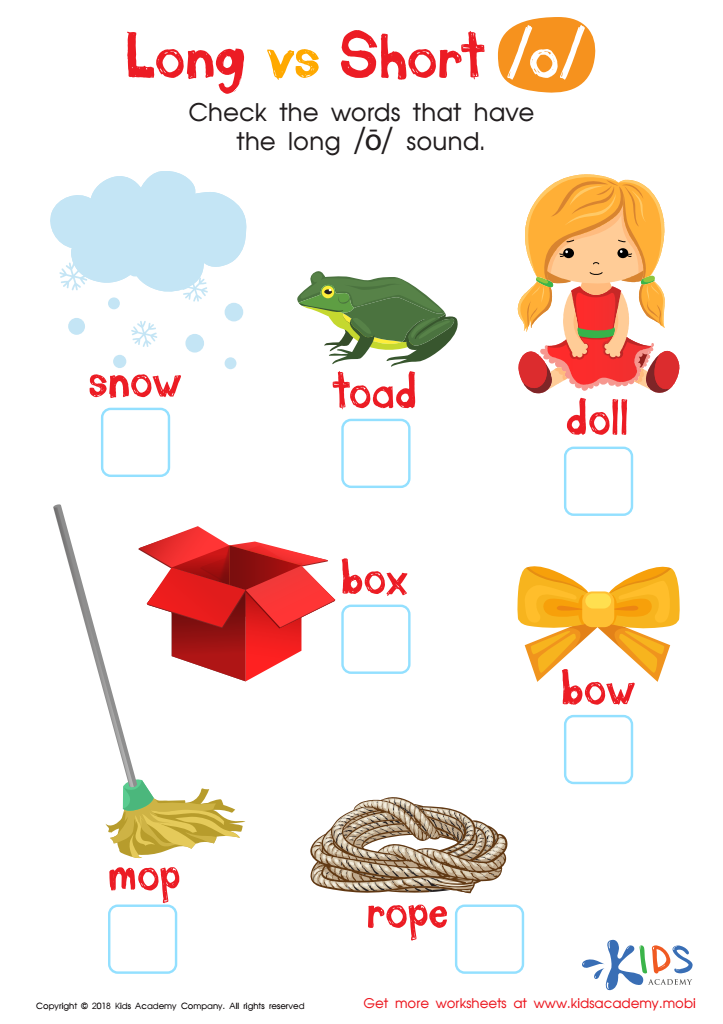
Long vs Short O Reading Worksheet
 Assign to My Students
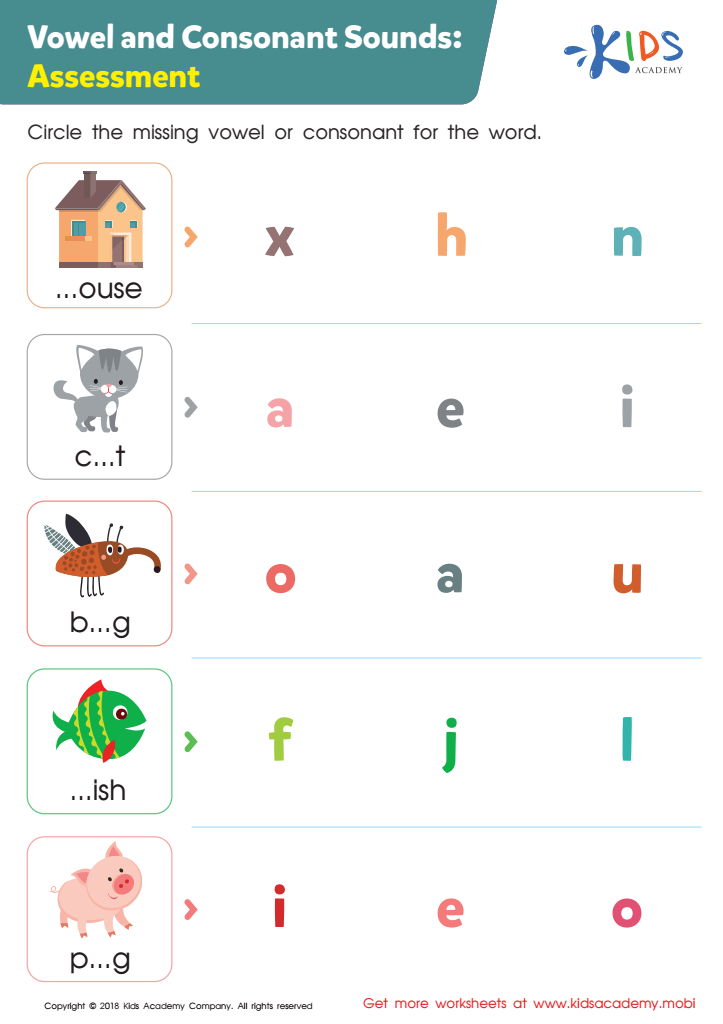
Vowel and Consonant Sounds: Assessment Worksheet
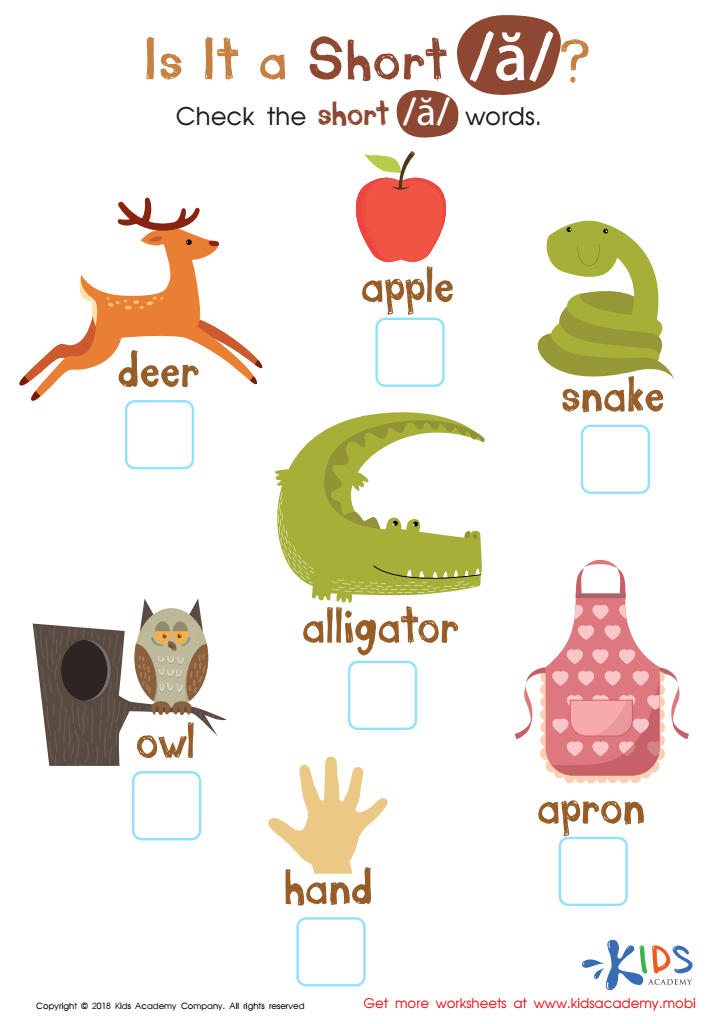
Is It Short A? Reading Worksheet
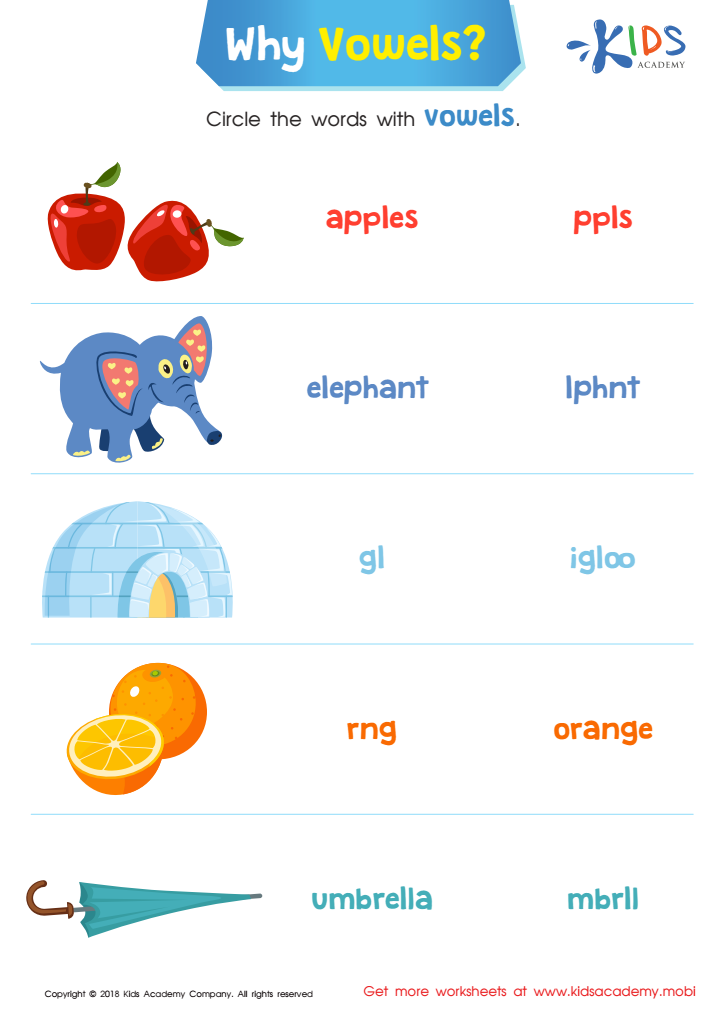
Why Vowels? Reading Worksheet
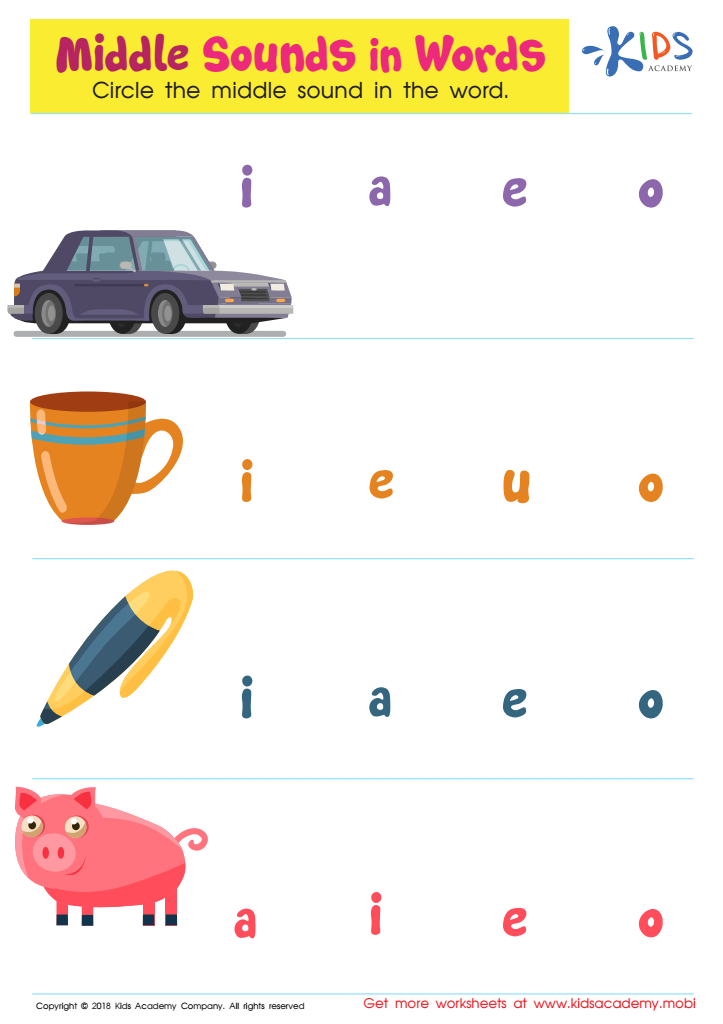
Middle Sounds in Words Worksheet





Parents and teachers should care about vocabulary and vowel development for children aged 5-6 because these foundational language skills are essential for their academic and social growth. Vocabulary for this age group forms the basis of their ability to comprehend stories, follow directions, and engage in conversations, which in turn boosts their confidence and enthusiasm for learning. A well-developed vocabulary aids in effective communication, helping children express their thoughts and emotions more clearly.
Understanding and correctly using vowels play a significant role in pronunciation, reading, and spelling. Vowels are the heart of words and mastering their sounds allows children to decode new words while reading. This phonemic awareness, achieved through the recognition of vowel sounds, forms a crucial stepping stone in the journey of becoming proficient readers, which is closely linked to future academic success.
Additionally, children with strong vocabulary and vowel recognition skills are better equipped to understand more complex instructions, adapt to different social situations, and build relationships. This early language development fosters cognitive abilities and sets the stage for lifelong learning. By prioritizing vocabulary and vowel education at this critical developmental stage, parents and teachers lay a solid foundation for the child's overall educational trajectory.







