Spatial awareness Chess Worksheets for Ages 5-6
3 filtered results
-
From - To
Nurture your child's cognitive skills with our "Spatial Awareness Chess Worksheets for Ages 5-6." These engaging printable worksheets are meticulously crafted to enhance young learners' spatial reasoning and problem-solving abilities through the exciting world of chess. Perfectly suited for early grade students, our resources transform learning into an adventure, helping kids understand and navigate the chessboard while developing critical thinking skills. With fun and interactive exercises, children will practice recognizing patterns, positions, and movements, laying a solid foundation for future chess mastery and everyday spatial awareness. Unlock your child's potential with these dynamic, educational worksheets.
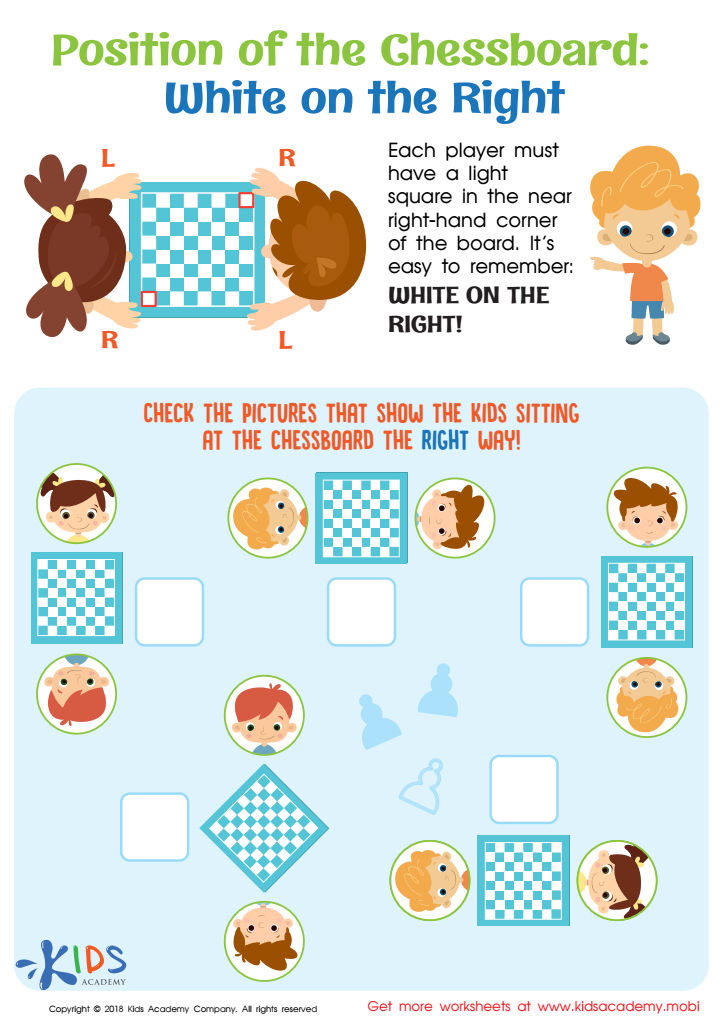
Position of the Chessboard: White on the Right Worksheet
 Assign to My Students
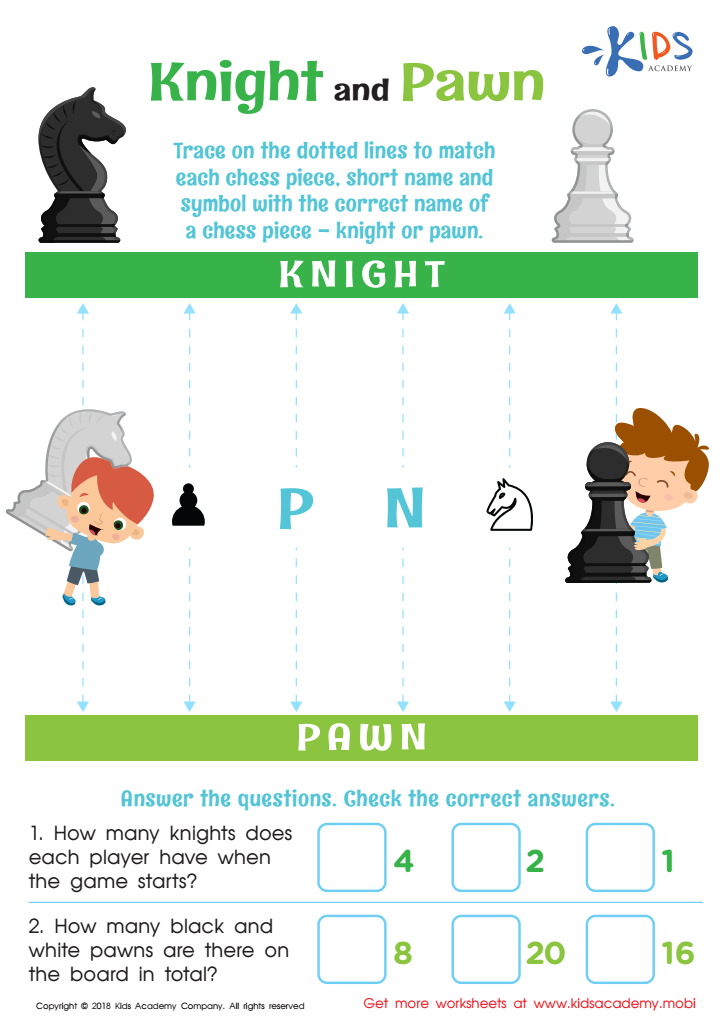
Knight and Pawn Worksheet
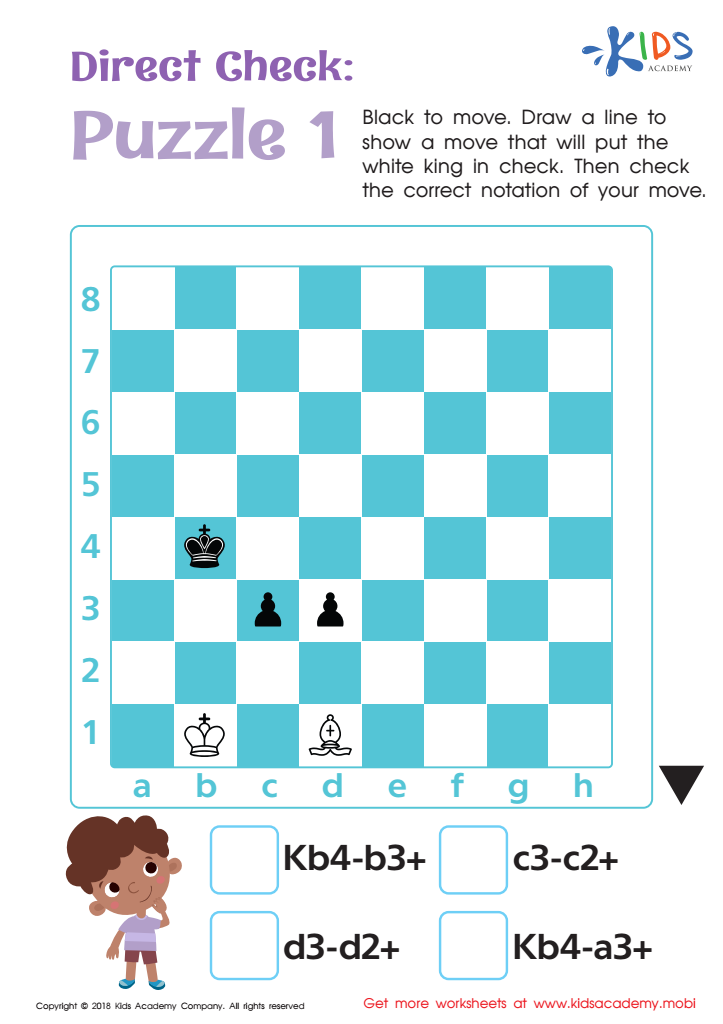
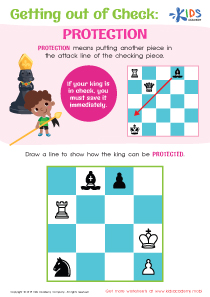
Direct Check: Puzzle 1 Worksheet





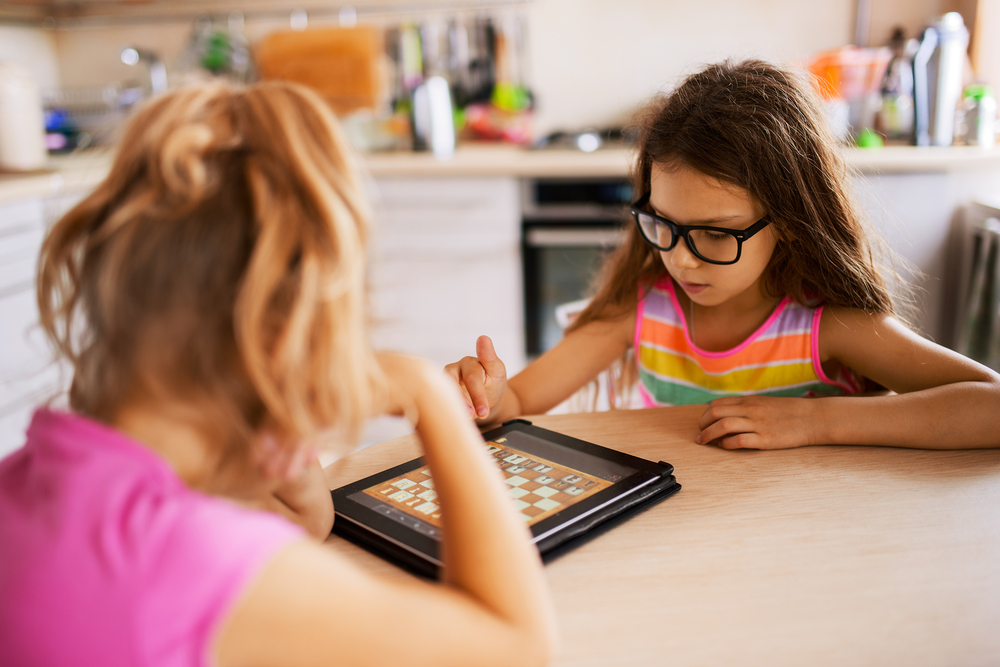
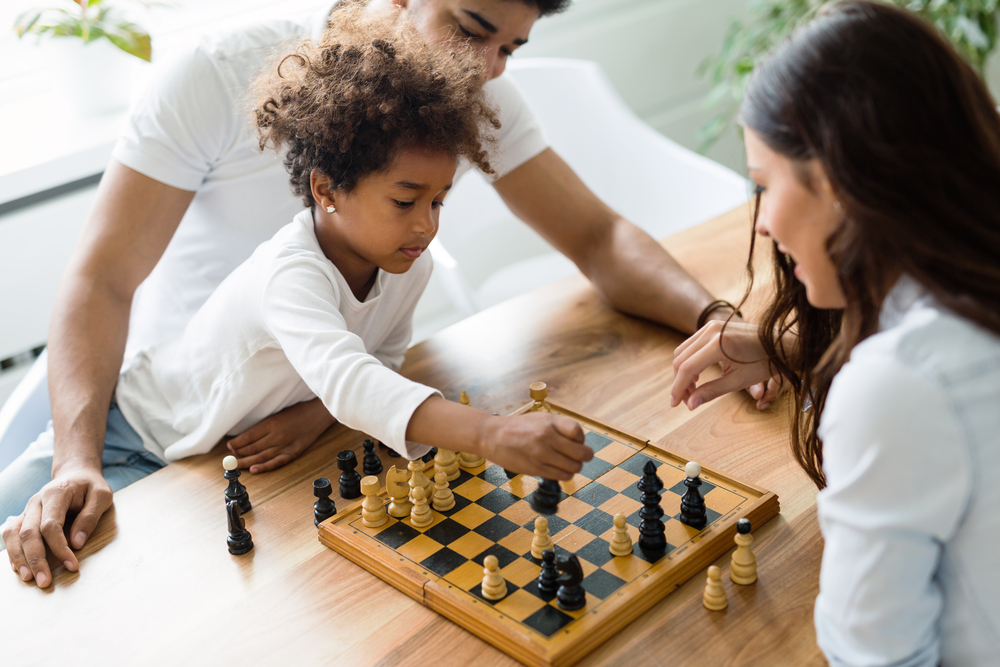
Spatial awareness chess can be a powerful tool for young children aged 5-6, fostering their cognitive and developmental growth. At this age, most children are at a crucial stage of developing essential skills that will benefit them in various aspects of life. When parents or teachers introduce spatial awareness chess, they are providing a fun and challenging way to enhance these skills.
Firstly, spatial awareness is the ability to understand and interact with the space around oneself and the relationship between objects in that space. It is a fundamental skill in both early math and reading. Playing chess helps children visualize patterns, identify positions, and predict moves, directly translating to improved spatial memory and problem-solving abilities.
Secondly, chess stimulates critical thinking and planning. Although young children might not grasp all the complexities of the game, simplifying concepts can help them learn strategic thinking, patience, and perseverance. These qualities are valuable in everyday decision-making and task execution.
Also, chess fosters concentration and patience. Keeping focus on the board and thinking ahead trains the brain to maintain attention on other tasks, which can be particularly beneficial in academic settings.
Overall, incorporating spatial awareness chess into a child's routine makes for enjoyable learning, reinforcing essential skills that underpin many areas of education and personal development. Parents and teachers thus investing in spatial chess give their children a head start in both cognitive and life skills.