Letter tracing skills English for Beginners Worksheets for Ages 5-6
3 filtered results
-
From - To
Introduce your child to the fascinating world of English writing with our engaging Letter Tracing Skills worksheets designed for beginners aged 5-6. These printable resources are crafted to build strong foundational skills in young learners. Each worksheet focuses on guiding children through tracing letters, enhancing their fine motor skills, and improving hand-eye coordination. With vibrant illustrations and clear, dotted lines, our materials make learning both fun and educational. Perfect for English as a second language students, these activities will boost their confidence and prepare them for more advanced writing tasks. Jumpstart your child's writing journey today!
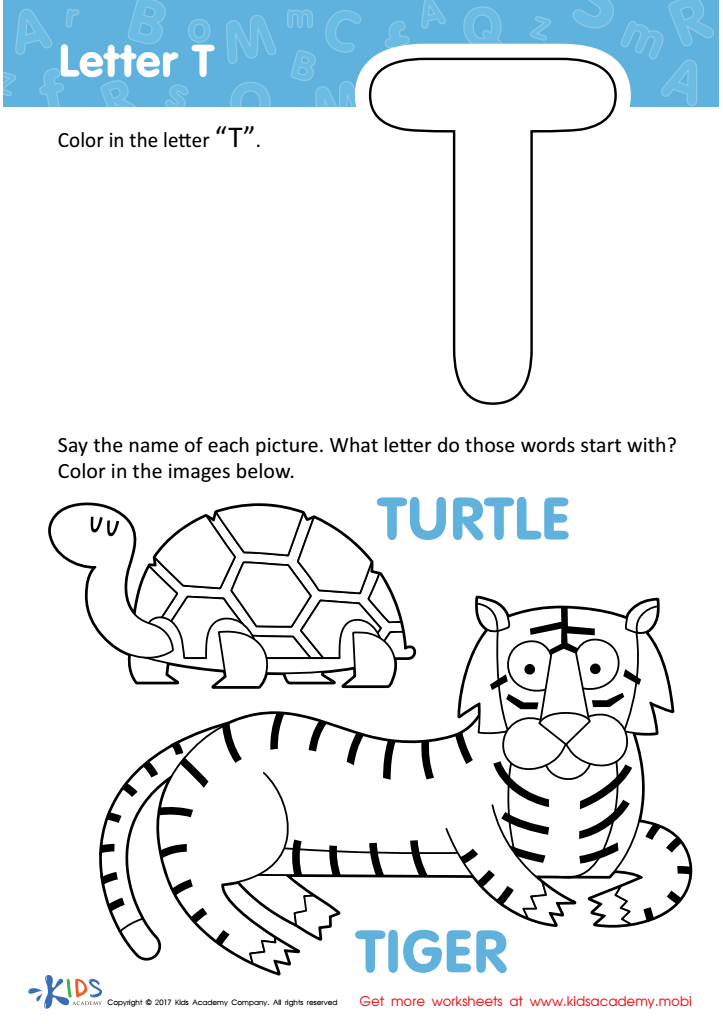
Letter T Coloring Sheet
 Assign to My Students
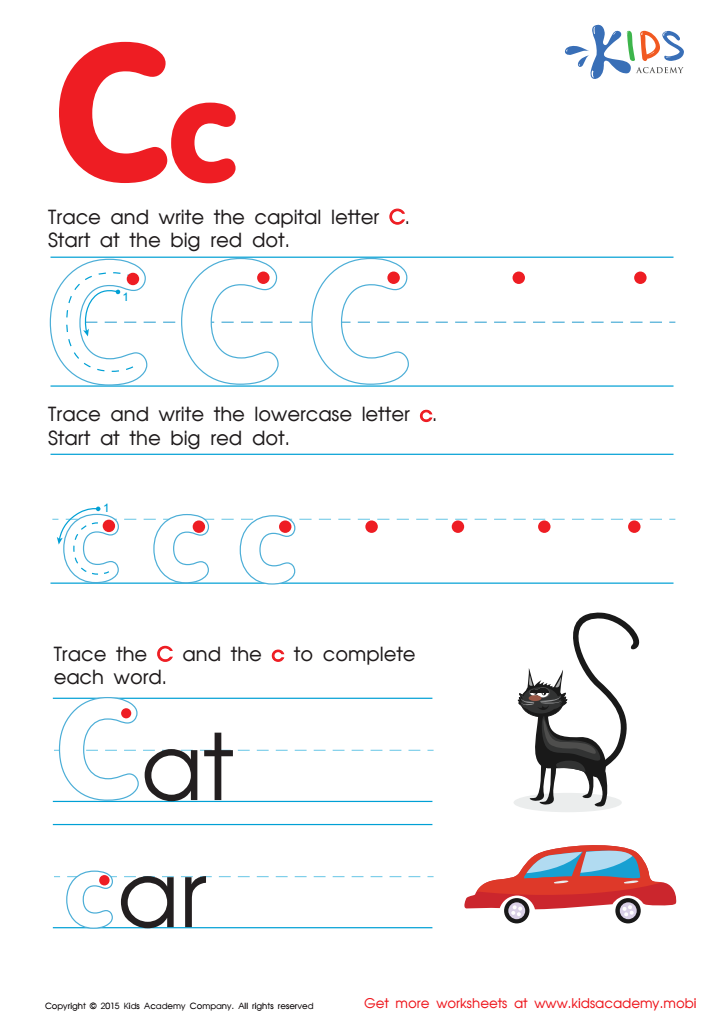
Letter C Tracing Page
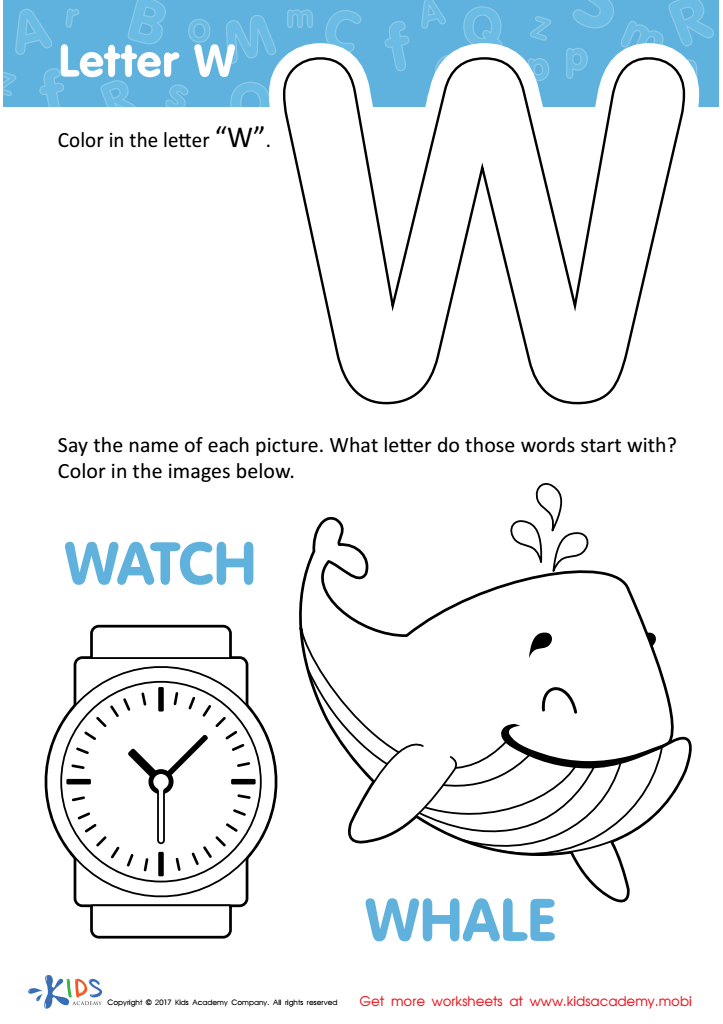
Letter W Coloring Sheet
Assign to My Students





Letter tracing is a crucial foundational skill for young learners, particularly for children aged 5-6. At this age, kids are just beginning to grasp the basic elements of reading and writing. Developing strong letter tracing skills serves several essential purposes.
Firstly, letter tracing helps children develop fine motor skills, which are necessary for writing. This practice strengthens hand muscles and improves hand-eye coordination. As a result, children are better prepared to hold a pencil and create recognizable letters.
Secondly, tracing letters reinforces shape recognition and spatial awareness. Young learners become familiarized with the alphabet's forms and curves, enabling them to distinguish one letter from another. Accurate letter recognition is a stepping stone to more advanced literacy skills, such as reading and spelling.
Furthermore, letter tracing activities often boost a child’s confidence and motivation. When children succeed in tracing letters, they experience a sense of accomplishment. This can foster a positive attitude towards learning, encouraging further practice and effort in their educational journey.
Finally, engaging in letter tracing can pique a child's interest in the English language, creating a solid foundation for future language skills. Both teachers and parents have essential roles in facilitating these initial learning experiences, setting the stage for long-term academic success.