
Addition up to 5 Worksheets for Ages 5-6
4 filtered results
Difficulty Level
Grade
Age
-
From - To
Subject
Activity
Standards
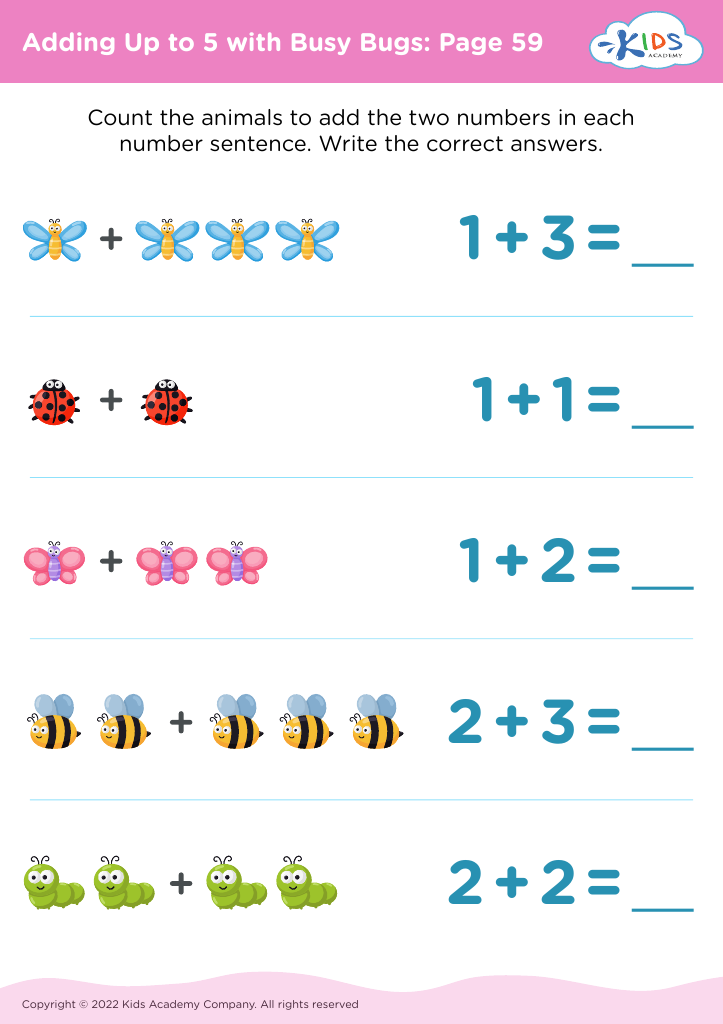
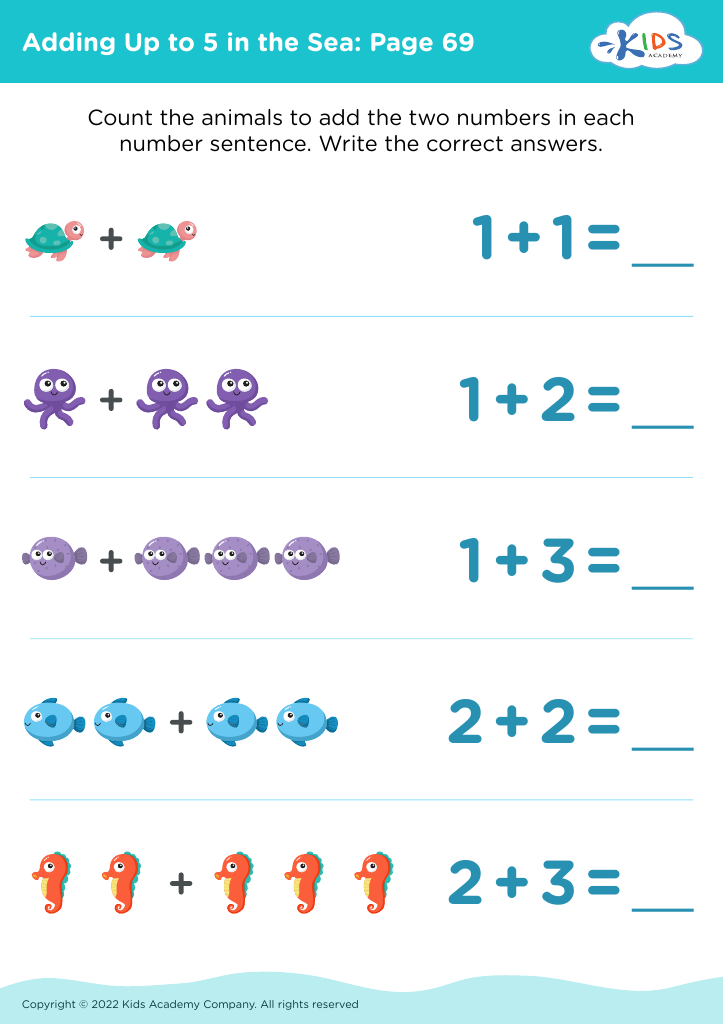
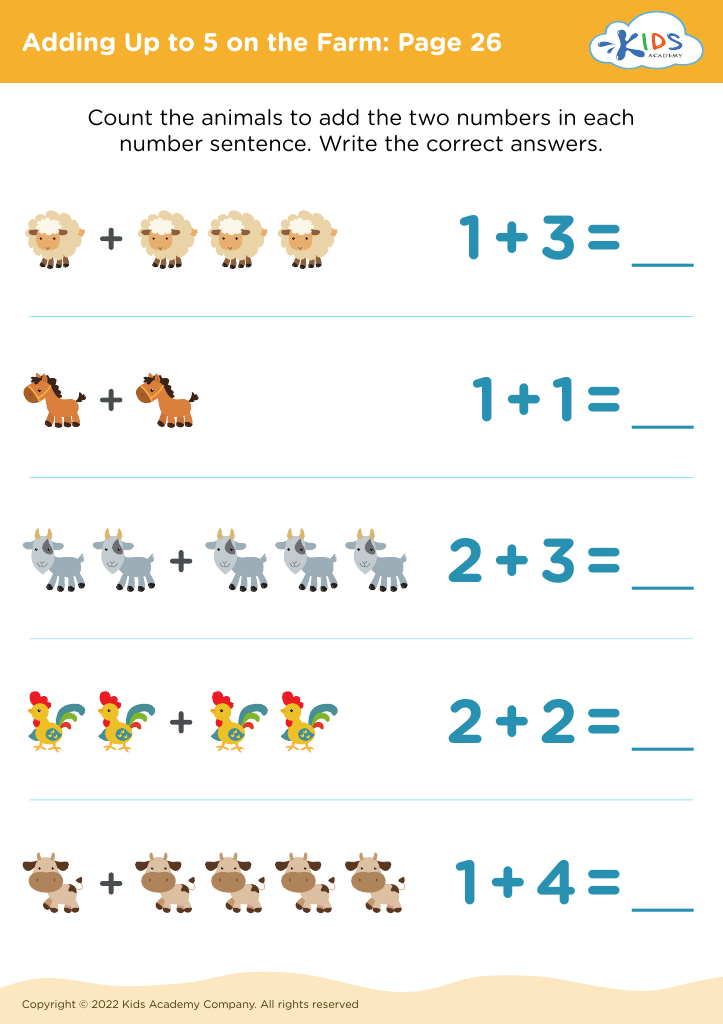
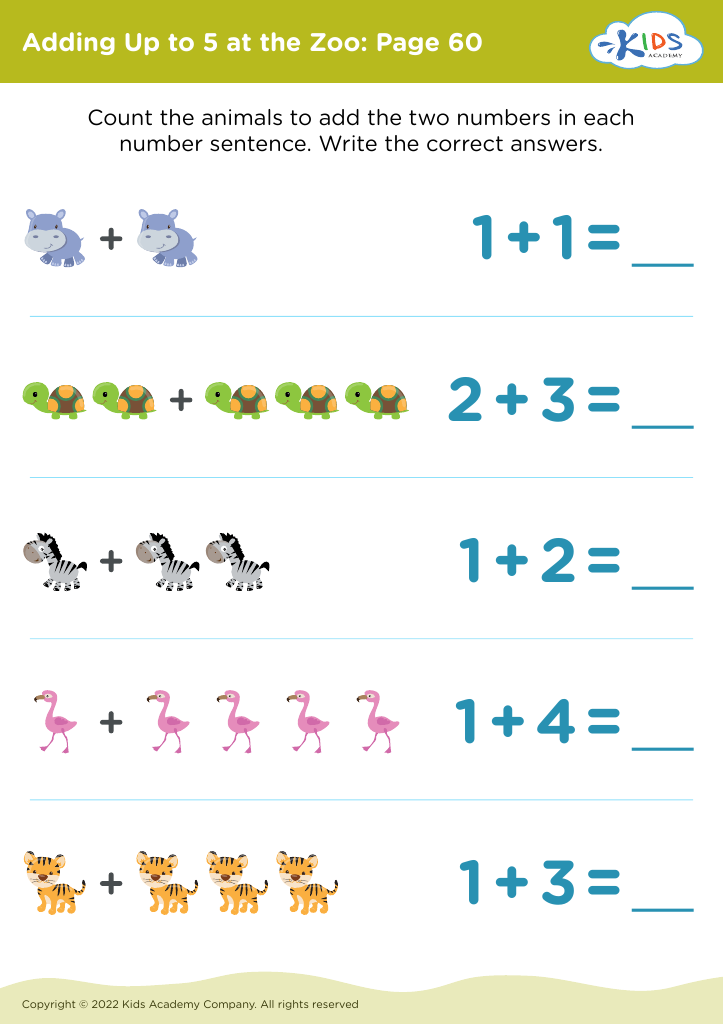
Welcome to our "Addition up to 5 Worksheets" page, designed specifically for children aged 5-6! These engaging and interactive worksheets make learning addition fun and accessible. With a focus on numbers 1 through 5, young learners can practice their addition skills through colorful activities that cater to various learning styles. Each worksheet encourages visual recognition of numbers and aids in developing basic math skills through playful exercises like counting objects and simple equations. Ideal for classroom use or at home, these worksheets will build a strong mathematical foundation while boosting confidence in early arithmetic. Start your child’s addition journey today!
Favorites
With answer key
Interactive
Join Kids Academy for Free
Who is primarily going to use this learning content?


.jpg)




.jpg)
Understanding addition up to 5 is crucial for children aged 5-6 as it lays the foundation for their mathematical skills and overall cognitive development. Here are some key reasons why parents and teachers should prioritize this area:
First, mastering the basics of addition fosters confidence in young learners. When children can accurately add small numbers, they experience a sense of achievement that motivates them to engage more with math. This early success helps form a positive attitude toward learning, which is vital for future academic endeavors.
Second, addition up to 5 enhances critical thinking and problem-solving abilities. It encourages children to engage with numbers and understand concepts like quantity and comparison, setting the stage for more complex mathematical operations later on.
Additionally, early math skills are closely linked to future academic performance. Studies have shown that children who grasp basic addition are more likely to excel in math as they progress through school.
Lastly, integrating fun activities, such as games and hands-on learning, can make addition enjoyable, creating memorable learning experiences. By supporting children in mastering this essential skill, parents and teachers empower them to build a strong mathematical foundation for lifelong success.








