Basic addition practice Worksheets for Ages 5-6
16 filtered results
-
From - To
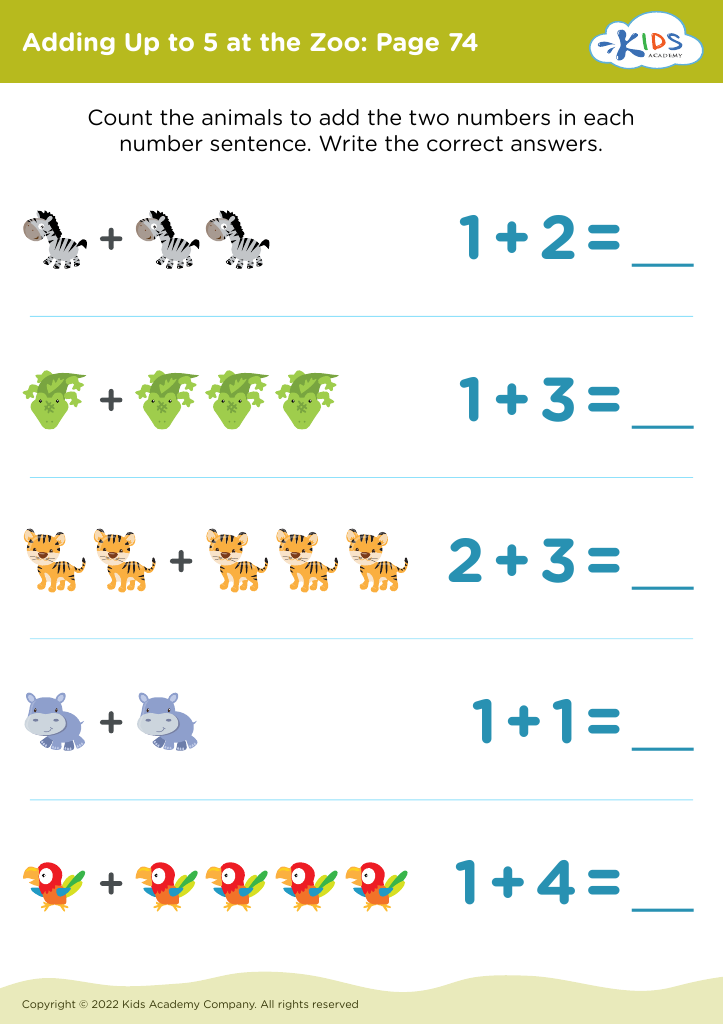
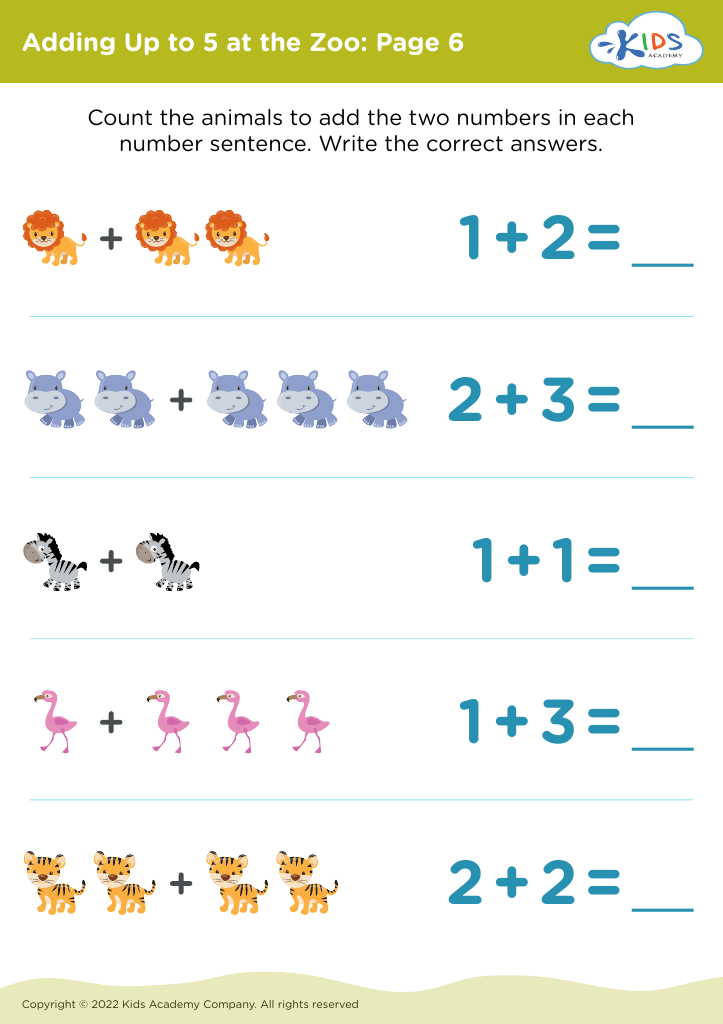
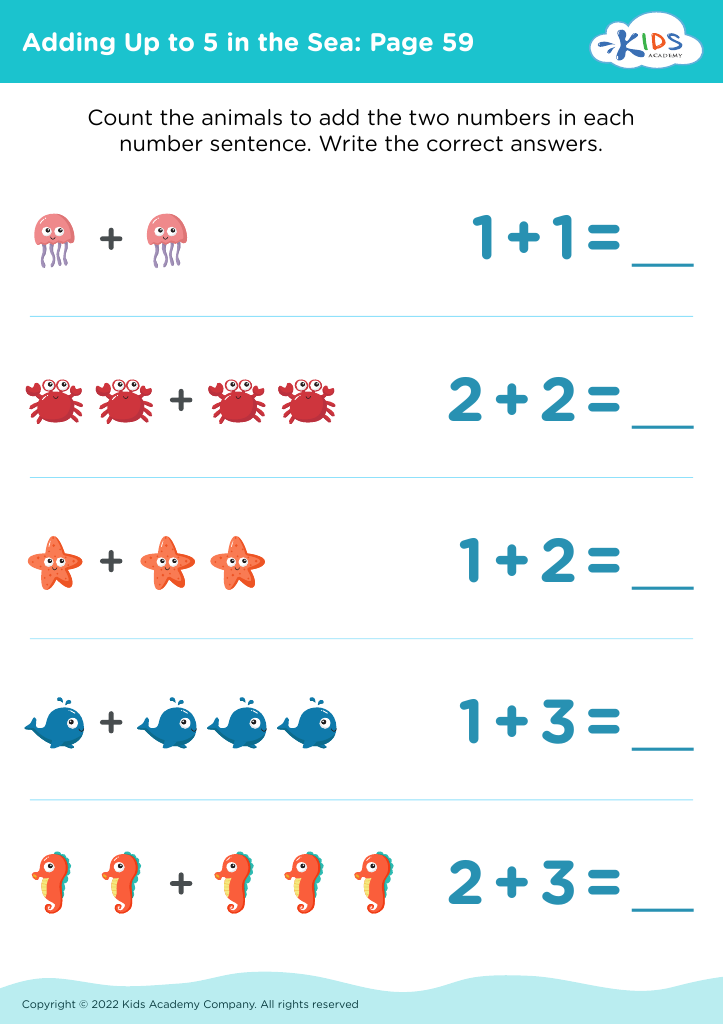
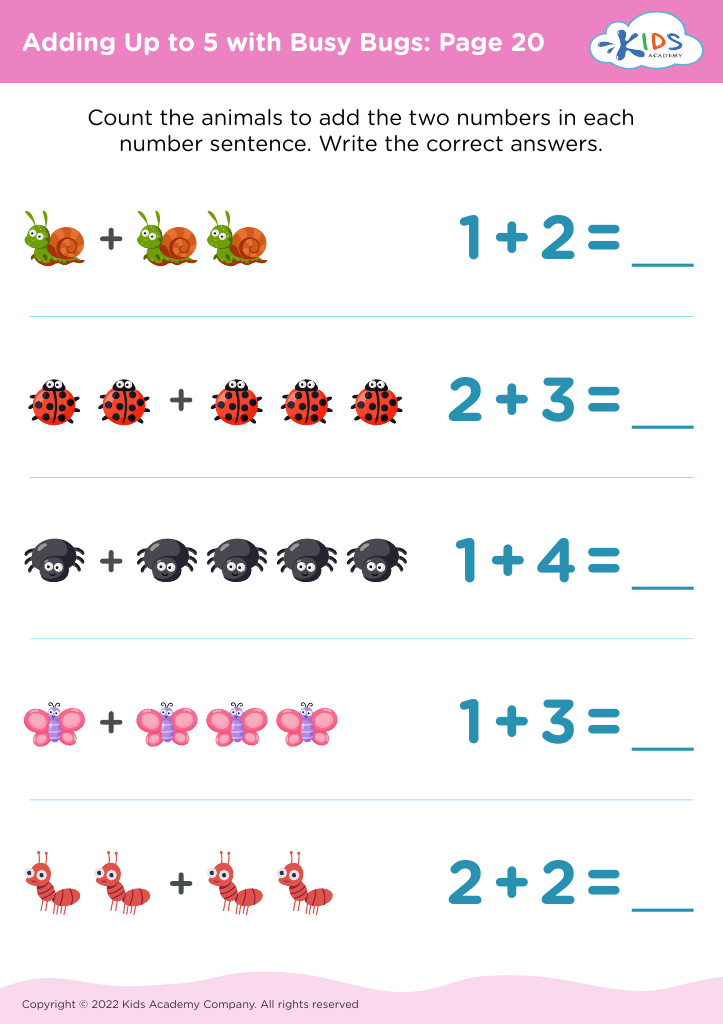
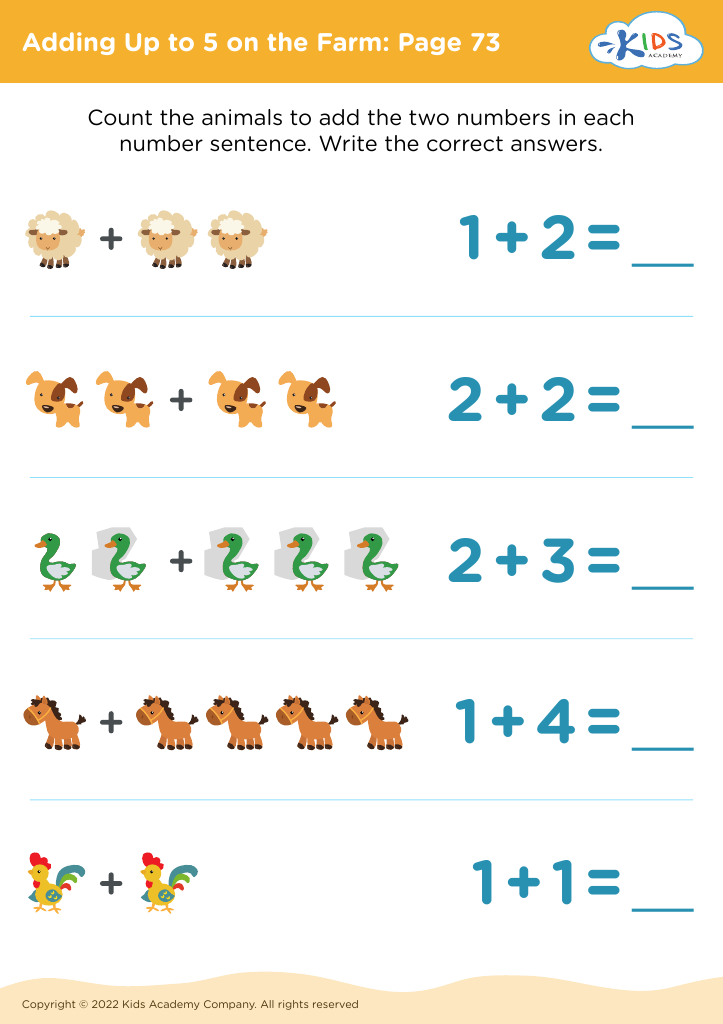
Welcome to our Basic Addition Practice Worksheets for Ages 5-6! Designed to make learning fun and engaging, these worksheets help young learners develop essential math skills through colorful and interactive activities. Each worksheet features simple addition problems that encourage children to practice and build their confidence in math. With appealing illustrations and varied exercises, kids will enjoy working through addition tasks, whether at home or in the classroom. Perfect for early childhood education, these printable worksheets support cognitive development while making numeracy enjoyable. Start your child's mathematical journey today and turn learning into an exciting adventure!
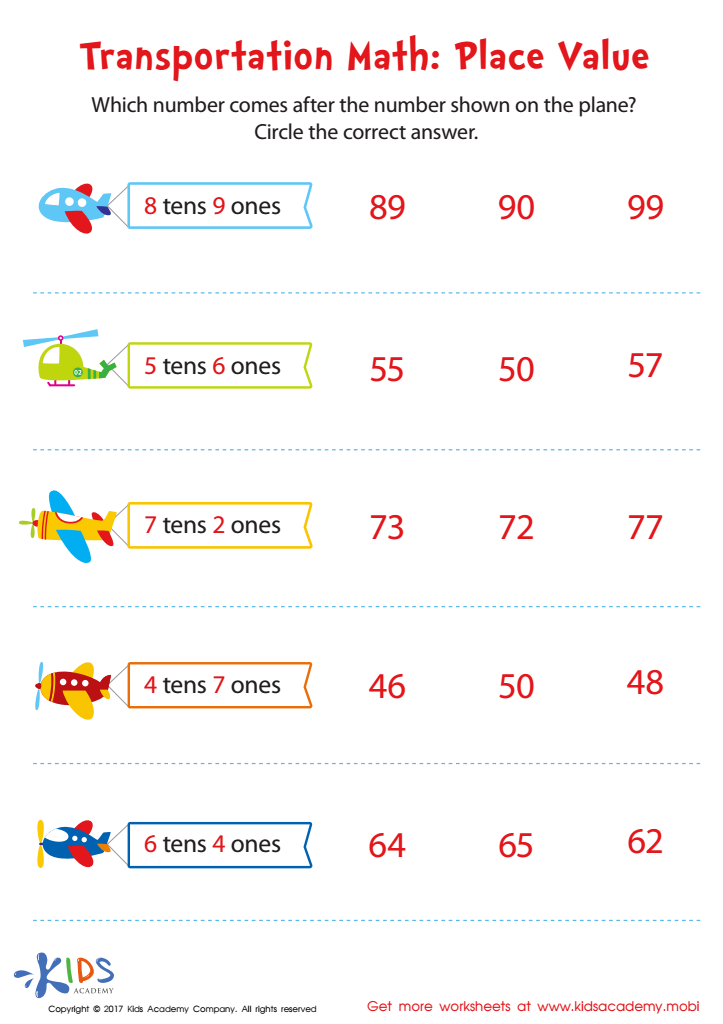
Transportation Math Printable
 Assign to My Students
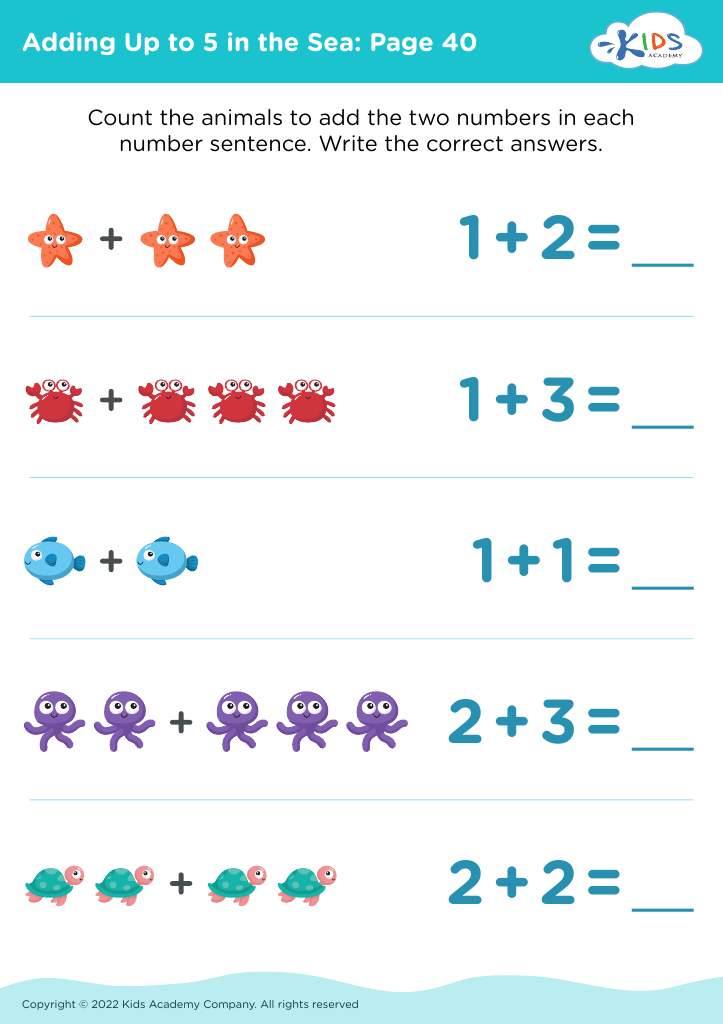
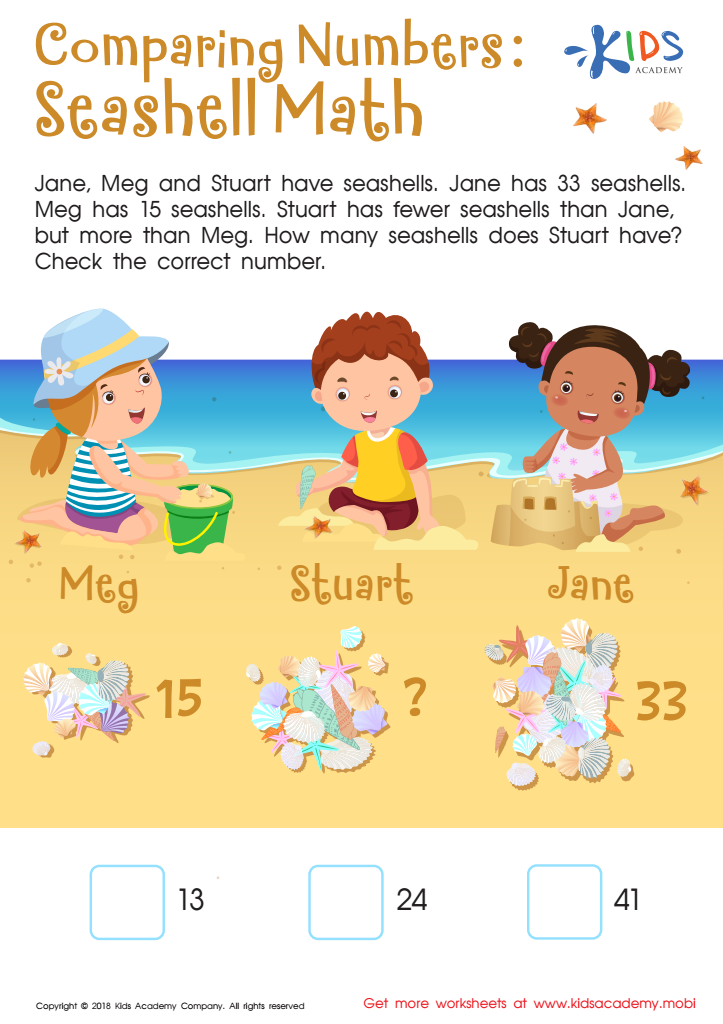
Seashell Collectors Worksheet
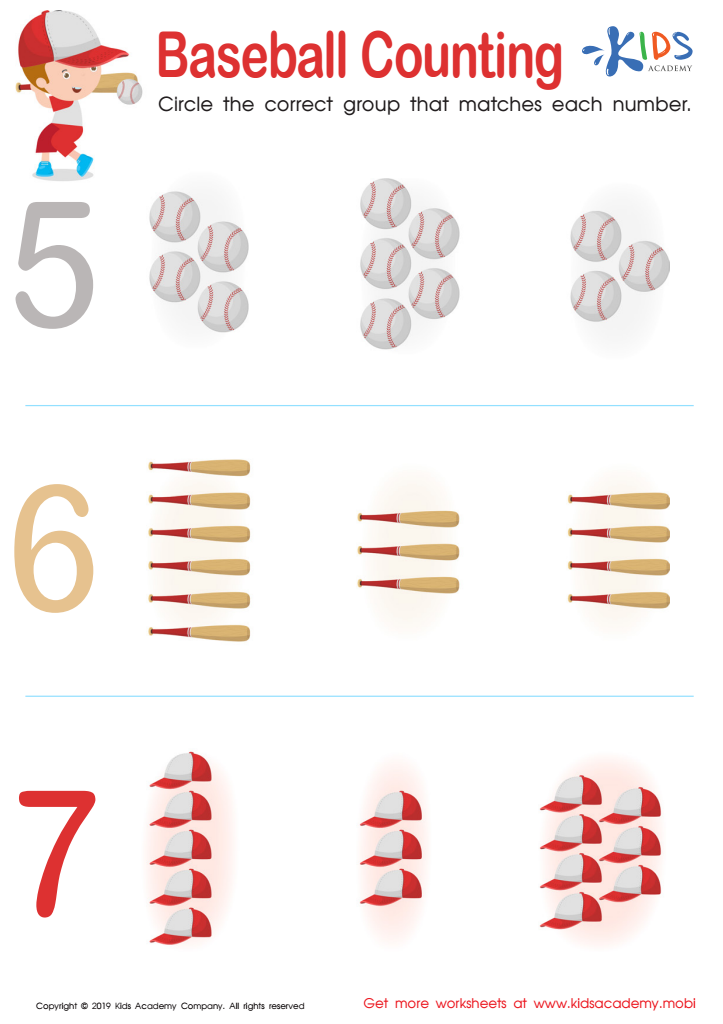
Baseball Counting Worksheet
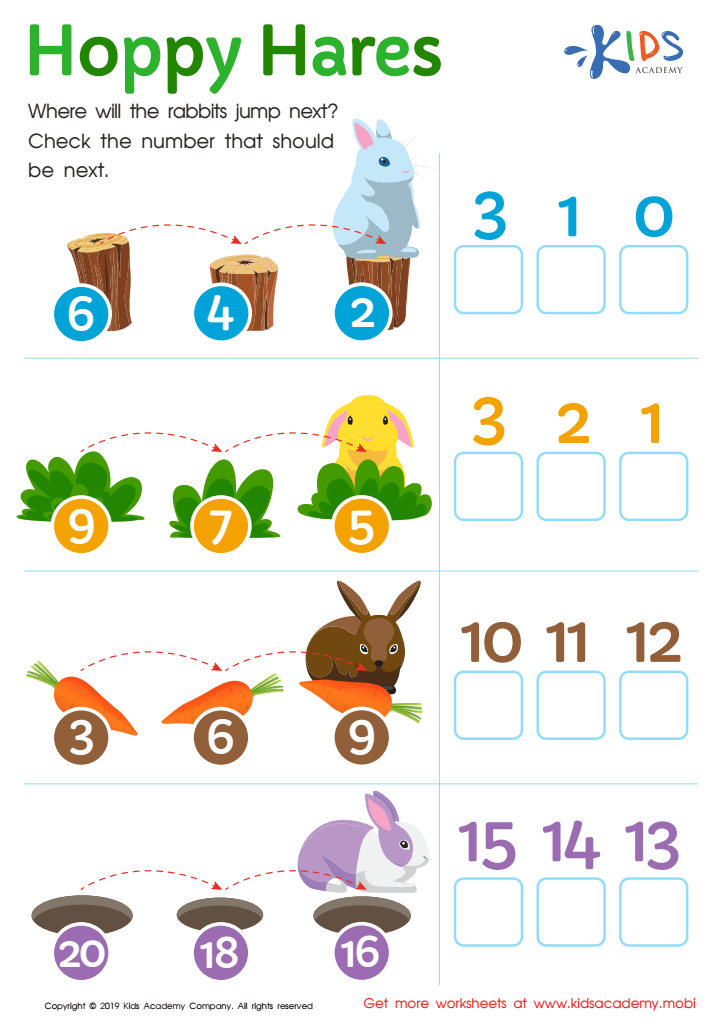
Hoppy Hares Worksheet
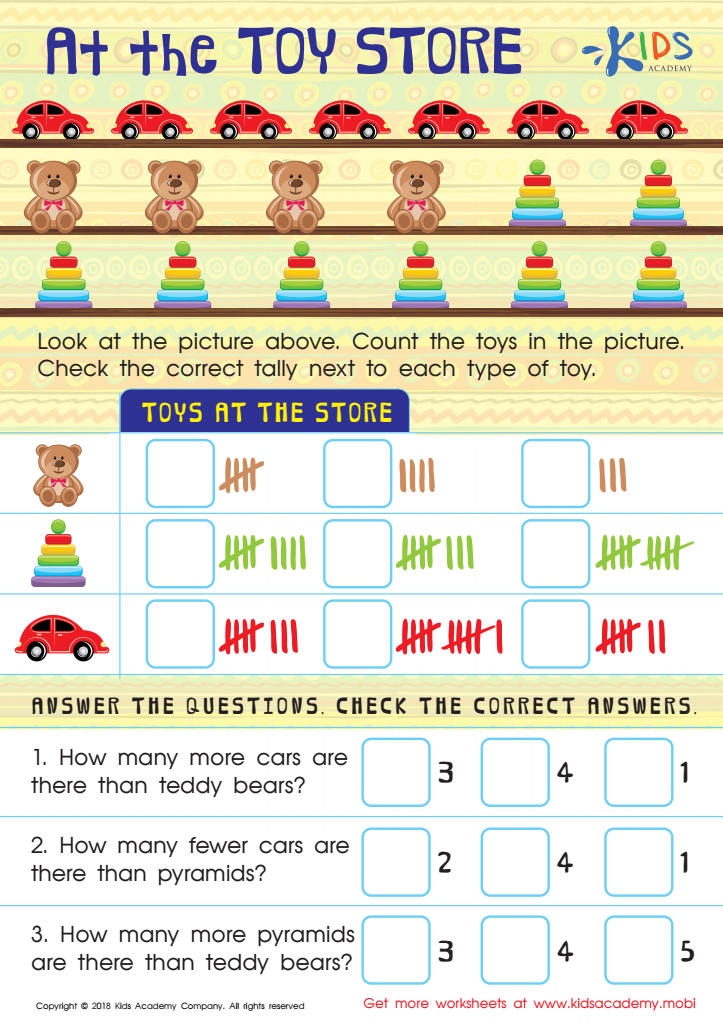
Tally Chart: At the Toy Store Worksheet
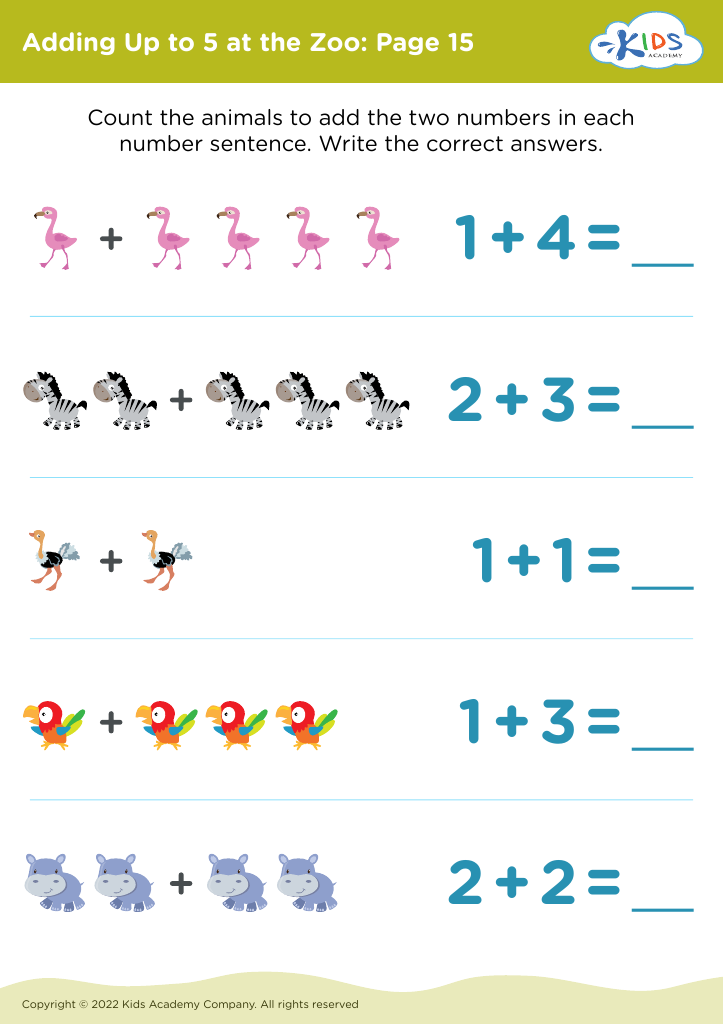
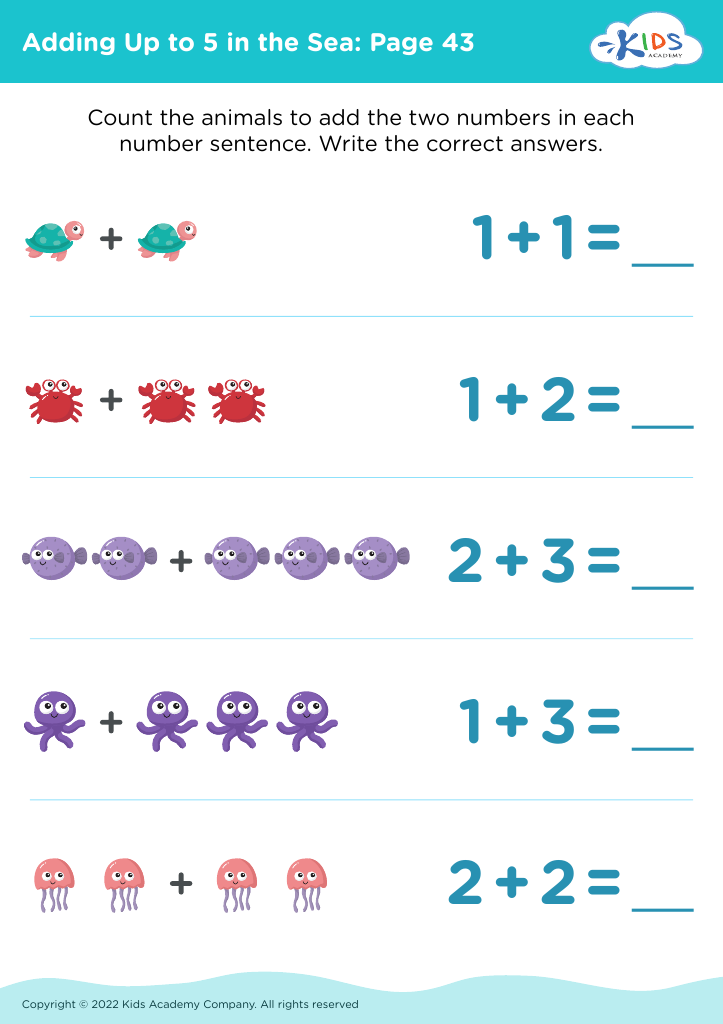
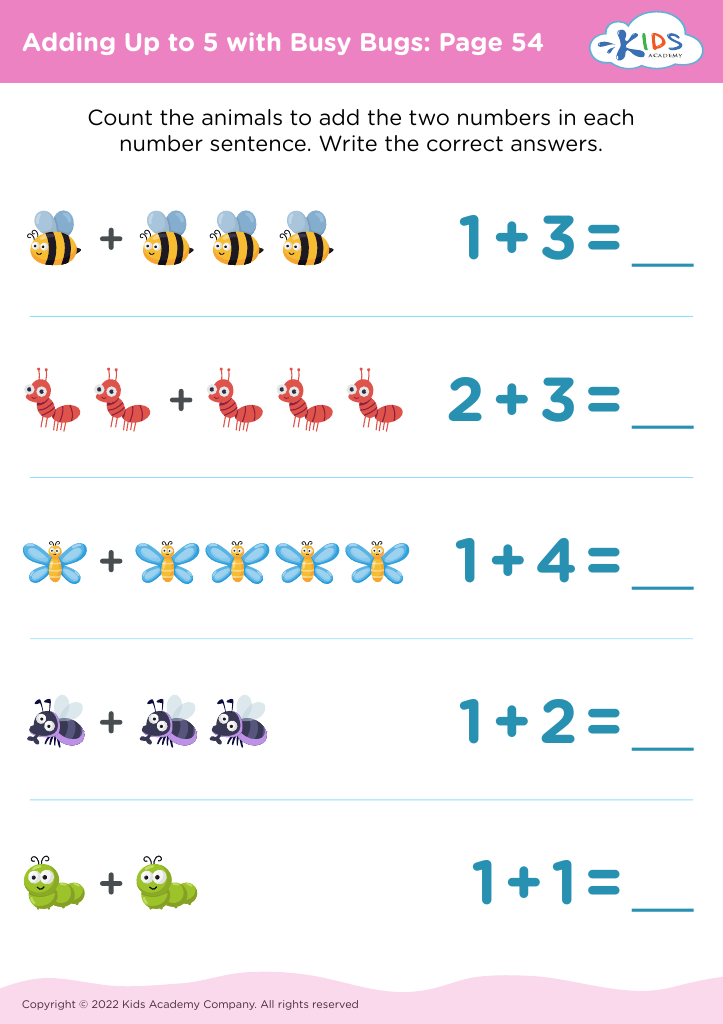
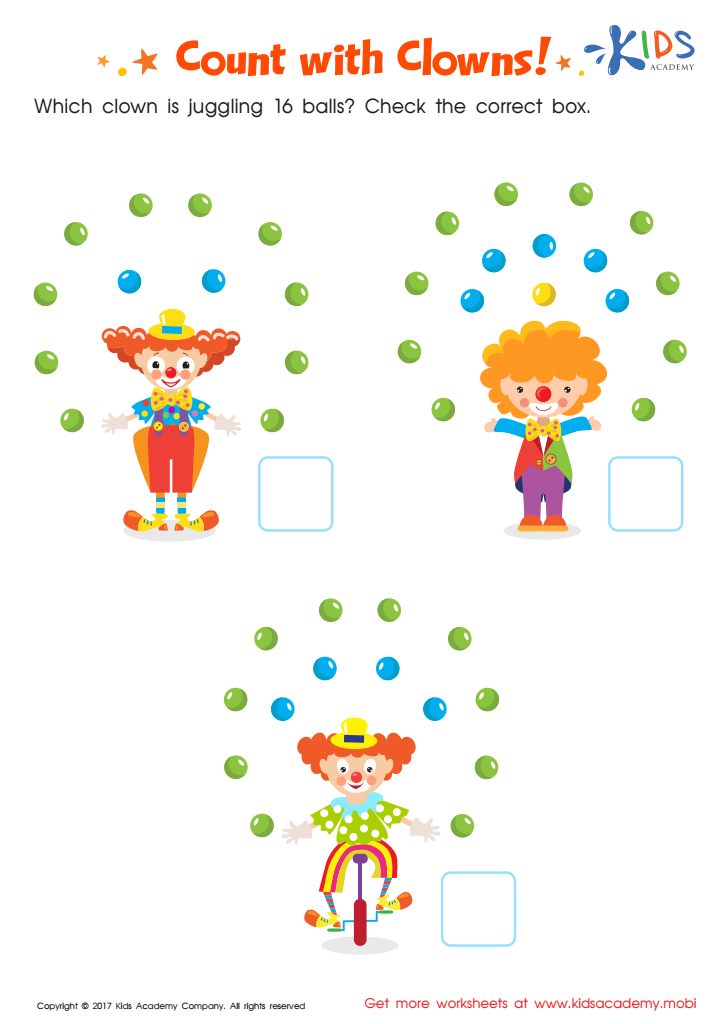
Count with Clowns Worksheet








Basic addition practice for children aged 5-6 is crucial for several reasons. At this developmental stage, children are forming foundational math skills that will support their future learning. Addition is one of the first mathematical concepts they encounter, and mastering it builds confidence and motivation in young learners.
Regular practice hones not only computational skills but also crucial cognitive skills such as problem-solving, critical thinking, and analytical reasoning. Additionally, engaging in basic addition helps children understand the relationship between numbers, fostering number sense and comprehension.
Moreover, consistent practice allows for the reinforcement of their learning. This creates a solid groundwork for more advanced concepts they've yet to encounter, such as subtraction, multiplication, and division. Encouraging a strong arithmetic foundation can influence a child's overall academic performance and attitudes toward learning.
Beyond academics, practicing addition with parents or teachers can strengthen the emotional bond between them. Interactive learning sessions foster a supportive environment, making math enjoyable rather than daunting.
In summary, basic addition practice lays a crucial stepping stone for young learners' cognitive, academic, and emotional development, fostering a lifelong appreciation for mathematics. Parents and teachers play an essential role in guiding and encouraging this process.








