Basic Arithmetic Worksheets for Ages 5-6 - Page 3
52 filtered results
-
From - To
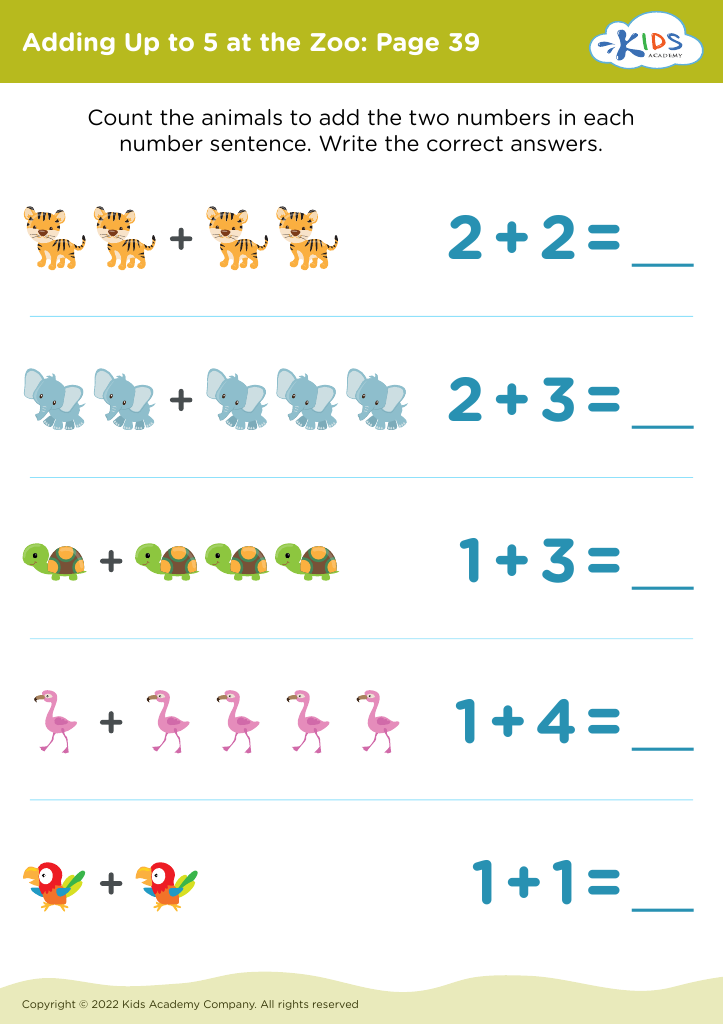
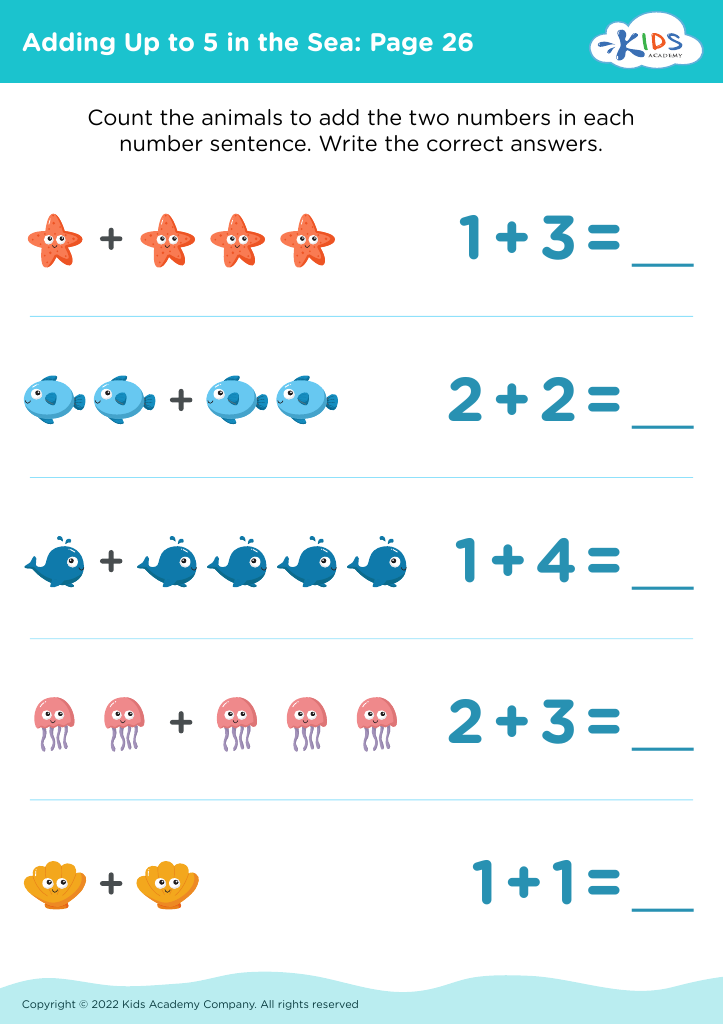
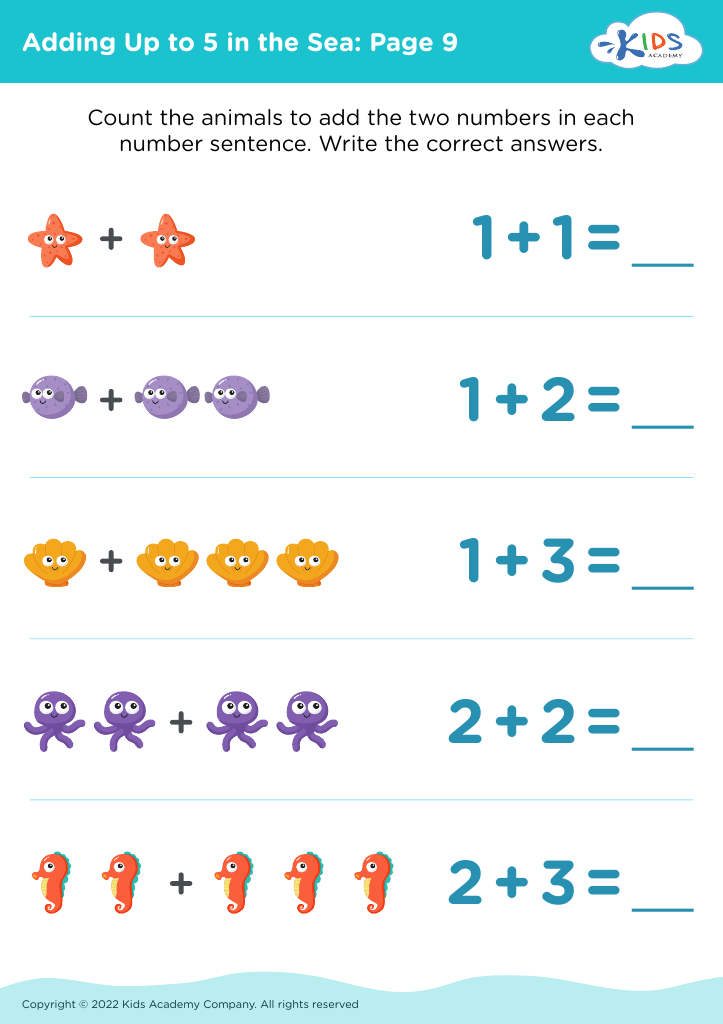








Basic arithmetic serves as the foundation for all future mathematics and critical thinking skills, making it essential for children aged 5-6. At this stage, children are naturally curious and eager to explore numbers, so parents and teachers should engage them in basic addition and subtraction. Learning these concepts enhances cognitive development, as it encourages problem-solving, logical reasoning, and spatial awareness.
Furthermore, arithmetic helps children understand their environment better. From counting objects to comparing quantities, arithmetic skills are relevant in everyday life. Encouraging early math skills can enhance a child's confidence, leading them to explore advanced topics in later years without fear.
Moreover, literacy in arithmetic supports academic success across subjects. Students who grasp basic math concepts often excel in reading and science, as many fields require quantitative reasoning. Engaging in fun activities, games, or puzzles centered on basic arithmetic can promote a love for mathematics and learning.
Ultimately, investing time in basic arithmetic during ages 5-6 sparks a lifelong interest in learning, setting the stage for personal and academic success. Teachers and parents play a pivotal role in facilitating this critical developmental phase, shaping capable, confident learners ready for future challenges.








