
Basic math abilities Worksheets for Ages 5-6
3 filtered results
Difficulty Level
Grade
Age
-
From - To
Subject
Activity
Standards
Enhance your child's foundational math skills with our engaging Basic Math Abilities Worksheets designed specifically for ages 5-6. These printable resources focus on essential concepts such as counting, number recognition, addition, and subtraction, tailored to foster early mathematical understanding. Each worksheet is interactive and fun, encouraging young learners to explore math through colorful illustrations and relatable activities. Parents and educators can easily access these worksheets online, supporting children's growth in a playful yet educational environment. Perfect for home or classroom use, our Basic Math Abilities Worksheets will ignite a love for learning and build confidence in young mathematicians!
Favorites
With answer key
Interactive
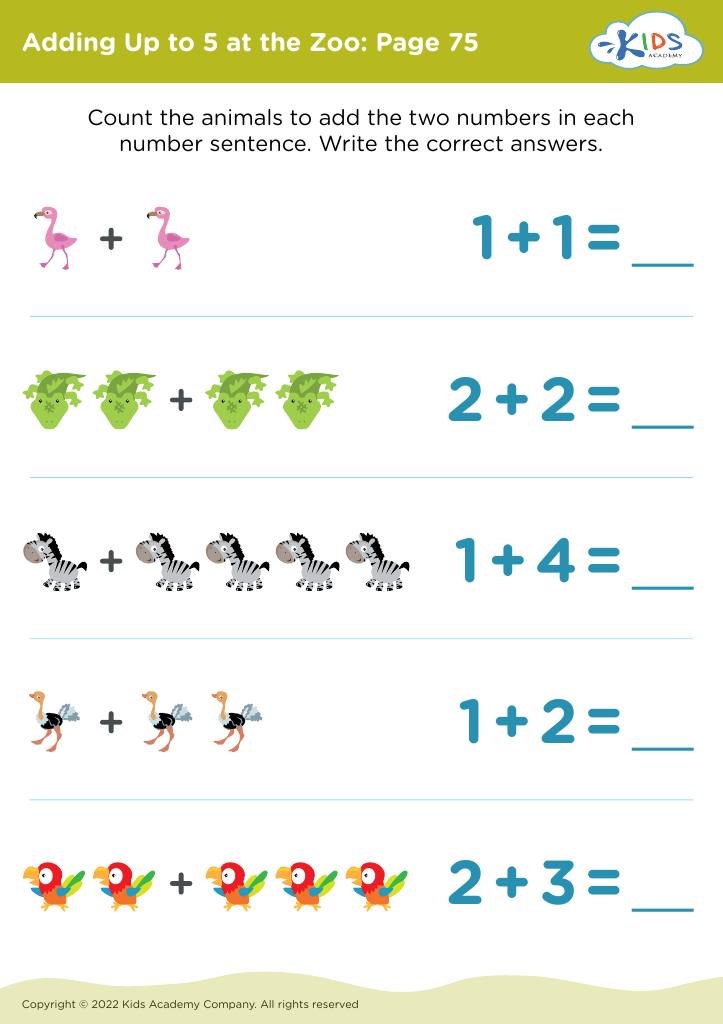
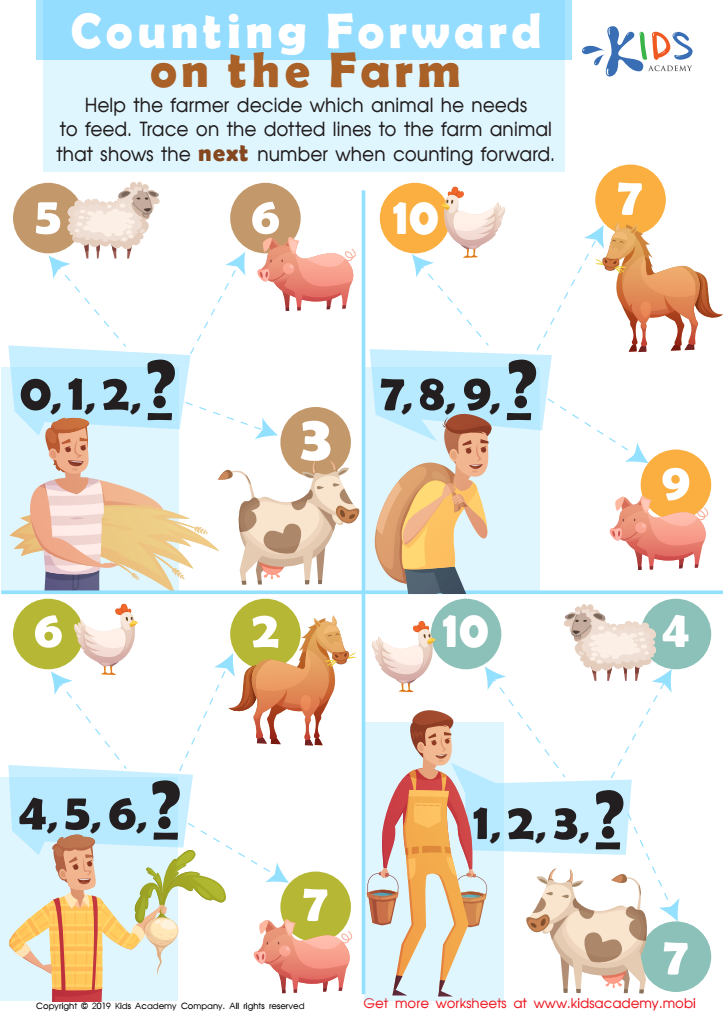
Counting Forward On the Farm Worksheet
Help your child practice counting with this fun worksheet. Have them help a farmer feed the right animal by counting on from a starting point. This activity will help them build number line thinking and refine fine motor skills.
 Assign to My Students
Counting Forward On the Farm Worksheet
Worksheet
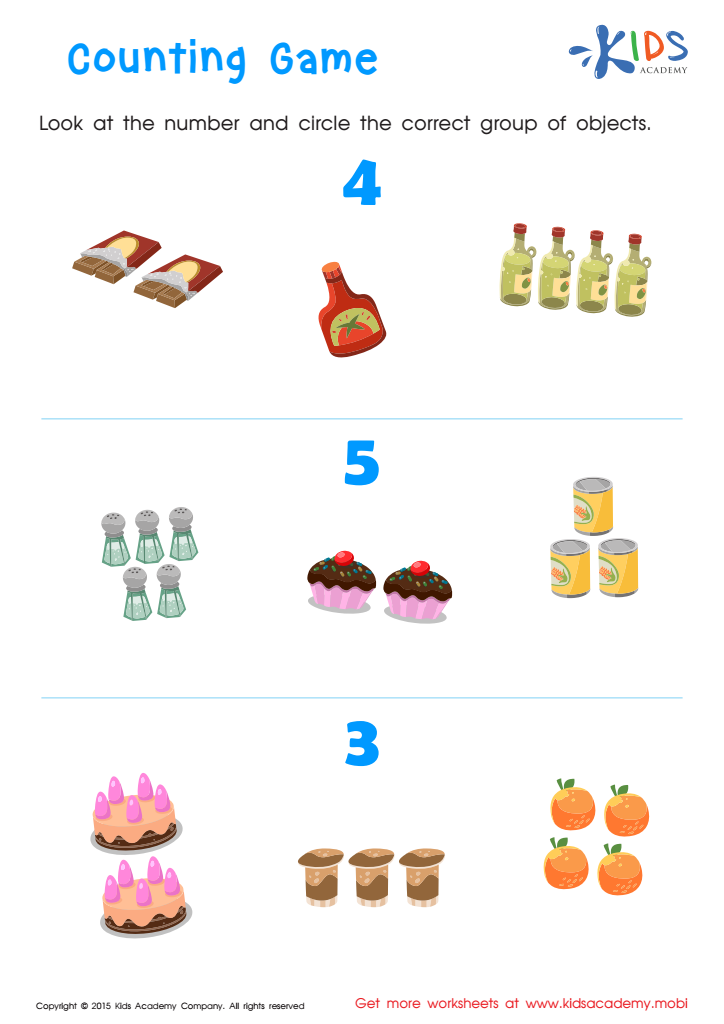
Counting Worksheet
Kids can connect printed numbers to groups of objects on this worksheet, helping them learn math by visually seeing item groups. Give your preschooler a fun, interactive way to learn counting!
Counting Worksheet
Worksheet
Join Kids Academy for Free
Who is primarily going to use this learning content?






Basic math abilities for children aged 5-6 are crucial for their overall development and future academic success. At this stage, children are like sponges, absorbing information and developing foundational skills that will support their learning in more complex subjects later on. Mastering basic math concepts, such as counting, number recognition, and simple addition and subtraction, helps cultivate logical thinking and problem-solving abilities, which are essential across all areas of learning.
Moreover, early math skills contribute to a child's confidence and self-esteem. When children successfully grasp basic concepts, they feel a sense of accomplishment, encouraging them to engage more actively in their learning journey. This positive attitude toward math can carry into their future education and foster a lifelong interest in the subject.
In addition, understanding numbers and shapes enhances a child’s ability to navigate everyday situations, from basic budgeting to telling time. For parents and teachers, prioritizing concise math instruction and hands-on activities ensures that children develop these critical skills in a fun and engaging way. Investing time and effort into fostering basic math abilities sets the stage for not only academic readiness but also equips children with valuable skills that will serve them in various aspects of life.








