Basic physics concepts Worksheets for Ages 5-6
3 filtered results
-
From - To
Introduce young minds to the wonders of science with our engaging "Basic Physics Concepts Worksheets" designed for ages 5-6. These vibrant, easy-to-understand worksheets make learning fun and interactive, covering essential topics such as motion, gravity, energy, and more. Each worksheet is crafted to spark curiosity and foster a love for science through hands-on activities and simple experiments. Perfect for both classroom and home use, these resources help build a solid foundation in physics while enhancing critical thinking and problem-solving skills. Explore our collection today and watch your child's scientific curiosity soar!
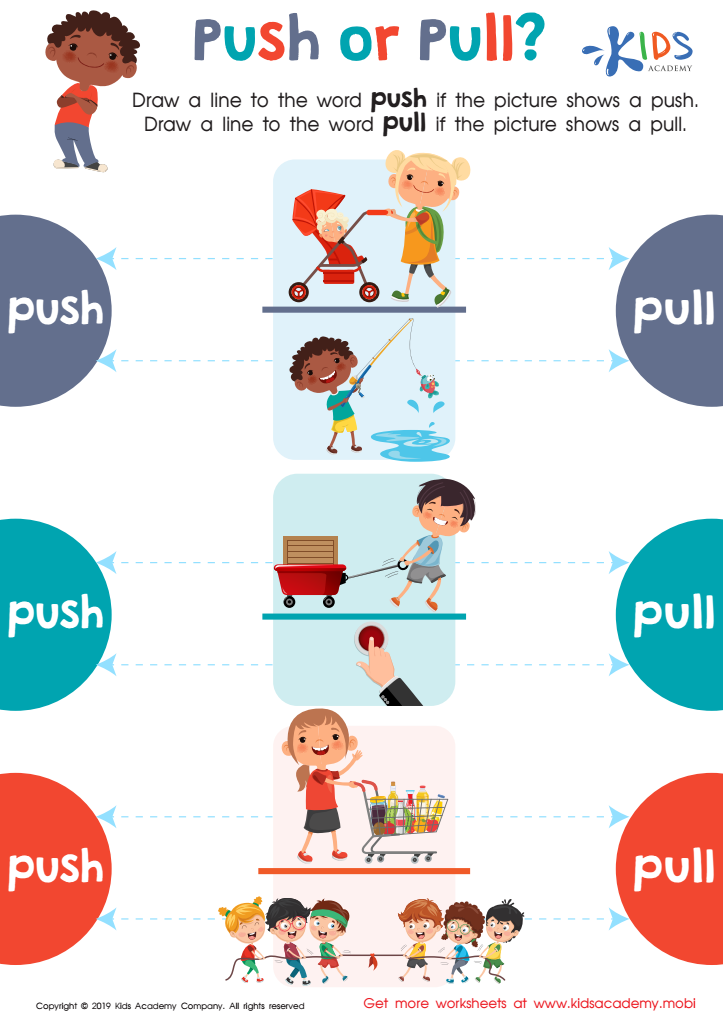
Push or Pull? Worksheet
 Assign to My Students
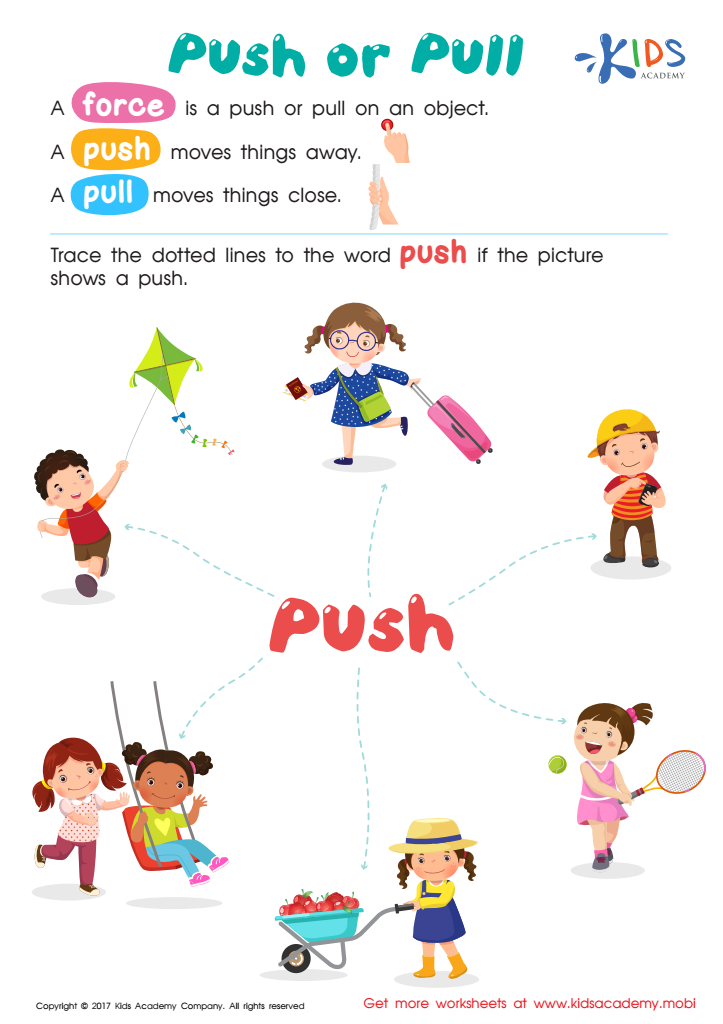
Push or Pull Worksheet
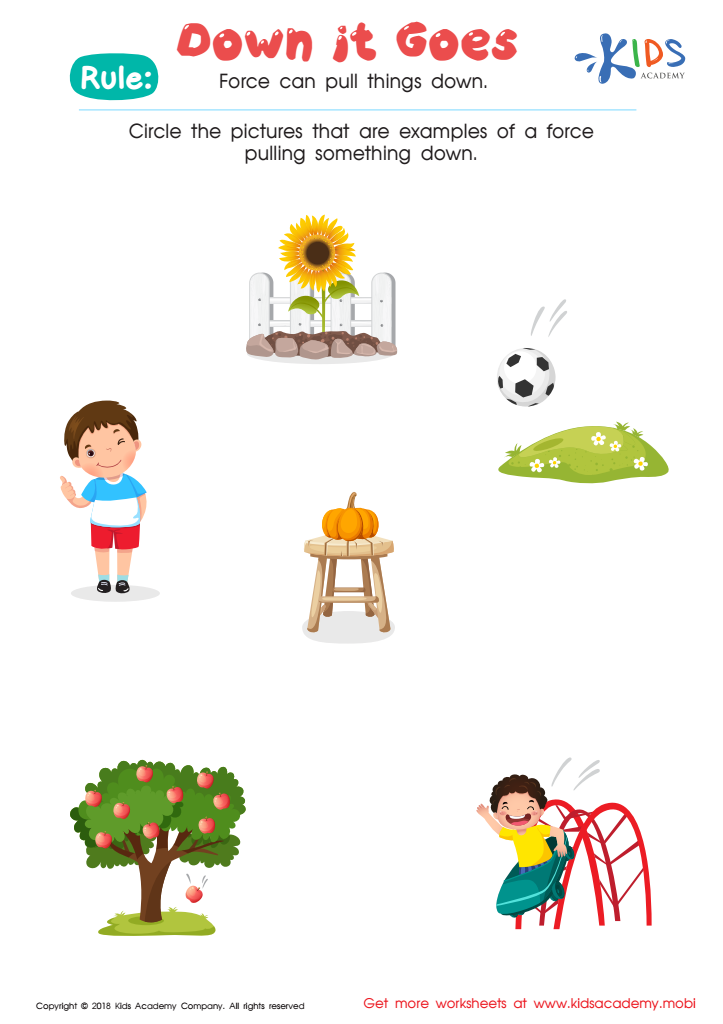
Down it Goes Worksheet








Basic physics concepts for ages 5-6 are crucial for several reasons, and parents and teachers should care about introducing them early on. Firstly, young children are naturally curious and perceptive. Introducing simple physics concepts like gravity, motion, and energy taps into this innate curiosity, fostering a love for learning and exploration. This early engagement helps to strengthen critical thinking and problem-solving skills.
Understanding basic physics helps children make sense of the world around them. They experience concepts like force when they push a toy car, or gravity when an object falls. By learning the scientific explanations behind these experiences, children can connect their observations with logical reasoning. This builds a strong foundation for more complex scientific learning later on.
Moreover, early exposure to scientific concepts supports the development of language and communication skills. Discussing and learning about simple experiments and everyday phenomena enrich children's vocabulary and ability to articulate their observations. It also encourages questioning and investigative skills.
Finally, introducing physics in a playful and engaging manner, through fun activities and experiments, aligns with effective Early Childhood Education principles. It ensures learning is both educational and enjoyable, promoting a positive attitude towards science and school as a whole, setting children on a path for continued academic success.








