
Chess knowledge Worksheets for Ages 5-6
5 filtered results
Difficulty Level
Grade
Age
-
From - To
Subject
Activity
Standards
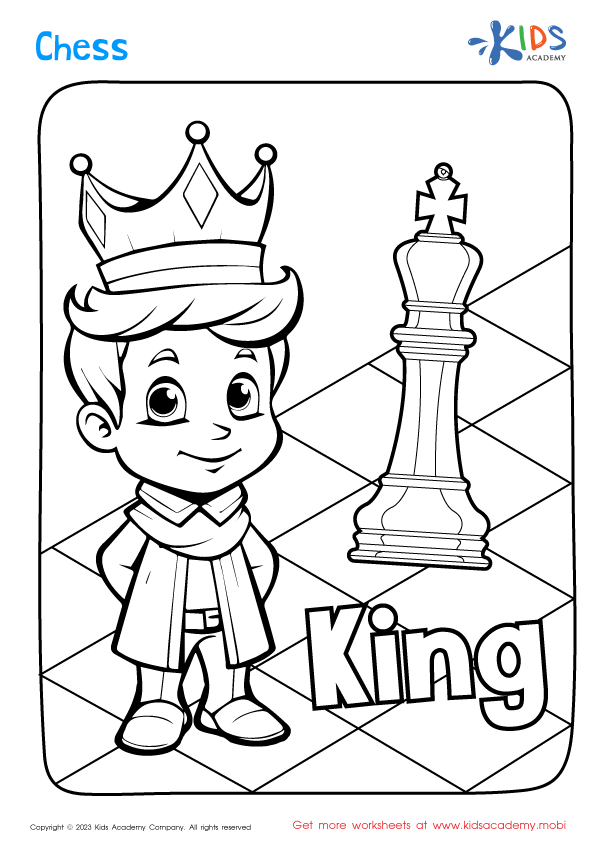
Unlock the world of chess for young minds with our engaging Chess Knowledge Worksheets for Ages 5-6. These worksheets are designed specifically to introduce children to the basic principles of chess, including identifying pieces, understanding their movements, and learning simple strategies. Each activity is crafted to be fun and educational, fostering critical thinking and problem-solving skills in early learners. With colorful illustrations and easy-to-follow instructions, children will enjoy every moment of discovery. Chess not only enhances cognitive abilities but also teaches patience and concentration. Start your child’s chess journey today and watch them develop lifelong strategic skills.
Favorites
With answer key
Interactive
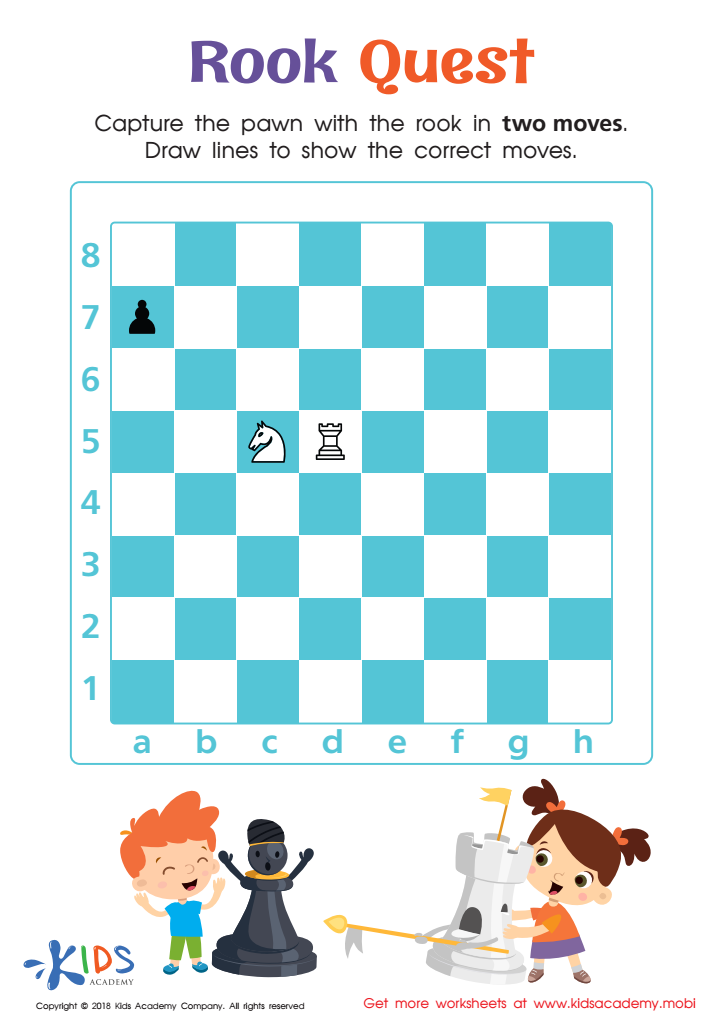
Rook Quest Worksheet
Is your child a chess whiz? Check their progress with this rook quest: get the enemy's pawn piece in just two moves. Have them draw the lines for the moves they'll make. See how quickly they master it!
 Assign to My Students
Rook Quest Worksheet
Worksheet
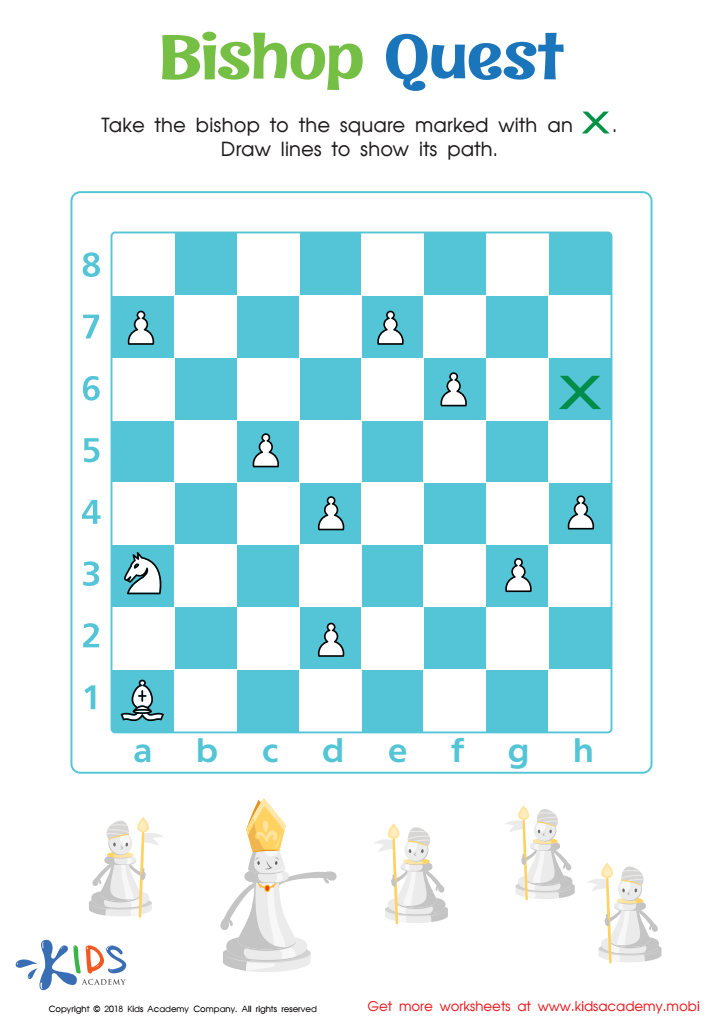
Bishop Quest Worksheet
Show kids the board and ask them to identify the bishop. Then ask them to move it to the square marked 'x', drawing lines to show its path. This worksheet helps teach kids how to move the bishop on a chessboard.
Bishop Quest Worksheet
Worksheet
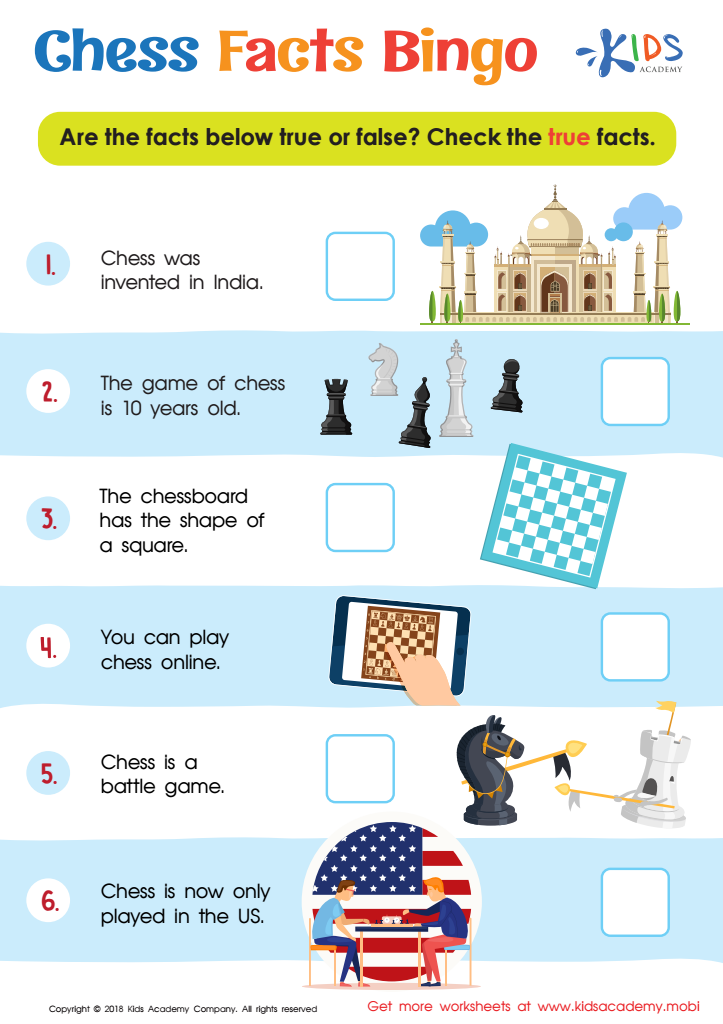
Chess Facts Bingo Worksheet
Help your child assess their knowledge of chess with our simple worksheet. It contains six questions; read them to your child and ask them if the statements are true or false. Once they check the boxes for the true statements, you'll have a better understanding of their understanding of the game.
Chess Facts Bingo Worksheet
Worksheet
Join Kids Academy for Free
Who is primarily going to use this learning content?






Introducing chess to children ages 5-6 can be incredibly beneficial for both cognitive and social development. Firstly, chess fosters crucial problem-solving skills. The game requires players to think multiple steps ahead, teaching young children to plan and strategize. These critical thinking abilities are foundational for both academic and real-world success. Additionally, chess enhances concentration and memory. Remembering the movements and potential strategies of different chess pieces sharpens a child's focus and recall abilities, which can positively impact their performance in other subjects.
Chess also nurtures patience and discipline. Waiting for an opponent's move and contemplating the best counter-move exercises self-control and a sense of discipline. These habits can translate into improved behavior both at home and in the classroom.
Socially, chess provides an avenue for building confidence and sportsmanship. Winning can boost self-esteem, while losing teaches humility and resilience. Playing against peers also enhances social interaction and communication skills, promoting a collaborative learning environment.
Overall, integrating chess into early education aligns with a well-rounded development approach, offering cognitive, emotional, and social benefits invaluable during these formative years. This investment in young minds can help set children on a successful and balanced developmental path.








