Community awareness Worksheets for Ages 5-6
4 filtered results
-
From - To
Explore our engaging Community Awareness Worksheets designed for young learners aged 5-6! These interactive resources help children understand their community, fostering essential social skills and promoting feelings of connection and responsibility. Our worksheets encompass a variety of fun activities, including identifying community helpers, understanding public spaces, and discussing the importance of friendship and teamwork. Designed to spark curiosity and creativity, these activities encourage children to think critically about their own roles within a community. Ideal for both home and classroom settings, these worksheets cultivate awareness and empathy, helping young minds grow into active, engaged community members. Start building a brighter future today!
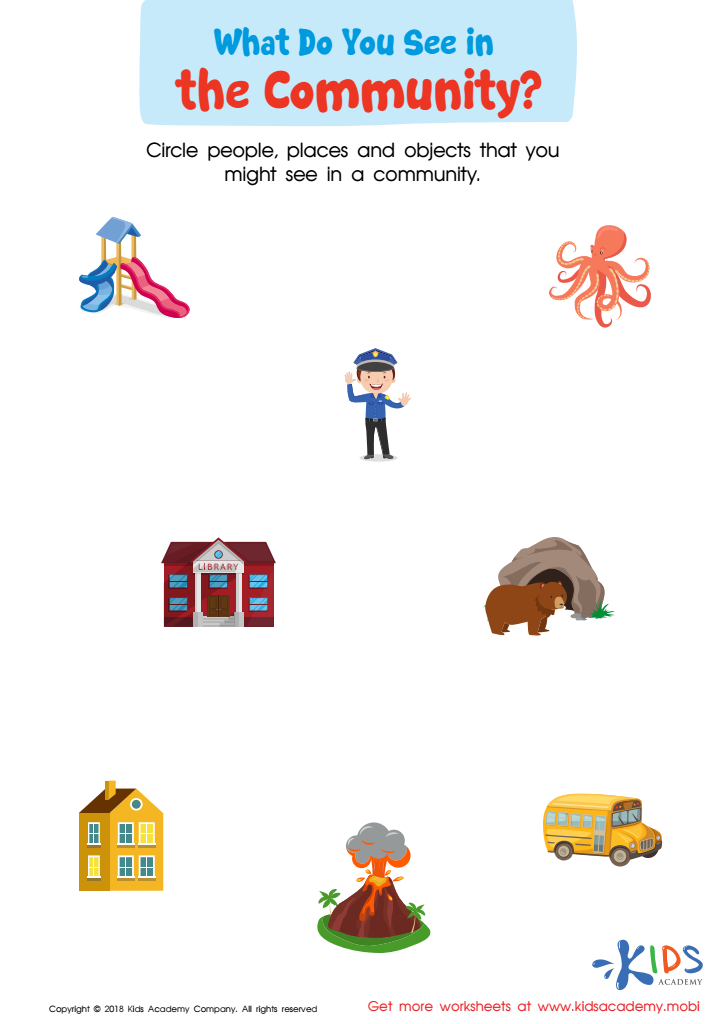
What Do You See in the Community Worksheet
 Assign to My Students
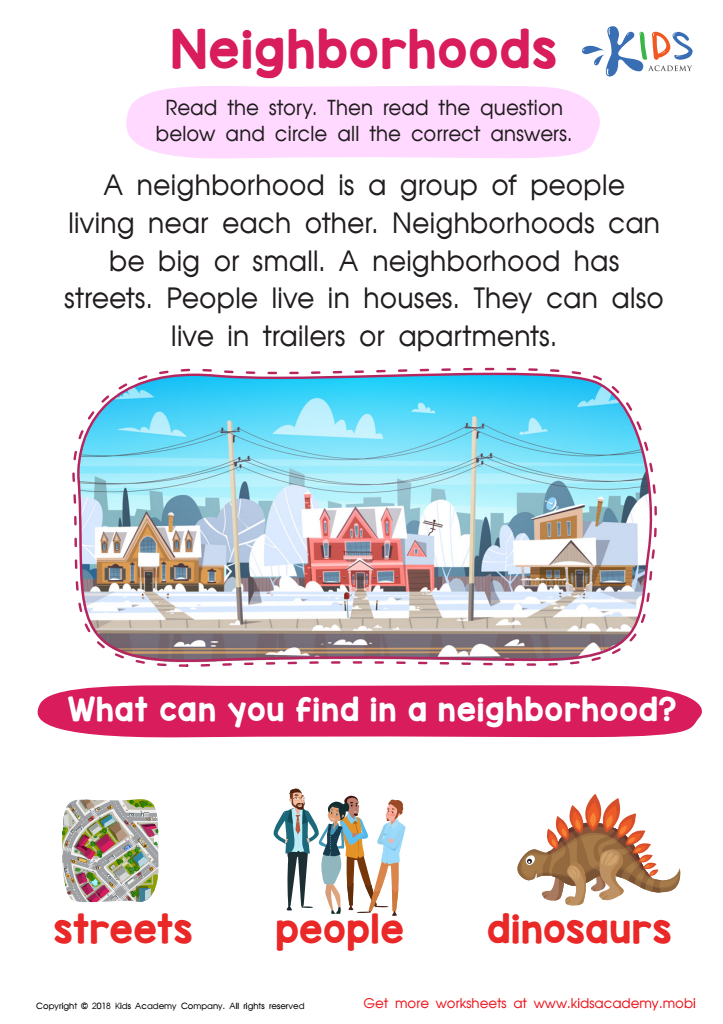
Neighborhoods Worksheet
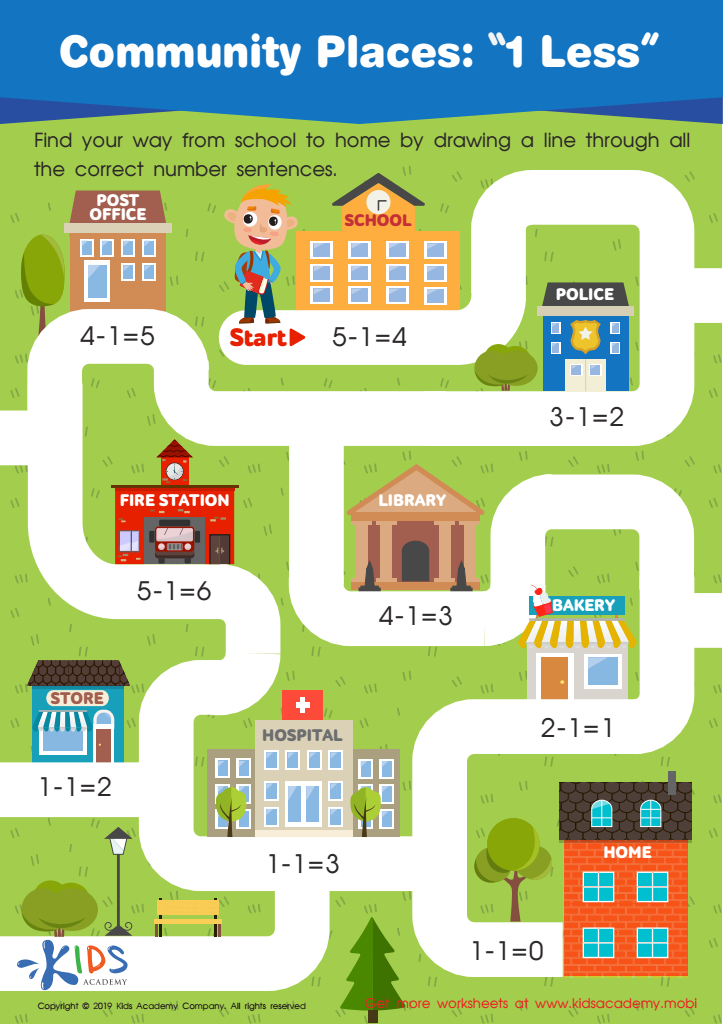
Community Places: 1 Less Worksheet
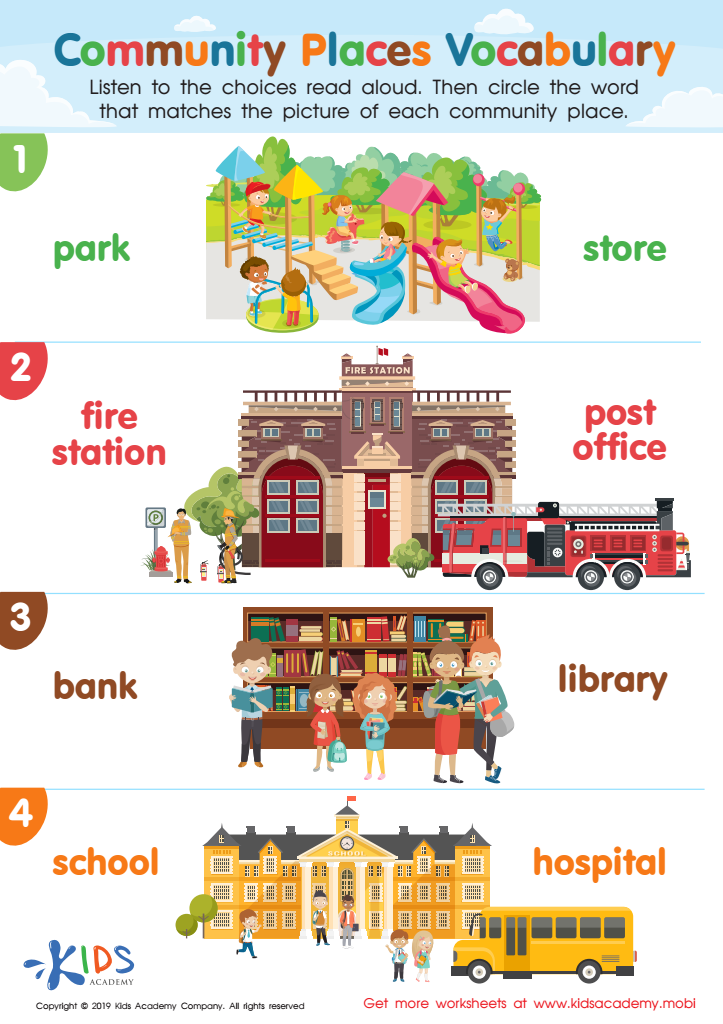
Community Places Vocabulary Worksheet







Community awareness is vital for children aged 5-6 because it lays the groundwork for their social and emotional development. At this age, children are starting to understand their surroundings and how they fit into their community. By fostering community awareness, parents and teachers can help children develop empathy, responsibility, and social skills.
When children engage with their community, they learn about diversity and different perspectives, which enhances their ability to relate to others. Understanding their environment also develops critical thinking skills as children ask questions and make connections about where they live. Furthermore, community awareness fosters a sense of belonging and security, crucial for young children’s emotional health.
Incorporating community-centered activities—like visiting local parks, engaging in neighborhood clean-up, or participating in cultural events—can provide rich, hands-on experiences. These activities not only teach children about teamwork and cooperation but also instill a sense of pride in their community.
Ultimately, by prioritizing community awareness, parents and teachers help young children grow into active, informed, and compassionate members of society. This investment in their social foundations will yield lifelong benefits, creating engaged citizens who value collaboration and understanding.








