Comparative analysis Worksheets for Ages 5-6
5 filtered results
-
From - To
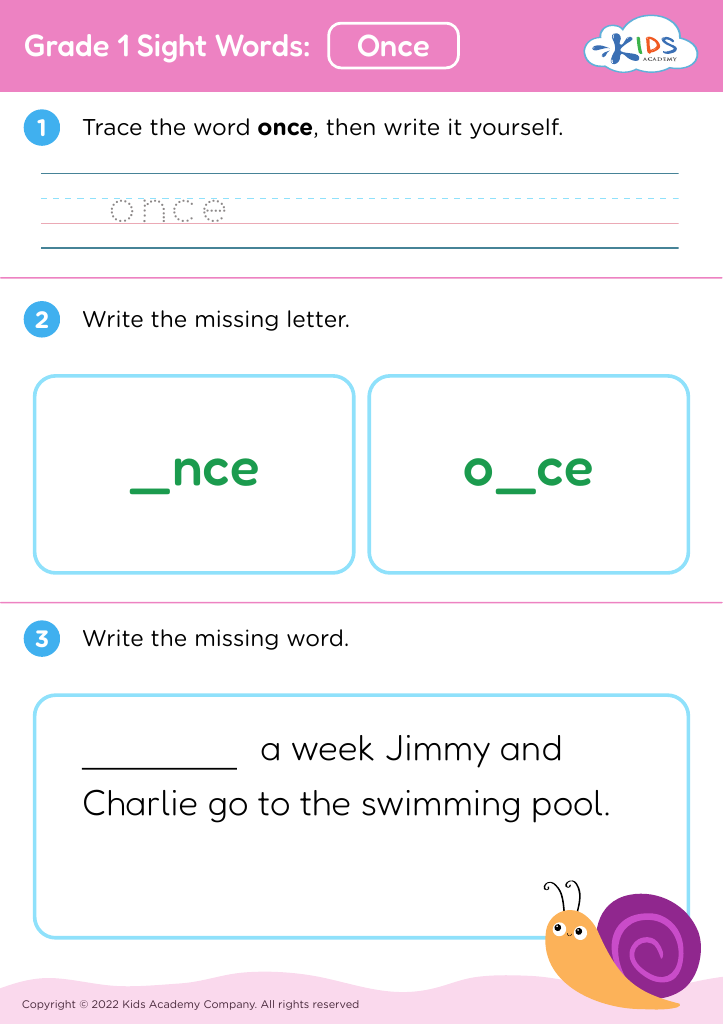
Enhance your child's learning experience with our engaging Comparative Analysis Worksheets designed specifically for ages 5-6. These worksheets focus on developing critical thinking skills by encouraging children to identify similarities and differences among various objects and concepts. Through colorful illustrations and fun activities, kids will explore comparisons related to size, color, and quantity in a playful and interactive manner. With easy-to-follow instructions, these printable resources promote independent learning while making education enjoyable. Perfect for parents and teachers alike, our Comparative Analysis Worksheets offer a great way to enhance cognitive skills and boost overall understanding in young learners. Explore now!
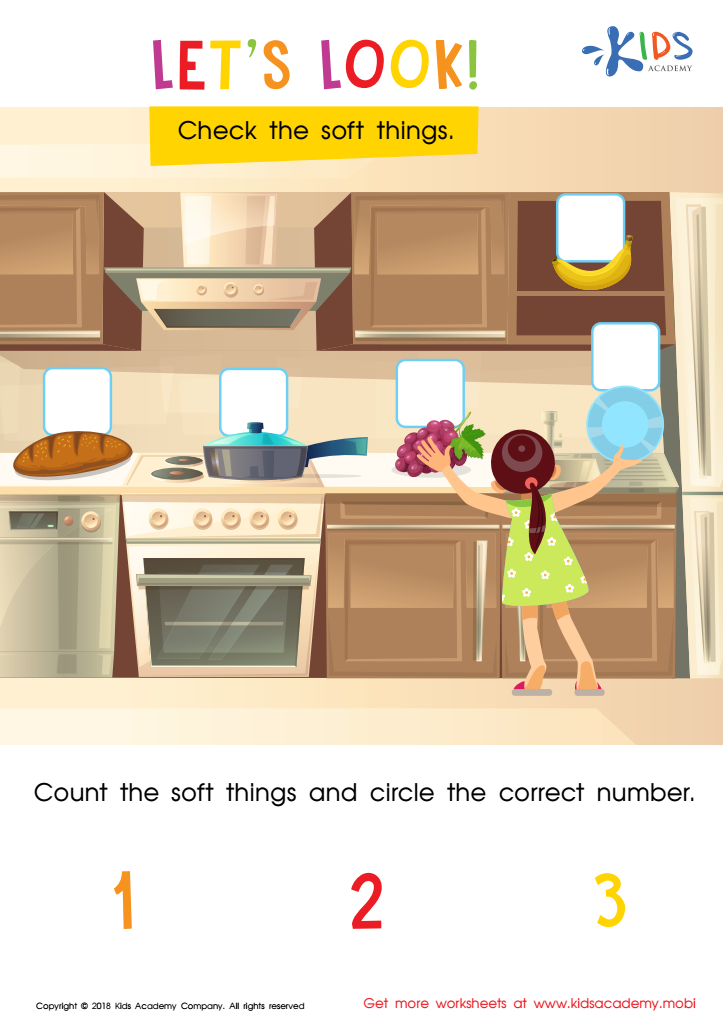
Let's Look! Assessment Worksheet
 Assign to My Students
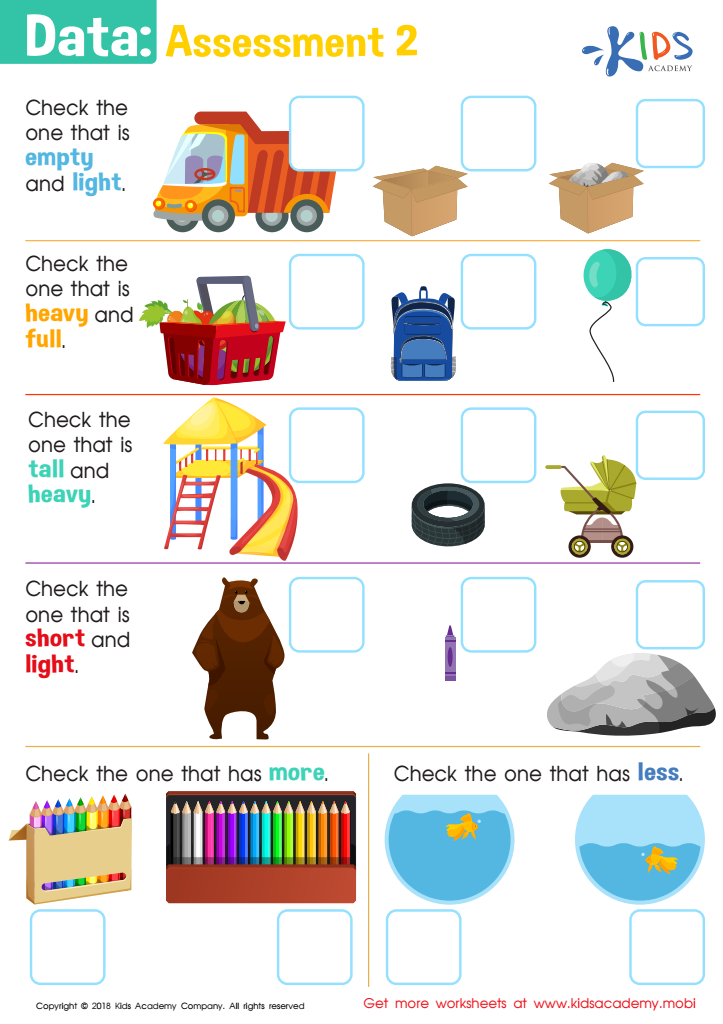
Data: Assessment 2 Worksheet
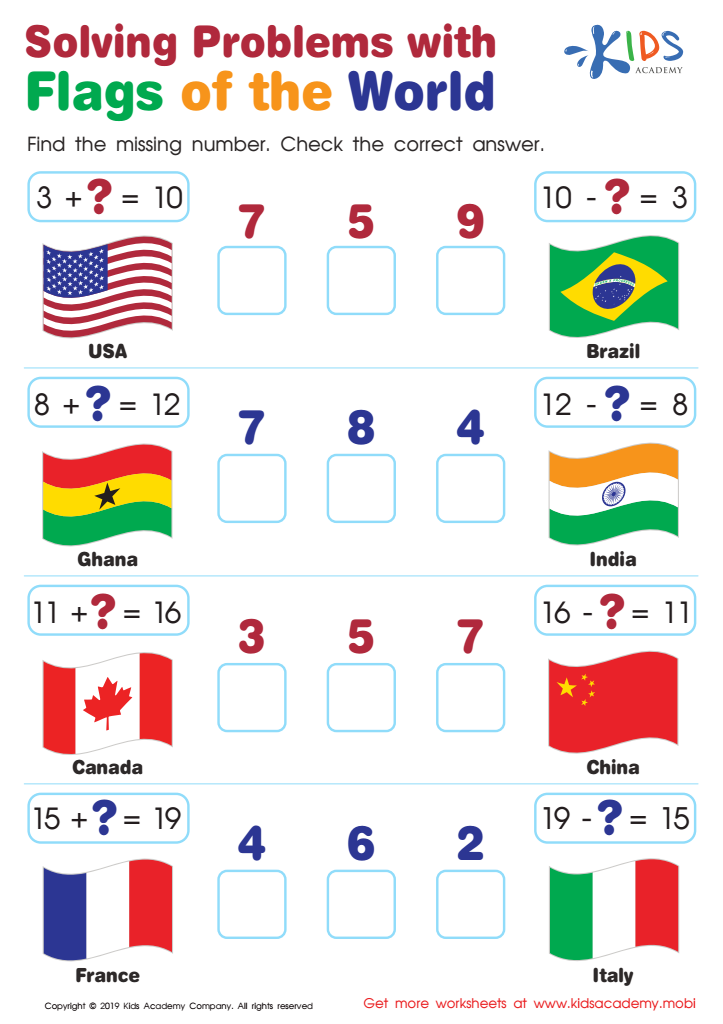
Solving Problems with Flags of the World Worksheet
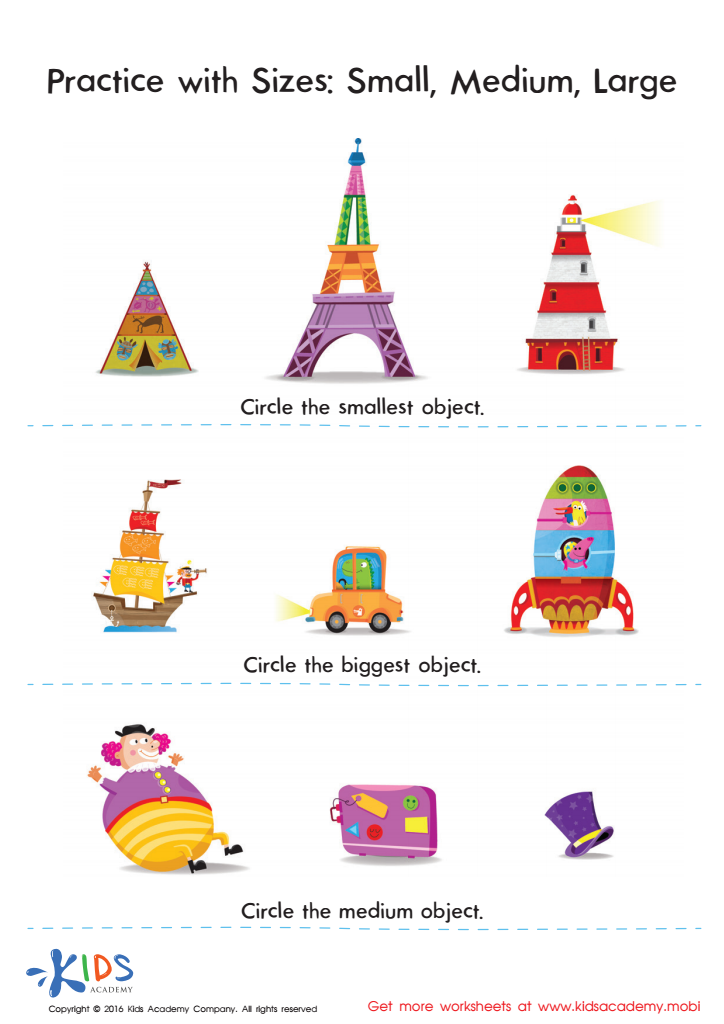


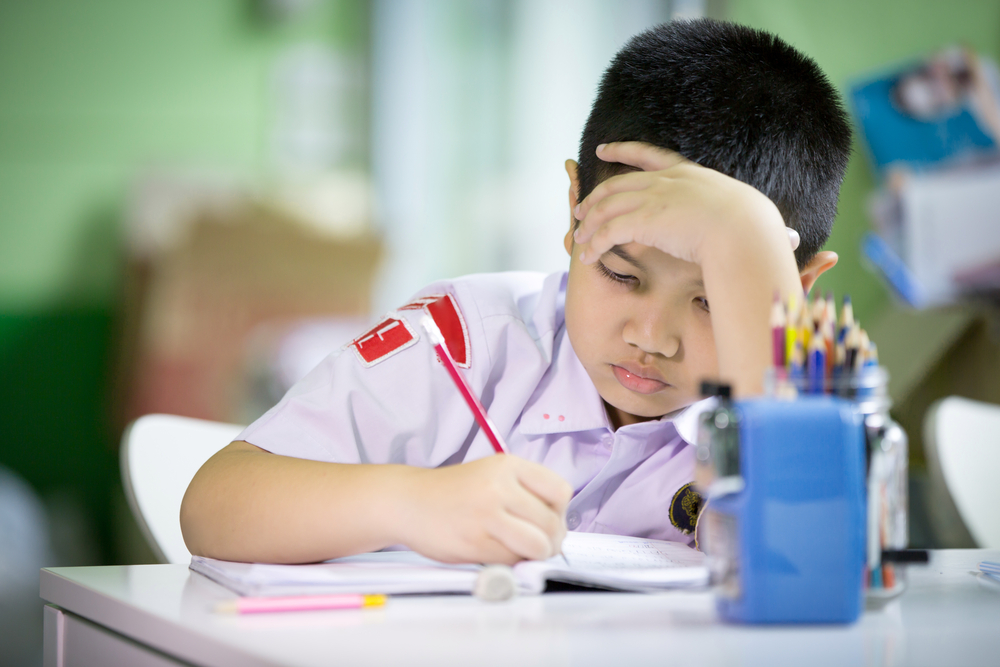
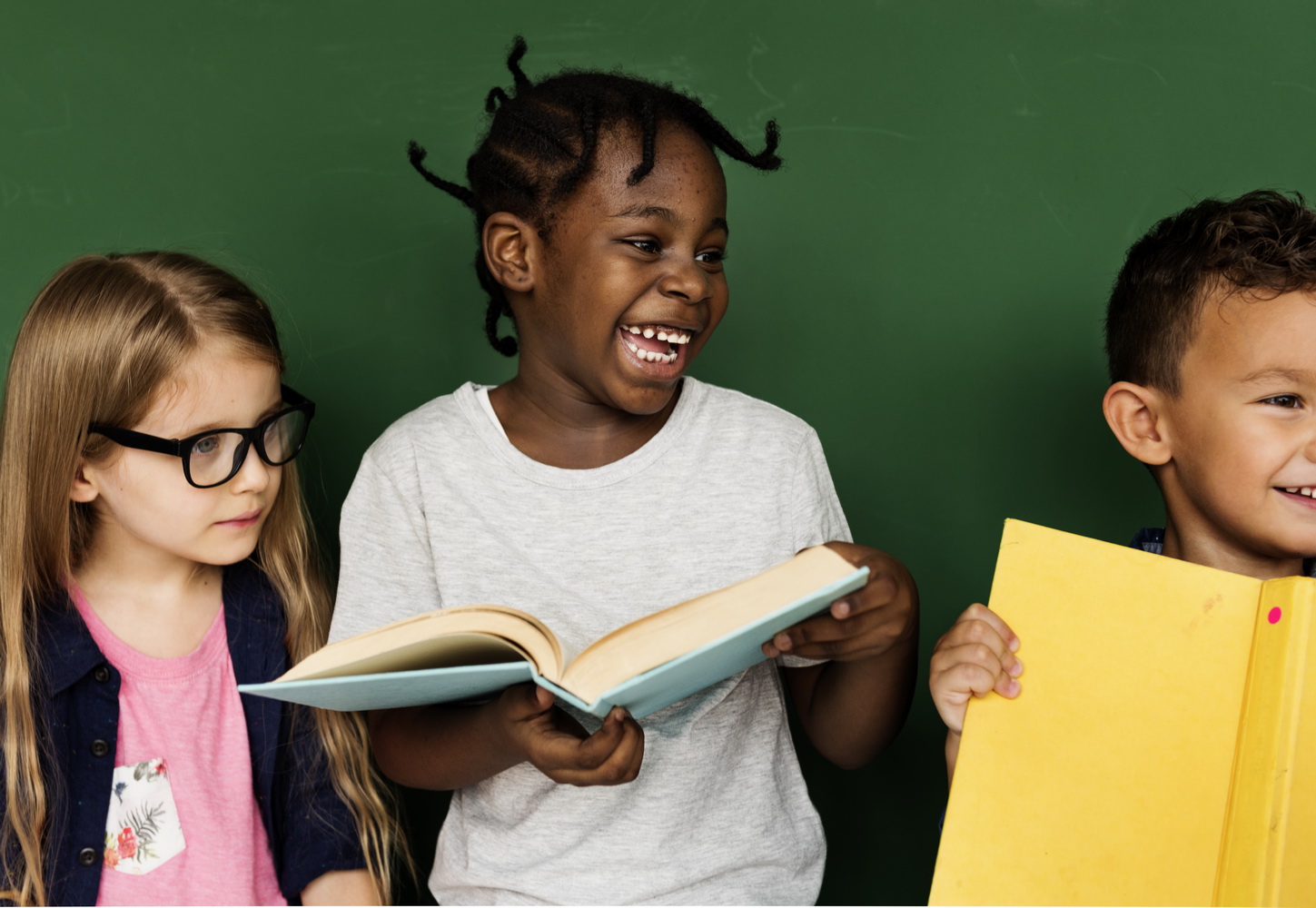



Comparative analysis for ages 5-6 is crucial for both parents and teachers as it helps to understand children's developmental pathways and learning styles. At this stage, children are diverse in their abilities, interests, and personalities, which can significantly affect their educational experience. By analyzing and comparing these factors, educators can tailor their teaching strategies to accommodate different learners, ensuring that each child receives the support they need to thrive.
Moreover, comparative analysis can help identify best practices and successful strategies employed by others in similar settings. Understanding how peer groups interact with various teaching methods allows for the optimization of classroom activities that work best for particular demographics. It fosters an inclusive environment where individuality is celebrated, and collaborative skills are enhanced.
From a parental perspective, knowing their child's development relative to peers can help in addressing potential difficulties early on. By engaging with educators to discuss findings from comparative analyses, parents can become more involved in their child's learning journey, fostering better communication and shared strategies at home and school.
Ultimately, engaging in comparative analysis for early learners leads to improved educational outcomes, cultivates a robust learning environment, and encourages holistic growth for every child involved.








