
Improving reading comprehension Worksheets for Ages 5-6
5 filtered results
Difficulty Level
Grade
Age
-
From - To
Subject
Activity
Standards
Boost your child's reading skills with our specially designed "Improving Reading Comprehension Worksheets for Ages 5-6." These worksheets offer fun and engaging activities tailored to young learners, aiming to enhance their understanding and grasp of simple texts. From identifying main ideas to answering questions about stories, our worksheets use age-appropriate methods to build essential reading and comprehension skills. Perfect for both classroom and home use, these activities make learning enjoyable and effective, paving the way for academic success. Explore our collection today and give your child the foundation they need for a lifelong love of reading!
Favorites
With answer key
Interactive
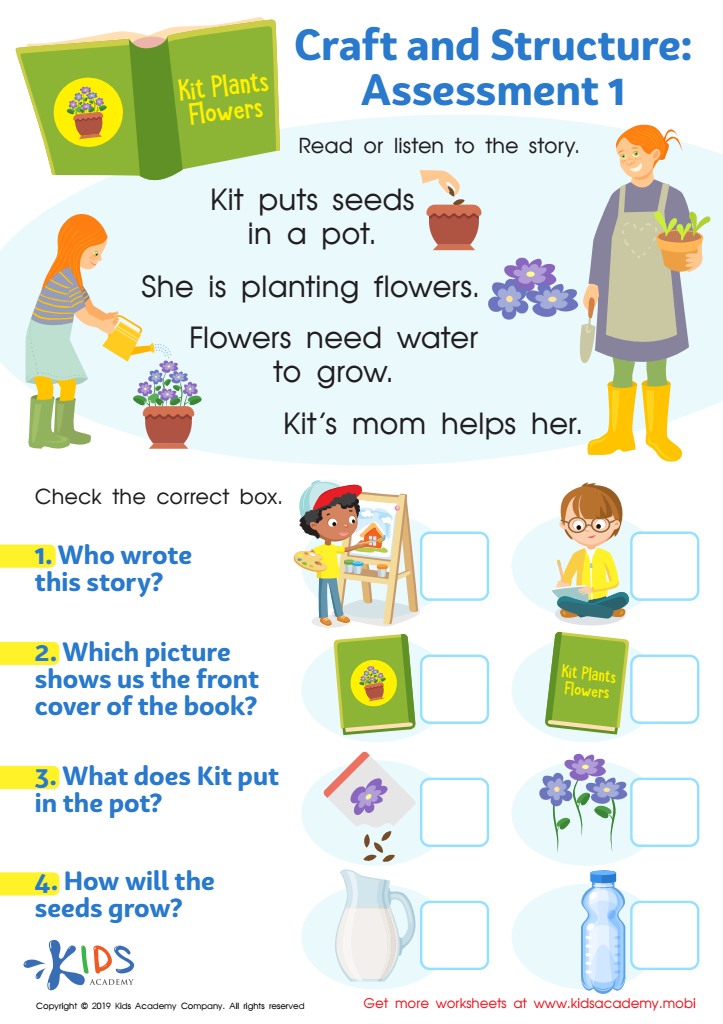
Craft and Structure: Assessment 1 Worksheet
A good reader needs more than word recognition: children must be able to identify story elements like author and main points. Test your child's craft and structure knowledge with this free PDF worksheet. They will read or listen to a story, then check off the correct answers according to what they heard or read.
 Assign to My Students
Craft and Structure: Assessment 1 Worksheet
Worksheet
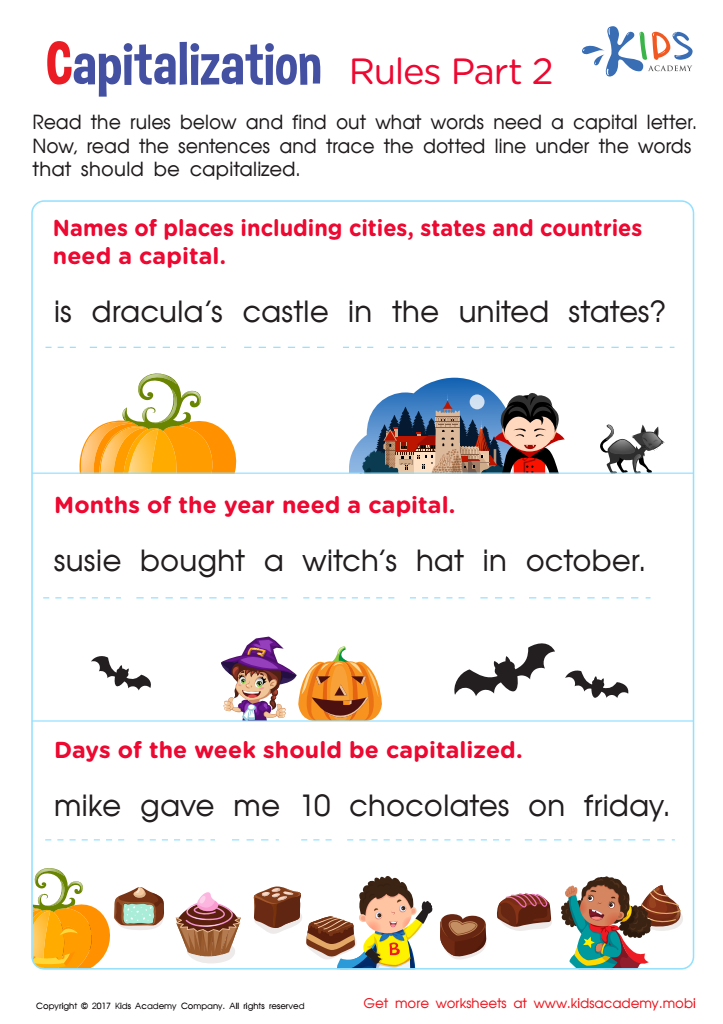
Capitalization Rules: Part 2 Worksheet
Split up grammar rules into shorter, achievable worksheets with this Halloween-themed worksheet, helping kids to practice capitalization for 1st grade.
Capitalization Rules: Part 2 Worksheet
Worksheet
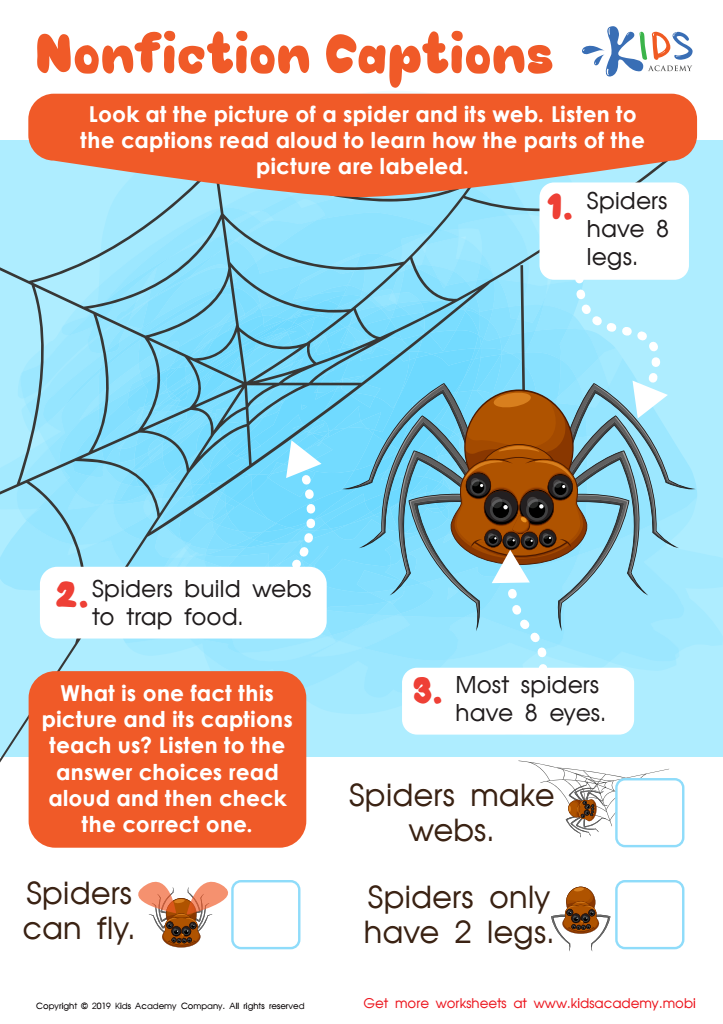
Nonfiction Captions Worksheet
Help your students learn to read better with books that have captions. Read the captions and labels aloud to help children understand the picture. Ask them to answer questions at the bottom of the page. Captions are an effective tool for teaching literacy skills.
Nonfiction Captions Worksheet
Worksheet
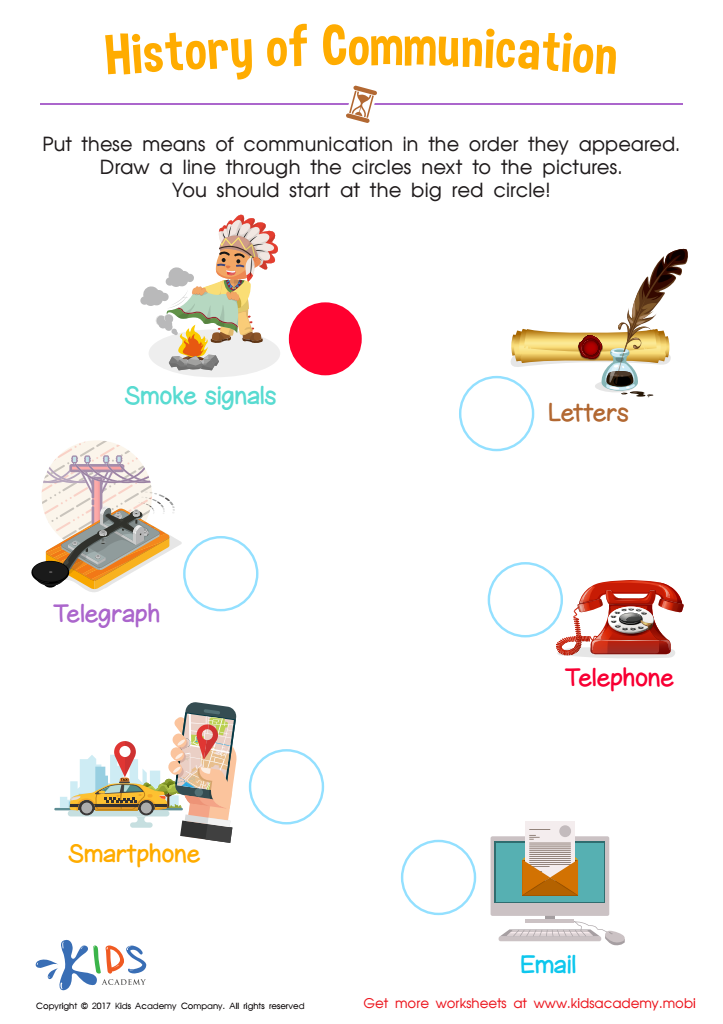
History of Communication Worksheet
Help your child understand history's communication evolution! With this worksheet, your child will learn about the various ways people communicated over time, and how that compares to today. It'll also foster an interest in history and bring the past to life!
History of Communication Worksheet
Worksheet
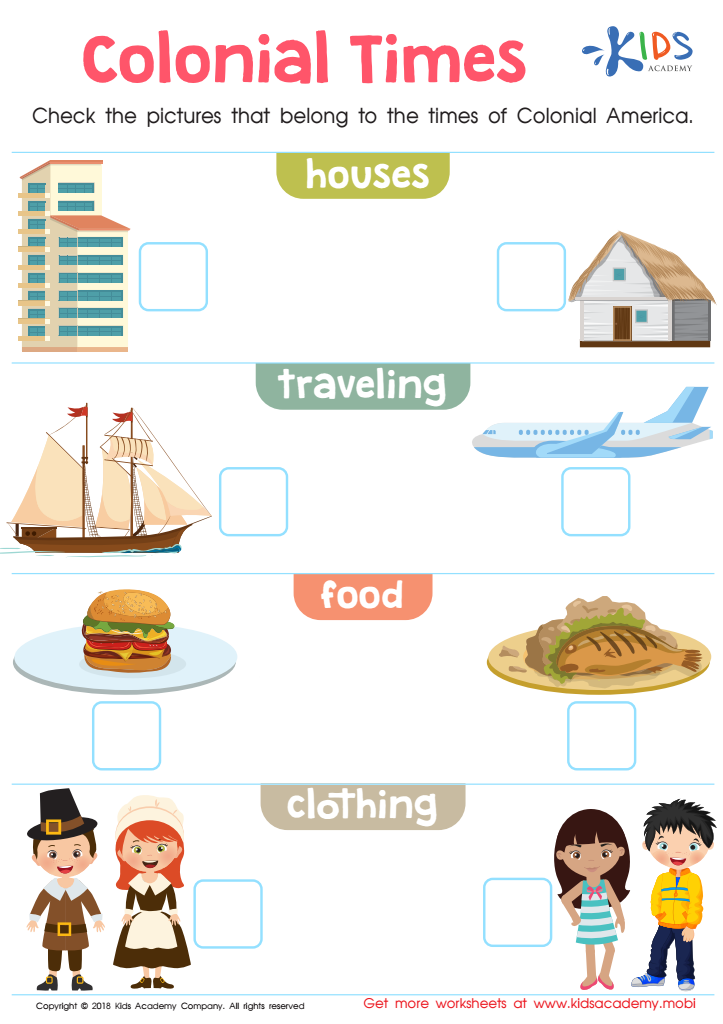
Colonial Times Worksheet
Test your students' knowledge of colonial times with this easy social studies worksheet. Look at the pictures to see how people lived back then. See if your little ones understand what structures they had, what food they ate, and what type of clothing they wore. You might be surprised by how much or how little they know!
Colonial Times Worksheet
Worksheet
Join Kids Academy for Free
Who is primarily going to use this learning content?







Reading comprehension is foundational for a child's academic and lifelong success, making it crucial for parents and teachers to prioritize its improvement starting at ages 5-6. At this early stage, children transition from recognizing letters and sounds to understanding complex ideas conveyed through text. By fostering strong reading comprehension skills, we inherently support their overall cognitive development, improving their ability to think critically, absorb new information, and make connections across different subjects.
Effective reading skills enable young learners to better understand instructions and problems in various contexts, from math to science, contributing to a well-rounded education. Moreover, early success in reading can build confidence and enjoyment in learning, motivating children to explore books independently and cultivate a lifelong love of reading.
Additionally, improving reading comprehension at this age helps bridge the vocabulary gap. Children actively engaged in meaningful reading experiences learn new words and concepts daily, enhancing their communication skills and ensuring they're better prepared for the linguistic complexities of future grades.
Lastly, a strong start in reading comprehension can prevent future educational disparities. Those who struggle with reading often face increasing academic challenges, leading to disengagement or frustration. By addressing this skill early on, parents and teachers contribute significantly to their children's long-term educational and personal development.








