Discover engaging and effective Letter Formation Worksheets for children ages 5-6 at Kids Academy. Specially designed to enhance early writing skills, these worksheets offer a fun and interactive way for young learners to master letter shapes and strokes. Each activity encourages proper pencil grip and fine motor development, paving the way for confident handwriting. Packed with colorful, child-friendly designs, these worksheets align with educational standards and provide a valuable resource for parents and teachers. Try our Letter Formation Worksheets today to support your child's literacy journey and ensure they enjoy every step of learning to write!

Check out this FREE "Letter formation" Trial Lesson for age 5-6!

A

Favorites
With answer key
Interactive
  • 5-6
  • Letter formation
Letter a worksheets
Letter a worksheets

Letter A Tracing Page

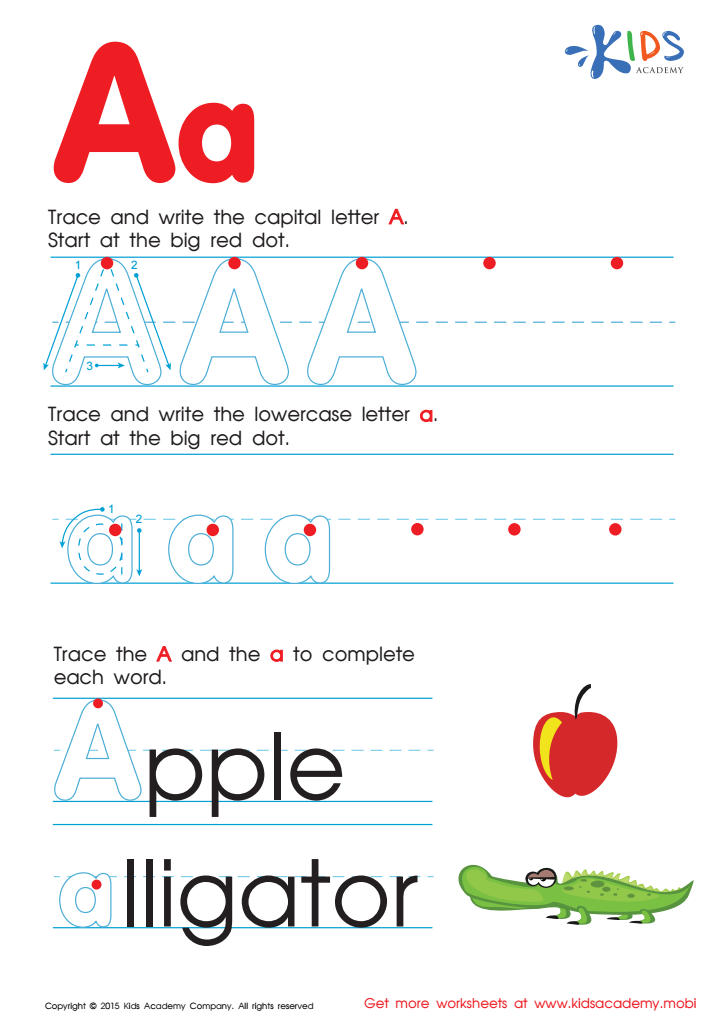
Trace and write the letter "A"! Start with the big red dot, then do the capital and lowercase versions. Then write it again with two words - apple and alligator. Download more tracing worksheets at Kids Academy.
Letter A Tracing Page
Worksheet
Letter P worksheets
Letter P worksheets

Letter P Tracing Page

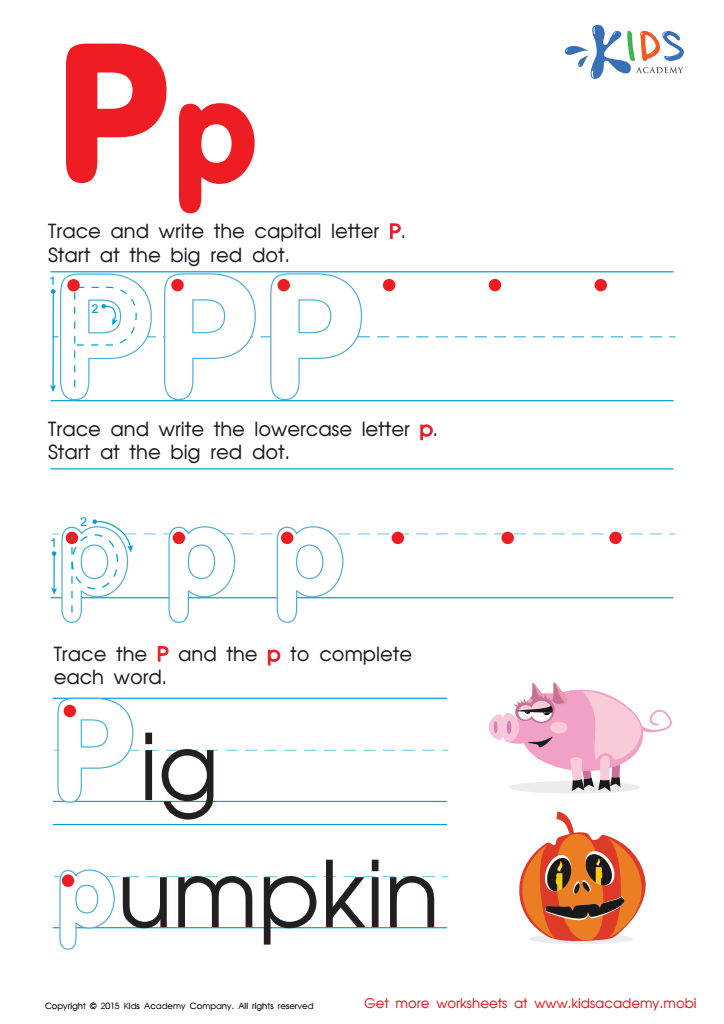
Trace the lines from the red dot to learn to write "P"! Then practice this letter with the fun activities: complete the word "Pig" and "Pumpkin". Check out Kids Academy to get more free ABC worksheets.
Letter P Tracing Page
Worksheet
Tracing and Spacing: Assessment 1 Worksheet

Tracing and Spacing: Assessment 1 Worksheet

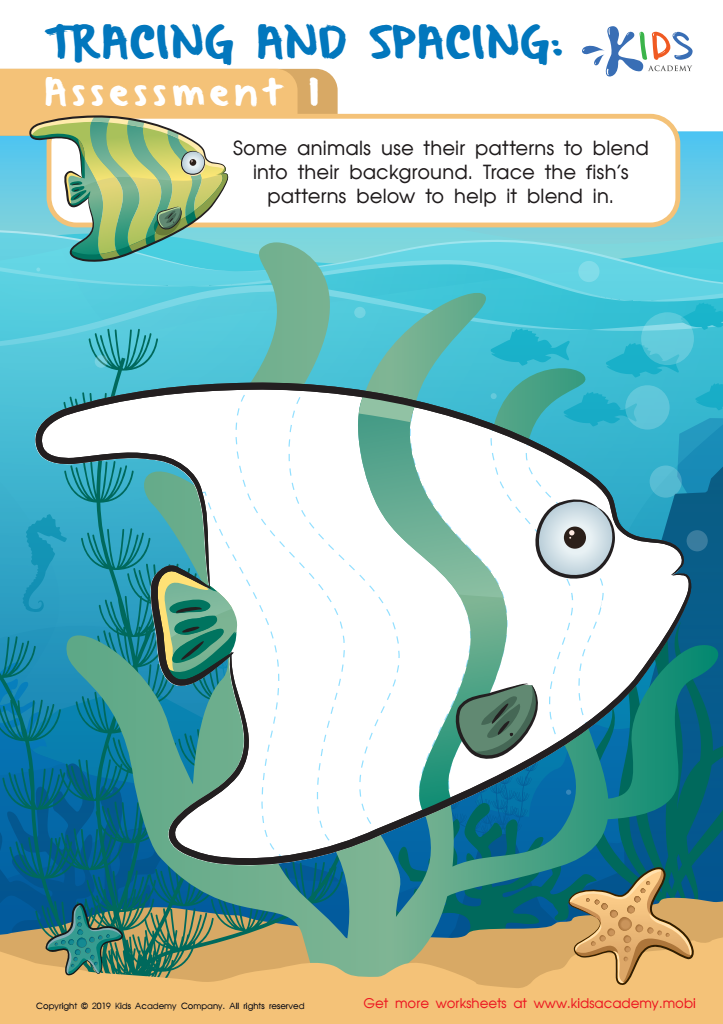
Download this coloring page to help your child learn about animals' camouflage. Trace the pattern with a pencil, then use crayons or markers to color the fish like the example. Read the accompanying paragraph to learn why some animals blend in with their environment. Encourage your child to look closely and match details in the pattern.
Tracing and Spacing: Assessment 1 Worksheet
Worksheet
Uppercase Letters G, H, and I Worksheet Preview


Uppercase Letters G, H, and I Worksheet

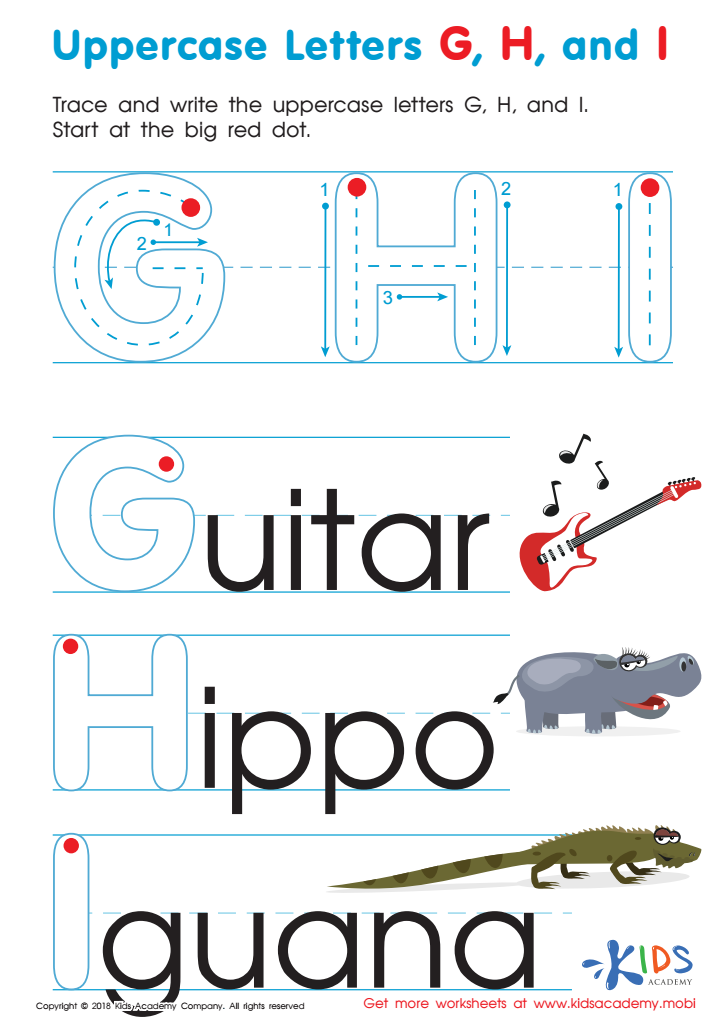
Trace each letter with the big red dot, connecting them to sounds as you go. Then write G to I. Congrats on a job well done! Rock on with a cute hippo and iguana while working on this delightful kindergarten worksheet!
Uppercase Letters G, H, and I Worksheet
Worksheet
letter G worksheets
letter G worksheets

Letter G Tracing Page

Get ready to trace the letter "G" – with a big red spot as the starting point, trace the lines and watch the letter appear. Uppercase and lowercase letters are both easy and fun to write. Give it a go and finish the word "go". Play the guitar and say "hello" to a funny ghost!
Letter G Tracing Page
Worksheet
Tracing and Spacing: Assessment 2 Worksheet

Tracing and Spacing: Assessment 2 Worksheet

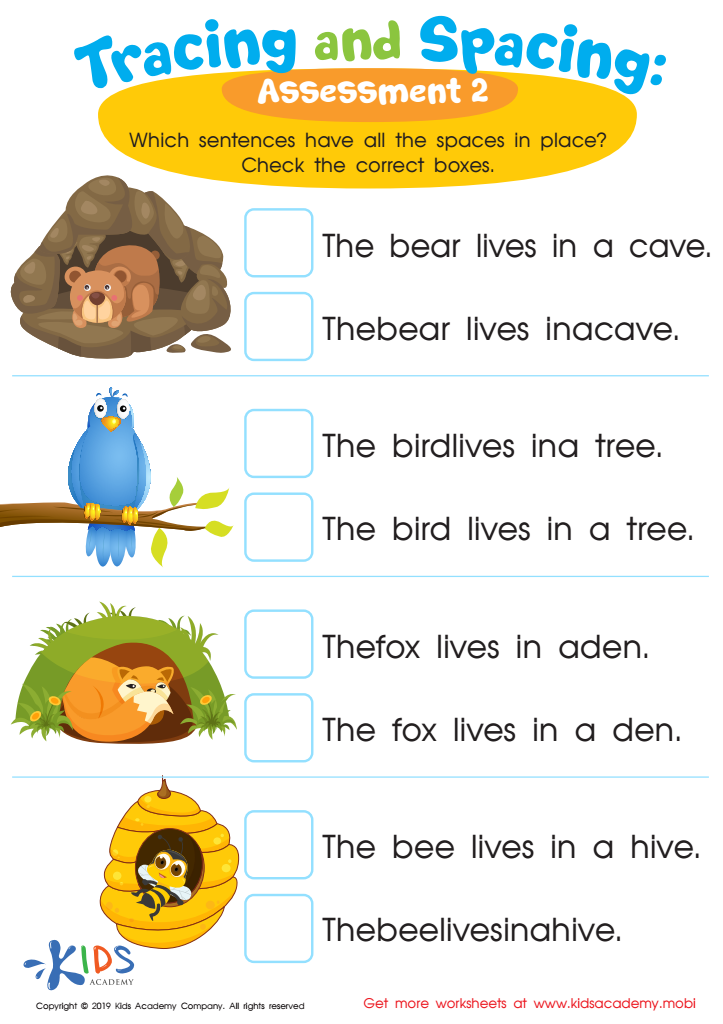
Help your little learner master letter spacing by using this charming assessment worksheet! Illustrated animals are paired with sentences; read each sentence and look at the spacing. Check the box next to the correctly spaced sentences to complete the sheet.
Tracing and Spacing: Assessment 2 Worksheet
Worksheet
Letters W-Z Tracing  Worksheet Preview

Letters W–Z Tracing Worksheet

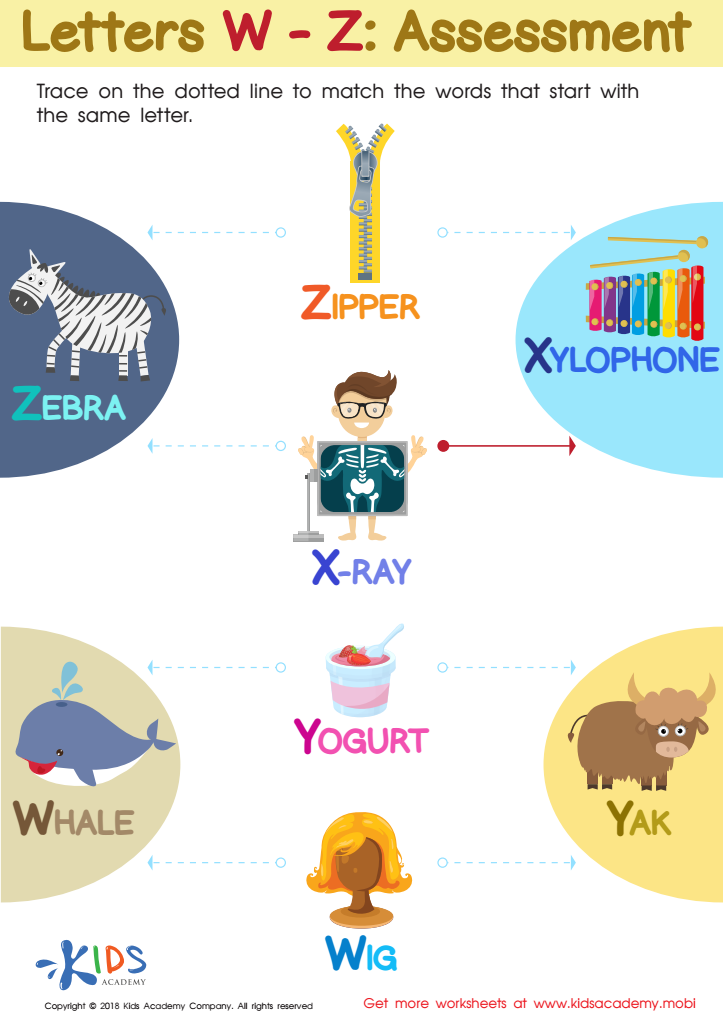
Kids will draw a line between words that start with the same letter, like 'Zipper' and 'Zebra', or 'Xylophone'. This worksheet strengthens their reading and letter W-Z recognition skills. Children can sound out each word to figure out the correct match, boosting their confidence in letter sounds.
Letters W–Z Tracing Worksheet
Worksheet
Letter Y Coloring Page

Letter Y Coloring Sheet

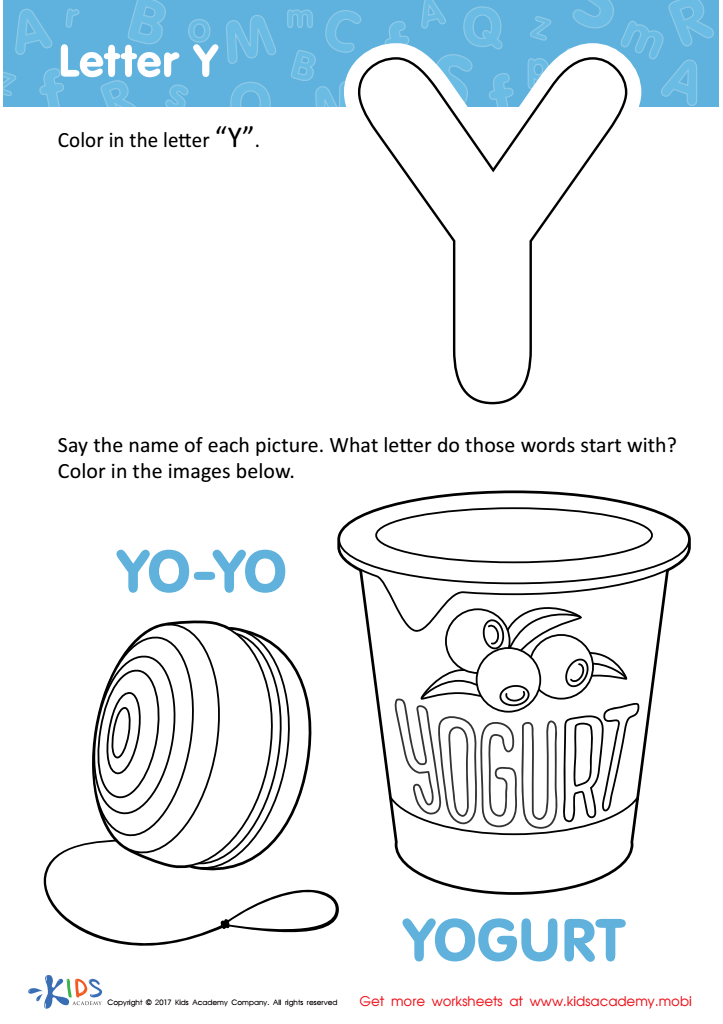
Let's celebrate letter "Y"! Here's a fun coloring page that'll help your child learn this end-of-the alphabet letter. It's packed with familiar objects that'll help build their art and literacy skills. So let's say "Yay"!
Download (PDF)
Assign to My Students
Letter Y Coloring Sheet
Worksheet
Lowercase Letters v w x Worksheet

Lowercase Letters v w x Worksheet

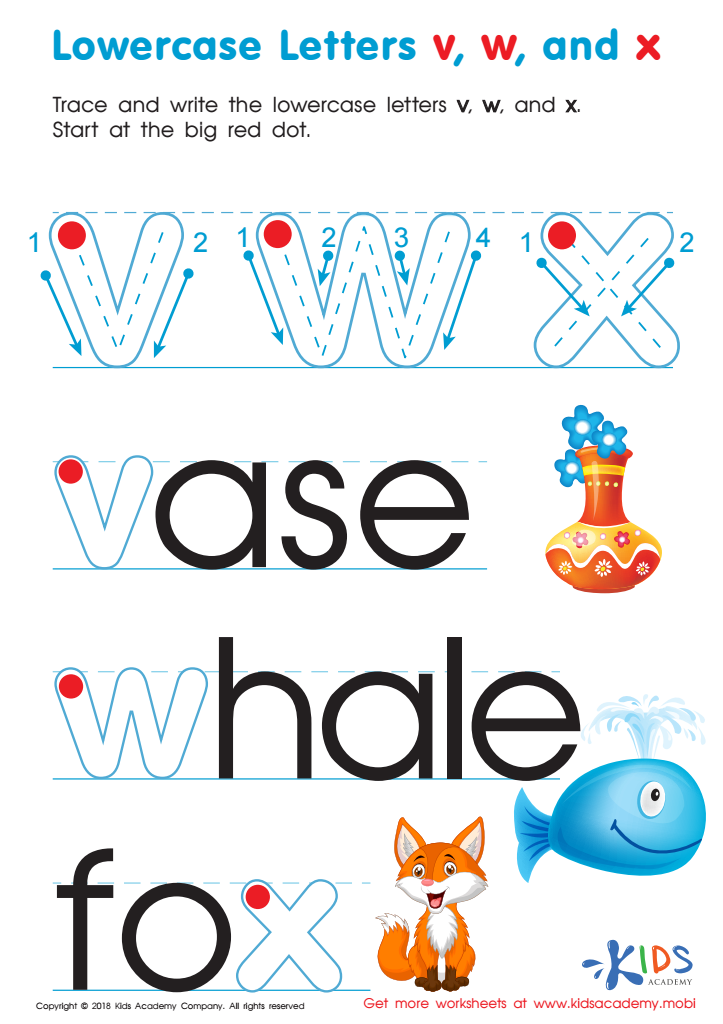
Help your child learn to write lowercase letters v, w, and x, starting at the big red dot. This activity will help them develop writing skills and correctly identify the letters. Guide them as they trace the letters and enjoy watching them improve!
Lowercase Letters v w x Worksheet
Worksheet
Rhyming Words PDF Worksheets, Pen

Pen Rhyming Words Worksheet

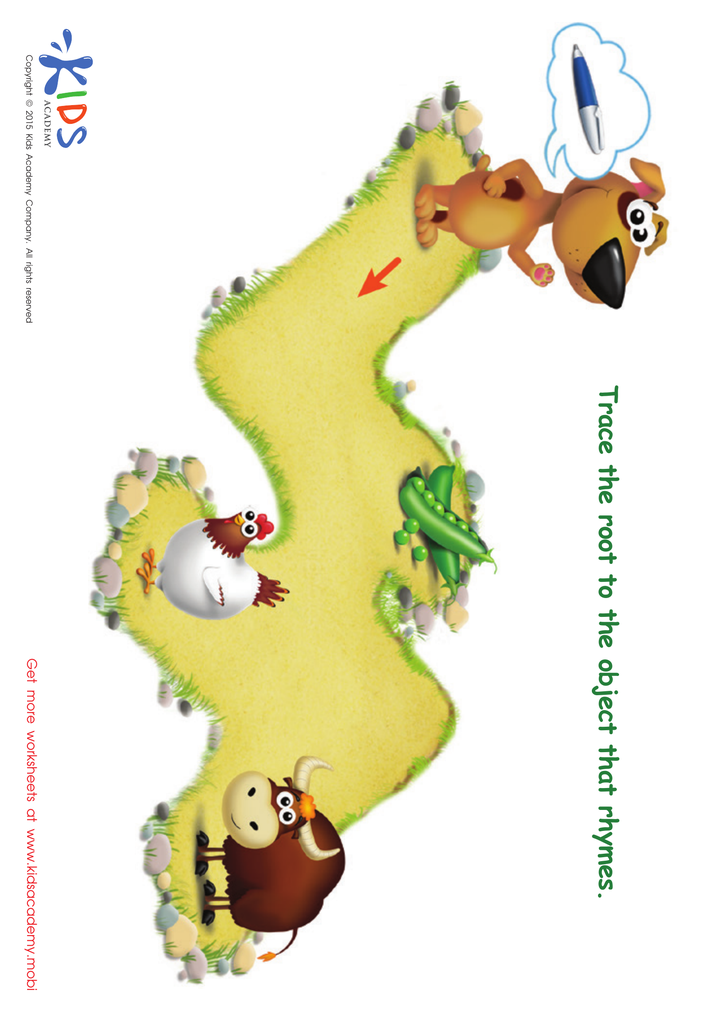
Check out the cute pup, pondering away. He's thinking of a root word - no suffix or prefix. Now check the hen, green beans, and the cow. Can you find the word that rhymes with pen? Draw a line from the root word to its rhyme for this simple yet beneficial worksheet. It helps young learners practice hearing and recognizing rhymes.
Pen Rhyming Words Worksheet
Worksheet


Letter formation is an essential building block in the early education of children aged 5-6. When young learners develop correct letter formation, they establish the foundation for fluent handwriting, which significantly contributes to academic success. Good handwriting skills rest on the ability to form letters in a way that is both legible and efficient.

Proper letter formation underpins the development of fine motor skills, as children learn to control hand movements with precision and coordination. This early practice directly impacts their ability to engage effectively in more detailed tasks later on, such as drawing, playing musical instruments, or even typing.

Equipping children with the ability to form letters correctly not only saves them from the frustration that arises from illegible handwriting but also bolsters their confidence and self-esteem. As they manage to communicate their thoughts more clearly on paper, their classroom engagement and overall learning experience improve.

From a developmental perspective, learning proper letter formation aligns with cognitive skills, such as memory and focus. It imposes a sense of order and discipline, crucial for academic routines in later years.

Ultimately, investing time and attention in proper letter formation for children aged 5-6 lays down a crucial educational groundwork. It is a key to unlocking their potential across a range of scholastic subjects and everyday activities.