Filters

28 filtered results

Clear all filters
Favorites
With answer key
Interactive

28 filtered results

Difficulty Level

Grade


Check out this FREE "Matching skills" Trial Lesson for age 5-6!

Match Digital to Analog Clocks

Favorites
With answer key
Interactive
  • 5-6
  • Matching skills
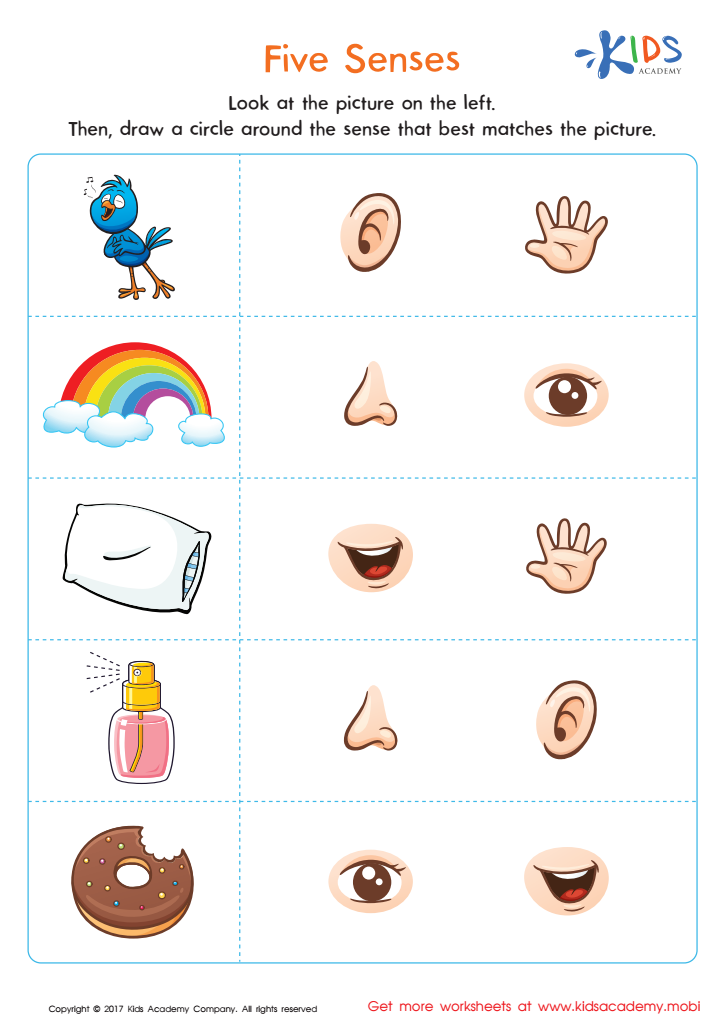
Free Printable Five Senses Worksheets

Five Senses Printable

For an easy way to jumpstart your child's critical thinking and introduce the five senses, print our free worksheets! These are great for reviewing each sense and practicing critical thinking skills. Work with your child and discuss each image. After completing the worksheet, find objects around the house so they can quiz themselves!
Five Senses Printable
Worksheet
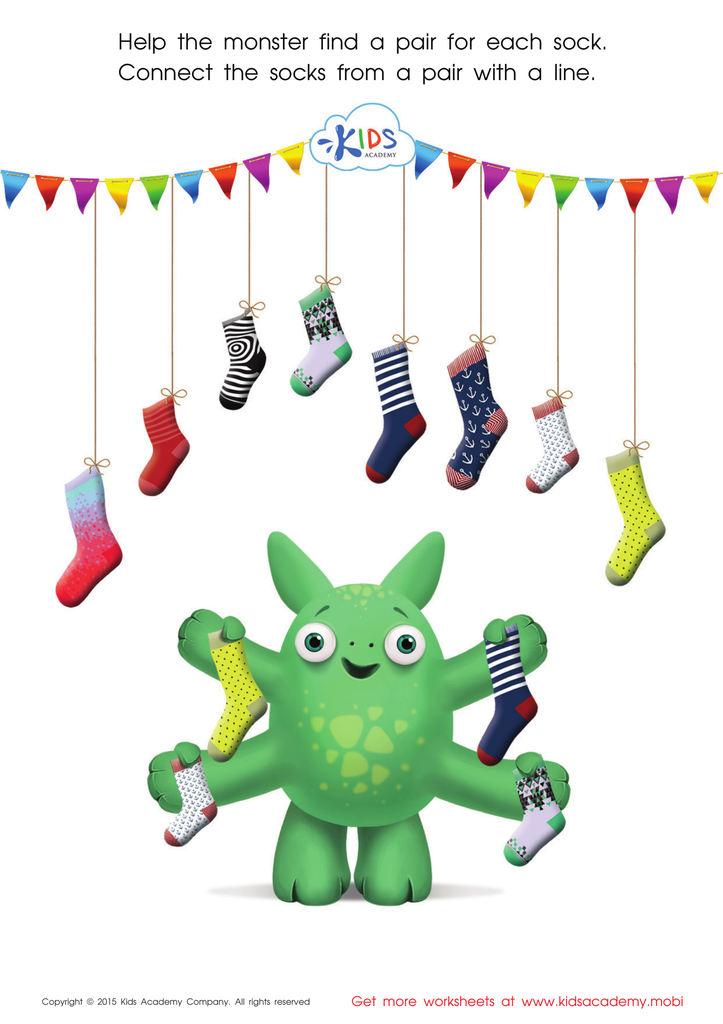
Math Matching Pairs Game: Monster’s Socks

Math Matching Pairs Game: Monsterв's Socks Worksheet
Let your child learn, concentrate and practice sorting skills with this fun kindergarten worksheet. Matching polka dots, anchors, geo shapes and stripes on Monster's socks will help improve fine motor skills. Download and print this free worksheet and several others on different topics.
Math Matching Pairs Game: Monsterв's Socks Worksheet
Worksheet
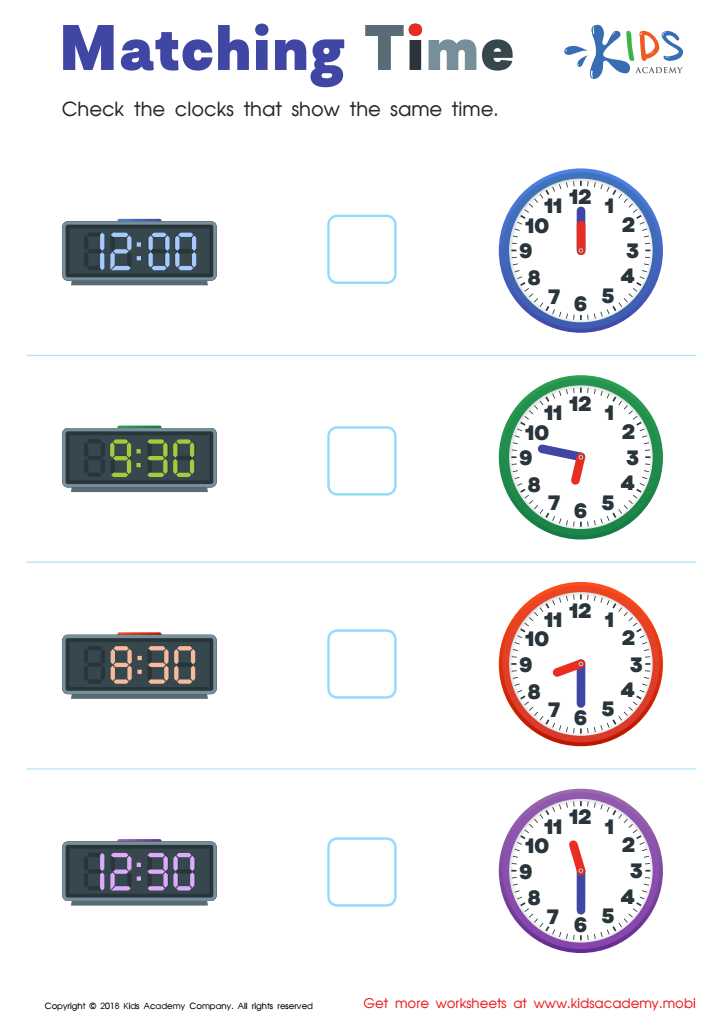
Matching Time Worksheet

Matching Time Worksheet

Teach your child to read time in both digital and analog formats with this helpful printout. They'll identify clocks that match in both formats and check them off. Colorful and engaging, it's a great way to help your child understand the concept of time-telling.
Matching Time Worksheet
Worksheet
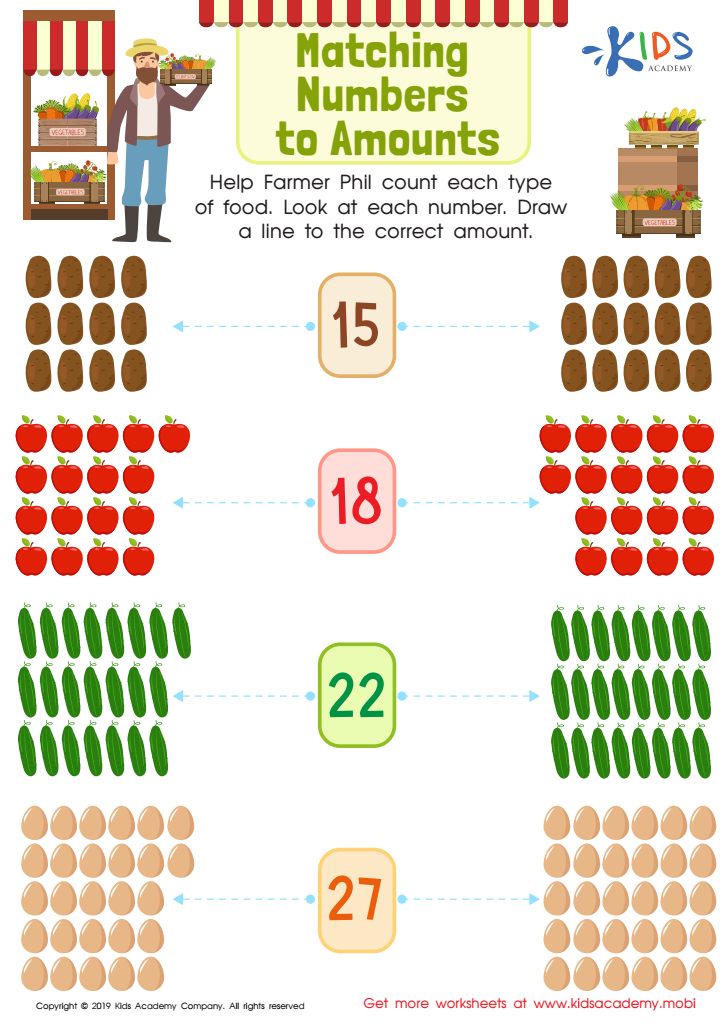
Matching Numbers to Amounts Worksheet


Matching Numbers to Amounts Worksheet

Farmer Phil needs your kid's help! Ensure they know the basics of math such as counting, adding and subtracting. Before beginning, help your child identify and count the different foods in the picture. Then, draw a line to the correct amount.
Matching Numbers to Amounts Worksheet
Worksheet


Matching skills for children aged 5-6 lay a crucial foundation for their cognitive development and future learning experiences. At this stage, children are beginning to categorize and organize information, which enhances their understanding of the world around them. By engaging in matching activities, such as pairing shapes, colors, or objects, children learn to identify similarities and differences, promoting critical thinking and problem-solving skills.

Parents and teachers should care about developing these skills because they contribute to essential academic competencies, including literacy and numeracy. For instance, matching can help children understand letter and number recognition, aiding in early reading and math skills. Furthermore, these activities often promote hand-eye coordination and fine motor skills, as children manipulate and interact with different materials.

Additionally, matching activities have social benefits—children often work in pairs or groups, fostering collaboration and communication skills. Engaging in these activities makes learning fun and interactive, helping to cultivate a positive attitude toward education. In summary, promoting matching skills in early childhood is essential as it supports cognitive development, enhances academic readiness, and nurtures social skills, all of which are vital for lifelong learning and success.