Musical instruments recognition Worksheets for Ages 5-6
3 filtered results
-
From - To
Welcome to our Musical Instruments Recognition Worksheets for Ages 5-6, designed to ignite your child's passion for music! Our engaging worksheets help young learners identify and differentiate various musical instruments through vibrant illustrations and interactive activities. Each worksheet is crafted to enhance recognition skills while promoting fun learning experiences. Children will explore a variety of instruments, from the piano to the violin, and enjoy fill-in-the-blank exercises, sorting games, and matching tasks. Perfect for home or classroom use, these resources will make music education enjoyable and accessible. Foster your child’s love for music while building essential skills today!
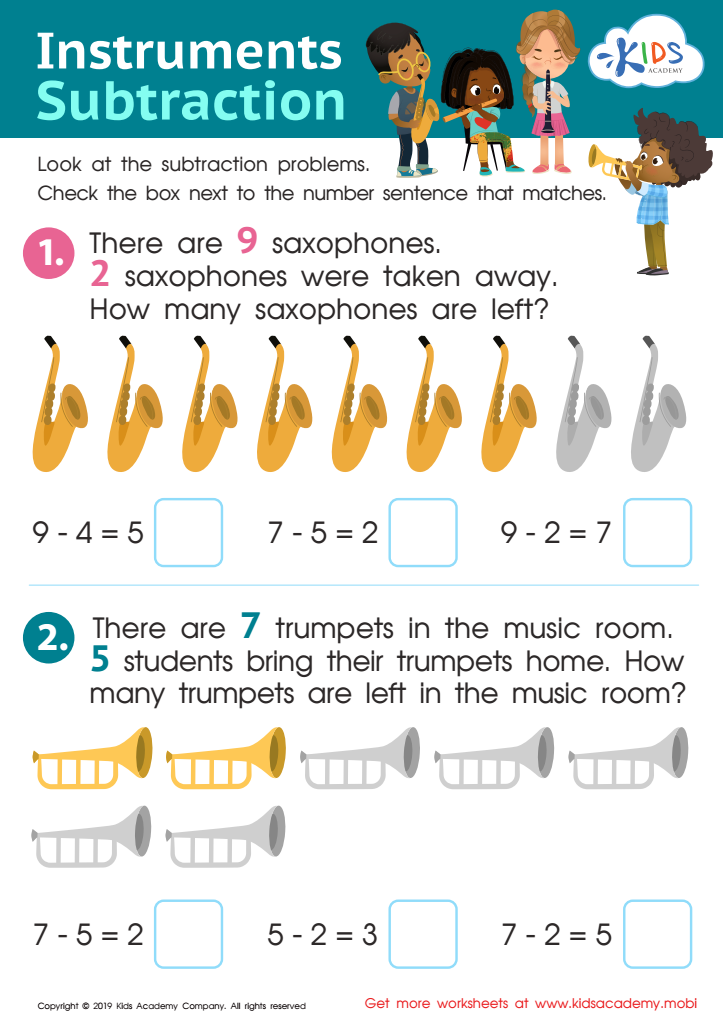
Instrument Subtraction Worksheet
 Assign to My Students
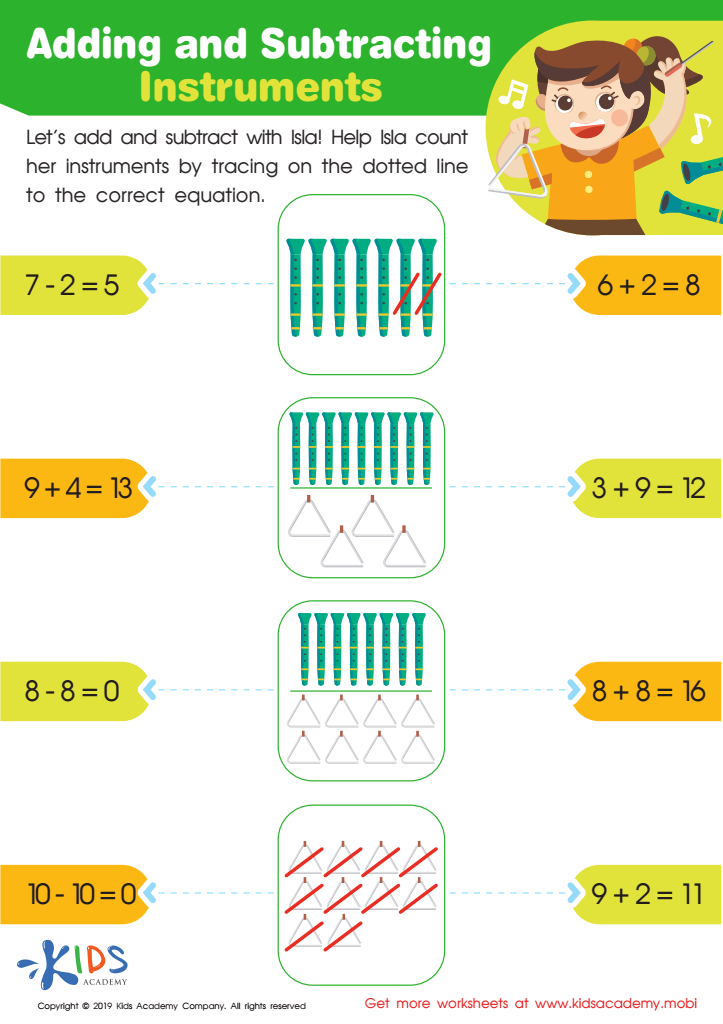
Adding and Subtracting: Instruments Worksheet
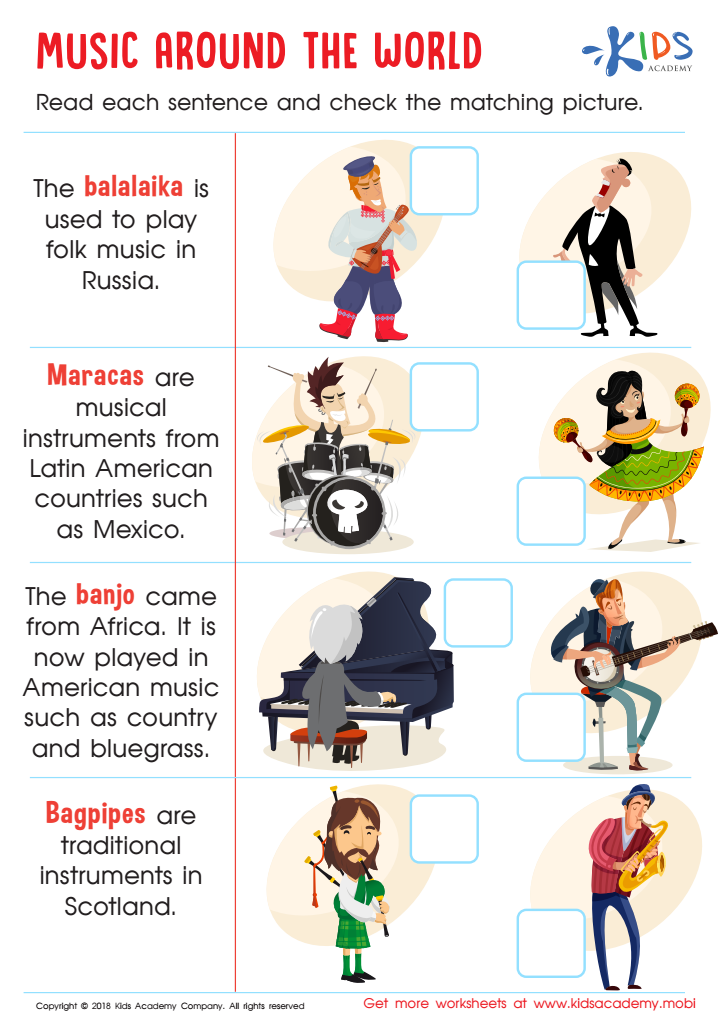
Music Around the World Worksheet







Musical instrument recognition for children aged 5-6 is crucial for several reasons. First, it enhances auditory skills, encouraging kids to distinguish between different sounds, which is a foundational aspect of language development. This early exposure to music can also improve listening abilities, essential for academic success.
Incorporating instrument recognition into learning fosters creativity, allowing children to express themselves and explore their imaginative capabilities. Understanding various instruments can also spark an interest in music, potentially leading to lifelong appreciation and participation in musical activities, whether through playing, singing, or dancing.
Furthermore, recognizing instruments and their characteristics helps develop cognitive skills. As children identify sounds and correlate them with visuals, they enhance memory retention and critical thinking abilities. Group activities centered around music promote social skills, cooperation, and teamwork, as kids work together in band settings or share their favorite musical pieces.
For parents and teachers, facilitating musical instrument recognition provides an enriching educational experience. It builds a strong foundation not only for music education but also supports overall developmental growth in young learners, making it an essential aspect of early childhood education. By nurturing these skills, educators and parents can lay the groundwork for a well-rounded and fulfilling learning experience.








