Phonics development Worksheets for Ages 5-6
5 filtered results
-
From - To
Unlock your child's reading potential with our engaging Phonics Development Worksheets designed specifically for ages 5-6. These carefully crafted resources help young learners master essential phonetic skills through fun and interactive activities. Whether it’s recognizing letters, blending sounds, or identifying rhymes, our worksheets provide a solid foundation for effective reading. Boost your child’s literacy confidence with colorful illustrations and captivating exercises that make learning enjoyable. Ideal for both classroom and home use, these worksheets are perfect for reinforcing phonics concepts. Explore the world of sounds and letters with Kids Academy and watch your child's reading skills flourish!
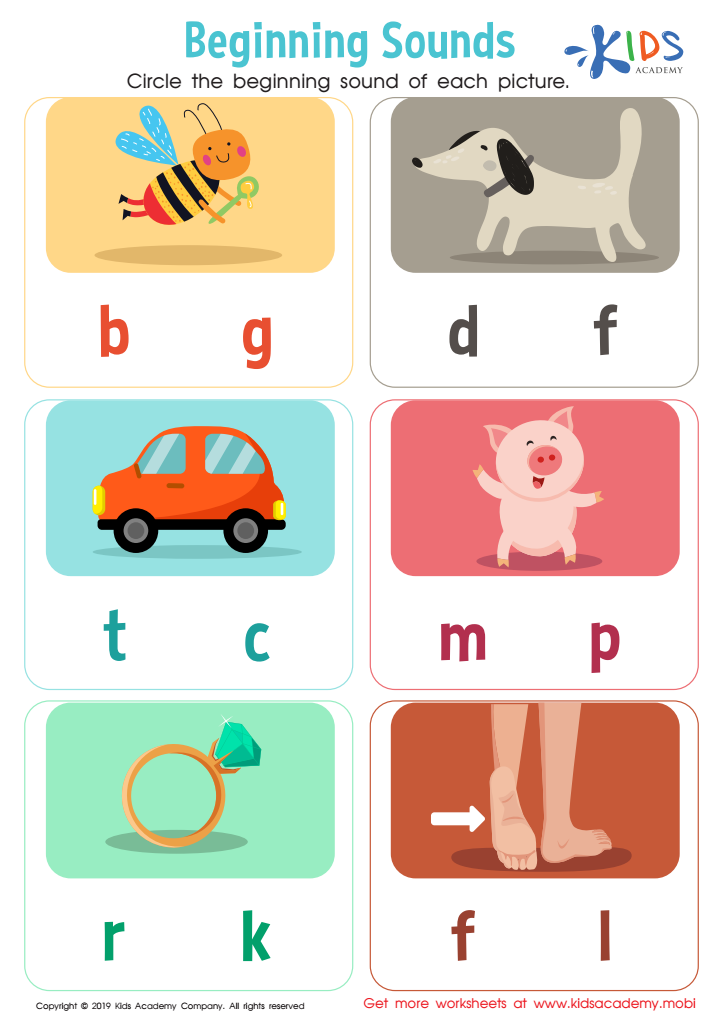
Beginning Sounds Worksheet
 Assign to My Students
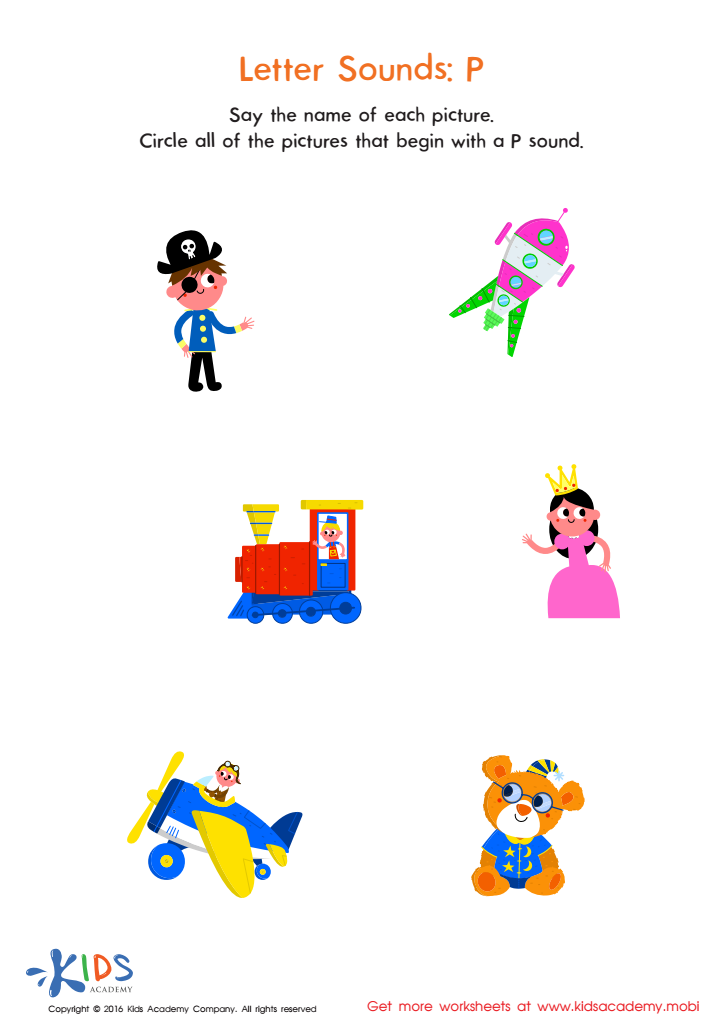
Letter P Sound Worksheet
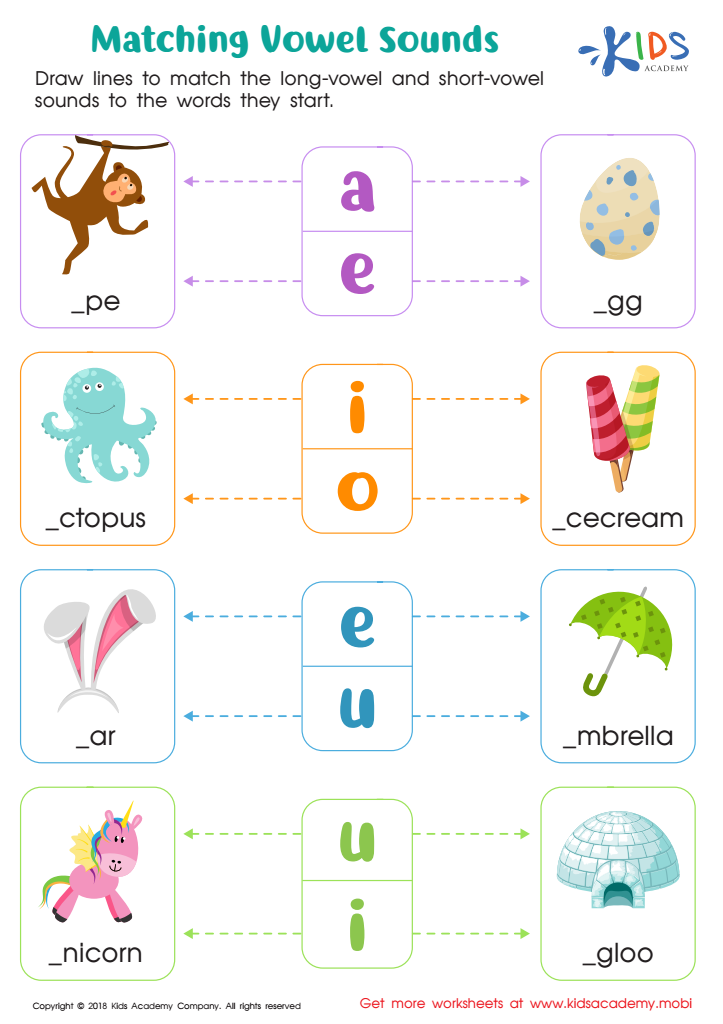
Matching Vowel Sounds Worksheet
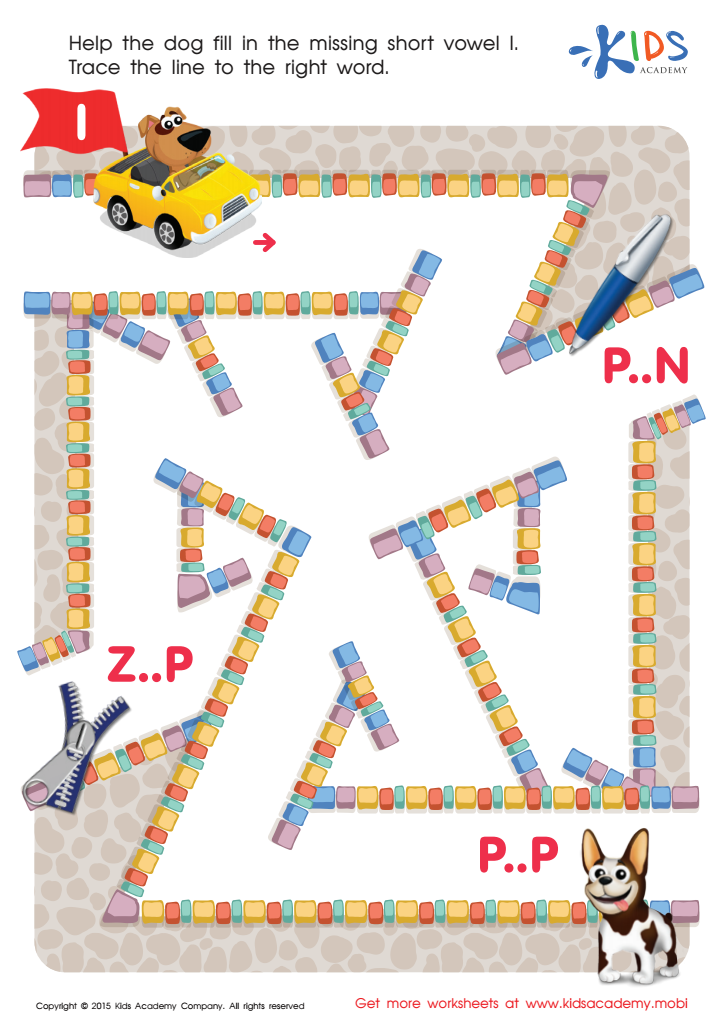
Short Vowel Sound I Worksheet
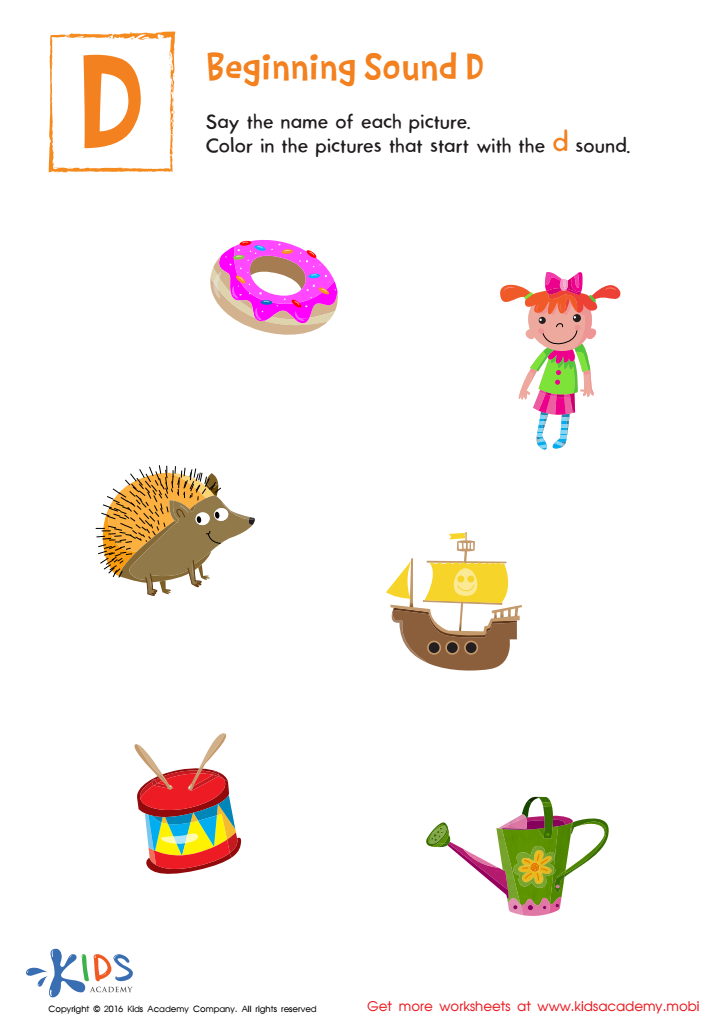
Beginning Sound D Worksheet





.jpg)

Phonics development is crucial for children aged 5-6 as it serves as the foundation for reading and writing skills. At this age, children are beginning to explore language more deeply, and phonics helps them decode words by understanding the relationship between letters and sounds. This skill is essential for reading fluency, comprehension, and overall literacy development.
When children grasp phonics, they can confidently approach new texts, which fosters a love for reading and learning. It empowers them to tackle unfamiliar words independently, enhancing their vocabulary and comprehension skills. Moreover, early phonics knowledge sets the stage for future academic success; children with strong foundational skills are more likely to excel in subsequent grades.
Parents and teachers should care about phonics development as it also supports critical thinking and problem-solving skills. Phonics instruction encourages children to analyze words, making educated guesses, and understand patterns in language. This cognitive engagement is vital for intellectual growth. Furthermore, fostering positive experiences around reading and phonics can boost a child's self-esteem and motivation, paving the way for lifelong learning habits. Therefore, prioritizing phonics is an investment in a child's educational journey and overall development.








