
Predicting outcomes Worksheets for Ages 5-6
3 filtered results
Difficulty Level
Grade
Age
-
From - To
Subject
Activity
Standards
Discover our engaging "Predicting Outcomes Worksheets for Ages 5-6" designed to enhance young learners' critical thinking and problem-solving skills. These worksheets feature age-appropriate scenarios where children predict the outcome based on given information, fostering early analytical abilities. With vibrant illustrations and interactive activities, our materials make learning fun and engaging. Perfect for both classroom and home use, they encourage children to think ahead and explore cause-and-effect relationships. Help your child build a strong foundation in predicting outcomes, setting them up for future academic success. Download now from Kids Academy for hours of educational enjoyment.
Favorites
With answer key
Interactive
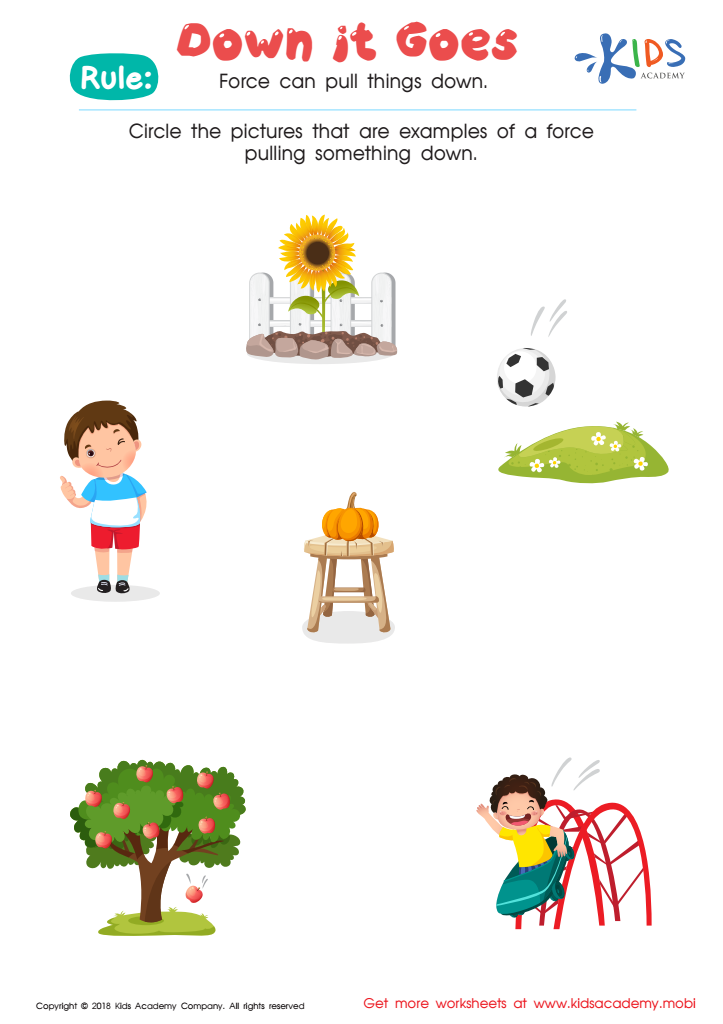
Down it Goes Worksheet
Explain gravity to your child using this fun worksheet. Ask them to give examples of things pulled down with force, then instruct them to circle the pictures that show this. It's a great way to help them understand the concept of gravity.
 Assign to My Students
Down it Goes Worksheet
Worksheet
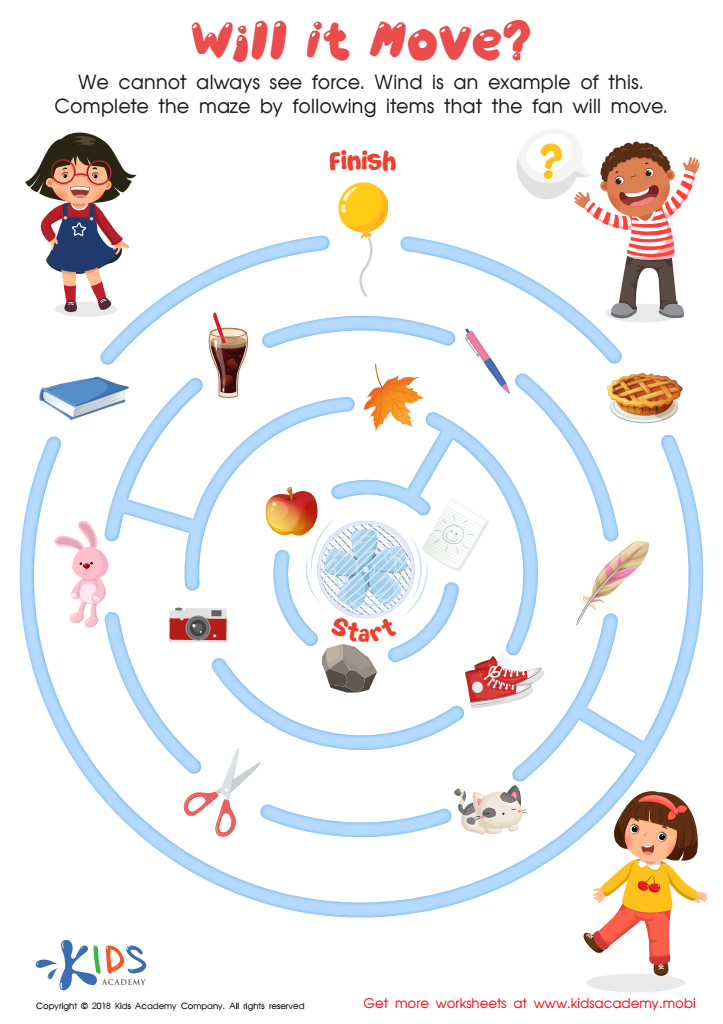
Will it Move? Worksheet
Does your child know about force? If yes/no, this worksheet can help. Force is invisible - like wind - but it moves objects. Ask your child to complete the maze, following the path of items moved by the wind. 80 words.
Will it Move? Worksheet
Worksheet
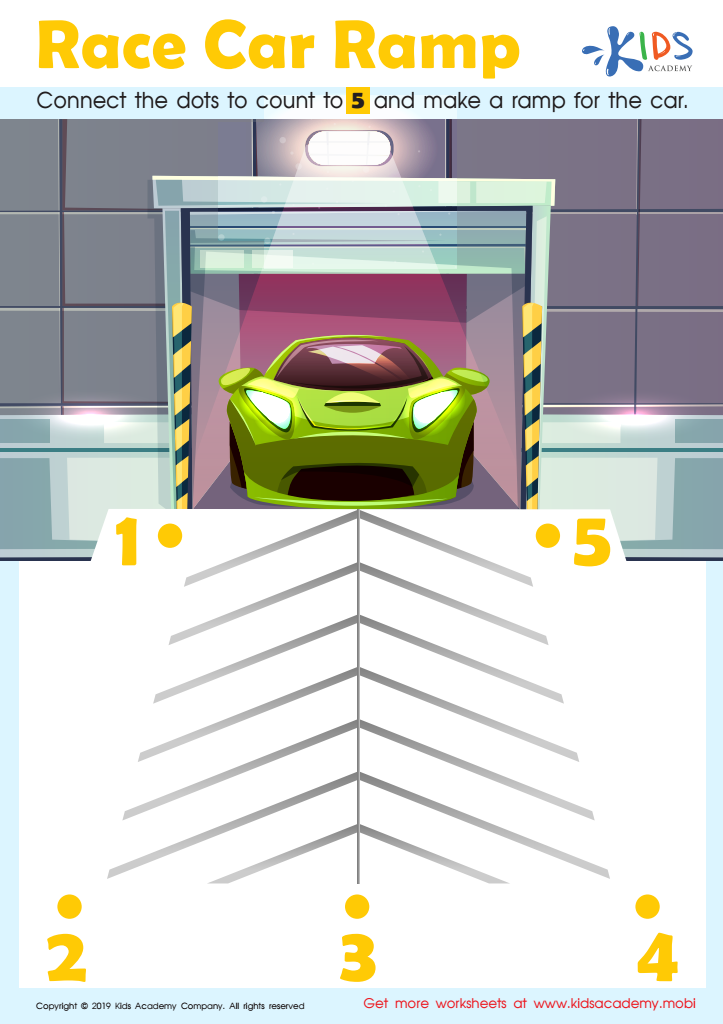
Race Car Ramp Worksheet
Kids can learn numbers quickly and have fun with this worksheet! It teaches preschoolers counting to 5 and allows them to draw a car ramp. It's a creative way to learn numbers, making them fun and easy to remember.
Race Car Ramp Worksheet
Worksheet
Join Kids Academy for Free
Who is primarily going to use this learning content?







Predicting outcomes is a vital skill for children ages 5-6, as it sets the foundation for critical thinking, problem-solving, and decision-making abilities. Parents and teachers should prioritize nurturing this competency to facilitate overall cognitive development. At this age, youngsters transition from relying solely on direct experiences to beginning to understand cause-and-effect relationships.
Developing prediction skills enables children to anticipate consequences, foresee challenges, and plan effectively. For instance, predicting what will happen next in a story enhances comprehension and fosters a love for reading. When children make and test predictions during science activities, they engage in the basic scientific method, honing their observation and analytical skills. Additionally, learning to predict social outcomes—like understanding the repercussions of actions in group settings—bolsters empathy and cooperation, crucial aspects of socio-emotional development.
Moreover, accurate prediction skills boost confidence and self-esteem, as children feel competent in navigating their environments and making informed choices. Early development in this area also prepares children for future academic and life success. Investing in prediction activities provides young learners with practical tools to tackle complex situations as they mature, laying the groundwork for resilient, thoughtful, and capable individuals.








