
Rhyme recognition Worksheets for Ages 5-6
6 filtered results
Difficulty Level
Grade
Age
-
From - To
Subject
Activity
Standards
Introducing our engaging Rhyme Recognition Worksheets for Ages 5-6! Designed to boost early literacy skills, these worksheets offer fun and interactive activities that help young learners identify and match rhyming words. Featuring colorful illustrations and easy-to-follow instructions, each worksheet enhances phonemic awareness, improves vocabulary, and encourages a love for reading. Perfect for both classroom use and at-home practice, our worksheets cater to various learning styles, ensuring every child enjoys the journey of mastering rhymes. Empower your child’s learning today with our comprehensive collection of rhyme recognition exercises, created by expert educators at Kids Academy!
Favorites
With answer key
Interactive
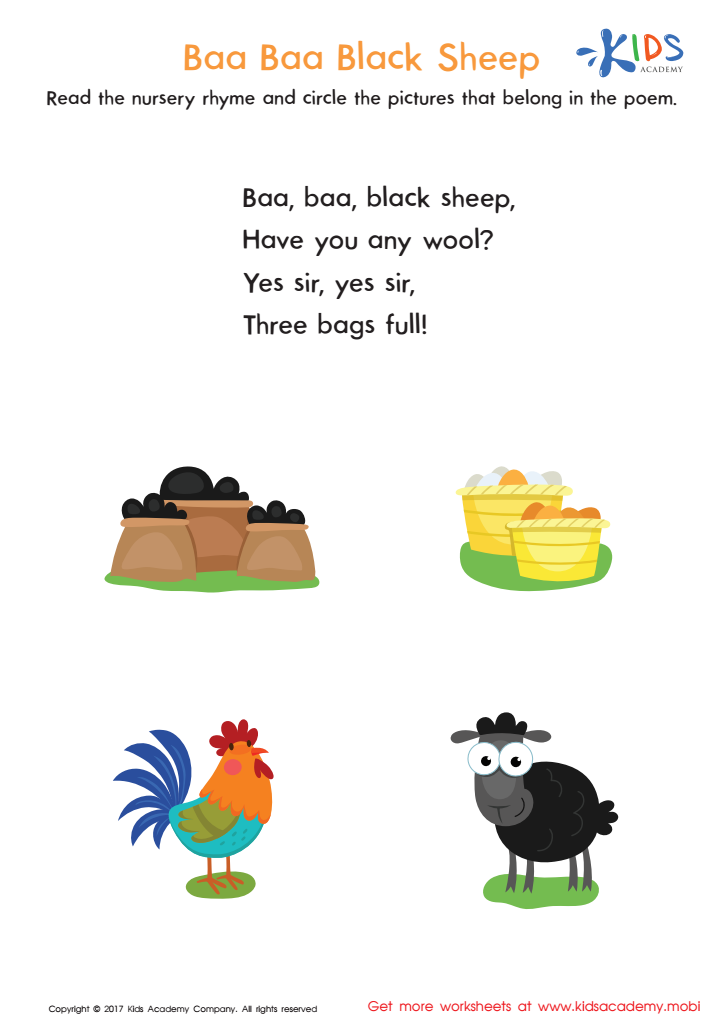
Baa Baa Black Sheep Printable
Jumpstart your child's reading skills with this printable Baa Baa Black Sheep worksheet! Recite the lines with them, then have them select the pictures associated with the poem to test comprehension. Fun and educational!
 Assign to My Students
Baa Baa Black Sheep Printable
Worksheet
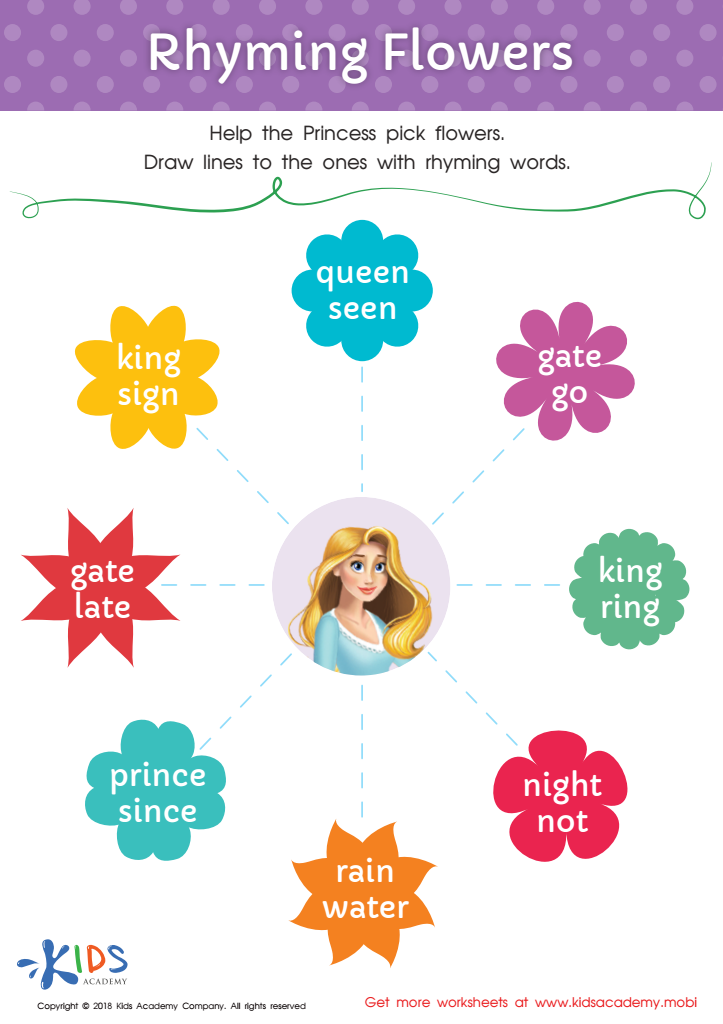
Rhyming Flowers Worksheet
Recognizing rhyming words boosts phonological awareness. With this skill, students can identify similar sounds in words and predict new words more accurately. This worksheet provides practice and is ideal for the reading classroom. Download and find the rhyming words! (80 words)
Rhyming Flowers Worksheet
Worksheet
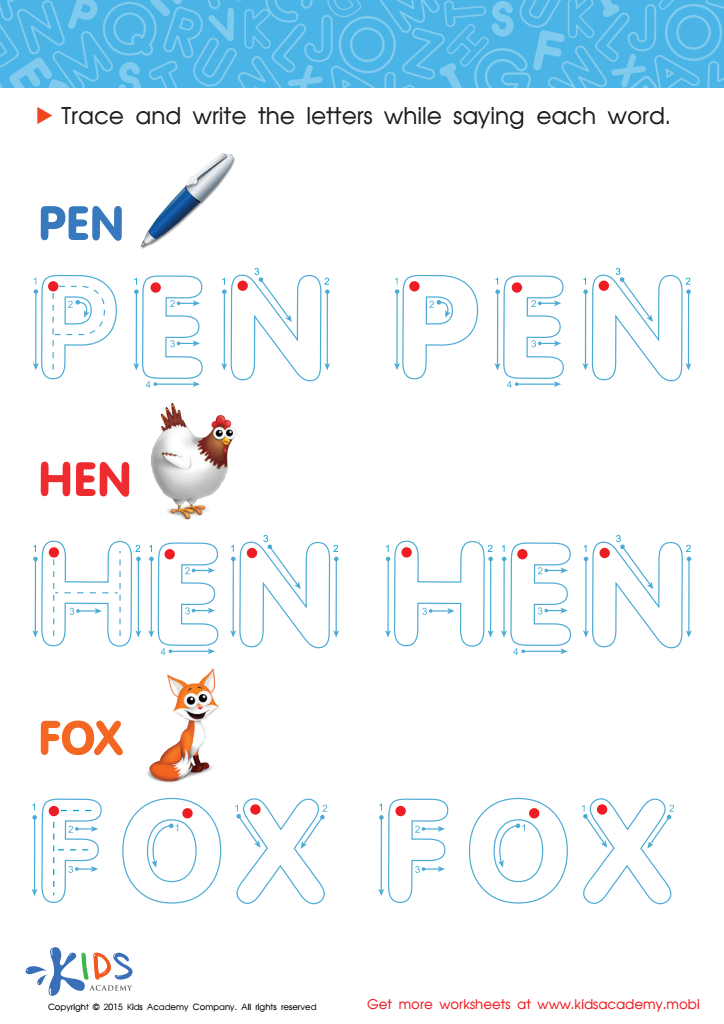
A Pen, a Hen and a Fox Spelling Worksheet
Practice spelling with this free worksheet: three lines, three new words. Say them, trace them, write them correctly. Keep learning with Kids Academy for more printable worksheets and more fun! (80 words)
A Pen, a Hen and a Fox Spelling Worksheet
Worksheet
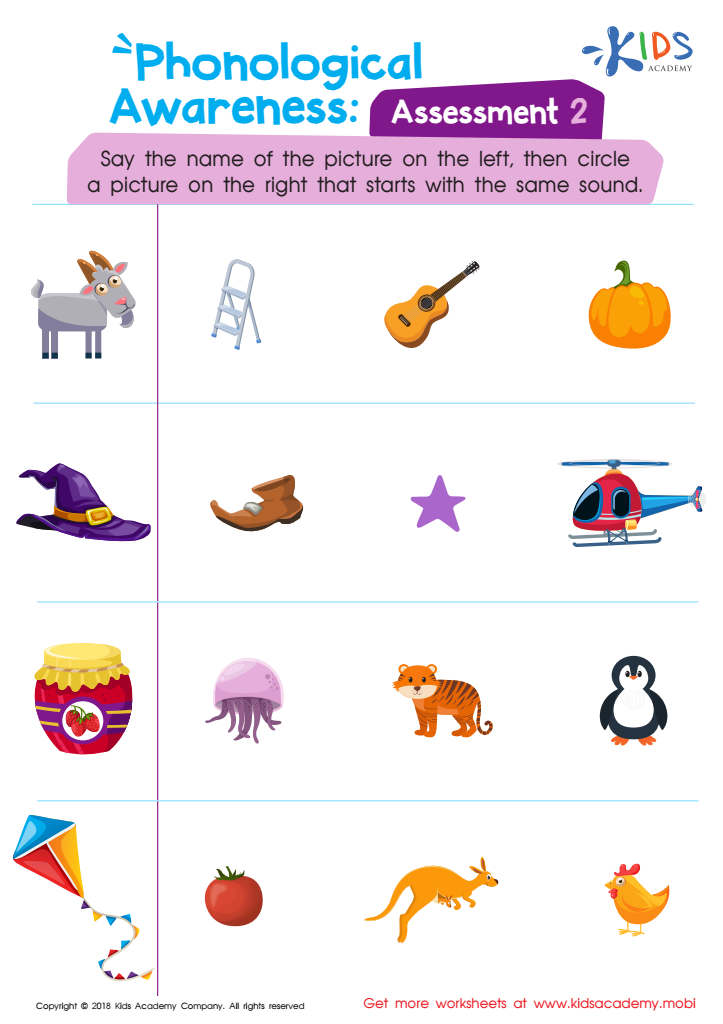
Phonological Awareness: Assessment 2 Worksheet
Test your child’s phonological awareness and reading readiness with this charming worksheet! Perfect for K-1, it assesses if they can name a picture aloud, listening for the starting sound and matching it to another word. Watch as they think deeply and listen to the sounds as they name each picture. Determine if your child is ready to sound out words or needs more phonics practice.
Phonological Awareness: Assessment 2 Worksheet
Worksheet
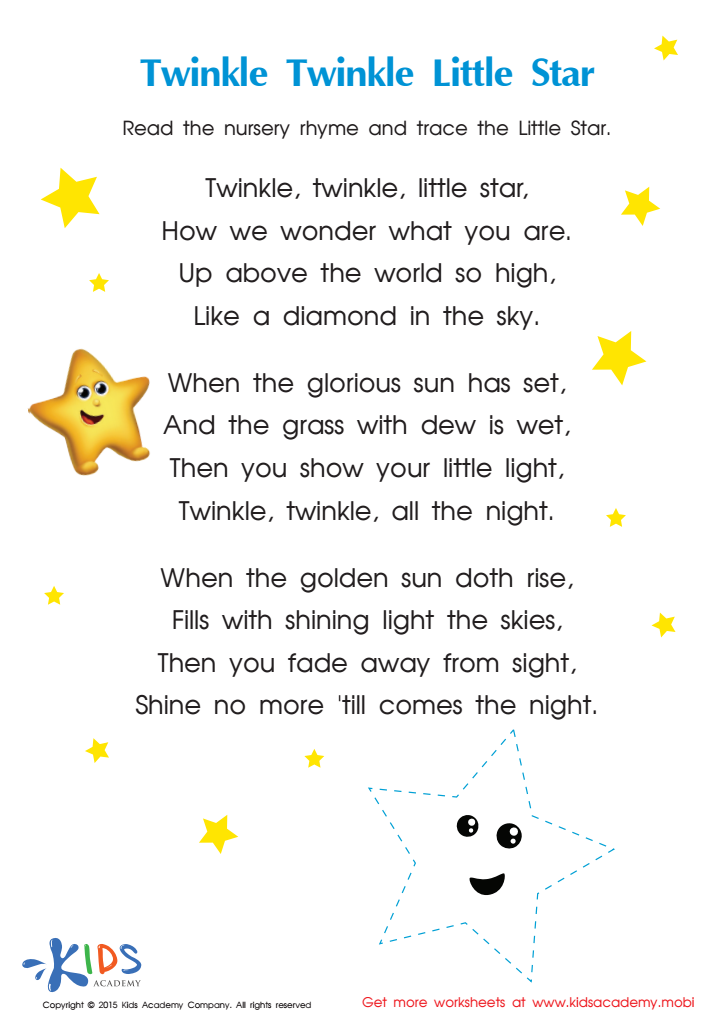
Nursery Rhymes: Twinkle Little Star Worksheet
Introduce your kindergartener to nursery rhymes using this printable worksheet. Sing Twinkle Little Star with your child and incorporate some simple actions. Even as a lullaby, it's a great way to teach letters and counting - have your child find and count all the letter 'S's in the song. For extra fun, try the Twinkle Little Star coloring page.
Nursery Rhymes: Twinkle Little Star Worksheet
Worksheet
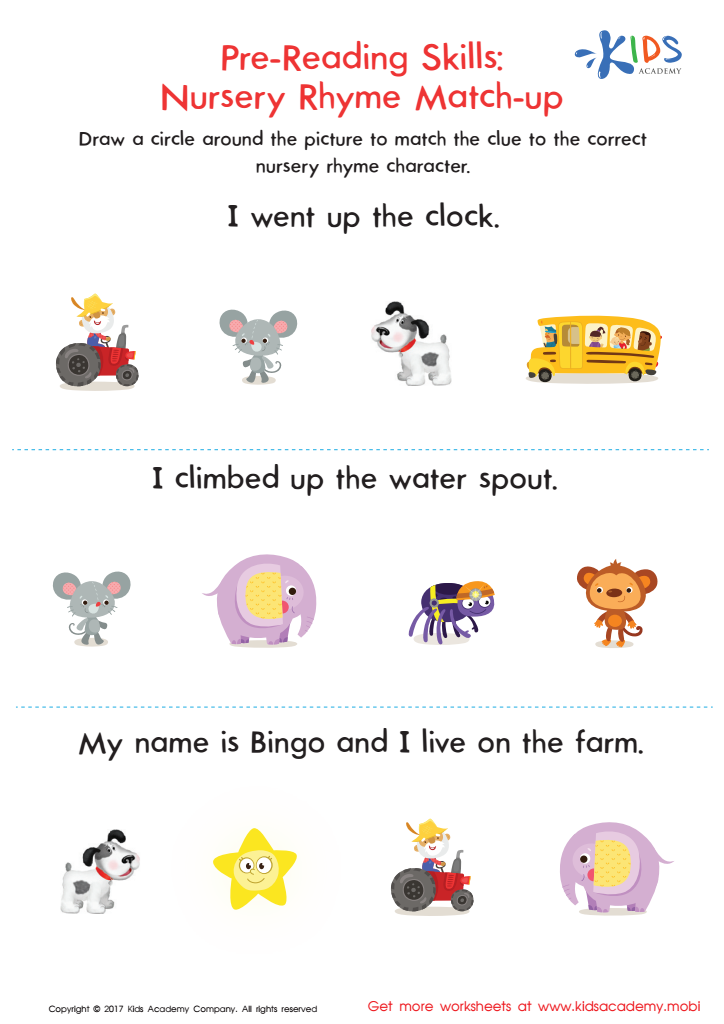
Nursery Rhyme Match–Up Worksheet
This worksheet helps kids build pre-reading skills using stories they know and love! By connecting with prior knowledge, kids can develop ideas about characters and set the stage for reading strategies.
Nursery Rhyme Match–Up Worksheet
Worksheet
Join Kids Academy for Free
Who is primarily going to use this learning content?








Parents and teachers should prioritize rhyme recognition for ages 5-6 because it is a foundational skill for early literacy development. Recognizing rhymes helps children understand that words are made up of different sounds, enhancing their phonological awareness, which is crucial for learning to read and write. Recognizing patterns within word families, gained through rhyming, allows children to decode new words and develop a stronger vocabulary, boosting their reading fluency and comprehension skills.
Furthermore, rhyming activities cultivate essential listening skills. As children learn to identify rhymes, they become better at distinguishing between different sounds, which is beneficial not just for reading but also for following instructions and engaging in classroom discussions. Rhyming fosters memory improvement as well. When rhymes are part of stories and songs, kids find it easier to remember and recite them, aiding in the retention of new concepts and facts.
Additionally, engaging with rhymes is inherently playful and enjoyable for young children. These light-hearted, rhythmic experiences instill a love for language and reading that can last a lifetime. Such positive early experiences with language can encourage greater motivation and engagement in more complex literacy tasks later on, setting a foundation for academic success.








