
Rhyming skills Worksheets for Ages 5-6
8 filtered results
Difficulty Level
Grade
Age
-
From - To
Subject
Activity
Standards
Enhance your child's literacy with our engaging Rhyming Skills Worksheets designed for ages 5-6! These interactive resources help young learners discover the joy of rhymes through fun activities that promote phonetic awareness and vocabulary development. Our worksheets offer a variety of exercises, from matching rhyming words to filling in the blanks, making learning enjoyable and effective. Ideal for at-home practice or classroom use, these worksheets encourage creativity and build foundational reading skills. Watch your child excel in language while having a blast with rhymes! Explore our collection today and ignite a love for learning that lasts a lifetime.
Favorites
With answer key
Interactive
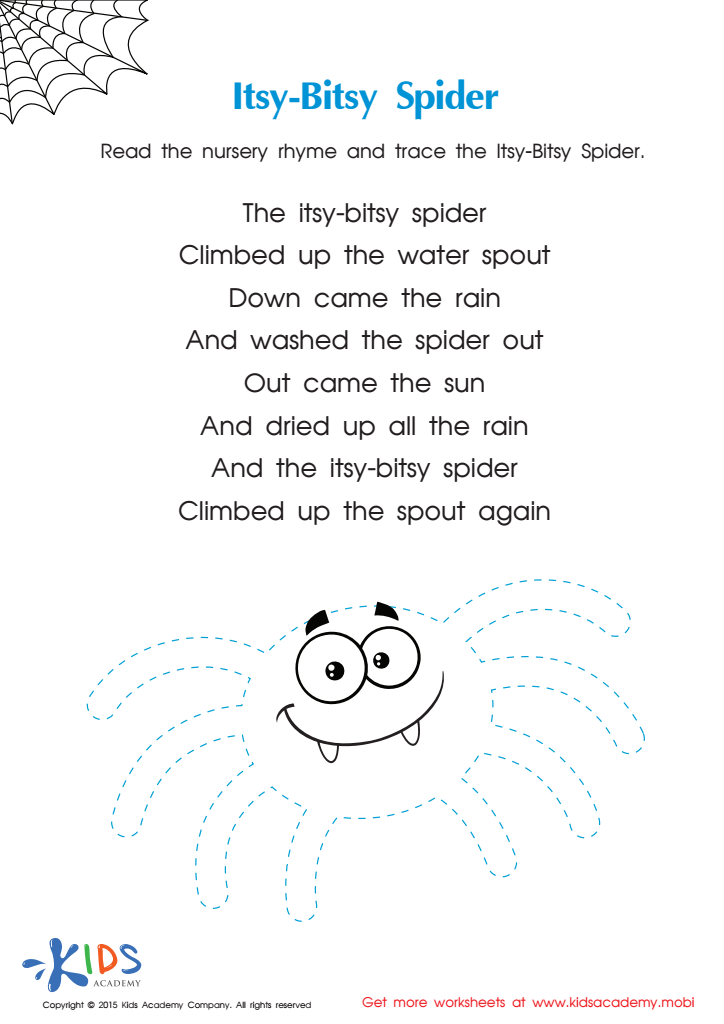
Itsy Bitsy Spider Nursery Rhyme PDF Worksheet
Introduce your child to the classic nursery rhyme with this worksheet. They'll learn the song, develop their motor skills, and find and count the letters 'A'. Pick up your crayons and add some color to the missing spider!
 Assign to My Students
Itsy Bitsy Spider Nursery Rhyme PDF Worksheet
Worksheet
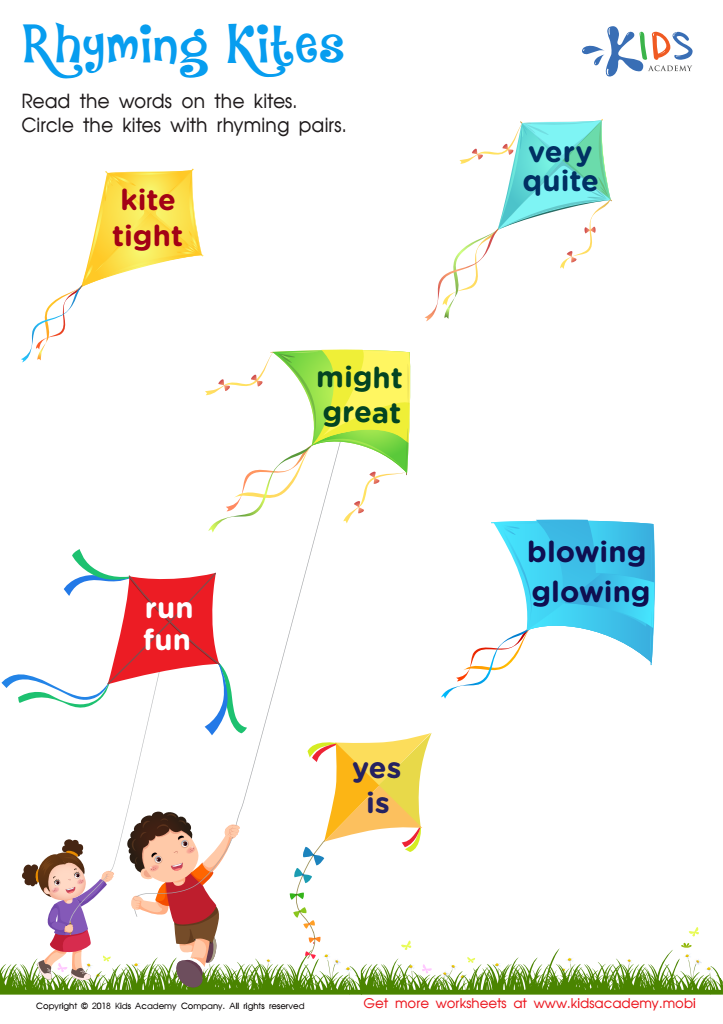
Rhyming Kites Worksheet
On a spring day, fly a kite! Kids Academy has a rhyming worksheet to boost your child's skills. Read the pairs of words aloud. Circle the kites if they rhyme, leave them blank if they don't. Listen carefully and find all the rhyming word pairs to complete this sheet!
Rhyming Kites Worksheet
Worksheet
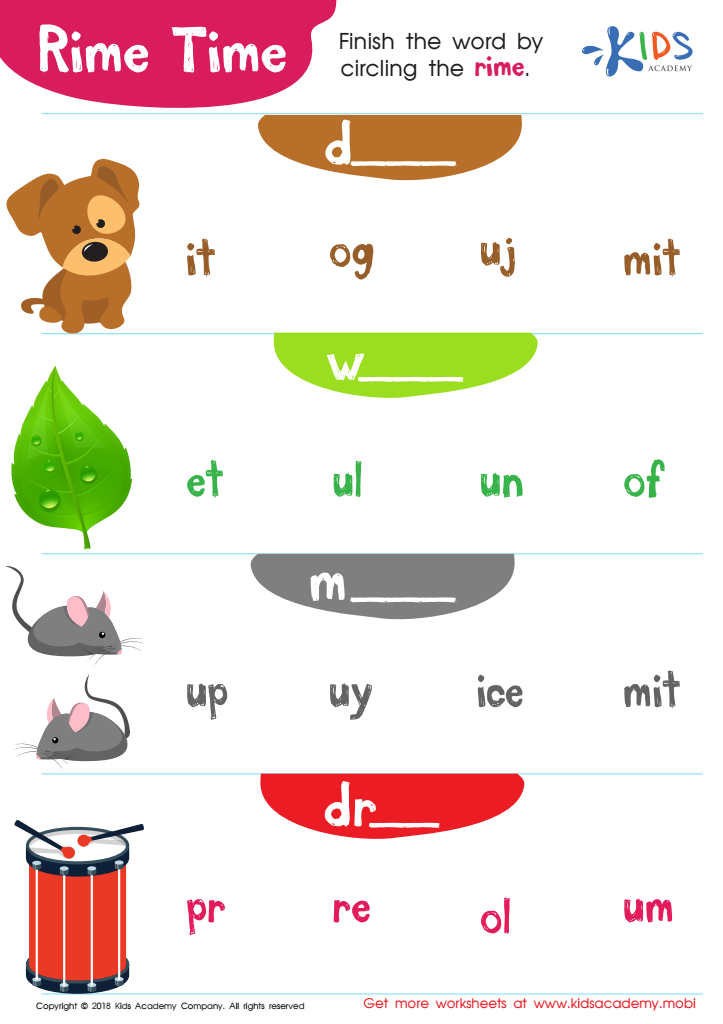
Rime Time Worksheet
This free PDF worksheet helps new and emerging readers identify rimes (the letters after initial consonants) and practice fine motor skills. Kids trace the correct rimes for each picture and increase their fluency and decoding skills with each one!
Rime Time Worksheet
Worksheet
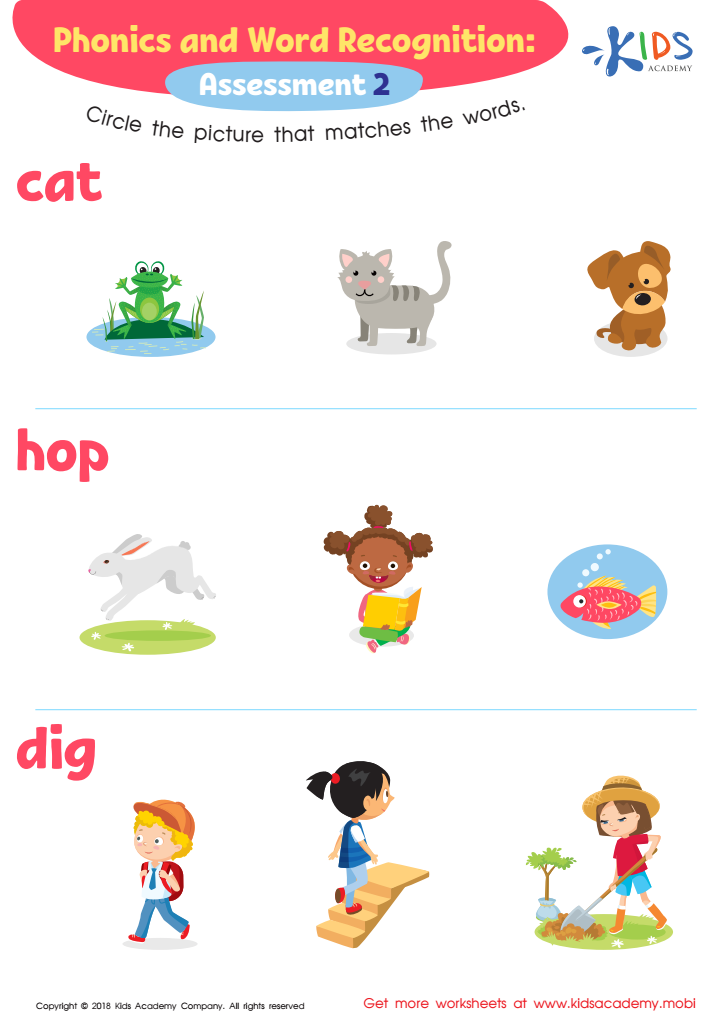
Phonological Awareness: Assessment 2 ELA Worksheet
This free worksheet assesses your emerging reader's ability to decode and match closed-syllable high-frequency words to the appropriate picture. The pictures are cheery and easy to identify, so your child will have fun and find success with decoding and matching.
Phonological Awareness: Assessment 2 ELA Worksheet
Worksheet
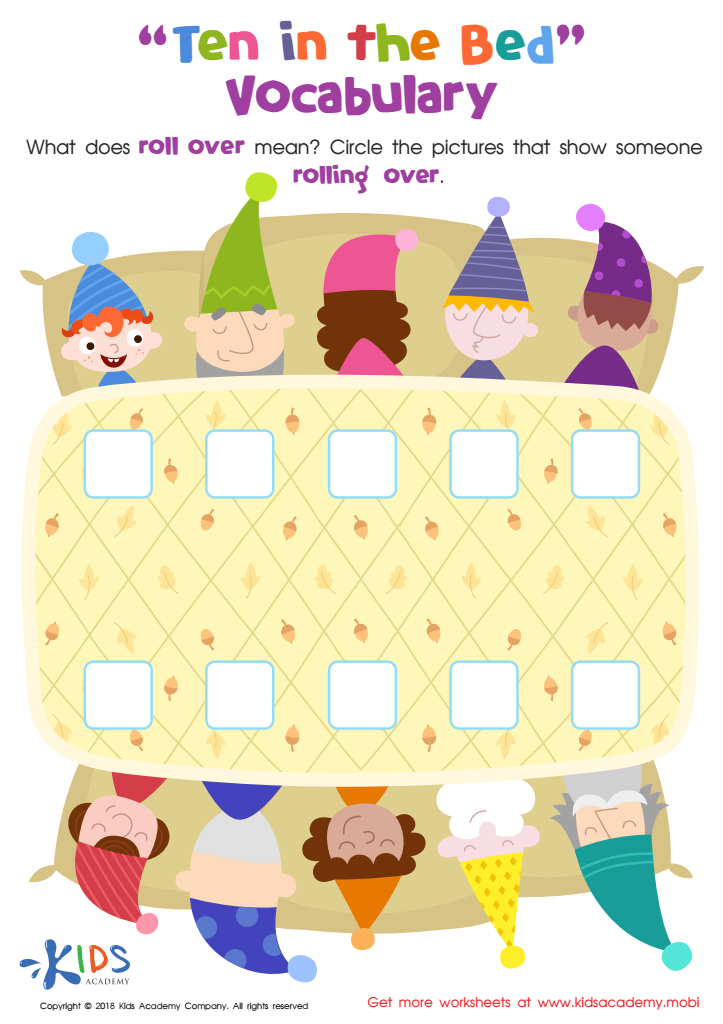
Ten in the Bed: Vocabulary Worksheet
It's essential for emerging readers to be proficient in positional and directional words. This worksheet uses cheerful faces to help students identify who has "rolled over". Knowing these words is an essential part of reading and writing for pre-K and Kindergarteners. It also helps them to follow directions and use precise language.
Ten in the Bed: Vocabulary Worksheet
Worksheet
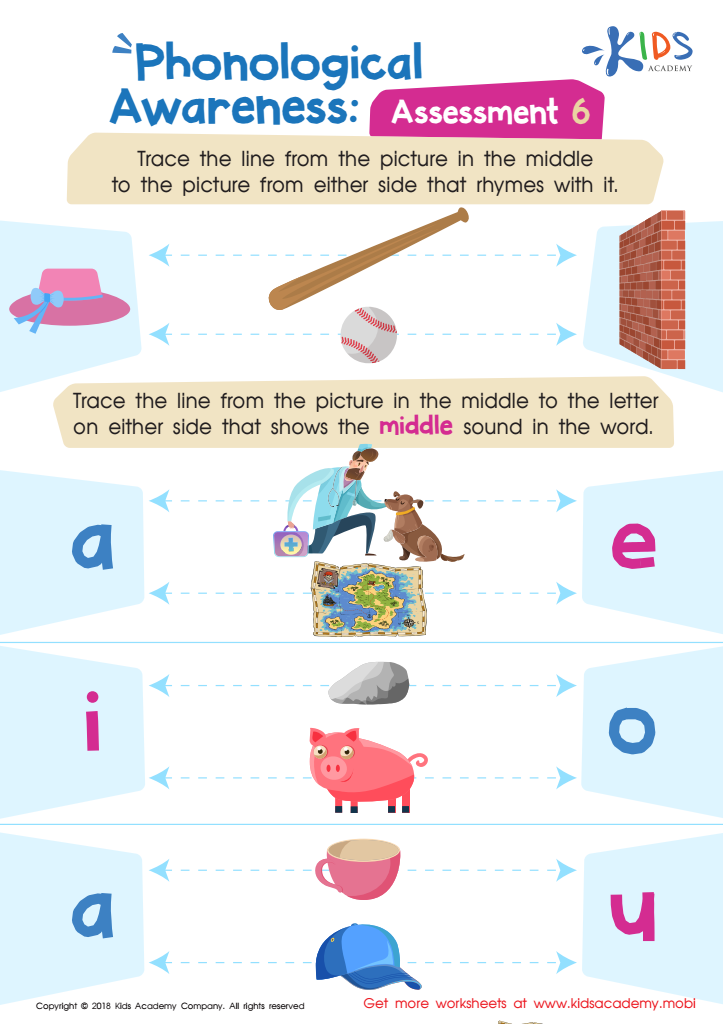
Phonological Awareness: Assessment 6 Worksheet
Check your child's ability to recognize middle word sounds using this free worksheet. Help them learn phonics by practicing with rhyming. Trace the line from the image to its rhyming match then encourage them to name each image aloud to identify which letter matches the sound. It's a great way to assess letter and sound recognition.
Phonological Awareness: Assessment 6 Worksheet
Worksheet
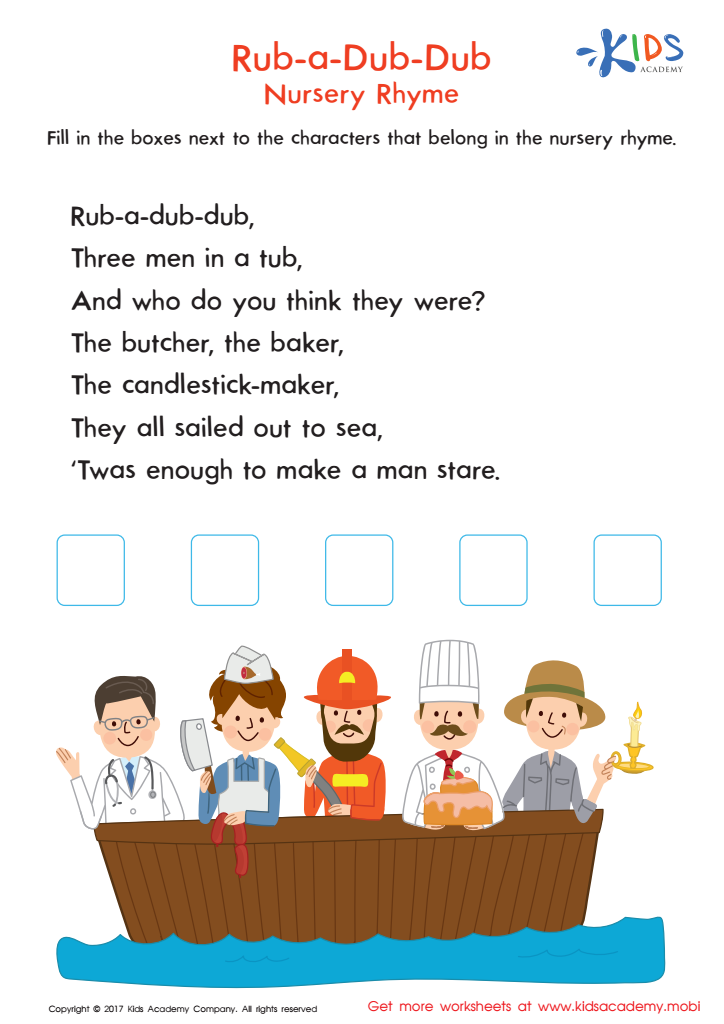
Rub a Dub Dub Printable
Delight your child and foster early reading skills with this printable nursery rhyme, Rub a Dub Dub! Let your little reader select the three men in the tub and practice important reading comprehension skills.
Rub a Dub Dub Printable
Worksheet
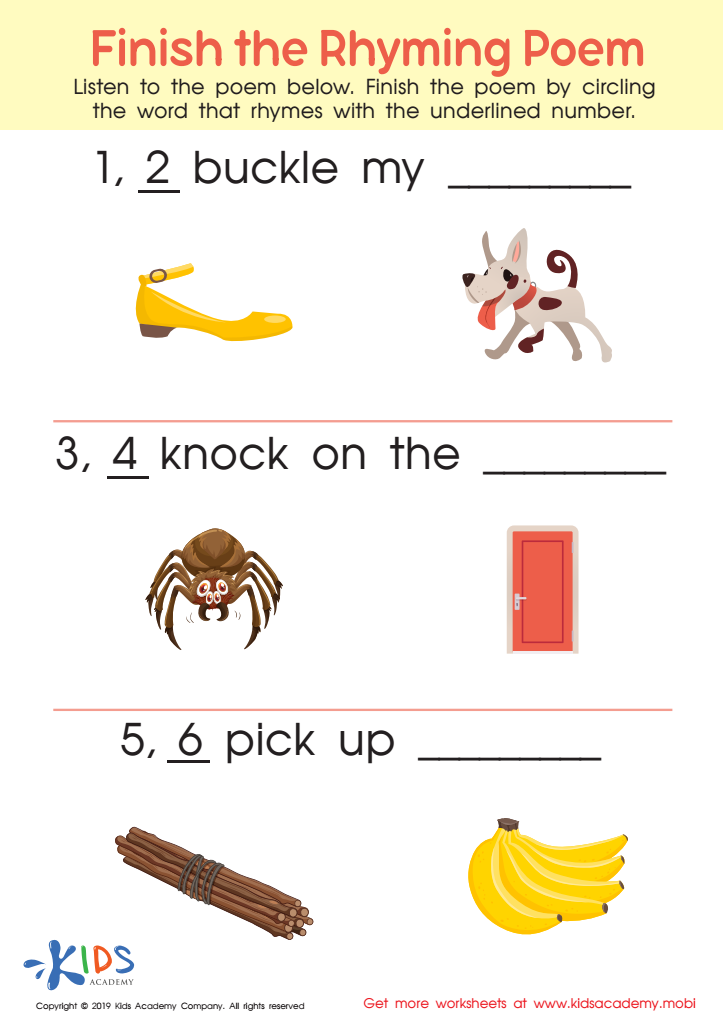
Finish Rhyming Poem Worksheet
Poems are a great way to express emotions and spark imagination. Does your child enjoy poetry and even have their own creations? If so, they'll love this worksheet. It's a great way to develop their rhyming skills. Challenge them to find and circle the words that rhyme with the ones underlined.
Finish Rhyming Poem Worksheet
Worksheet
Join Kids Academy for Free
Who is primarily going to use this learning content?








Rhyming skills are integral to early literacy development, particularly for children aged 5-6. For parents and teachers, fostering these skills has several beneficial implications. Firstly, rhyming enhances phonemic awareness, which is critical for reading readiness. It helps children discern similar sounds, enabling them to manipulate words more effectively—a foundational skill for decoding words when they begin to read independently.
Additionally, exposure to rhymes nurtures vocabulary development. Children who engage with rhyming texts encounter a diverse range of words in enjoyable contexts, aiding retention and usage. This playful interaction with language not only builds confidence but also encourages a lifelong appreciation for reading and storytelling.
Moreover, rhyming is foundational for understanding the rhythm and melody of language, which supports oral language skills and promotes expressive communication. Engaging in rhyming activities encourages turn-taking, listening, and social interaction among peers, crucial aspects of emotional and social development.
Ultimately, prioritizing rhyming skills provides a powerful springboard for academic success. It lays the groundwork for future literacy needing strong foundational skills, supporting a child’s journey towards reading fluency and comprehension. Investing in rhyming today builds a stronger connection to language that will last a lifetime.








