Sentence structuring Worksheets for Ages 5-6
5 filtered results
-
From - To
Discover our engaging Sentence Structuring Worksheets designed for children ages 5-6! These fun and interactive resources help young learners master the basics of writing by teaching them how to form simple sentences correctly. Through colorful illustrations and relatable scenarios, kids will practice organizing words, understanding sentence flow, and enhancing their language skills. Ideal for home or classroom use, our worksheets support early literacy development while making learning enjoyable. With a range of activities tailored for young minds, your child will gain confidence in their writing abilities. Explore our Sentence Structuring Worksheets and watch their communication skills flourish!
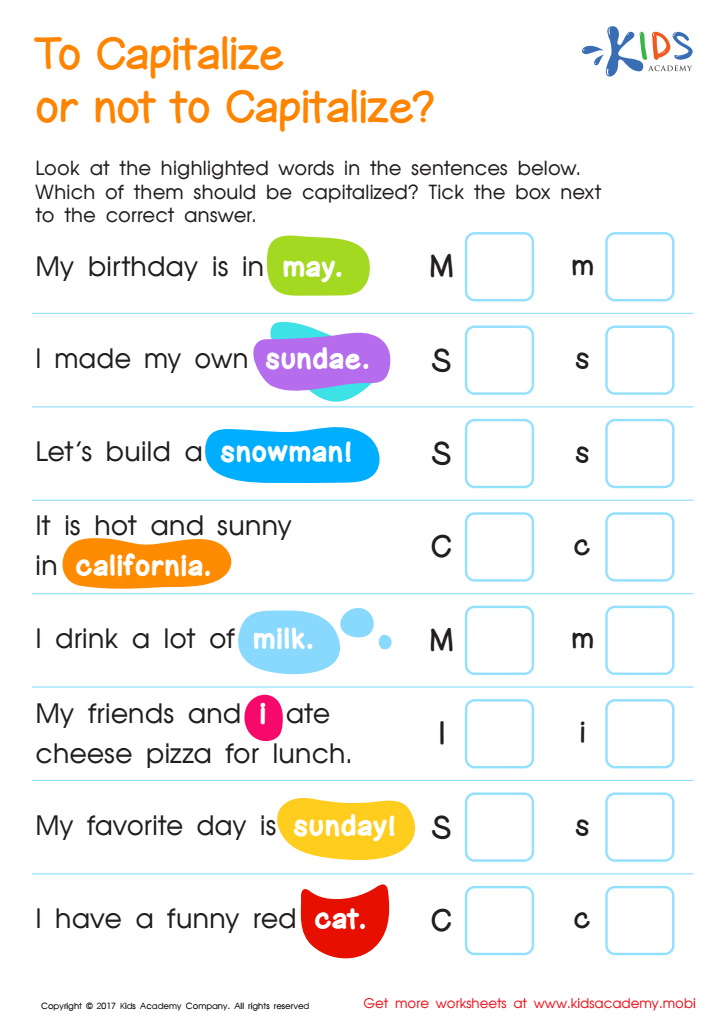
Capitalization: To Capitalize or Not? Printable
 Assign to My Students
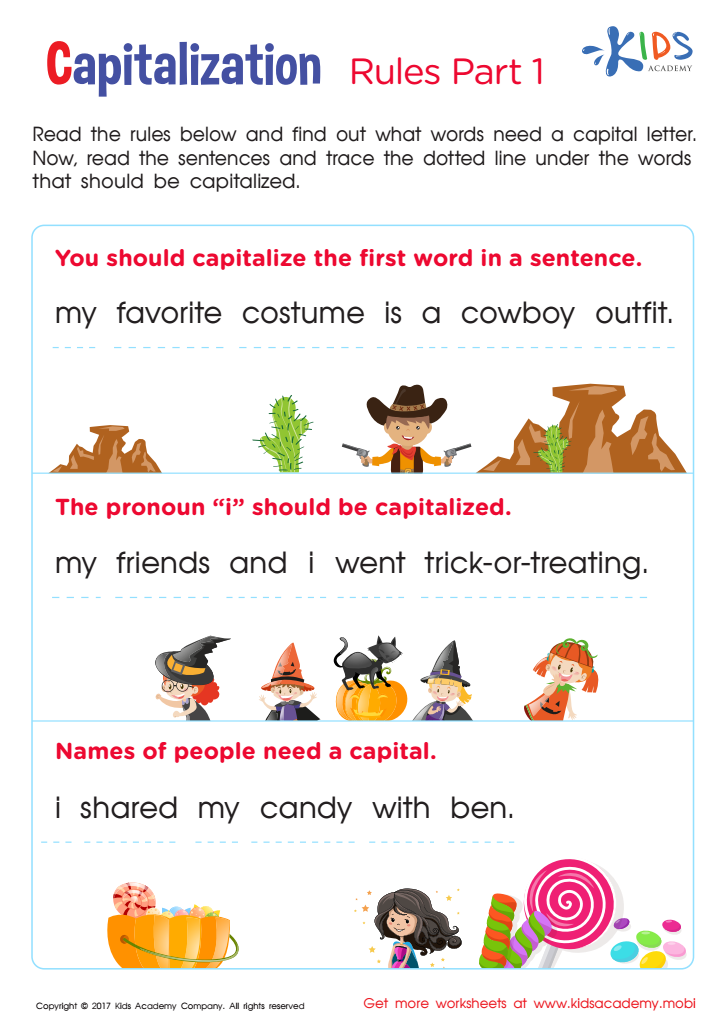
Capitalization Rules: Part 1 Worksheet
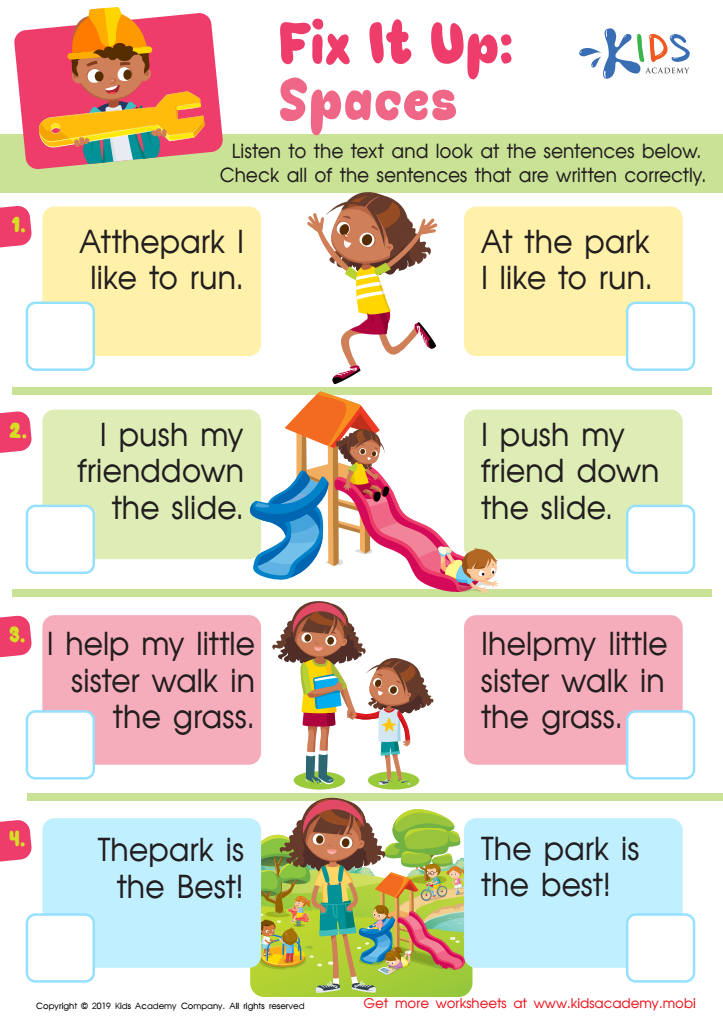
Fix Spaces Worksheet
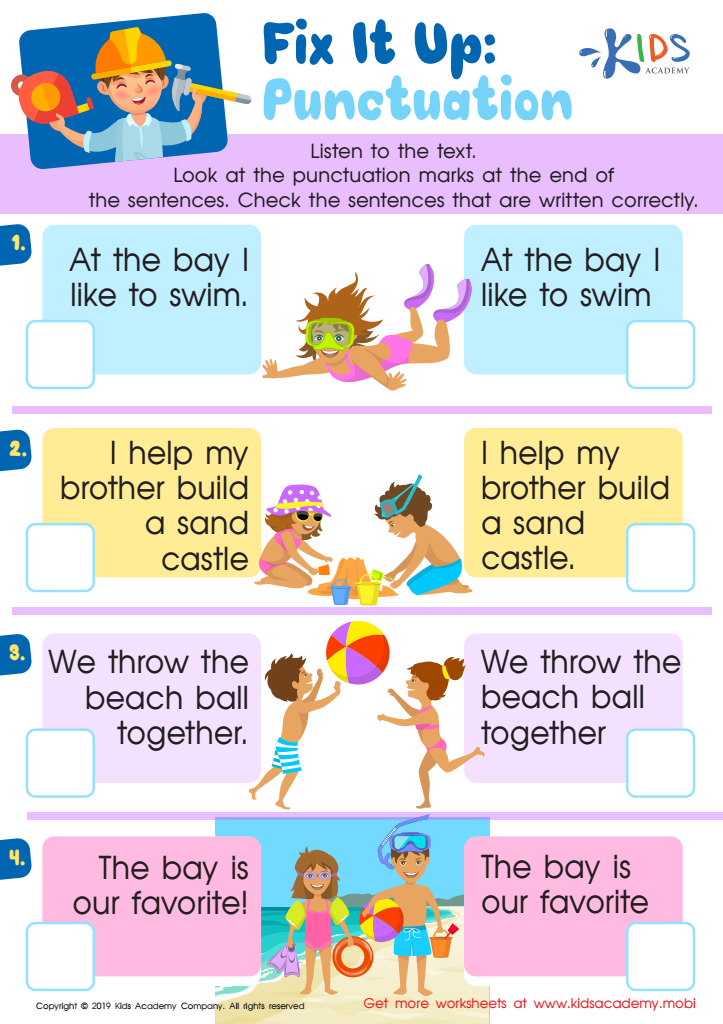
Fix Punctuation Worksheet








Sentence structuring is a foundational skill for young learners, and parents and teachers should prioritize it for several key reasons. First, clear sentence construction helps improve communication abilities. Children who can express their thoughts coherently are better equipped to share ideas, feelings, and opinions. This enhances their social interactions and lays the groundwork for effective conversations.
Secondly, mastering sentence structure supports literacy development. As children learn to recognize different parts of a sentence, they build essential reading and writing skills. This understanding aids in comprehension, allowing them to parse meanings and develop vocabulary.
Additionally, strong sentence structuring can boost a child's confidence. When children articulate their thoughts clearly, they feel more empowered in classroom discussions and collaborative settings. This increase in self-esteem can lead to greater participation and a positive classroom atmosphere.
Moreover, developing these skills at a young age fosters critical thinking. As children learn to construct sentences, they begin to organize their ideas logically, improving their problem-solving abilities as they grow. Ultimately, prioritizing sentence structuring in early education ensures that children are well-prepared for future academic challenges and contributes to their overall cognitive and social development.








