Syllable identification Worksheets for Ages 5-6
3 filtered results
-
From - To
Unlock your child's potential with our engaging Syllable Identification Worksheets designed for ages 5-6! These printable resources help young learners master the concept of syllables through fun, interactive activities. Each worksheet features colorful illustrations and age-appropriate exercises to capture your child's attention and make learning enjoyable. By practicing syllable counting and identifying patterns, your child will develop essential language skills vital for reading and writing. Perfect for homeschooling or classroom use, our worksheets support early literacy while fostering confidence in young learners. Explore our collection today and watch your child's understanding of syllables soar as they embark on their literacy journey!
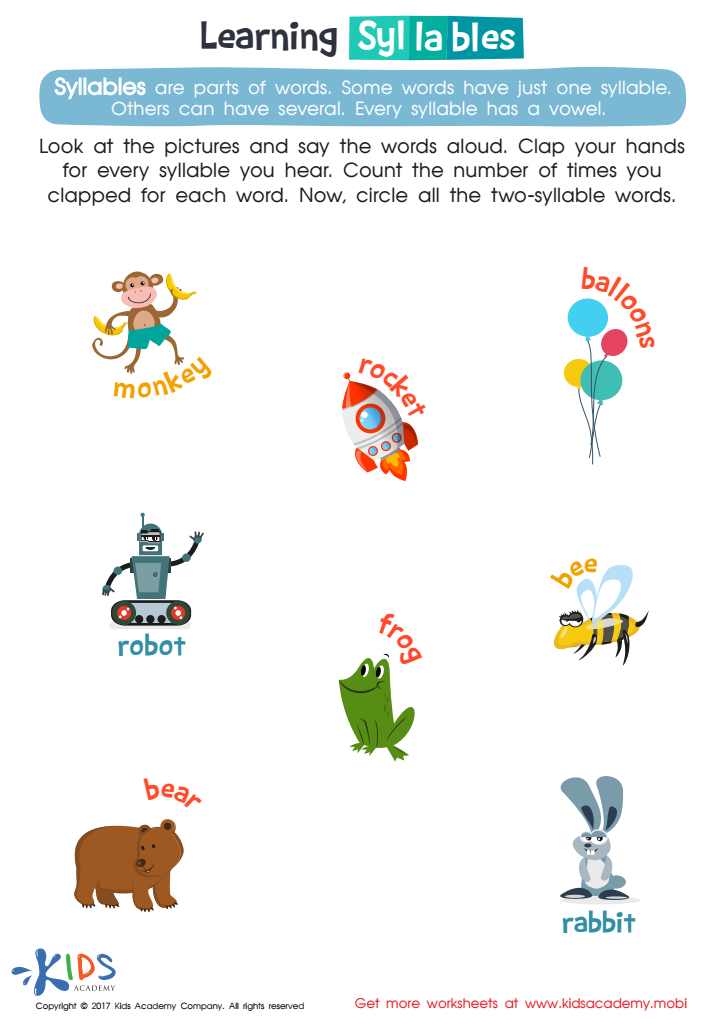
Learning Syllables Word Structure Worksheet
 Assign to My Students
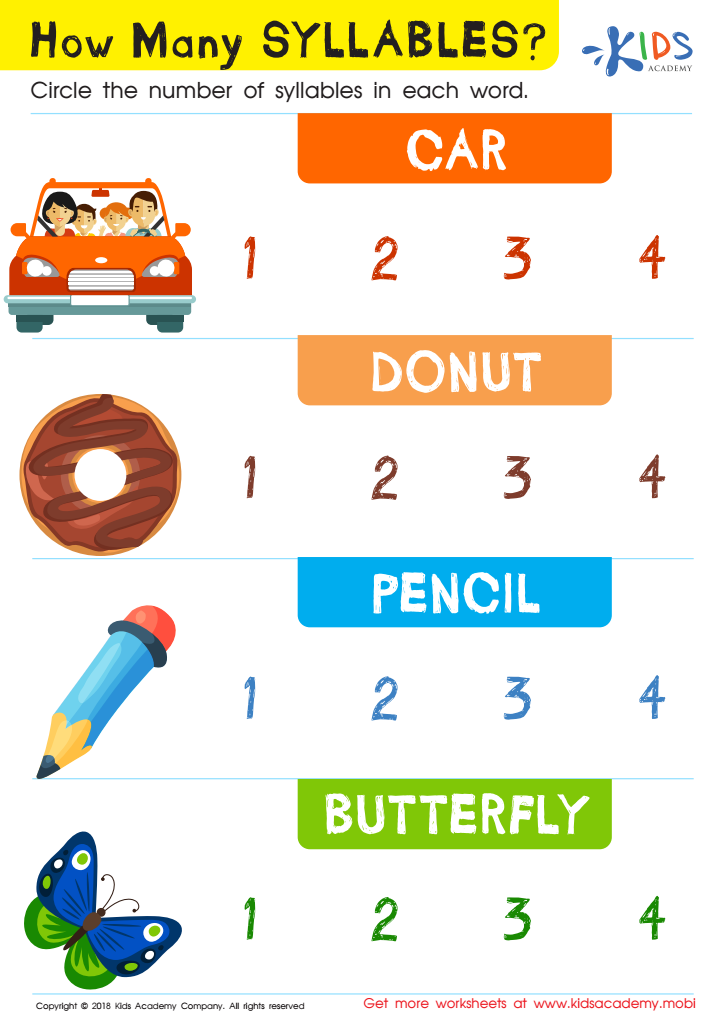
How Many Syllables? Worksheet
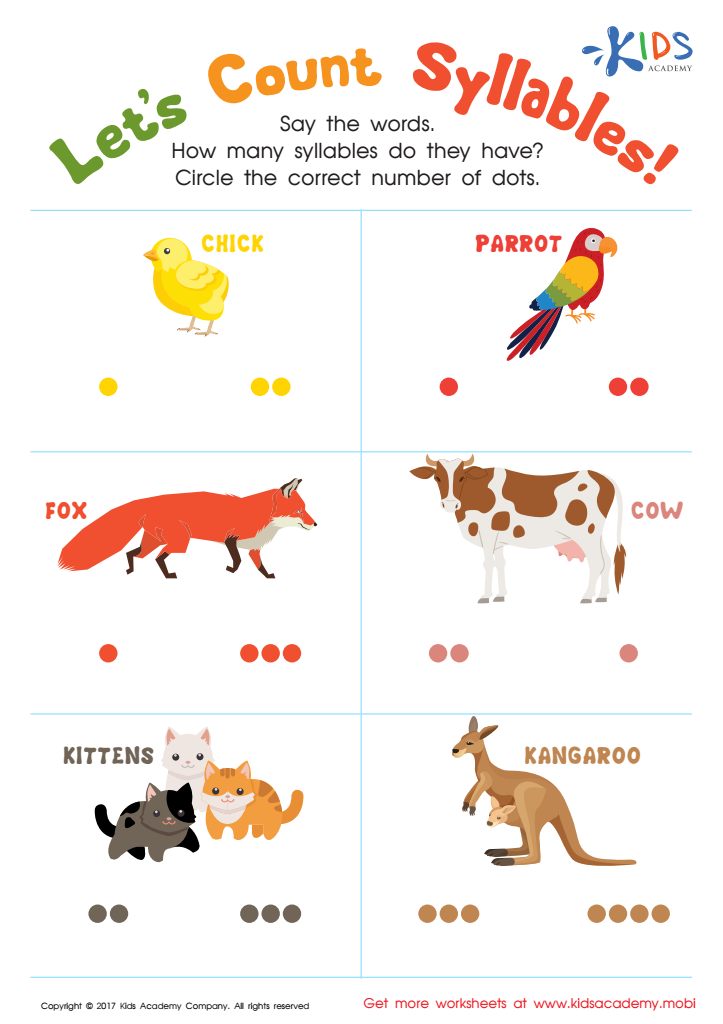
Lets Count Syllables Worksheet








Syllable identification is a foundational skill in early literacy that significantly impacts a child's reading and writing development. For children ages 5-6, understanding syllables helps them to break words down into manageable parts, making it easier to decode unfamiliar words. This skill enhances phonemic awareness, which is critical for developing strong reading abilities.
Moreover, teaching young children to identify syllables fosters their listening skills and phonological processing, which are crucial for learning to spell and pronounce words correctly. Engaging in syllable activities can also enrich vocabulary, as children learn to segment and manipulate sounds, leading to a deeper understanding of language.
For parents and teachers, incorporating syllable identification into early education can ignite a child's enthusiasm for reading. Activities like clapping out syllables or using hands-on manipulatives make learning fun and interactive, building a positive association with literacy. Ultimately, investing time and resources in syllable identification prepares children for academic success, boosts their confidence, and encourages lifelong learning. As early grade educators and caregivers, nurturing such skills lays the groundwork for effective communication, critical thinking, and creativity in future learning.








