
Understanding equivalence Worksheets for Ages 5-6
3 filtered results
Difficulty Level
Grade
Age
-
From - To
Subject
Activity
Standards
Welcome to our "Understanding Equivalence Worksheets" designed specifically for young learners aged 5-6! These engaging resources help children grasp the concept of equivalence through fun activities and colorful visuals. By exploring basic math concepts like equal quantities and simple number comparisons, students develop critical thinking skills while reinforcing their understanding of numbers. Our worksheets are perfect for both classroom settings and home practice, ensuring that learning is enjoyable and effective. Dive into a variety of exercises that challenge young minds while building a strong foundation for future mathematical success. Get started today and watch your child thrive in their learning journey!
Favorites
With answer key
Interactive
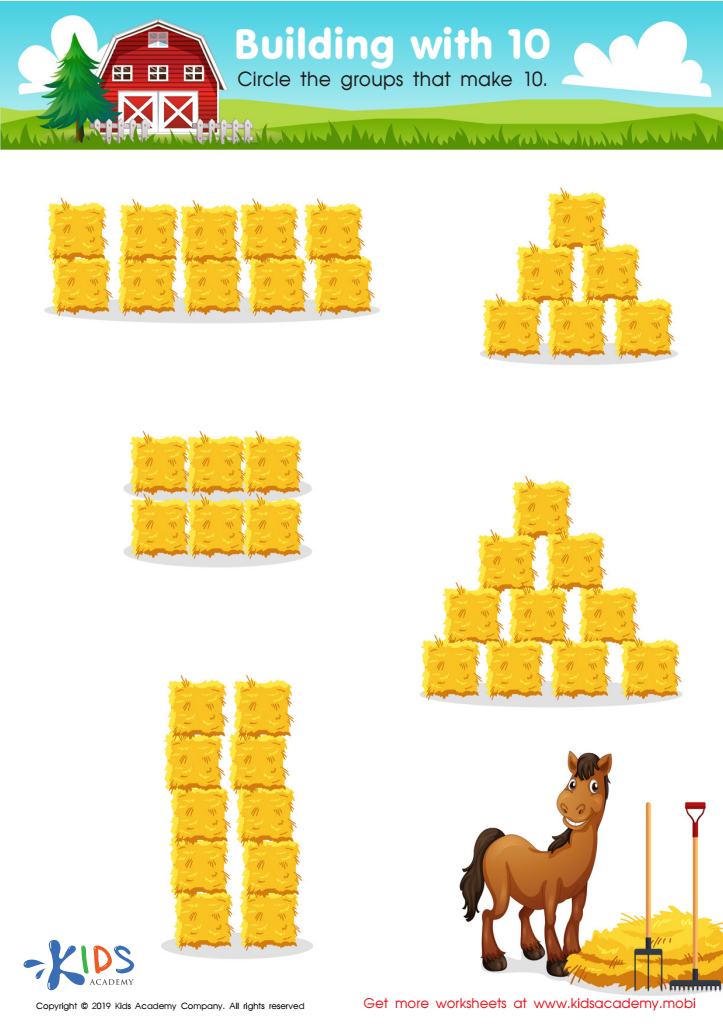
Building with 10 Worksheet
Counting numbers can be simple with this worksheet: Ask your kids to count the stacks of objects, ensure accuracy with your help, then circle the ones of ten. With practice and guidance, your children will soon become counting pros!
 Assign to My Students
Building with 10 Worksheet
Worksheet
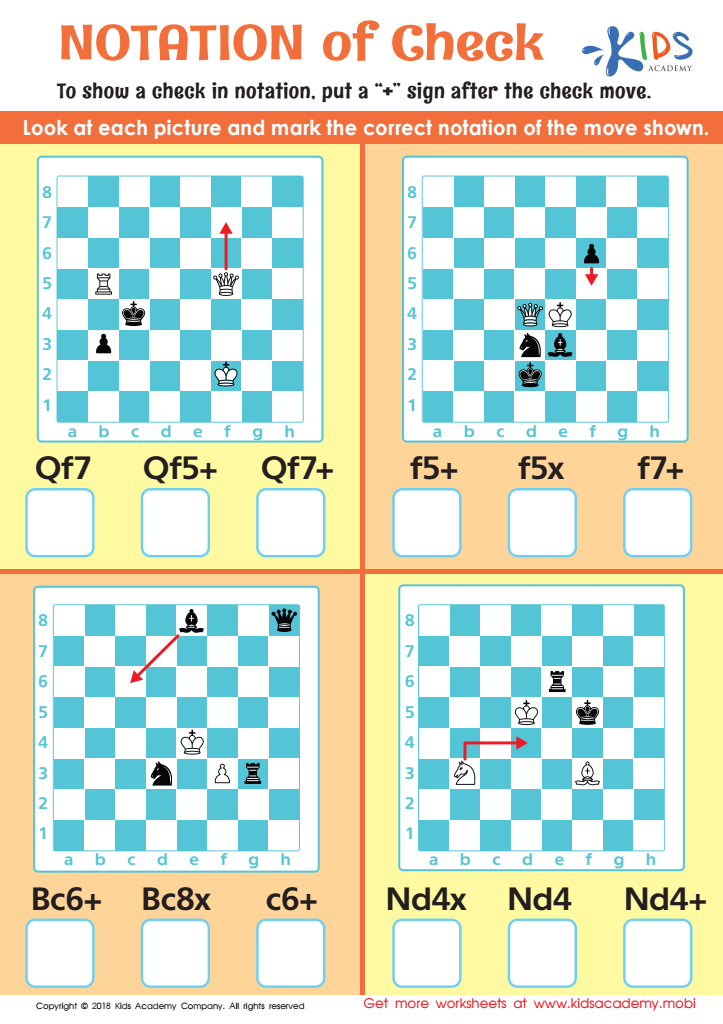
Notation of Check Worksheet
Chess is an addictive game! Once you know the basics of check and checkmate, you'll be hooked! Teach your little one to make check notation with this free PDF worksheet. They can use downloadable practice to look at each picture and mark the correct notation, strengthening their problem-solving skills while they learn to play - and win - this fun game!
Notation of Check Worksheet
Worksheet
Join Kids Academy for Free
Who is primarily going to use this learning content?






Understanding equivalence is a crucial mathematical concept for children ages 5-6, serving as the foundation for their future learning. At this age, children explore the idea that different amounts can represent the same value, which promotes critical thinking and problem-solving skills. By engaging with equivalence, children develop a deeper understanding of numbers and are better prepared for addition and subtraction concepts.
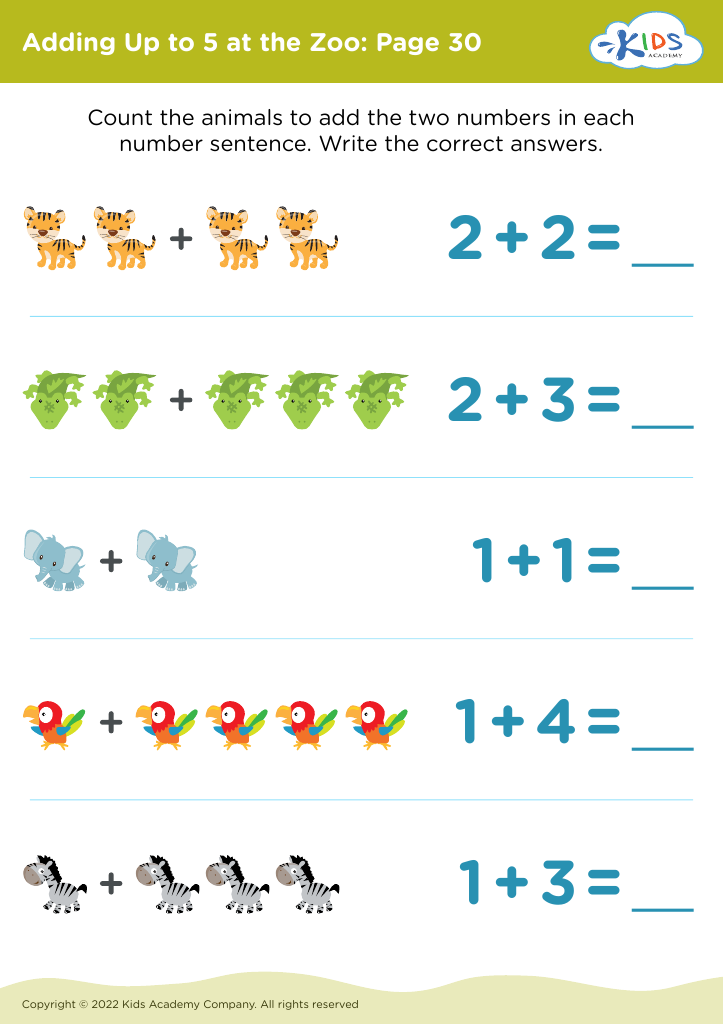
Parents and teachers should care about equivalence because it enhances children’s cognitive skills; recognizing patterns and relationships between numbers not only fosters mathematical proficiency but also encourages logical reasoning. For instance, when children discover that 2 + 2 is equivalent to 4 and that 1 + 3 is too, they begin to grasp abstract thinking.
Moreover, understanding equivalence supports fluency in math, leading to greater confidence in tackling complex problems later on. Socially, it nurtures collaborative learning, as students often work together to explore these concepts through games and hands-on activities, building communication and teamwork skills.
In summary, emphasizing equivalence helps young learners construct a solid mathematical foundation, prepares them for advanced concepts, and aids in their overall cognitive and social development, making it a vital focus for both parents and educators.








