Understanding Math Concepts Worksheets for Ages 5-6
3 filtered results
-
From - To
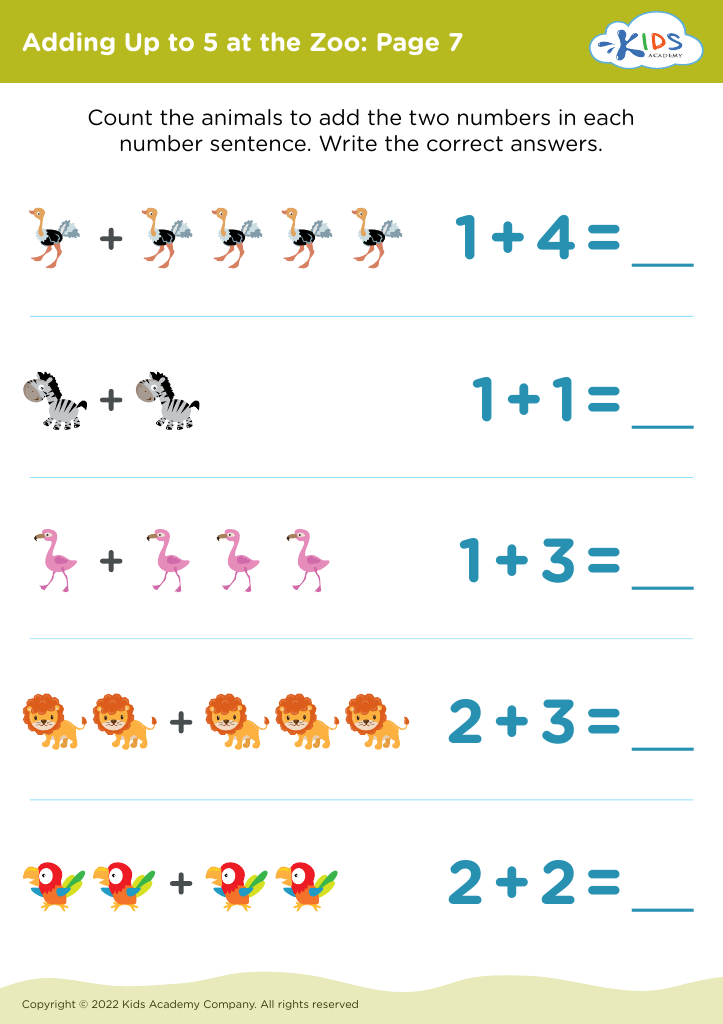
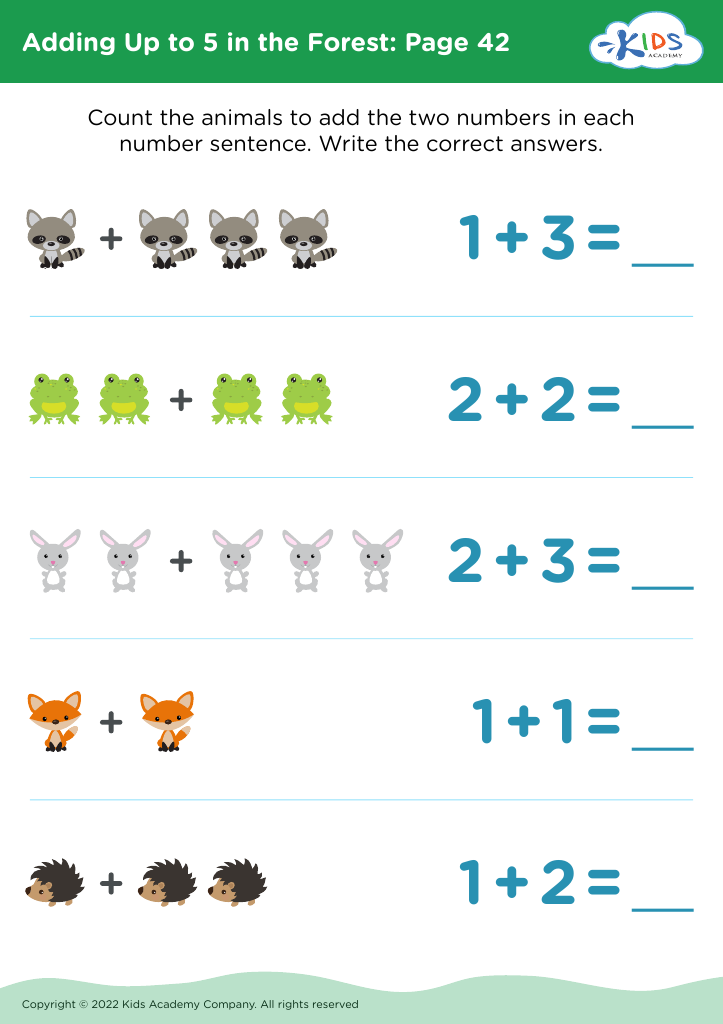
Discover our engaging "Understanding Math Concepts Worksheets" designed specifically for young learners aged 5-6. These worksheets focus on essential math skills, helping children grasp foundational concepts such as counting, number recognition, basic addition, and subtraction. Each activity encourages interactive learning, supporting cognitive development while making math fun and accessible. Our colorful and visually appealing worksheets capture children's interest and promote independent learning. Perfect for home or classroom use, these resources foster a positive attitude towards mathematics and build essential skills for academic success. Explore our comprehensive collection today and empower your child with a strong mathematical foundation!
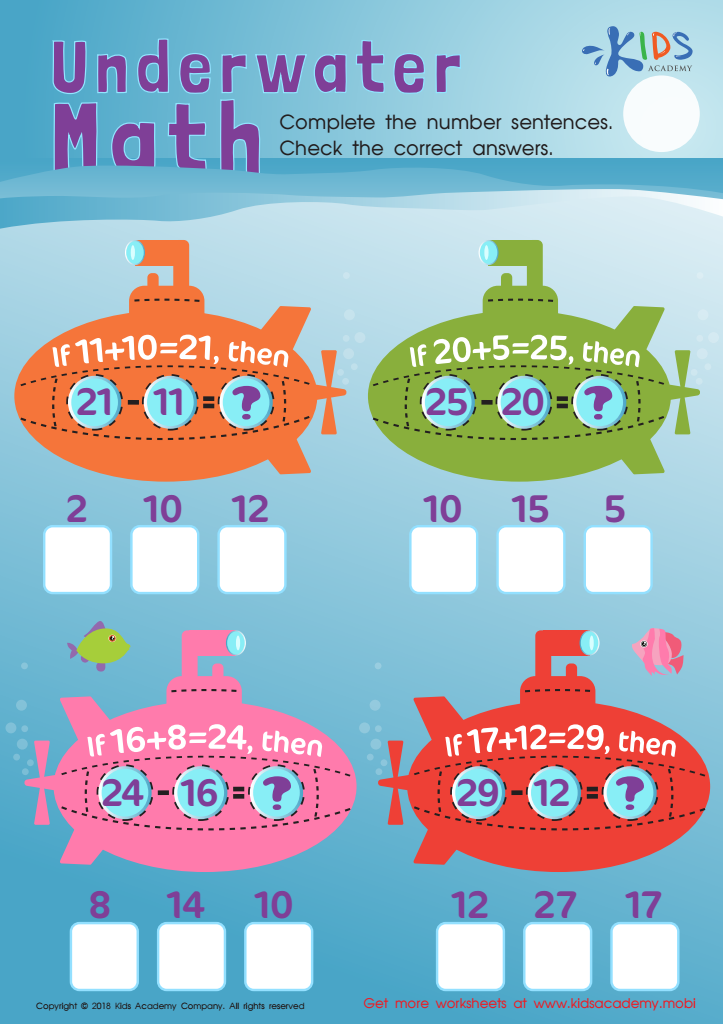
Addition and Subtraction: Underwater Math Worksheet
 Assign to My Students




.jpg)


Understanding math concepts at ages 5-6 lays a crucial foundation for a child's future academic success. During this critical developmental stage, young learners are particularly receptive to absorbing new information, making it an ideal time for them to grasp basic mathematical principles. These foundational skills include counting, number recognition, simple addition and subtraction, and an understanding of shapes and patterns.
Parents and teachers should care deeply about fostering a strong math understanding because early math skills correlate with later academic achievement. Children who develop confidence and competence in math are more likely to enjoy learning and excel in higher-level math concepts in the future. Furthermore, comprehension of math concepts enriches problem-solving abilities and critical thinking skills, which are essential in everyday life.
Moreover, fostering a positive attitude toward math can combat the anxiety sometimes associated with the subject in later years. Engaging in math-related activities builds not only skills but also a love for learning. Ultimately, investing time and resources in teaching young children math concepts equips them with the tools they need for success in school and beyond, encouraging a lifelong appreciation for learning and exploration.








