Understanding numeracy Worksheets for Ages 5-6
4 filtered results
-
From - To
Explore our engaging "Understanding Numeracy Worksheets for Ages 5-6" to help young learners develop essential math skills! Designed specifically for early learners, these worksheets offer fun activities that introduce basic number concepts, counting, addition, and subtraction. Each worksheet is crafted to promote critical thinking and problem-solving in a playful manner, ensuring that your child builds confidence in numeracy. Perfect for a classroom or at-home learning, these resources provide a balance of challenging and supportive exercises tailored to this age group. Start your child’s mathematical journey with our fun, interactive, and accessible worksheets today!
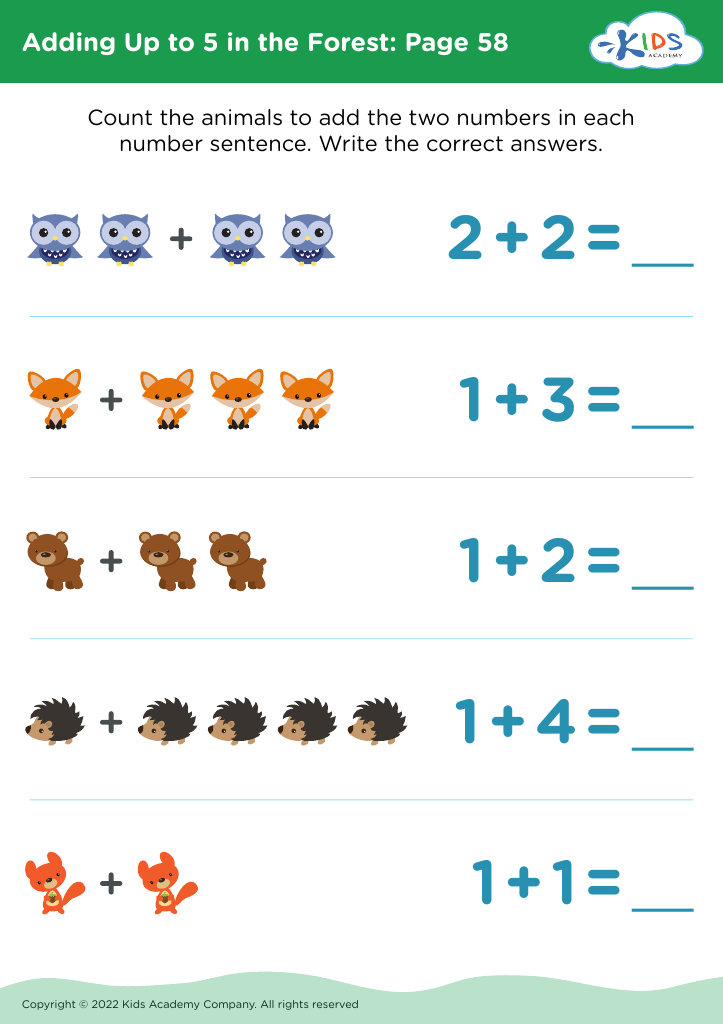
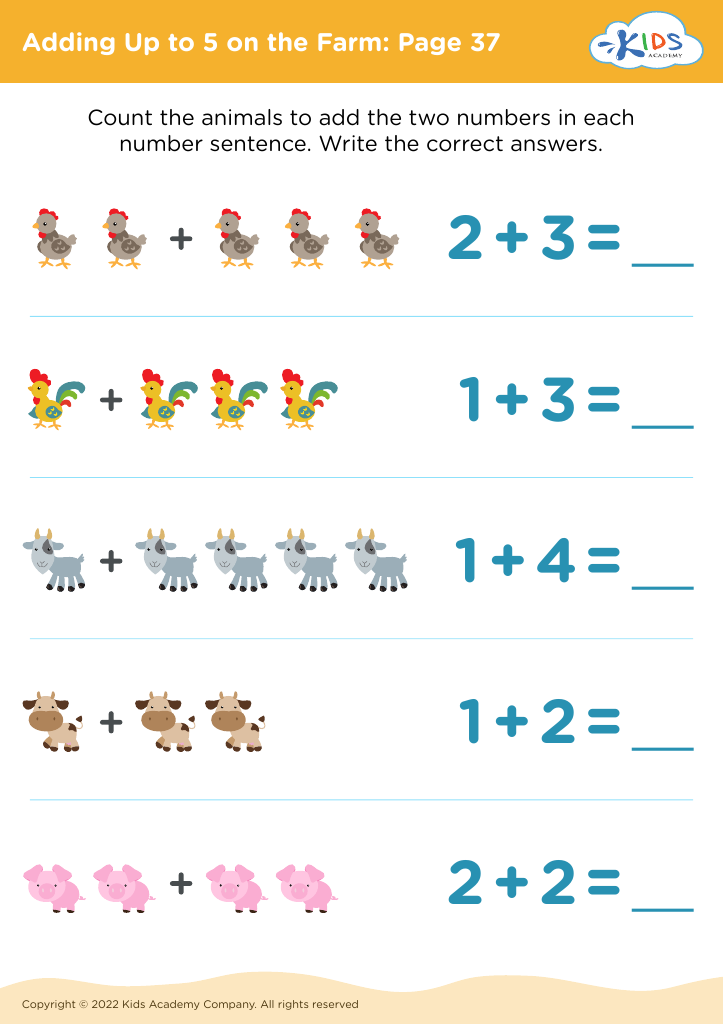
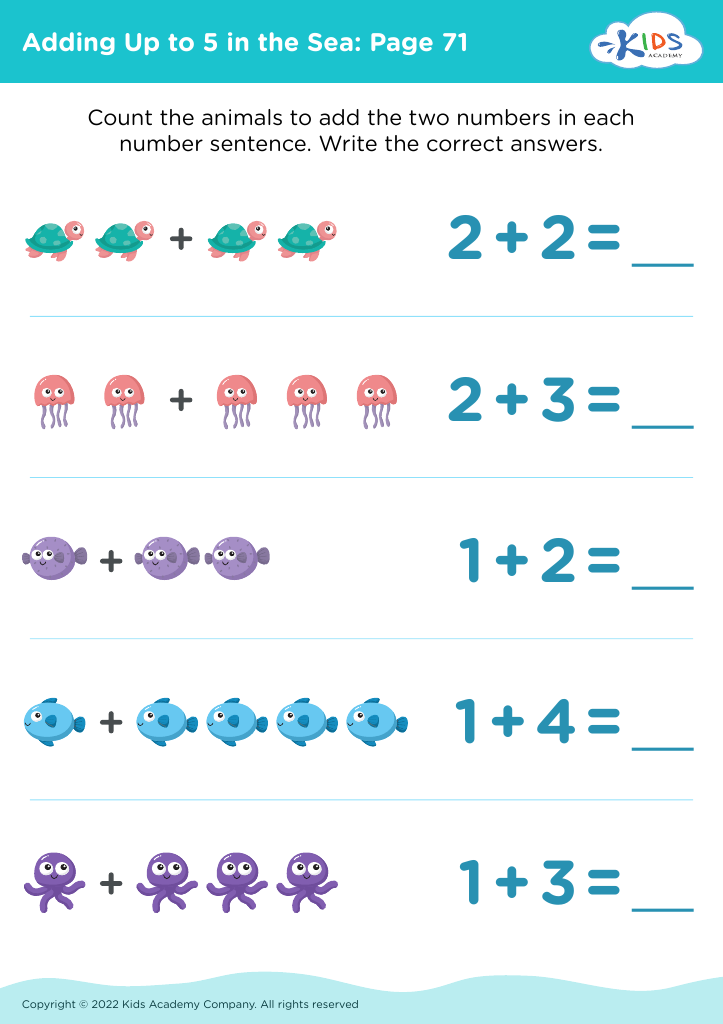
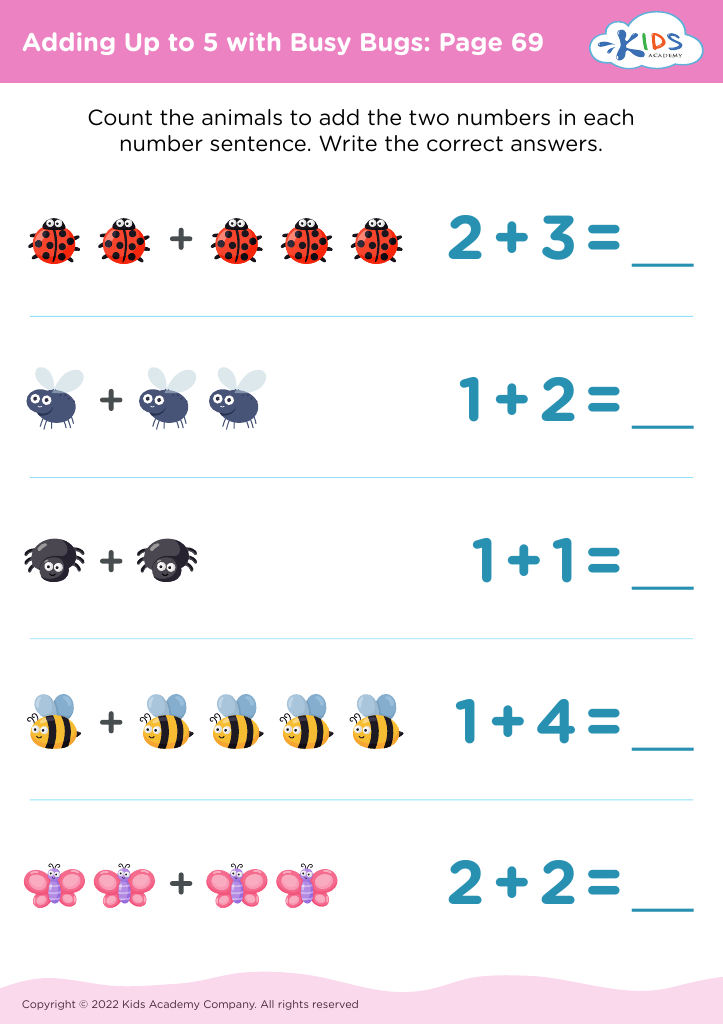








Understanding numeracy for ages 5-6 is crucial for both parents and teachers, as it lays the foundation for a child's mathematical skills and overall cognitive development. At this age, children are naturally curious and eager to learn, making it an ideal time to introduce basic numeracy concepts such as counting, number recognition, addition, and subtraction.
Engaging with numeracy helps children develop critical thinking and problem-solving skills that they will use throughout their lives. It also fosters a positive attitude towards mathematics, promoting confidence when tackling numerical tasks in the future. Numeracy skills promoted at this early stage can significantly impact academic success in later grades, as math is intertwined with a variety of subjects.
Moreover, understanding numeracy enables parents and teachers to recognize and support a child’s individual learning needs, ensuring they achieve mastery of essential skills at their own pace. Additionally, numeracy has practical applications beyond academics; it helps children navigate everyday situations, from using money to measuring ingredients while cooking. By prioritizing numeracy education, parents and teachers play a vital role in shaping well-rounded, capable young learners ready to face the challenges of the academic world ahead.








