
Understanding punctuation Worksheets for Ages 5-6
3 filtered results
Difficulty Level
Grade
Age
-
From - To
Subject
Activity
Standards
Introduce young learners to the exciting world of punctuation with our "Understanding Punctuation Worksheets for Ages 5-6". These engaging, age-appropriate worksheets make fundamental punctuation concepts simple and fun. Children will learn to recognize periods, question marks, and exclamation points, improving their reading and writing skills. Each worksheet is filled with colorful illustrations and interactive exercises designed to stimulate a child’s curiosity and love for learning. Perfect for use in the classroom or at home, these worksheets help build a strong foundation in literacy, preparing children for future language challenges. Explore now to make punctuation a playful and educational journey!
Favorites
With answer key
Interactive
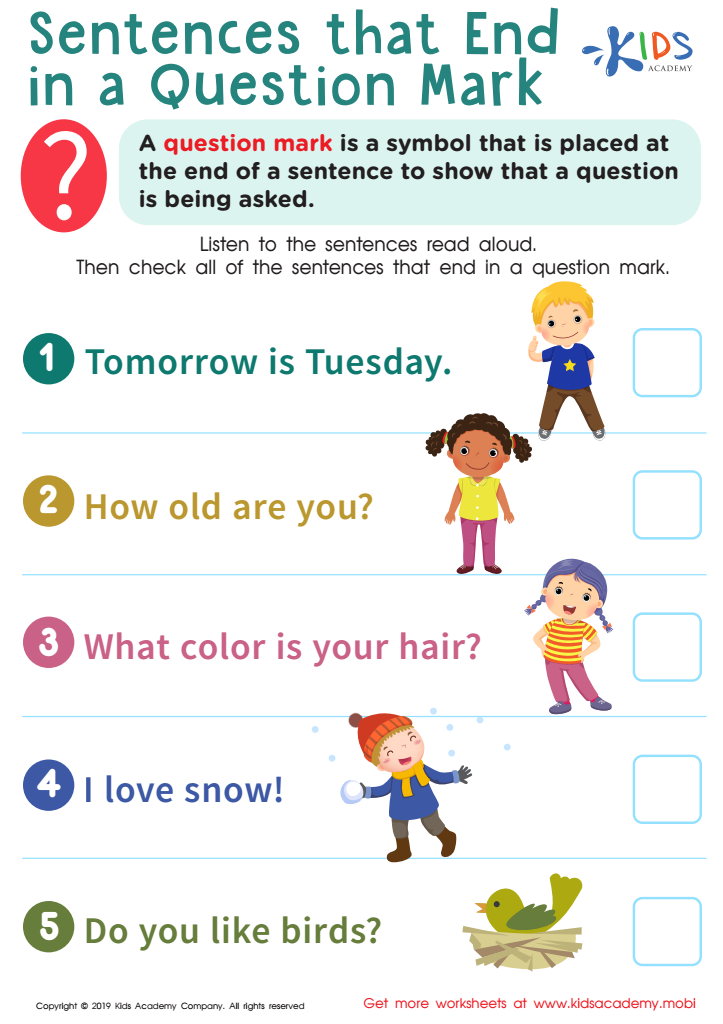
Sentences That End in an Question Mark Worksheet
Teach your students about the four most common punctuation marks - period, comma, question mark, and exclamation mark - with this worksheet. Show them how to use the question mark to indicate a sentence is a question. Then, have them check all sentences that end in a question mark.
 Assign to My Students
Sentences That End in an Question Mark Worksheet
Worksheet
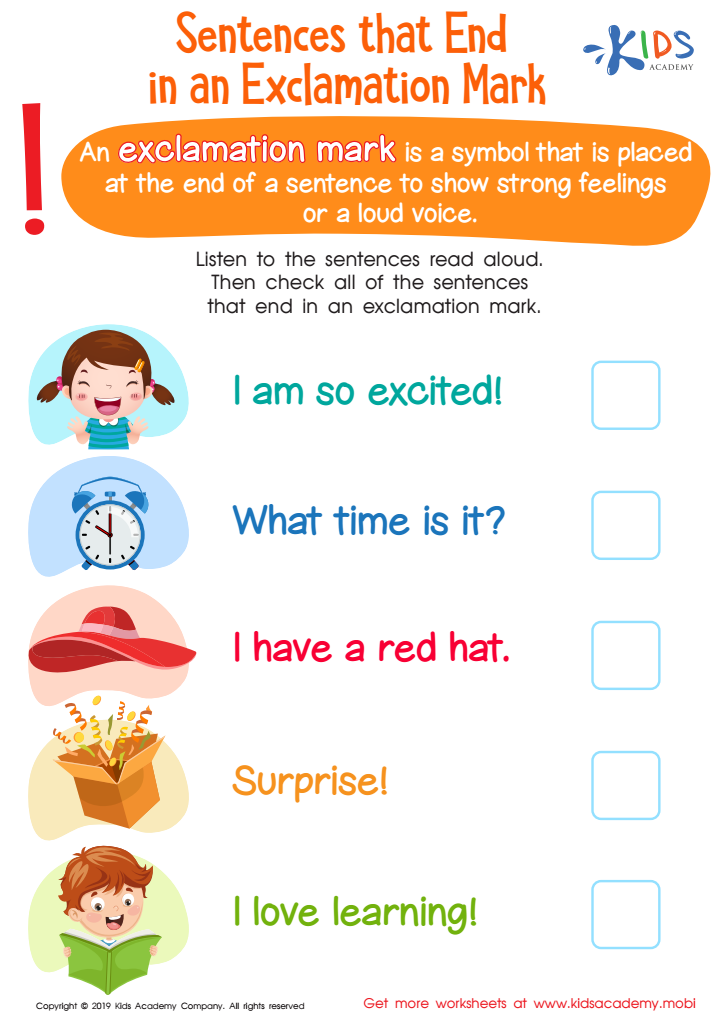
Sentences That End in an Exclamation Mark Worksheet
This worksheet is a great way to brush up kids' punctuation skills. Period, comma, question mark and exclamation mark are the first four punctuation marks they should learn. Exclamation marks show strong emotion or a noise. Use this printout to teach and test kids' understanding of exclamation marks.
Sentences That End in an Exclamation Mark Worksheet
Worksheet
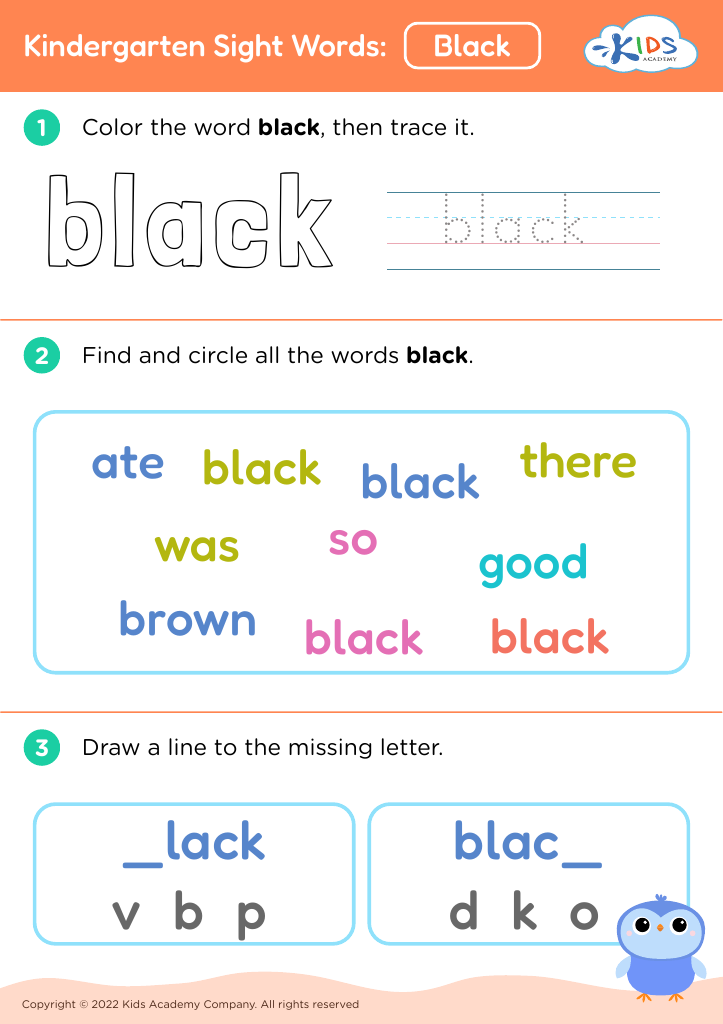
Join Kids Academy for Free
Who is primarily going to use this learning content?








Understanding punctuation at ages 5-6 is vital for several reasons. Firstly, proper punctuation is a foundational aspect of literacy. It aids in comprehension, so young children can easily grasp the meaning of sentences. For example, periods indicate where a thought ends, helping kids understand sentence boundaries.
Secondly, early exposure to punctuation enhances writing skills. When children understand where to place commas, periods, and question marks, their writing becomes clearer and more coherent. This sets a strong foundation for more advanced writing tasks in later years.
Moreover, punctuation affects oral reading fluency. When children recognize punctuation marks, they naturally pause, stop, or change their tone in speech, which enhances their ability to read aloud with expression and accuracy. This builds their confidence in reading and speaking.
Furthermore, instilling these skills early can foster a sense of discipline and attention to detail. Learning to apply specific punctuation rules requires concentration and practice, traits that are beneficial in all areas of learning.
In summary, parents and teachers should prioritize teaching punctuation to 5- to 6-year-olds because it supports reading comprehension, improves writing clarity, enhances oral reading fluency, and promotes important cognitive skills.








